

Revolutionizing Space Exploration: NASA Teams Up with KULR for 3D Printed Batteries
The landscape of space exploration is undergoing a profound transformation, largely driven by the advancements in additive manufacturing. What was once confined to science fiction is now reality, with fully 3D printed rockets taking shape and tiny, yet highly sophisticated, 3D printed satellites being prepared for deployment into Earth’s orbit. This revolutionary technology, often referred to as 3D printing, has enabled unprecedented levels of design freedom, material optimization, and rapid prototyping across the aerospace sector. From developing lighter components for spacecraft to manufacturing complex tools on demand, additive manufacturing is proving to be an indispensable asset for cosmic endeavors. Among the leading pioneers in harnessing this potential, NASA stands as an undisputed titan, continuously pushing the boundaries of what’s possible beyond our planet and actively integrating these cutting-edge techniques into its ambitious missions.
In a move set to redefine power solutions for future space missions, NASA’s Marshall Space Flight Center (MSFC) has recently awarded a landmark contract to KULR Technology Group. This significant partnership is aimed at developing and manufacturing 3D printed battery systems directly in space, designed for both manned and robotic applications. This initiative marks a crucial step towards creating more autonomous, flexible, and sustainable operations in the harsh environment of outer space, addressing critical challenges related to cost, logistics, and safety for long-duration missions. The implications of manufacturing power sources in situ are immense, promising to unlock new possibilities for human exploration and scientific discovery far beyond our current capabilities.
KULR Technology Group, a trailblazing company headquartered in San Diego, California, has carved out a niche for itself by innovating next-generation carbon fiber thermal management technologies. Their expertise is vital for ensuring the optimal performance and, more importantly, the safety of batteries and sophisticated electronic systems in extreme conditions. KULR’s cutting-edge solutions are widely adopted across high-stakes industries such as aerospace, advanced electronics, and electric vehicle production, where thermal stability, longevity, and reliability are paramount. The ability to manage heat effectively is particularly critical for batteries, as overheating can lead to reduced lifespan, decreased performance, and even catastrophic failures. Their commitment to innovation was underscored in June 2020 when the company successfully developed a groundbreaking PPR (passive propagation resistant) battery design specifically tailored for demanding space applications. The recent announcement that NASA has selected KULR to build these advanced 3D printed batteries, potentially for in-space manufacturing, is a testament to KULR’s pioneering work and its critical role in shaping the future of space power.
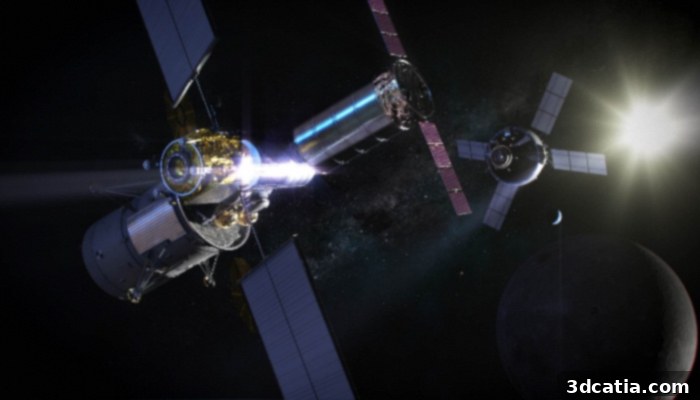
Image credits: NASA
The synergy between NASA’s unparalleled expertise in space systems and KULR’s proven proficiency in engineering state-of-the-art PPR battery packs represents a pinnacle in the development of safe and efficient power systems for extraterrestrial use. The concept of manufacturing these systems directly in outer space significantly elevates the potential for mission success and astronaut safety. John Carr, Deputy Chief Technologist at NASA MSFC, articulated the agency’s stringent requirements, stating, “NASA employs highly rigorous assurance and safety standards, especially for our man-rated technologies. KULR’s PPR design solution for future manned and unmanned space missions is an ideal fit for mass design, flexibility and cost, all the while maintaining this safety rigor through battery risks such as thermal runaway.” This statement highlights the critical need for robust, reliable, and inherently safe power sources when human lives are at stake. Thermal runaway, a dangerous phenomenon where an increase in temperature within a battery cell leads to a cascade of further temperature increases, can result in fires or explosions, posing an unacceptable risk in the enclosed environment of a spacecraft. KULR’s PPR design is engineered to mitigate such risks by preventing the propagation of thermal events from one cell to another, thereby enhancing overall system safety, making it an indispensable technology for future space exploration.
Beyond meeting the formidable safety benchmarks, the strategy of 3D printing KULR’s PPR batteries directly in space offers a myriad of strategic advantages, most notably a drastic reduction in the cost associated with transporting battery packs from Earth. Launching anything into orbit is an incredibly expensive undertaking, with every kilogram adding significant costs to a mission – often tens of thousands of dollars per pound. By manufacturing batteries on-site, NASA can significantly alleviate the payload burden, reserving precious cargo capacity for other vital scientific instruments, essential life support systems, or additional crew necessities. This financial and logistical relief is particularly crucial for ambitious undertakings like the upcoming Artemis missions, where every gram of payload has to be carefully justified and optimized for the demanding journey to the Moon and beyond.
The Artemis program represents humanity’s bold return to lunar exploration, spearheaded by NASA with the ambitious goal of sending the first woman and the next man to the surface of the Moon within the next few years. These missions are not merely about planting flags; they are about establishing a sustainable human presence on and around the Moon, laying the groundwork for future deep-space exploration, including eventual missions to Mars. Long-duration lunar surface operations, the construction of lunar habitats, and the deployment of advanced scientific equipment will demand robust, reliable, and replenishable power sources. The ability to 3D print batteries in space directly supports these objectives, offering unparalleled flexibility and enabling more extended missions than previously thought possible. Imagine the capability to print a new battery pack on demand for a lunar rover that experiences power degradation, or to customize a power unit for a newly deployed scientific instrument without the exorbitant cost and time delays of Earth-based resupply. This paradigm shift will empower astronauts with greater independence and resilience, essential traits for survival and success far from home.
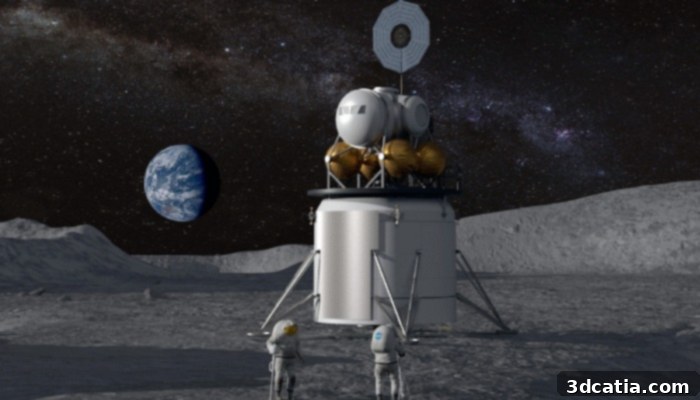
NASA’s Artemis mission. (Image credits: NASA)
Dr. Timothy Knowles, Co-Founder and CTO of KULR, succinctly captured the transformative potential of this initiative: “The optionality to repair and replace battery packs in space with parts 3D printed in space is a complete game changer.” This statement underscores a profound shift towards a truly self-sufficient model of space operations. Beyond the immediate practical benefits for specific missions, in-space additive manufacturing of critical components like batteries has far-reaching implications for the entire paradigm of human space exploration. It paves the way for reduced reliance on Earth-based supply chains, fostering greater autonomy for astronauts and robotic probes alike. This operational independence can dramatically lower the overall cost of space ventures, allowing for more ambitious and longer-duration missions that might otherwise be economically unfeasible. By optimizing cargo capacity, space agencies can dedicate more resources to scientific payloads, exploration equipment, and even comfort items for long-duration crewed missions, enhancing both productivity and quality of life in space. Furthermore, the ability to iterate and improve designs on the fly, responding to unforeseen challenges or evolving mission requirements, introduces an unprecedented level of adaptability to space operations.
The collaboration between NASA and KULR Technology Group represents more than just a contract; it is a forward-looking partnership that signals a new era for space power and in-space manufacturing. The ability to produce critical power components like batteries directly where they are needed – on orbit, on the Moon, or even eventually on Mars – solves fundamental challenges that have historically constrained space exploration. This innovation not only promises enhanced safety through cutting-edge PPR design and robust thermal management but also unlocks unprecedented logistical and economic efficiencies that will reshape future missions. As humanity prepares to venture further into the cosmos, technologies like 3D printed batteries will be instrumental in making these ambitious journeys safer, more affordable, and ultimately, more sustainable. It’s a bold step towards a future where human outposts in space are not just temporary visits, but permanent, self-sustaining endeavors, fostering a new age of discovery and human enterprise beyond Earth.
What are your thoughts on this groundbreaking collaboration between NASA and KULR Technologies to 3D print batteries in space? Do you see this as the ultimate solution for powering future lunar and Martian missions, or are there still significant hurdles to overcome? We’d love to hear your perspectives on how in-space manufacturing could impact the future of space exploration. Share your insights in a comment below or join the discussion on our Facebook and Twitter pages! For all the latest news on additive manufacturing progress, cutting-edge research, and insights from entrepreneurs in the 3D printing industry, remember to sign up for our free weekly Newsletter, delivered straight to your inbox!