
Revolutionizing Pediatric Burn Care: How 3D Printing Transforms Facial Orthoses
The medical field is undergoing a profound transformation driven by the rapid advancements in 3D printing and additive manufacturing technologies. From intricate bioprinting applications and custom 3D printed prostheses to the digitization of dentistry and patient-specific surgical guides, the integration of additive manufacturing is paving the way for unprecedented levels of personalized care and efficiency. A recent and particularly impactful innovation highlights this progress: a groundbreaking pilot project stemming from a collaborative effort between medical and technological pioneers in Italy and France. This project, spearheaded by the renowned Romans Ferrari pediatric rehabilitation center in Lyon and partnered with 3DZ, a leading 3D printer distribution company with extensive global experience, has harnessed the power of 3D printing to create highly effective and significantly less traumatic facial masks for treating children who have suffered facial burns. This initiative not only exemplifies the clinical utility of 3D printing but also underscores its profound humanitarian potential in alleviating suffering among vulnerable patients.
For many years, the Romans Ferrari Center in Lyon has been dedicated to the intensive rehabilitation of severely burned children, facing the constant challenge of devising effective yet compassionate treatment methods. The conventional approach for creating facial orthoses – specialized masks designed to apply gentle pressure and facilitate healing on burned facial skin – presented a significant hurdle. Historically, this process involved taking a direct impression of the child’s face using plaster strips. These strips were meticulously applied to the delicate, often hypersensitive, and sometimes still open skin of the child’s face, allowed to set, and then removed. While necessary for creating a perfectly fitted mold, this traditional method was inherently painful, deeply uncomfortable, and often terrifying for children already grappling with the trauma of their injuries. The physical sensation of the plaster, the pressure, and the prolonged contact on sensitive areas frequently led to distress, anxiety, and even re-traumatization, making an already difficult healing journey even more arduous for both the young patients and their families. Recognizing the urgent need for a more humane and efficient alternative, the Romans Ferrari Center engaged with students from the prestigious Ecole Centrale de Lyon and subsequently approached the French branch of 3DZ, seeking a technological solution to this long-standing medical challenge.
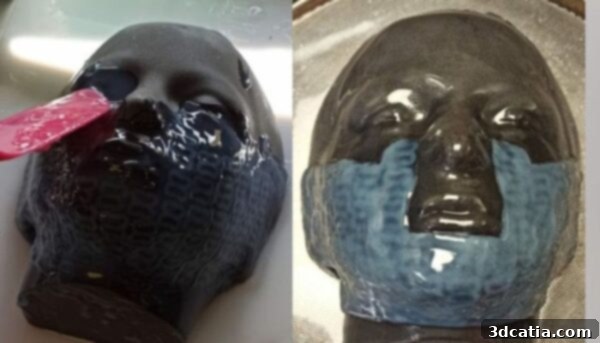
Photo Credits: 3DZ
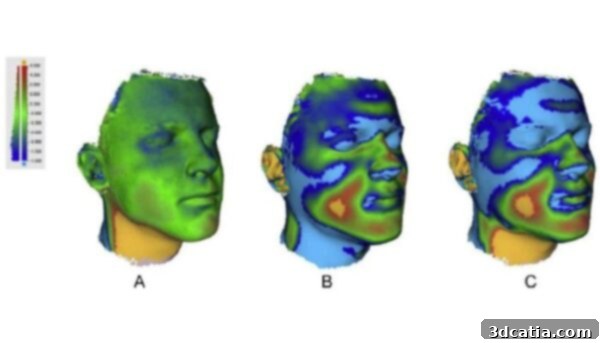
The innovative collaboration between 3DZ and the Romans Ferrari Center successfully re-engineered this critical medical procedure, transforming it into a process that is remarkably child-friendly, significantly less invasive, and demonstrably more efficient. At the heart of this transformation was the complete elimination of the plaster cast and its replacement with advanced 3D scanning technology. Instead of direct physical contact, a state-of-the-art 3D scanner was utilized to capture the intricate topography of the patient’s face. This non-contact scanning process allowed for the acquisition of a perfect, highly detailed three-dimensional reproduction of the child’s facial features, encompassing every contour and subtle detail, all without ever touching their sensitive skin. The transition from physical molding to digital capture not only removed the painful and distressing aspects of the traditional method but also ushered in an era of enhanced precision and comfort in pediatric burn care.
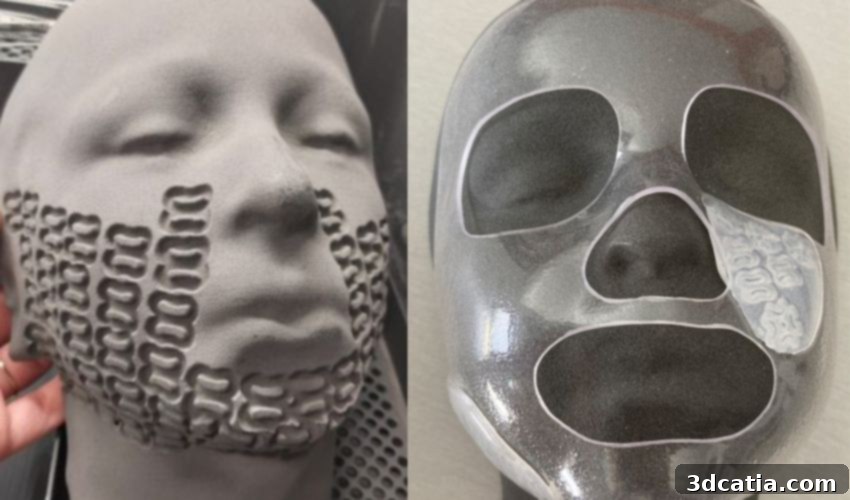
Following the creation of the digital 3D model, the subsequent step involved the design and manufacturing of the facial orthosis using advanced 3D printing techniques. The operator first creates a highly accurate three-dimensional photo or scan of the child’s face. This scanned file, a meticulous digital blueprint of the patient’s unique facial anatomy, is then processed using sophisticated software like Geomagic Freeform. This powerful software allows for highly organic and precise modeling, enabling medical professionals to sculpt and refine the digital model of the mask, ensuring an optimal fit and therapeutic effectiveness. The digital design phase is crucial, as it allows for adjustments and customizations that would be impossible with traditional methods, leading to a mask that perfectly conforms to the child’s individual facial structure and burn contours. Once the design is finalized, the mask is brought to life using cutting-edge 3D printing technology, specifically the Formlabs Fuse 1 3D printer. This Selective Laser Sintering (SLS) printer is renowned for its ability to produce robust, high-resolution parts from durable materials such as nylon, which is ideal for medical applications due to its biocompatibility and mechanical properties. The result is a precise, accurate, and truly customized reproduction of the patient’s face, forming the base of the facial orthosis. Inside this customized 3D printed orthosis, specially designed silicone devices are carefully placed. These silicone inserts play a vital role in the healing process by providing gentle, consistent pressure and a massaging action on the burned area, which is crucial for reducing hypertrophic scarring, promoting better circulation, and ultimately facilitating superior healing outcomes and improved cosmetic appearance.
Face scanner (photo credits: Artec3D)
More Efficient Burn Treatment Thanks to 3D Printing and Advanced Customization
The pilot project, launched as a collaborative venture, reached its successful completion in early 2022, yielding exceptional results that immediately demonstrated the significant advantages of this innovative approach. The positive impact on patient comfort, treatment precision, and overall healing outcomes was so pronounced that the collaboration between 3DZ and Romans Ferrari garnered well-deserved recognition at the Global Industrie trade show, France’s most important event for the industrial sector, underscoring its groundbreaking nature. Inspired by these remarkable successes, the French medical center made the pivotal decision to permanently adopt 3D-printed masks, entirely phasing out the outdated and often traumatic plaster cast method. Christophe Debat, director of the Centre Romans Ferrari, articulated the long-held aspiration that this project finally fulfilled: “For several years, we have dreamed of making the mold for treatment without the patient having to come into direct contact with the burned skin.” He further emphasized the profound impact of this innovation, stating, “To see what we can cure and invent thanks to the complete 3D production chain we have developed is simply magical.” Echoing this sentiment, Patrick Ferraris, director of 3DZ France, highlighted the humanitarian core of the initiative: “The application developed by Romans Ferrari is a human project that takes care of the future health of these children.” This shift represents a monumental leap forward in pediatric burn treatment, offering not just a technological upgrade but a profound improvement in the quality of care and the emotional well-being of young patients.
Looking ahead, the future development of this transformative project holds immense promise, with a particular focus on its adaptation to telemedicine and the expansion of its application. One primary goal is to continuously refine and scientifically document the ideal forms and parameters for these 3D-printed orthoses. This rigorous scientific approach will enable the creation of standardized protocols and best practices, facilitating wider adoption and ensuring consistent, high-quality care globally. By leveraging telemedicine, the process could be extended to remote patients, allowing local medical staff to perform 3D scans, send the data for centralized design and production, or even enable localized 3D printing in regional facilities. This would dramatically improve accessibility to advanced burn care, reducing travel burdens for families and providing timely interventions regardless of geographical location. Furthermore, the project aims to scale up the technology to treat larger body parts affected by burns, extending beyond facial orthoses to cover limbs, torso, or other complex anatomical regions. This expansion would unlock even greater potential for personalized rehabilitation, pain management, and scar reduction across a broader spectrum of burn injuries, solidifying 3D printing’s role as an indispensable tool in modern medical science and compassionate patient care.
What are your thoughts on the revolutionary use of 3D printing to provide innovative and compassionate care for children with burns? Share your insights and perspectives by leaving a comment below, or engage with us on our LinkedIn, Facebook, and Twitter pages! Don’t miss out on the latest advancements and news in additive manufacturing – be sure to sign up for our free weekly Newsletter here, delivering the most relevant 3D printing news directly to your inbox! You can also explore all our insightful videos and interviews on our YouTube channel for more in-depth content.
*Cover Photo Credits: 3DZ