
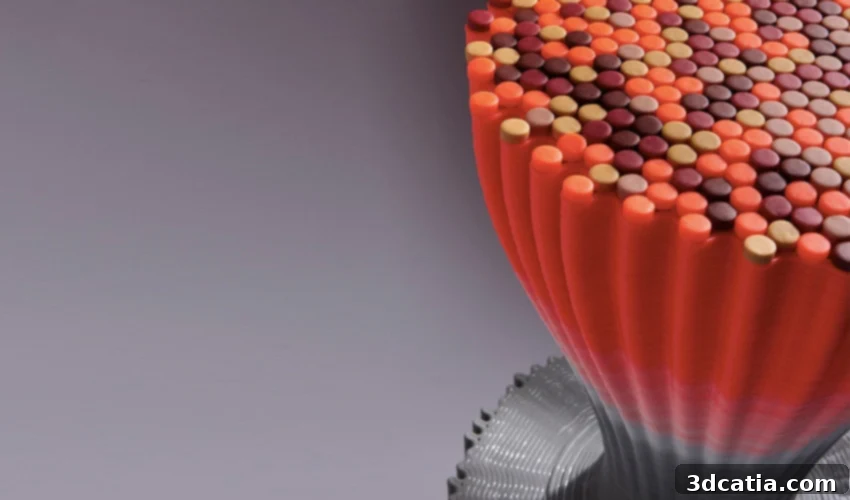
Nagami’s Vision: Redefining Design and Manufacturing Through Advanced 3D Printing and Robotics
Nagami, a pioneering design studio based in Ávila, Spain, has rapidly garnered global recognition for its groundbreaking work at the intersection of design, architecture, and advanced manufacturing. In recent months, the studio captivated the design world with the presentation of innovative Zaha Hadid Architects chairs at the prestigious Milan Design Fair. Further cementing their reputation, Nagami’s Voxel Chair v1.0 was acquired for the permanent collection of the Georges Pompidou Museum in Paris, showcasing their commitment to pushing artistic and technological boundaries. At the core of Nagami’s strategy is a bold vision for the future: integrating large-scale 3D printing and advanced robotics into every facet of their manufacturing process.
These significant milestones have naturally sparked considerable interest in Nagami’s unique approach. We recently had the privilege of speaking with Manuel Jiménez García, a highly accomplished architect by training and a co-founder of Nagami. In this exclusive interview, Manuel delves into the studio’s key developments, shares his insights on the transformative evolution of design and architecture, and discusses how 3D technologies are shaping the future of industrial production.
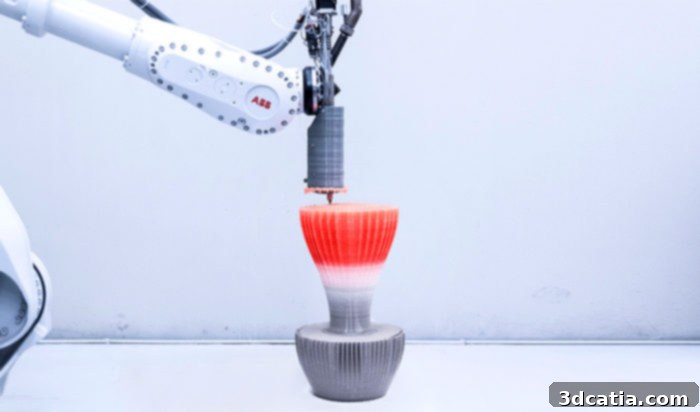
Ross Lovegrove Stool Manufacturing
The Genesis of Nagami: A Vision Born from Research
3DN: Can you tell us how the idea of Nagami came about and what were its first developments?

Manuel Jiménez García co-founder of Nagami
Manuel Jiménez García explains his journey: “For nine years, I dedicated my efforts to architectural research in London, primarily within the academic sphere. Over the last five years, the research laboratory I lead at UCL The Bartlett School of Architecture, known as the Design Computation Lab, has focused heavily on automation methods. Among these, large-format 3D printing stood out as particularly promising. Concurrently, my partners Ignacio and Miki, who also possess strong architectural backgrounds, were already laying the groundwork for a 3D printing venture in Spain.”
He continues, “The pivotal moment for Nagami’s inception arrived when the Centre Pompidou in Paris commissioned my laboratory for an artwork to be featured in their ‘Printing the World’ exhibition. This presented a unique opportunity to combine our strengths. Nagami was formally created to develop a sophisticated robotic extrusion system, specifically tailored to facilitate the creation of this challenging piece. The underlying idea was always to extend this capability towards developing large-scale furniture and design objects once the exhibition concluded. The outcome, the VoxelChair v1.0, proved to be a resounding success, earning a place in the museum’s permanent collection. From that moment, Nagami truly embarked on its adventure in product development, leading to the creation of our initial productions such as the Nobu and Estrat chairs, and the elegant Nital vase.”
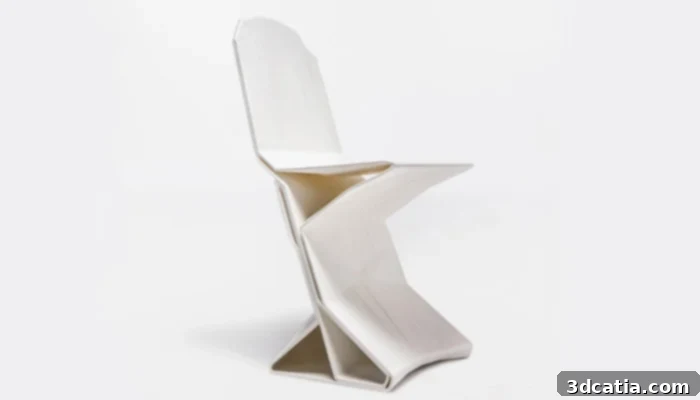
Silla Estrat – Nagami
Embracing Additive Manufacturing: Freedom, Efficiency, and Innovation
3DN: Why have you decided to introduce additive manufacturing technologies, and what techniques do you use so far?
Manuel elaborates on Nagami’s commitment to 3D printing: “Additive manufacturing technologies unlock unparalleled formal freedoms that would be simply unattainable with conventional production methods. The distinctive and often complex geometries that our brand champions would have very little viability if we were confined to traditional manufacturing technologies such as injection molding, blow molding, or even other numerical control technologies like CNC milling. The ability to create intricate, organic, and truly unique forms without the constraints of molds or conventional tooling is a game-changer for design innovation.”
“Beyond formal liberation, additive manufacturing is also incredibly efficient in terms of material usage,” Manuel continues. “By precisely printing only the material that ultimately becomes part of the final object, the production of waste material is significantly minimized, often to a near-zero level. This inherent efficiency not only contributes to cost savings but also aligns with more sustainable manufacturing practices, a principle that is increasingly vital in today’s industrial landscape.”
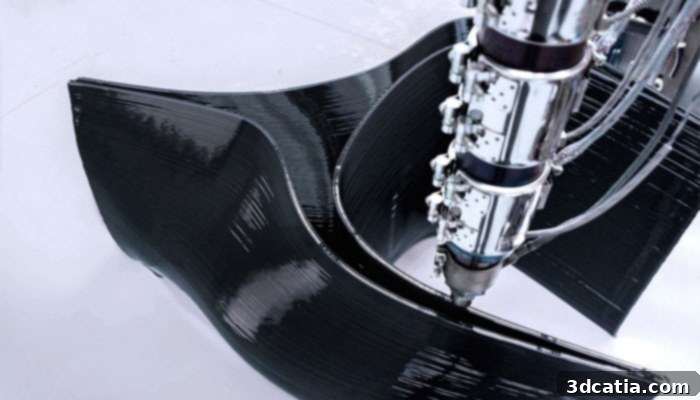
Development of the Peeler chair by Daniel Widrig
Addressing the specific techniques Nagami employs, Manuel explains, “So far, we are primarily concentrating our efforts on large-scale PLA plastic extrusion. A key innovation for us is the use of plastic in pellet form, rather than traditional filament. This approach significantly reduces production costs compared to conventional filament-based 3D printing. Furthermore, we have invested heavily in developing advanced techniques within 3D printing, such as sophisticated pigment gradation and variable thickness printing. These proprietary methods have not only expanded our creative possibilities but have also become distinctive trademarks of the Nagami brand, allowing for nuanced aesthetic effects and optimized structural integrity.”
Nagami’s Milestones and Ambitious Future
3DN: Could you tell us about Nagami’s most outstanding projects and what are the ones you have in mind for the near future?
“The VoxelChair v1.0 remains a profoundly important project for us,” Manuel states, “not merely because it was our first professionally developed project, but also due to the invaluable technical and design knowledge we gained during its creation. It truly set the precedent for what was possible with robotic additive manufacturing.”
Here’s a video showcasing the development of the VoxelChair v1.0 for the Pompidou Museum:
“Our designs like the Nital vase and Estrat chair also hold immense significance for the brand,” Manuel adds. “They represent our first accessible products created using large-scale 3D printing, marking a crucial step in making this advanced technology relevant and available in an still emerging market. These pieces demonstrate that cutting-edge design and manufacturing can be brought to a broader audience.”
Manuel highlights recent successes: “The four distinctive chairs we recently unveiled at the Milan Design Fair were a tremendous laboratory of ideas for us. Collaborating with world-renowned designers like Zaha Hadid Architects, Ross Lovegrove, and Daniel Widrig, each project introduced unique technical challenges. Overcoming these challenges will undoubtedly facilitate the development of new, innovative products in the future, as we continually nurture and integrate these breakthroughs into our design philosophy. These collaborations push us to explore new material properties, structural geometries, and aesthetic expressions that were previously unimaginable.”
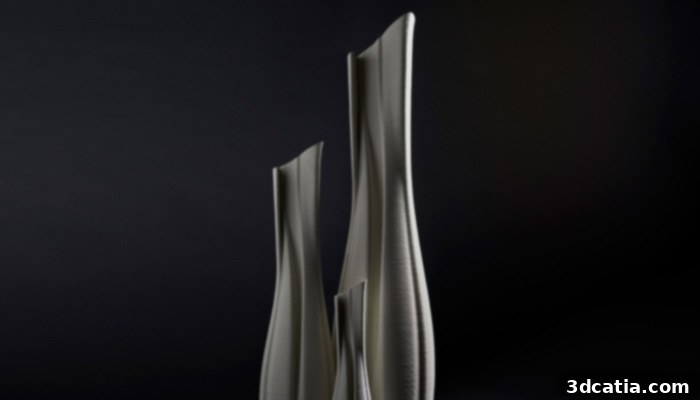
Nital – Nagami
Looking ahead, Manuel shares Nagami’s ambitious future plans: “In the coming years, we aim to significantly expand our range of products. This expansion won’t just involve reaching different scales—from intricate small objects to expansive elements linked to architectural facades and interior design projects. We also aspire to incorporate products that inspire new uses, objects that challenge conventional categorization, thereby generating entirely novel typologies within the dynamic worlds of design and architecture. We envision furniture that adapts, surfaces that respond, and structures that seamlessly integrate technology and aesthetics.”
3D Printing: A Catalyst for a New Design Paradigm
3DN: How important do you think the relationship between 3D printing and design is today?
“The synergy between 3D printing and design gains greater importance with each passing day for design professionals across the globe,” Manuel asserts. “This transformative technology is fundamentally altering our traditional production models, paving the way for more horizontal, democratic, and agile design and manufacturing methods. Thanks to 3D printing and other sophisticated digital manufacturing technologies, we are collectively transforming not only how we generate physical products but also how we structure design companies and develop innovative research and development models. This shift represents a profound decentralization of manufacturing capabilities.”
He adds, “A substantial number of startups, like Nagami, that are revolutionizing various industries, base their core principles on ambitious goals that are only achievable through the strategic use of 3D printing technology. The ability to iterate rapidly, customize extensively, and produce complex forms economically has empowered a new generation of innovators. We are, without a doubt, witnessing one of the most significant changes in our discipline since the Industrial Revolution. This era is characterized by mass customization, on-demand production, and an unprecedented level of creative freedom for designers, allowing them to bring highly complex and personalized visions to life with efficiency and precision.”
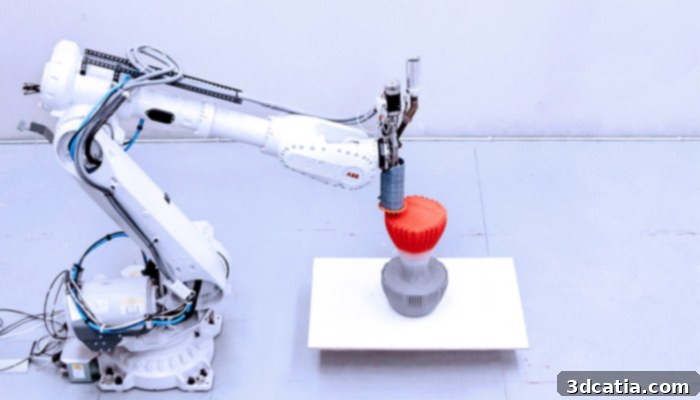
Use of a robotic arm for the manufacture of Ross Lovegrove stool
Final Thoughts for Aspiring Innovators
3DN: Do you have any last words for our readers?
“Think Big and work hard!” Manuel enthusiastically concludes. “Truly, nothing is impossible if someone can imagine it. The boundaries of what is possible in design and manufacturing are constantly expanding, and with dedication and innovative technologies like 3D printing, designers and creators have the power to shape a future limited only by their imagination.”
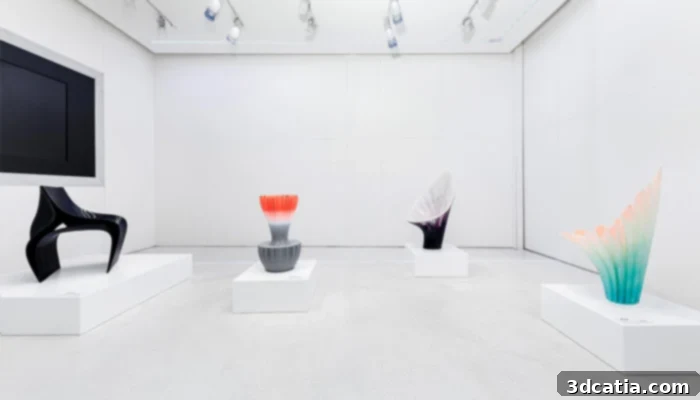
Milan Design Fair with the chairs manufactured by the studio
For more information on Nagami’s visionary projects and their unique design philosophy, you can visit their official website here.
What do you think about the incredible potential of 3D printed furniture and the innovative work Nagami is doing? Share your thoughts in a comment below or join the conversation on our Facebook and Twitter pages! And don’t forget to sign up for our free weekly Newsletter to get all the latest news in 3D printing delivered straight to your inbox!