
Innovative 3D Printed Stink Bug: Boosting New Zealand’s Biosecurity Awareness Through Student-Led Innovation
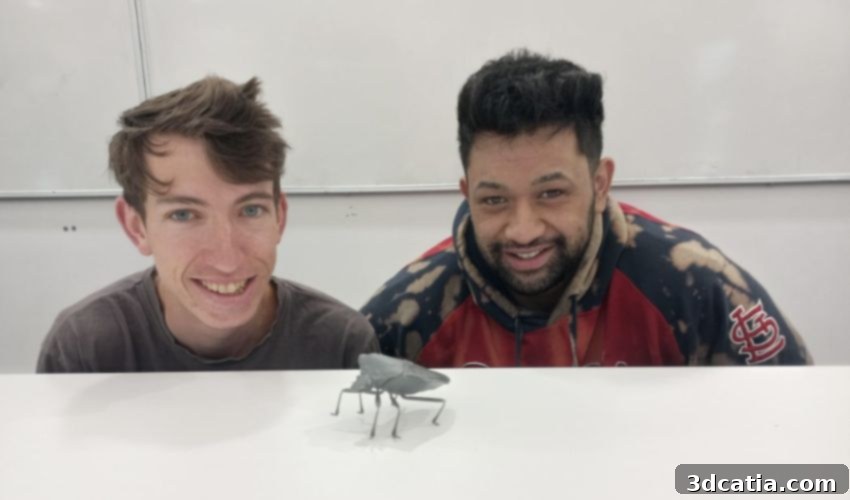
In a groundbreaking initiative that merges cutting-edge technology with critical environmental protection, students in Canterbury, New Zealand, have successfully 3D printed a highly realistic model of the brown marmorated stink bug (Halyomorpha halys). This innovative project aims to significantly enhance public awareness regarding the severe biosecurity threat this invasive pest poses to the nation’s pristine ecosystems and vital agricultural sector. Developed under the esteemed Better Border Biosecurity (B3) Summer Student Programme, this collaborative effort highlights the proactive approach New Zealand is taking to safeguard its unique biodiversity and economic interests. The B3 program itself is a testament to national cooperation, bringing together Crown Research Institutes, academic institutions, and governmental bodies in a concerted research collaboration focused on robust biosecurity solutions. This initiative not only demonstrates the practical application of additive manufacturing but also underscores the crucial role young innovators play in addressing national challenges.
Engineering & Biology Unite: The Minds Behind the Model
The meticulous design and 3D printing of the brown marmorated stink bug model were spearheaded by two exceptionally talented students from the University of Canterbury: Joel Tregurtha and Te Matau O Te Rangi Allen (who also carries his whakapapa affiliations of Te Ati Haunui-a-Pāpārangi, Ngāti Rangi, Ngāti Tūwharetoa). Their diverse academic backgrounds proved to be a powerful combination. Allen, currently pursuing a Bachelor of Engineering in Mechatronic, Robotics, and Automation Engineering, brought invaluable expertise in mechanical design and advanced manufacturing processes. Tregurtha, working towards a bachelor’s degree in Biological Sciences, provided the critical scientific understanding of the bug’s morphology, behavior, and ecological impact, ensuring the model’s biological accuracy and relevance to the biosecurity mission.
According to Allen, the project was a true interdisciplinary endeavor, requiring them to harmoniously blend their distinct fields of study to conceive and execute this novel idea. The journey from concept to a tangible, realistic model was not without its hurdles. Allen shared insights into the iterative design process, emphasizing that achieving the desired outcome demanded numerous attempts. Early prototypes, for instance, often suffered from printing inaccuracies, leading to models that didn’t fully capture the intricate details of the insect. Furthermore, the inherent fragility of the bug’s delicate anatomy presented a significant challenge during the post-processing phase. Removing support structures and refining the printed parts often resulted in damage, particularly to the slender legs. The students, however, demonstrated remarkable resilience and problem-solving skills, having to painstakingly glue parts back onto the initial prototypes to achieve a complete model.
Their dedication extended beyond mere structural integrity. The pair was committed to achieving an authentic representation of the stink bug, not just in its overall shape but also in its distinctive texture. Allen explained that they ingeniously printed a specialized layer in vinyl, which was then meticulously adhered to the 3D-printed body. This additional step was crucial in replicating the subtle tactile characteristics and visual nuances of the brown marmorated stink bug, making the model an incredibly accurate and immersive educational tool. This level of detail ensures that anyone encountering the model can gain a much clearer understanding of what to look for in the wild, significantly enhancing the effectiveness of the awareness campaign.

Biosecurity checks are an essential part of New Zealand’s border security (Photo credit: NZ Herald)
The Looming Threat: Why the Brown Marmorated Stink Bug Matters to New Zealand
The primary driving force behind this innovative project is the urgent need to elevate public awareness about the brown marmorated stink bug (BMSB) as a critical biosecurity threat. This invasive species, scientifically known as Halyomorpha halys, is not currently established in New Zealand, but its potential arrival and spread could have devastating consequences. The BMSB is a highly destructive agricultural pest, notorious for its broad diet and rapid reproductive cycle. It feeds on a vast array of crops, including fruits like apples, peaches, and berries, as well as vegetables such as corn, tomatoes, and beans. Its feeding habits lead to significant damage, causing deformities, blemishes, and internal tissue necrosis, rendering produce unmarketable and leading to substantial economic losses for farmers. Beyond agriculture, the stink bug can also become a nuisance pest in residential areas, seeking shelter in homes and buildings during colder months. The “stink” refers to the pungent odor it releases when disturbed or crushed, which is a defensive mechanism.
The potential establishment of the BMSB in New Zealand is viewed with extreme concern by authorities. The New Zealand government has explicitly warned that if this pest were to become entrenched in the country, it could cause “decimation” of fruit and vegetable populations. Given New Zealand’s significant horticulture and viticulture industries, which are major contributors to its export economy, such an invasion would have catastrophic financial repercussions. Furthermore, the introduction of a new invasive species can disrupt delicate native ecosystems, potentially outcompeting native insects or altering food webs. Therefore, public vigilance is not just encouraged but actively solicited. The government continually urges the public to learn how to identify the bug and to promptly contact the Ministry for Primary Industries (MPI) or other relevant authorities immediately upon spotting one. The 3D-printed models serve as an excellent tool in this educational outreach, providing a tangible reference for identification that is far more effective than mere photographs.
3D Printing as a Powerful Educational Tool for Biosecurity
The students’ decision to utilize 3D printing for this biosecurity awareness campaign highlights the technology’s immense potential as an educational and communication tool. Unlike two-dimensional images or even videos, a 3D-printed model offers a tactile, multi-sensory experience. People can hold the model, feel its texture, and observe its size and shape from all angles, creating a much more memorable and impactful learning experience. This hands-on engagement is particularly effective in teaching identification skills, which are crucial for early detection of invasive species. The ability to rapidly prototype and iterate designs with 3D printing also allowed the students to refine their model until it achieved an impressive level of realism and accuracy, crucial for distinguishing the BMSB from native New Zealand insect species.
Beyond immediate identification, Allen envisions broader applications for the 3D-printed stink bug. He suggests that these realistic models could be widely distributed and integrated into educational programs within schools, nature centers, and even during guided nature walks. Imagine children and adults alike learning about the nuances of local ecosystems and the threats posed by invasive species, with a physical model to guide their understanding. Such initiatives could transform abstract biosecurity concepts into engaging, tangible lessons, fostering a new generation of environmentally conscious citizens. This approach moves beyond passive learning, actively involving individuals in the protection of their natural heritage. The project underscores how practical, interdisciplinary student work can translate into significant societal benefit, particularly in areas as vital as biosecurity.
New Zealand’s Unique Vulnerability and Proactive Biosecurity Measures
While New Zealand might not frequently feature in global 3D printing news, projects like this vividly demonstrate the region’s commitment to innovation, especially when addressing pressing local challenges. Biosecurity is an issue of paramount importance, particularly for island nations like New Zealand and its neighbor, Australia. These isolated landmasses are home to unique, endemic flora and fauna that have evolved over millennia without exposure to many external threats. This isolation, while fostering incredible biodiversity, also makes them exceptionally vulnerable to invasive species. A single introduced pest or disease can rapidly decimate native populations, disrupt ecological balances, and cause irreversible damage to fragile ecosystems. The economic implications are equally severe, as industries like agriculture, forestry, and tourism heavily rely on a healthy and protected natural environment.
New Zealand has a long history of stringent biosecurity measures, learning from past experiences with invasive species. The country’s border security protocols are among the strictest globally, involving rigorous checks of incoming goods, passengers, and vessels. However, given the increasing volume of international trade and travel, the risk of accidental introduction of pests like the brown marmorated stink bug remains ever-present. This makes public awareness campaigns, exemplified by the students’ 3D printing project, an indispensable layer of defense. By empowering everyday citizens with the knowledge and tools to identify potential threats, New Zealand creates a wider network of vigilant guardians for its natural heritage. The project thus contributes significantly to the nation’s multi-faceted, proactive approach to biosecurity, demonstrating how local innovation can bolster national resilience against global threats.
This isn’t the first instance of 3D printing proving its worth in educational contexts. In 2022, for example, we highlighted the work of Lino3D, an initiative focused on democratizing additive manufacturing education. Their efforts illustrate a growing trend where 3D printing is increasingly recognized for its ability to transform learning by making complex subjects tangible and engaging. From creating anatomical models for medical students to historical artifacts for history lessons, the applications are boundless. The stink bug project further solidifies this trend, showcasing how this versatile technology can be applied to environmental education and public service, bridging the gap between scientific research and community engagement.
You can learn more about the project from the University of Canterbury HERE.
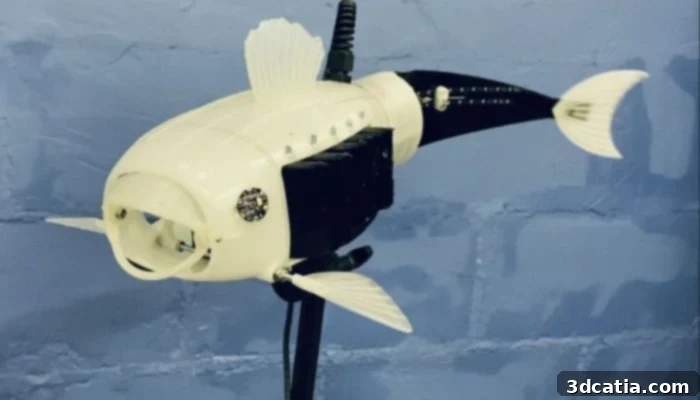
A similar student project from the UK saw a 3D printed robotic fish which can collect microplastics. (Photo credit: Rob Siddal)
Join the Conversation: Your Thoughts on 3D Printing for Biosecurity
What are your thoughts on this innovative application of 3D printing for biosecurity awareness? Do you believe such tactile educational tools can significantly impact public vigilance against invasive species? We invite you to share your insights and opinions in the comments section below. Your perspectives are valuable, and we encourage a robust discussion on how technology can further contribute to environmental protection. You can also engage with us and other enthusiasts on our LinkedIn, Facebook, and Twitter pages. Stay updated with the latest advancements and news in the additive manufacturing world by signing up for our free weekly Newsletter here, delivered straight to your inbox. For a visual dive into the world of 3D printing, explore all our compelling videos on our YouTube channel. Let’s continue to explore the incredible potential of 3D printing together!
*Cover photo: University of Canterbury