
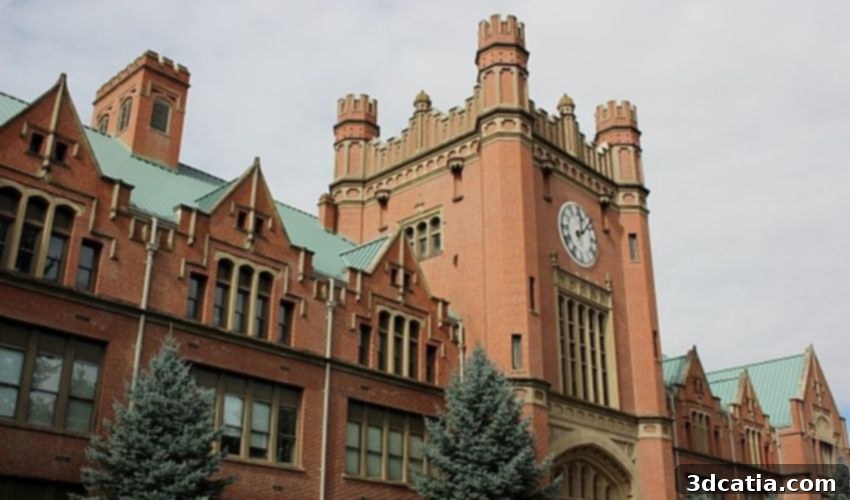
University of Idaho Pioneers Sustainable Construction: Transforming Wood Waste into 3D Printable Building Materials
The University of Idaho (U of I) has secured a significant $4 million USD grant to spearhead an innovative research initiative. An interdisciplinary team from the university is tasked with developing groundbreaking technology that will convert Idaho’s abundant wood waste into a highly sustainable material for the construction industry. This ambitious project aims to integrate this new material directly into the rapidly evolving 3D printing construction sector, promising a future where buildings are not only efficiently produced but also environmentally conscious. The team’s research, funded through 2025, encompasses a dual objective: to develop and rigorously test an advanced additive manufacturing process specifically tailored for these bio-based materials, and concurrently, to design a novel 3D printer capable of handling this unique composite for large-scale construction applications. This endeavor positions the U of I at the forefront of green building innovation, seeking to revolutionize how we conceive and construct our built environment.
This substantial funding, awarded by the National Science Foundation’s (NSF) EPSCoR Research Infrastructure Improvement Program, underscores the critical importance and potential impact of the U of I’s work. It further solidifies the university’s growing reputation as a leader in sustainable building solutions and cutting-edge material science. While construction 3D printing has garnered considerable attention in recent years for its promise of efficiency and waste reduction, a significant paradox has emerged. The vast majority of current construction 3D printing projects are extrusion-based and predominantly utilize concrete as their primary material. This reliance on concrete has sparked considerable debate within the sustainability community. Despite the material-saving benefits of 3D printing, concrete itself is far from a truly sustainable material. Its production is energy-intensive and responsible for a substantial global carbon footprint. Efforts over the past decade have aimed to mitigate its environmental impact, but statistics remain stark: according to Chatham House, concrete production accounted for approximately 8% of the world’s total carbon dioxide emissions in 2018. This highlights an urgent need for genuinely eco-friendly alternatives to realize the full sustainable potential of construction 3D printing, a challenge the U of I project directly addresses by moving beyond conventional materials.
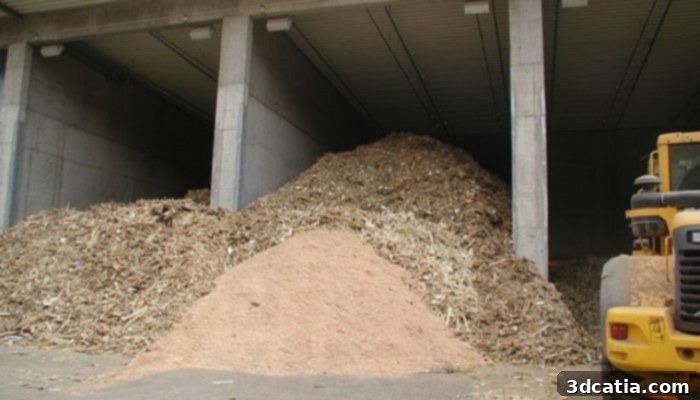
Wood waste, often considered unusable in traditional construction, represents a vast untapped resource that this project aims to transform into valuable building material (photo credits: Tetris L, CC BY 3.0, via Wikimedia Commons)
The innovative approach taken by the U of I team represents a significant departure from existing construction 3D printing methods, tackling the sustainability challenge head-on. As part of this transformative project, researchers are developing an advanced 3D printing technology that shares conceptual similarities with binder jetting, but with a crucial bio-based twist. Instead of using traditional powdered materials, their process will ingeniously combine a specialized binding agent with wood fibers that are typically considered waste by the lumber market. This includes materials like sawdust from sawmills, wood chips, and other fibrous byproducts from wood processing plants that would otherwise be discarded or incinerated. This choice of raw material offers a dual benefit: it converts a prevalent waste product into a valuable resource, and it introduces a renewable, biodegradable component into the construction material pipeline. Consequently, this project distinguishes itself not only through the revolutionary materials it employs but also through its unique method. While most contemporary construction 3D printing relies on extrusion technologies that often involve high temperatures and energy consumption, this binder-based approach for wood fibers promises a more energy-efficient and fundamentally greener manufacturing process, paving the way for truly sustainable building practices that leverage abundant, locally sourced waste materials.
This multi-year 3D-printing technology project is poised to deliver a profoundly positive impact, particularly on Idaho’s rapidly expanding construction industry, by directly addressing the pervasive issue of waste generation within the sector. The sheer scale of waste produced by the construction industry globally is staggering; according to the U.S. Energy Information Administration, this industry alone accounts for a colossal 60% of all global waste. This statistic underscores the immense potential for genuinely sustainable building methods to significantly mitigate climate change and promote a circular economy. The U of I’s initiative offers a powerful model for converting an economic burden – wood waste – into a valuable asset. Assistant Professor Michael Maughan, the esteemed leader of this pioneering project, eloquently summarized the project’s overarching vision: “We’re developing a new composite material, using completely bio-based resources on a truly large scale. With this technology, houses and commercial buildings can be made entirely differently. We can push past climate change, mitigate impact on our environment and make better use of the natural resources we have.” This statement encapsulates the project’s ambition to create a paradigm shift in construction, moving towards a future where building is synonymous with environmental stewardship and resource efficiency. The economic benefits for Idaho are also substantial, potentially leading to new industries, job creation, and a stronger, more resilient local economy built on sustainable principles. By demonstrating a viable, scalable method for bio-based construction, the U of I project could serve as a blueprint for regions worldwide looking to reduce waste, embrace green technologies, and build a more sustainable future.
The vision articulated by Professor Maughan extends beyond mere material substitution; it speaks to a fundamental reimagining of construction itself. Utilizing wood waste on a “truly large scale” implies a future where entire communities could be built with locally sourced, renewable materials, drastically reducing transportation costs and the carbon footprint associated with conventional building supplies. This technology holds the promise of revolutionizing not just the materials used, but also the design flexibility and speed of construction. Imagine custom-designed homes and commercial spaces that are not only structurally sound and aesthetically pleasing but also inherently sustainable, contributing positively to their environment throughout their lifecycle. This advancement could unlock new possibilities for rapid deployment of housing in areas affected by natural disasters, or for creating affordable, eco-friendly homes for growing populations. By turning waste into a high-performance building block, the U of I team is not just developing a new product; they are laying the groundwork for an entirely new philosophy of building – one that prioritizes ecological balance, resource preservation, and innovative engineering to meet the challenges of climate change head-on. This project embodies a hopeful future where human ingenuity and environmental responsibility converge to create resilient, sustainable communities.
What are your thoughts on the University of Idaho’s pioneering initiative to transform wood waste into a sustainable base for a new generation of 3D printing construction material? Do you believe this could be a game-changer for green building and waste reduction globally? We’d love to hear your insights! Share your comments below or engage with us on our social media platforms: LinkedIn, Facebook, and Twitter. For the very latest news and developments in the world of 3D printing, don’t forget to sign up for our free weekly Newsletter here, delivered straight to your inbox! You can also explore all our in-depth videos and content on our dedicated YouTube channel.
*Cover Photo Credits: Apstrinka, CC BY-SA 4.0 via Wikimedia Commons