
Particle3D: Pioneering Patient-Specific 3D Printed Bone Implants for Natural Regeneration
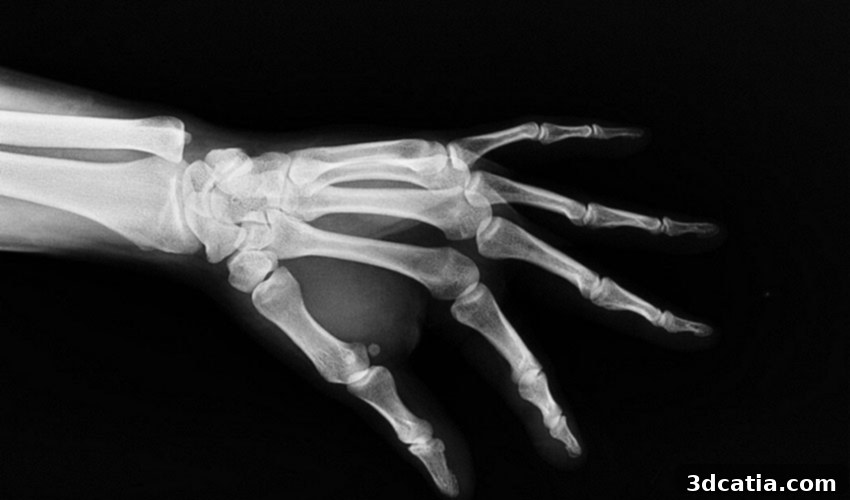
The landscape of medical technology is constantly evolving, driven by innovations that promise more effective and personalized patient care. At the forefront of this revolution is Particle3D, a Danish company founded in 2014, which has made significant strides in the development of groundbreaking 3D printed bone implants. Unlike conventional solutions, Particle3D utilizes a proprietary technology to create implants that are meticulously tailored to a patient’s unique anatomy. What sets these implants apart is their remarkable design: they are not only porous but also degradable, engineered to seamlessly fuse with the patient’s existing skeleton before gradually dissolving and remodeling into natural, living bone tissue. This innovative approach represents a paradigm shift in reconstructive surgery, moving beyond simple replacements towards true biological integration and regeneration.
Bone tissue reconstruction is a critical medical necessity, impacting millions of lives globally each year. Patients requiring such interventions range from those born with congenital bone defects, individuals who have suffered traumatic accidents, to cancer patients undergoing tumor removal that necessitates bone replacement. For decades, traditional methods for addressing these needs have presented various challenges, including limited customization, potential for rejection, and often, less than ideal long-term integration. The advent of additive manufacturing, commonly known as 3D printing, has ignited fervent research and development efforts across the medical field, aiming to overcome these hurdles and deliver more viable, patient-centric solutions.
Numerous attempts have been made within the world of additive manufacturing to develop effective bone regeneration solutions. For instance, a notable team of researchers at the University of Arizona explored combining 3D printing techniques with adult stem cells to engineer biomimetic scaffolds capable of treating complex fractures. While these efforts highlight the immense potential of 3D printing in regenerative medicine, Particle3D’s approach is distinct. The company employs a sophisticated bioink, meticulously formulated from tricalcium phosphate (TCP) particles combined with fatty acids. This particular blend is not arbitrary; TCP is renowned for its osteoconductive properties, meaning it actively stimulates natural bone growth, providing an ideal scaffold for new tissue to form. The integration of fatty acids further refines the bioink, enhancing its printability and biocompatibility, making it a uniquely effective material for advanced orthopedic applications.
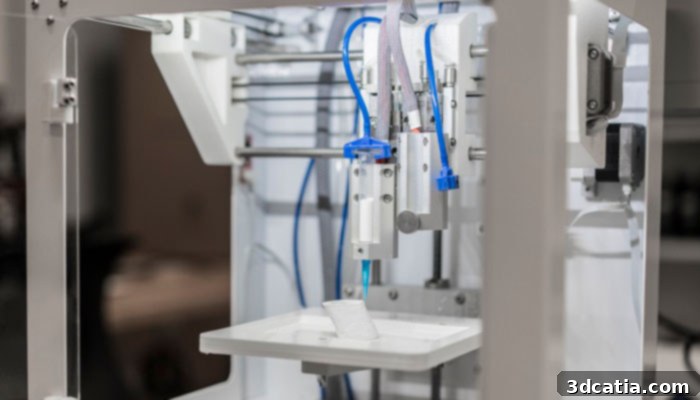
Image via Particle3D
The innovation from Particle3D lies not just in the material, but crucially, in the method of fabrication. The Danish company explains that while tricalcium phosphate (TCP) is frequently employed in similar medical contexts, traditional implants made from this material are typically crafted manually from solid blocks. This manual, solid block approach inherently limits the usefulness and precision of the implants. Such conventional processes struggle to achieve the perfect adaptation required for a patient’s unique anatomical structure, often resulting in suboptimal fit, increased surgical complexity, and potentially longer recovery times. Particle3D’s groundbreaking solution directly addresses these limitations.
Particle3D’s process begins with high-resolution scans of the patient’s bones, such as CT or MRI data. This detailed anatomical information is then fed into sophisticated CAD (Computer-Aided Design) software, where a precise 3D model of the required implant is generated. The design is meticulously adjusted and optimized for surgical implantation, ensuring an exact fit and seamless integration with the patient’s existing bone structure. This digital workflow allows for the creation of truly tailor-made, patient-specific implants that would be impossible to achieve through manual methods. Once the digital design is finalized, Particle3D leverages its proprietary additive manufacturing technology for the production process, fabricating the complex porous structures with unparalleled accuracy. The finished implant is then dispatched to the hospital, where medical professionals undertake the surgical insertion, confident in the precision and efficacy of the custom-designed device.
As clearly demonstrated, Particle3D’s proprietary technology is the linchpin that transforms conventional TCP into an advanced, porous, and degradable medical device rather than just another implant. The company elaborates on their website: “Particle3D has developed a technology to reconstruct the patient’s exact anatomy with 3D printed patient-fitted implants with bone-like porosity. The implants are made from natural biomaterials which degrade over time and remodel into real living bone tissue.” This statement encapsulates the core value proposition: not merely filling a void, but fostering genuine biological repair. The “bone-like porosity” is paramount, as it mimics the natural architecture of cancellous bone, facilitating vascularization and the infiltration of osteogenic cells. This intricate network of pores allows blood vessels, nutrients, and cells to penetrate the implant, which is crucial for successful bone ingrowth and integration. As the patient’s natural bone tissue begins to regenerate and grow into the porous scaffold, the implant itself gradually degrades, leaving behind healthy, host bone. This process minimizes the risk of long-term complications associated with permanent foreign bodies and offers a more natural, robust outcome for patients.
The validation of Particle3D’s fabrication method and unique bone material is a cornerstone of its credibility and potential for widespread adoption. Extensive studies and rigorous tests conducted by researchers worldwide have confirmed the safety, efficacy, and biocompatibility of these 3D printed implants. This global validation underscores the scientific robustness of Particle3D’s technology, paving the way for regulatory approvals and clinical applications on a broader scale. Such validation is vital in the medical device industry, assuring both healthcare providers and patients of the reliability and performance of these cutting-edge implants. The meticulous testing ensures that the material properties, degradation rates, and osteoinductive capabilities meet the highest clinical standards, promising transformative outcomes in orthopedic surgery.
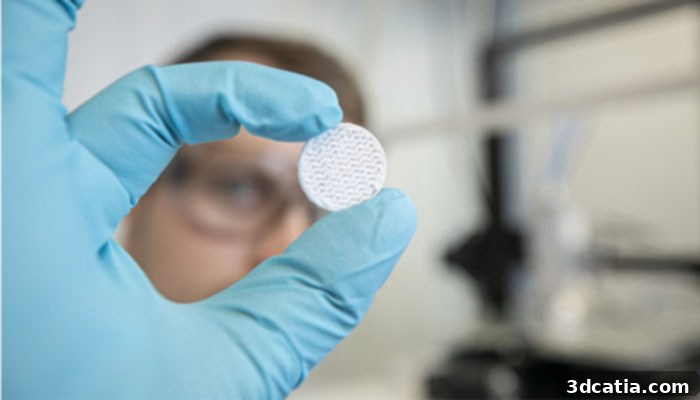
Image via Particle3D
Looking ahead, Particle3D envisions an even more advanced future for its implants. The company has articulated ambitious plans for these devices to serve as intelligent delivery systems for various additives, thereby significantly expanding their therapeutic capabilities. This includes the potential to release growth factors, which can further accelerate bone healing and regeneration, antibiotics to prevent or treat post-surgical infections, and even chemotherapy agents for localized cancer treatment directly within the bone defect. This vision represents a profound leap towards truly “smart” implants that not only provide structural support but also actively participate in the patient’s recovery and long-term health. The ability to deliver targeted therapeutics locally could revolutionize treatment protocols, reducing systemic side effects and enhancing treatment efficacy, particularly in complex cases involving infection or oncology.
This exciting trajectory for tailor-made medicine is a powerful reminder of the accelerating pace of advancements within the biomedical sector, particularly through the integration of additive manufacturing. Innovations like those from Particle3D underscore a growing trend towards personalized healthcare solutions that move beyond one-size-fits-all approaches. The meticulous customization, bio-integrative properties, and future capabilities for drug delivery position Particle3D’s implants at the cutting edge of orthopedic and regenerative medicine. It appears to be only a question of time before these highly sophisticated solutions are implemented on a wider scale, transforming patient care globally. As research continues to validate and refine these technologies, the prospect of entirely natural bone regeneration, facilitated by intelligent and degradable implants, becomes an increasingly tangible reality. You can find more comprehensive information about their pioneering work and vision HERE.
What are your thoughts on these innovative 3D printed bone implants and their potential to revolutionize regenerative medicine? We invite you to share your insights and opinions in a comment below, or join the conversation on our Facebook and Twitter pages! Don’t miss out on the latest advancements and breaking news in the world of 3D printing; sign up for our free weekly Newsletter to receive all the crucial updates directly in your inbox.