
Revolutionizing Bone Repair: Fraunhofer’s 3D Printed Implants with Plasma Technology for Enhanced Regeneration
The landscape of medical technology is constantly evolving, with additive manufacturing and medicine forming an increasingly robust alliance. This powerful synergy has paved the way for groundbreaking innovations, particularly in the field of bioprinting and regenerative medicine. In a significant leap forward, researchers at the esteemed German Fraunhofer Institute have unveiled a novel technique designed to enhance the efficacy of 3D printed bone implants. This pioneering method involves the strategic injection of plasma directly into the implant structure. The core benefit of this approach lies in its ability to actively promote cell growth, both internally within the implant and externally around it, thereby facilitating the natural and accelerated recovery of damaged bone tissue. This development marks a pivotal moment, promising more effective and personalized solutions for patients in need of advanced orthopedic interventions.
The integration of 3D printing into healthcare has already demonstrated immense potential across various applications. For instance, institutions like the University of Arizona are actively engaged in leveraging 3D printing to develop superior treatments for fractures. Their research, which combines the regenerative power of stem cells with advanced 3D technologies, seeks to uncover more potent and enduring strategies for healing severe injuries. Building on this momentum, the German researchers at Fraunhofer have turned their attention to the remarkable properties of plasma, integrating it with additive manufacturing to address the complex challenge of healing defective bones. Their work underscores a growing trend in medical science: harnessing the precision and customization capabilities of 3D printing alongside biological stimuli to engineer more effective restorative treatments. This focus on personalized medicine through advanced manufacturing holds the promise of transforming patient outcomes for a wide range of bone-related conditions.
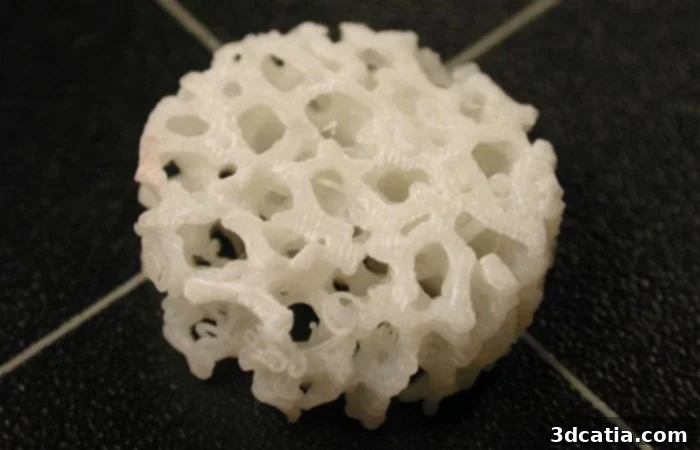
Illustration of a scaffolding structure, often used in 3D printed bone implants
Innovating Bone Regeneration: The Fraunhofer Method for Developing 3D Printed Implants
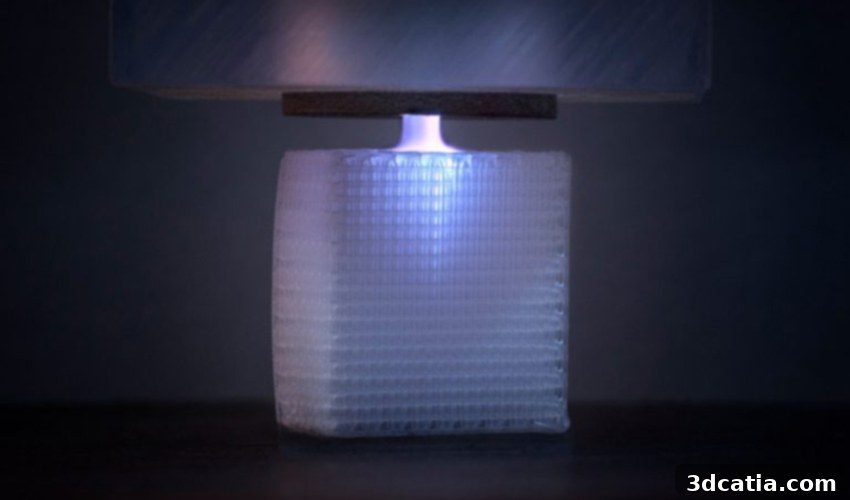
The development of these advanced 3D printed bone implants by the Fraunhofer Institute involves a sophisticated and precisely controlled manufacturing process. At its core, the technique utilizes a cold plasma jet which is meticulously injected between successive layers of a specialized copolymer material. This methodical application gradually builds the intricate structure of the implant, which functions as a biodegradable scaffold. The ingenious design ensures that this scaffold will progressively dissolve within the body over time, leaving behind newly regenerated natural bone tissue. The role of the plasma jet extends beyond mere structural formation; it also facilitates the precise incorporation of aminopenicillins. These are a class of antibiotics specifically chosen for their excellent bone diffusion properties, meaning they can effectively spread throughout the bone matrix. Once integrated, these aminopenicillins intermix with the 3D printed scaffold, creating an optimal biochemical environment that actively encourages bone cells to adhere, proliferate, and eventually integrate into the new structure. This dual action of providing structural support and biochemical signaling is critical for successful bone regeneration.
A significant advantage of this novel approach is the ability to mold the implant directly to the precise contours of the patient’s existing bone structure. This eliminates the need for any harsh chemical treatments, thereby preserving the implant’s stability and biocompatibility within the body. The design of each implant is inherently personalized, ensuring a perfect fit tailored to the unique anatomical requirements of every individual patient. This bespoke manufacturing process significantly enhances the potential for successful integration and reduces the risk of complications associated with ill-fitting standard implants. Dr. Jochen Borris, Head of the Life Science and Ecology business unit at Fraunhofer IST, articulated the overarching vision: “Our goal is for the bone cells to grow into the synthetic structure as quickly as possible and finally replacing the implant which is broken down gradually by the body’s own enzymes.” This statement highlights the ultimate aim of regenerative medicine – not just to repair, but to encourage the body’s intrinsic healing mechanisms to fully restore function, making the synthetic implant a temporary but crucial catalyst for natural recovery.
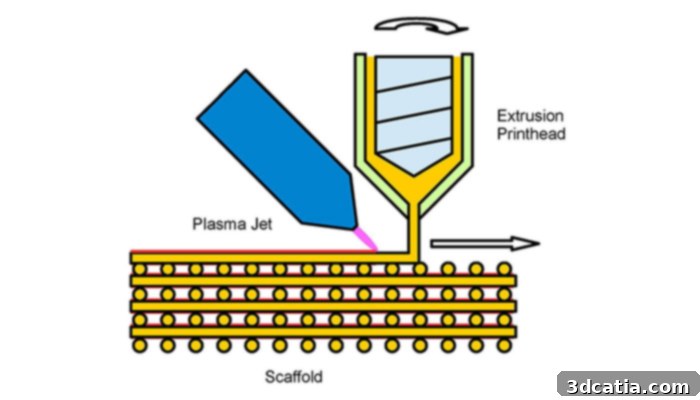
Visualizing the manufacturing technique for custom bone implants
Beyond the initial placement, this innovative technology offers clinicians unprecedented control over the properties of the implanted material. Doctors gain the capability to precisely control the density and internal filling of the 3D printed media. This level of customization is profoundly important because natural bone is not homogenous; it comprises areas of varying density and strength, such as the dense cortical bone and the porous cancellous bone. By strategically sealing certain areas of the implant, greater stability can be imparted, mimicking the load-bearing characteristics of natural bone. Dr. Thomas Neubert, Project Manager for the EU at Fraunhofer IST, further emphasized this breakthrough, stating: “Like natural bones, implants can now have areas with different strengths.” This capability allows for the creation of implants that are not only anatomically precise but also biomechanically optimized, ensuring that areas requiring more rigidity for weight bearing are robust, while those needing more porosity for vascularization and cell infiltration are appropriately designed. Such biomimetic design significantly enhances the chances of successful osseointegration and long-term functionality of the bone implant, representing a major advancement in orthopedic surgery.
Charting the Future: Next Steps for Plasma-Enhanced 3D Printed Bone Implants
While the scientific community and medical practitioners are highly optimistic about these developments, the project, according to the Fraunhofer Institute, is currently in an active and critical development phase. This pioneering technique is still undergoing rigorous laboratory testing and refinement to ensure its safety, efficacy, and scalability. The immediate next step involves a comprehensive evolution of the technique itself, alongside a thorough exploration of its diverse application uses. This includes optimizing the material properties, refining the plasma injection process, and evaluating different copolymer compositions to maximize bone cell adhesion and regeneration. Dr. Borris reiterated the profound potential of this research, explaining: “The innovative technique offers a lot of potential for adapting bone implants very precisely to the individual needs of patients. With our method, we’re able to control the shape, porosity, mechanical stability and biomechanical characteristics well and vary them within the implants. This means that we can produce areas with different strengths or porosities, which can also be coated with various functional groups.” This vision for precise control over an implant’s micro- and macro-architecture is what makes this technology so transformative, allowing for unparalleled levels of personalization and functional adaptation for each unique patient requirement.
This innovative method holds significant promise for treating severe fractures and other complex bone conditions
The medical professionals spearheading this groundbreaking development have highlighted that the plasma-enhanced 3D printing technique holds particular promise for patients suffering from complex medical conditions, such as cancer-related bone defects or severe, non-healing fractures. For cancer patients, where extensive bone resections might be necessary, this method could provide custom-fit implants that promote rapid healing and improve quality of life. Similarly, for serious fractures that fail to heal properly, known as non-unions, these personalized and regenerative implants could offer a vital pathway to recovery. The ultimate goal driving this research is to enable doctors to develop and deploy highly personalized 3D printed bone implants for every patient who requires them, moving away from a ‘one-size-fits-all’ approach to truly individualized medicine. To accelerate the transition from laboratory success to clinical application, the project is actively seeking industrial partners. This crucial step suggests that while the scientific foundations are strong, there are still a few years of development, regulatory approval processes, and large-scale manufacturing challenges to overcome before these advanced implants become a commonplace sight in hospitals and operating rooms globally. For those interested in delving deeper into the technical specifics and ongoing progress, more detailed information can be found in the official press release HERE.
We are eager to hear your thoughts on this revolutionary method of manufacturing 3D printed bone implants. How do you foresee this technology impacting the future of orthopedic surgery and patient care? Please share your insights and opinions in a comment below, or join the conversation on our Facebook and Twitter pages! Don’t forget to sign up for our free weekly Newsletter to receive all the latest news, breakthroughs, and updates in the dynamic world of 3D printing delivered directly to your inbox!