
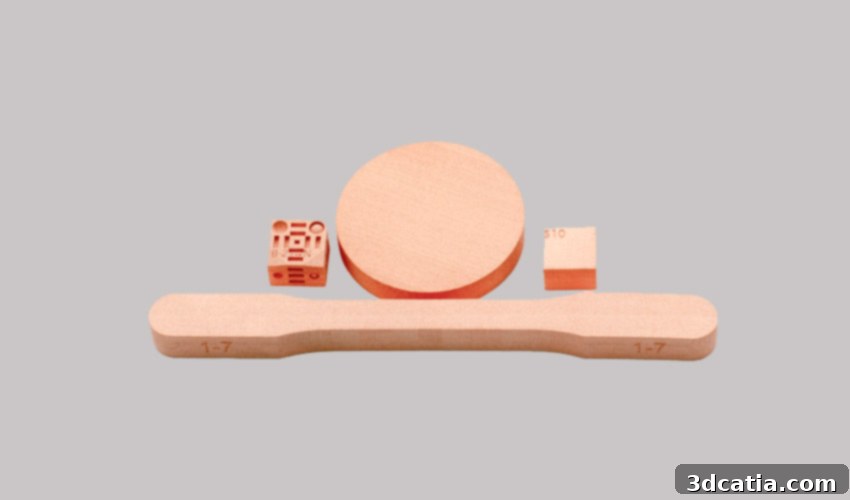
Digital Metal Pioneers Pure Copper 3D Printing with Binder Jetting: A Game Changer for High-Performance Applications
Digital Metal, a distinguished subsidiary of the renowned Swedish metal powder specialist Höganäs AB, stands at the forefront of industrial metal 3D printing. The company specializes in advanced systems that leverage a sophisticated powder binding, or binder jetting, process. In a significant industry announcement, Digital Metal has expanded its material portfolio for the acclaimed DM P2500 system by introducing pure copper. This launch marks a pivotal moment, positioning Digital Metal among a select group of innovators capable of additively manufacturing this notoriously challenging metal.
The newly unveiled pure copper powder is meticulously engineered to cater to demanding industrial applications that necessitate exceptional thermal and electrical conductivity. Key areas set to benefit profoundly include the manufacturing of high-efficiency heat exchangers, intricate engine components, and advanced electrical systems. Beyond pure copper, Digital Metal offers a comprehensive suite of copper alloys, further enriching its material offerings. These new copper materials seamlessly integrate with the company’s existing high-performance metals, which include robust 316L and 17-4PH stainless steels, the durable DM D2 tool steel, and the lightweight yet strong titanium Ti6Al4V. This diverse material range underscores Digital Metal’s commitment to providing versatile solutions for complex industrial challenges across various sectors.
The Growing Demand for 3D Printed Copper in Additive Manufacturing
The demand for copper in additive manufacturing has seen a dramatic surge, driven by its unique properties. Copper’s outstanding electrical and thermal conductivity make it indispensable for numerous high-performance applications, from advanced electronics and electric vehicle components to sophisticated thermal management systems. Recognizing this escalating need, several key players in the additive manufacturing space have dedicated considerable resources to developing copper-based materials and processes.
Recently, we’ve observed prominent companies such as Desktop Metal and Markforged making strides in developing copper-based materials, primarily for extrusion-based additive manufacturing processes. These methods often involve mixing fine copper particles with a polymeric binder, which is then extruded and subsequently debound and sintered to produce dense metal parts. This approach has opened doors for many industrial users to design and manufacture components for critical energy, automotive, and electrical applications. The market potential is immense, with a study conducted by SmarTech Analysis projecting that additive manufacturing is poised to consume a staggering 1.4 million kilograms of copper powder annually by 2029. This forecast highlights a real opportunity for manufacturers to innovate and meet the escalating industrial requirements for high-performance copper components.
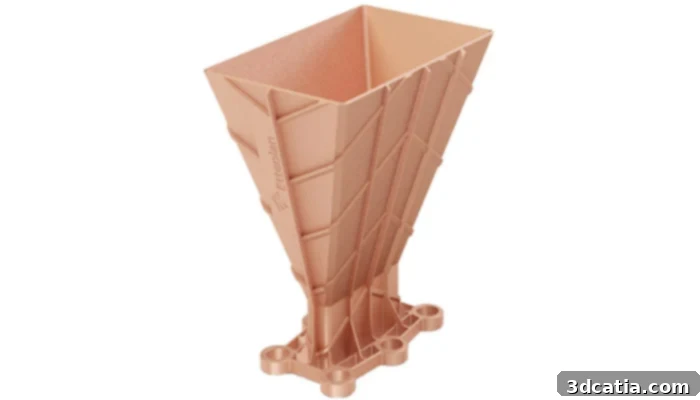
A 3D printed bullhorn antenna with the new pure copper (photo credits: Digital Metal)
Overcoming Challenges: Digital Metal’s Binder Jetting for Pure Copper
The 3D printing of pure copper has historically presented significant challenges, particularly when using laser-based machines, such as those employing Direct Metal Laser Sintering (DMLS) or Laser Powder Bed Fusion (LPBF). The fundamental difficulty lies in copper’s inherent material properties: its exceptionally high reflectivity and excellent thermal conductivity. When a high-power laser beam strikes the surface of copper powder, a substantial portion of the laser energy is reflected away rather than absorbed. This means that a large part of the energy required to melt and fuse the powder particles is effectively wasted, making it incredibly difficult to achieve consistent and complete melting. Furthermore, copper’s high thermal conductivity means that any heat absorbed is rapidly dissipated throughout the powder bed, preventing localized melting and leading to poor part quality, porosity, and cracking.
In contrast, Digital Metal’s binder jetting technology offers an elegant and effective solution to these long-standing challenges. The key advantage of binder jetting is its fundamental operational principle: it does not use a laser for the initial layer-by-layer part formation. Instead, a liquid binding agent is selectively jetted onto a bed of metal powder, bonding the particles together to form a “green part.” This green part then undergoes a separate sintering process in a furnace at high temperatures, where the binder is removed, and the metal particles coalesce into a dense, solid component. Because no laser is involved in the initial printing phase, the issues of laser reflectivity and rapid heat dissipation are entirely circumvented. This makes binder jetting an ideal alternative for materials like copper, enabling the production of high-density, pure copper parts with excellent material properties. Digital Metal thus meets a critical industrial need, especially for applications demanding superior thermal and electrical conductivity, where traditional laser-based methods fall short.
Strategic Importance and Industry Impact
Christian Lönne, CEO of Digital Metal, eloquently articulated the significance of this breakthrough: “Printing with pure copper using Digital Metal’s binder jetting technology is one of the most anticipated material launches ever, and totally new within binder jetting. Copper has been high up on our customers’ wish list and timing is perfect with the demand for copper applications soaring in fast growth areas such as e-mobility and heat conductivity. We have been developing the process for some time internally, but I would really like to emphasize the value of the excellent cooperation with key customers in our fast-growing Digital Metal User Group.”
Lönne’s statement underscores several critical points. Firstly, the introduction of pure copper through binder jetting is not merely an incremental improvement but a groundbreaking advancement, fulfilling a long-standing industry desire. The increasing global focus on sustainability and efficiency has propelled sectors like e-mobility (electric vehicles, charging infrastructure) and advanced thermal management to the forefront. These industries are heavily reliant on highly conductive materials, making pure copper indispensable. Digital Metal’s ability to provide this material via additive manufacturing means complex, optimized copper components can now be produced with unprecedented design freedom and performance.
Secondly, the emphasis on collaboration with the Digital Metal User Group highlights a customer-centric development approach. By actively engaging with key industry partners and understanding their specific needs and challenges, Digital Metal has ensured that its pure copper solution is not just technically feasible but also commercially viable and directly addresses real-world industrial demands. This collaborative spirit fosters innovation and accelerates the adoption of new additive manufacturing capabilities across diverse applications.
Transformative Applications: Bullhorn Antenna and Heat Sink
To demonstrate the immediate and tangible benefits of their pure copper binder jetting technology, Digital Metal showcased two compelling application examples: a bullhorn antenna and a high-performance heat sink. These examples perfectly illustrate how additive manufacturing with pure copper can revolutionize product design and functionality.
The 3D Printed Bullhorn Antenna
For the bullhorn antenna, a crucial component in telecommunications and radar systems, the primary advantage of additive manufacturing lies in its unparalleled design freedom. Traditional manufacturing methods impose significant limitations on geometric complexity, often restricting the ability to create highly optimized structures. With Digital Metal’s pure copper binder jetting, engineers were able to produce an antenna featuring incredibly thin walls and intricate internal ribs. This level of detail is almost impossible to achieve through conventional means without incurring prohibitive costs or compromising structural integrity. By utilizing pure copper and an optimized design, the manufacturer was able to drastically reduce the total weight of the part, which is a critical factor in applications where every gram counts, such as aerospace and satellite communications. Concurrently, the optimized geometry, enabled by additive manufacturing, allowed for a significant boost in the antenna’s frequency performance, leading to more efficient and powerful signal transmission. This dual benefit of weight reduction and enhanced functionality showcases the transformative potential of 3D printed pure copper for high-frequency electronics.
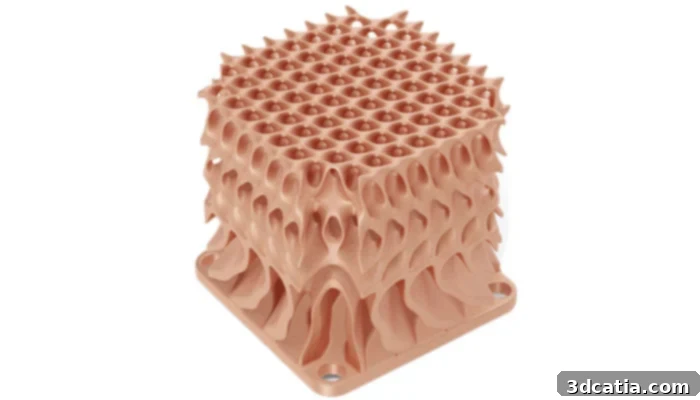
The heat sink (photo credits: Digital Metal)
The Advanced 3D Printed Heat Sink
The heat sink application further exemplifies the power of binder jetting pure copper for thermal management. Heat sinks are vital components for dissipating excess heat from electronic devices, ensuring their optimal performance and longevity. The challenge lies in maximizing the surface area for heat exchange while minimizing volume and mass. Digital Metal’s pure copper solution enabled the creation of a heat sink with a highly complex, internal geometry that significantly enhanced its heat transfer properties. The manufacturer elaborated on this sophisticated design: “In this heat sink, the baseline TPMS structure is modified in three dimensions to get thicker walls and wider air passages near the base and thin, closely spaced walls at the top, which distributes heat optimally and allows strong natural convective flow.” TPMS, or “Triply Periodic Minimal Surface” structures, are advanced lattice geometries known for their exceptional surface area-to-volume ratio and superior fluid flow characteristics. By tailoring this intricate structure – making walls thicker and passages wider at the base where heat input is highest, and thinner, denser at the top for maximum dissipation – Digital Metal achieved an optimal heat distribution profile. This design facilitates strong natural convective flow, meaning hot air rises efficiently and is replaced by cooler air, leading to highly effective passive cooling. Such a complex and functionally graded design is virtually impossible to produce with traditional subtractive or formative manufacturing techniques, underscoring the revolutionary potential of additive manufacturing for advanced thermal solutions in industries like automotive electronics, data centers, and power electronics.
For more in-depth technical details and further insights into this groundbreaking development, interested parties can find additional information HERE.
Conclusion: A New Era for Copper in Additive Manufacturing
Digital Metal’s introduction of pure copper for its DM P2500 binder jetting system represents a monumental leap forward for additive manufacturing. By effectively overcoming the inherent challenges associated with 3D printing copper, the company has unlocked immense potential for industries requiring materials with exceptional thermal and electrical conductivity. This innovation empowers engineers and designers to create complex, optimized components previously deemed impossible to manufacture, driving advancements in critical sectors such as e-mobility, advanced electronics, and thermal management. The ability to produce high-density, pure copper parts with intricate geometries promises to accelerate product development, improve performance, and open new avenues for innovation. As the additive manufacturing market for copper continues its projected rapid growth, Digital Metal is well-positioned at the forefront, shaping the future of high-performance metal 3D printing.
What are your thoughts on this transformative copper powder developed by Digital Metal? We invite you to share your insights and engage in the discussion! Let us know in a comment below or connect with us on our Facebook, Twitter and LinkedIn pages! Don’t miss out on the latest advancements in 3D printing – sign up for our free weekly Newsletter here and get the most recent news delivered straight to your inbox!