
Empowering the Future Workforce: The Indispensable Role of 3D Printing and Digital Manufacturing in Higher Education
The rapid evolution of technology continues to reshape industries worldwide, creating an urgent demand for a workforce equipped with advanced digital skills. A groundbreaking study commissioned by Ricoh Europe unequivocally highlights this imperative, revealing that a staggering nine out of ten higher education professionals consider skills developed through digital manufacturing and 3D printing technologies to be absolutely vital for graduates entering the modern labor market. This comprehensive survey engaged 3,150 professionals globally, delving deep into the integration of 3D technologies within student curricula and their profound influence on future employability. The findings serve as a compelling call to action for educational institutions to prioritize these transformative tools, ensuring that today’s students are well-prepared for the challenges and opportunities of tomorrow’s industrial landscape.
The Vital Link Between Academia and Industry: Bridging the Skills Gap
While previous research, such as a study by Joblift, has clearly demonstrated that additive manufacturing is a burgeoning recruiting sector with significant growth potential, the insights from Ricoh Europe’s study further solidify the critical role that higher education plays in nurturing this talent pipeline. It is becoming increasingly evident that for future entrants into the labor market to thrive, they must be proactively trained to meet the specific requirements of industries that are rapidly adopting advanced manufacturing techniques. This necessitates a strategic incorporation of 3D printing and digital fabrication into educational programs, transforming them from niche subjects into fundamental components of a well-rounded modern curriculum. By proactively embedding these technologies, educational institutions can ensure that graduates possess not only theoretical knowledge but also the practical, hands-on skills and know-how that are indispensable for success in an increasingly digitized global economy. This proactive approach helps to bridge the ever-widening gap between academic preparation and industry demands, fostering a seamless transition for students from the classroom to the professional world.
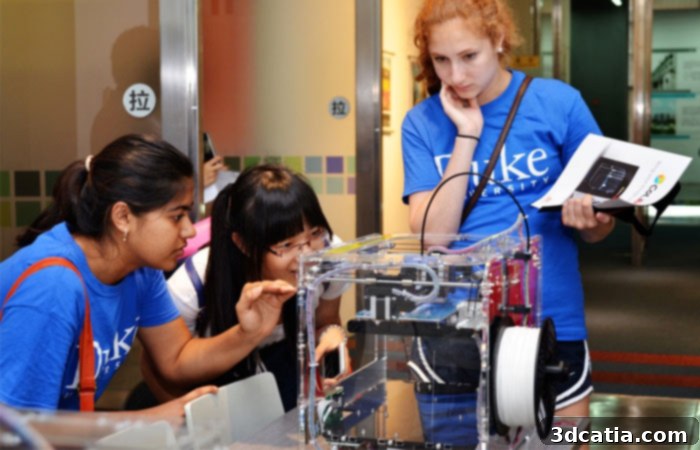
Students from Duke University discover 3D printing
Key Findings from the Ricoh Europe Study: A Mandate for Digital Literacy
The Ricoh Europe study gathered perspectives from 3,150 participants, among whom 787 were distinguished leaders in education. Their collective insights underscore a profound consensus: 88% of these educational leaders emphatically highlighted the paramount importance of graduates possessing robust digital production skills upon completing their studies. This strong endorsement reflects an awareness of the fundamental shift occurring in manufacturing and design processes across virtually all sectors. Furthermore, an impressive 65% of respondents affirmed that 3D printing is an increasingly significant and integral component of STEM (Science, Technology, Engineering, and Mathematics) education. This perception is not merely theoretical but is deeply rooted in practical industry needs. The finding is particularly reinforced in high-growth sectors such as medicine and automotive, where the demand for additive manufacturing capabilities is soaring. In medicine, 3D printing facilitates the creation of custom prosthetics, surgical guides, and even bioprinted tissues, demanding a new generation of professionals proficient in these techniques. Similarly, the automotive industry leverages 3D printing for rapid prototyping, lightweight component production, and complex tooling, driving a continuous need for engineers and designers adept in additive manufacturing processes. These statistics are not just numbers; they represent a clear mandate for educators to integrate these technologies more deeply into their curricula to ensure graduates are truly workforce-ready.
Leadership Insights: Cultivating Future-Ready Talent
Providing crucial context to these findings, David Mills, CEO of Ricoh Europe, articulated the pedagogical advantages of these advanced technologies: “Digital manufacturing and 3D printing offer the opportunity to illustrate complex concepts on a variety of topics.” This insight speaks to the transformative power of hands-on learning, where abstract theories can be brought to life through tangible, interactive models. For instance, students can visualize intricate anatomical structures, understand complex engineering designs, or prototype innovative product ideas, making learning more engaging and effective. Mills further emphasized the evolving nature of the professional landscape, stating, “As the way people and machines work together continues to evolve, the integration of technical capabilities into the learning process helps to ensure that the skills required of the future workforce become a second nature for today’s students.” This statement highlights the shift towards collaborative environments where human ingenuity interfaces with advanced automated systems. By embedding these technical capabilities early in the educational journey, institutions can cultivate a generation of professionals for whom operating advanced digital tools and understanding their implications is not an acquired skill but an intuitive, inherent ability. This early exposure and integration are paramount to fostering innovation and maintaining a competitive edge in a global economy increasingly driven by digital prowess.
Innovating Education: Attracting Students with Advanced 3D Technologies
Beyond preparing students for the workforce, the study further elucidates how many schools and universities are strategically leveraging the integration of 3D printing and digital manufacturing to attract prospective students. In an increasingly competitive educational landscape, institutions are seeking innovative ways to differentiate themselves and offer compelling value propositions. The study found that 66% of respondents believe that one of the most effective ways to attract students is by investing significantly in these advanced 3D technologies. This investment signals a forward-thinking approach, demonstrating a commitment to providing cutting-edge educational resources that align with future career opportunities. Furthermore, the appeal extends to enhancing the learning experience itself. A substantial 48% of respondents indicated that facilitating access to content and resources through customized course materials, often developed or enhanced with 3D models and interactive digital components, is a key draw. This personalized approach caters to diverse learning styles and makes complex subjects more accessible. Critically, 43% of participants highlighted the importance of providing students with flexible, on-demand 3D printing services, accessible from virtually anywhere. This level of accessibility empowers students to rapidly iterate designs, bring their creative ideas to fruition outside traditional lab hours, and integrate practical application seamlessly into their academic projects. Such provisions not only make education more practical and responsive to student needs but also position institutions at the forefront of technological integration in learning.
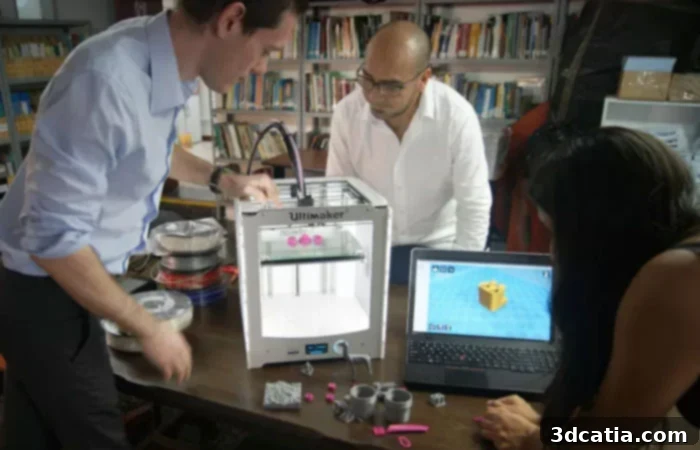
Students from De Montfort University in Leicester
Conclusion: Shaping the Workforce of Tomorrow
The findings from Ricoh Europe’s comprehensive study paint a clear picture: digital manufacturing and 3D printing are no longer emerging technologies but essential skills that must be deeply embedded within higher education curricula. The overwhelming consensus among education professionals underscores the critical role these technologies play in enhancing graduate employability and preparing students for the demands of a rapidly evolving global workforce. By investing in these advanced tools, offering flexible learning pathways, and providing on-demand access to resources, educational institutions can not only attract the brightest minds but also cultivate a generation of innovators and problem-solvers who are adept at leveraging cutting-edge technology. This proactive integration ensures that students are not merely observers of technological progress but active participants in shaping the future of industry and society. The future of work is digital, and the future of education must reflect this reality, equipping students with the “second nature” skills required to thrive in a world where human and machine collaboration defines success.
To delve deeper into these transformative insights, you can find the complete Ricoh Europe study here. In the interim, countless opportunities exist for individuals to enhance their skills in 3D printing, thanks to the varied training getting implemented in education globally. The journey towards a digitally proficient workforce is ongoing, and education stands at the forefront of this crucial transformation.
What are your thoughts on implementing 3D printing and digital manufacturing in education? How do you envision these technologies impacting the future workforce? Let us know in a comment below or on our Facebook and Twitter pages! And remember to sign up for our free weekly Newsletter to get all the latest news in 3D printing sent straight to your inbox!