
3D Printed Food: A Culinary Revolution for Dysphagia Patients and Personalized Nutrition
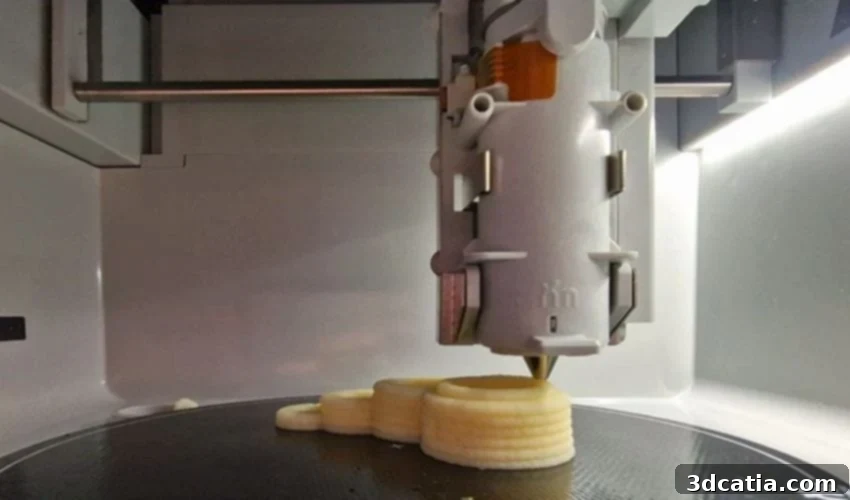
The landscape of food innovation has been dramatically reshaped by 3D printed food, moving beyond mere novelty to address critical dietary challenges. While companies like Steakholder Foods and Forma Foods have pioneered 3D printed meat and fish alternatives, and others have delved into custom chocolates and reconstituted fruits and vegetables, a particularly impactful mission has emerged from the University of West England (UWE) Bristol. An international team of researchers there embarked on a unique journey: to develop 3D printed meals specifically designed for individuals who experience difficulty swallowing, a condition known as dysphagia.
This groundbreaking initiative marks a significant leap forward, transforming the potential of additive manufacturing in the food sector. Instead of focusing on luxury or sustainable alternatives, UWE’s team channeled the power of 3D printing to tackle a pressing healthcare and quality-of-life issue. Their success in creating palatable, nutritious, and safe meals for dysphagia patients holds immense promise, offering a beacon of hope for an aging global population grappling with this challenging condition.
Addressing the Growing Challenge of Dysphagia
Dysphagia, the medical term for swallowing difficulties, is a complex condition that affects millions worldwide. It is particularly prevalent among the elderly, individuals recovering from strokes, those with neurological disorders like Parkinson’s disease or Alzheimer’s, head and neck cancer patients, and people with certain developmental disabilities. As global populations age, the incidence of dysphagia is steadily rising, posing a substantial and growing concern for healthcare systems and caregivers alike. People with dysphagia often struggle to safely swallow certain solid foods and liquids, and in severe cases, some cannot swallow at all.
The consequences of untreated or poorly managed dysphagia can be severe, ranging from malnutrition and dehydration to aspiration pneumonia, a life-threatening lung infection caused by food or liquid entering the airway. Beyond the physical dangers, dysphagia significantly impacts a person’s quality of life. Eating, a fundamental human pleasure and social activity, becomes a source of anxiety and frustration. Traditionally, managing dysphagia involves modifying food textures, typically by pureeing meals and thickening liquids. While these methods can help reduce choking hazards, they often result in bland, unappetizing, and visually unappealing food. This lack of nutritional variety and aesthetic appeal can lead to reduced food intake, further exacerbating malnutrition and contributing to social isolation and depression among patients.
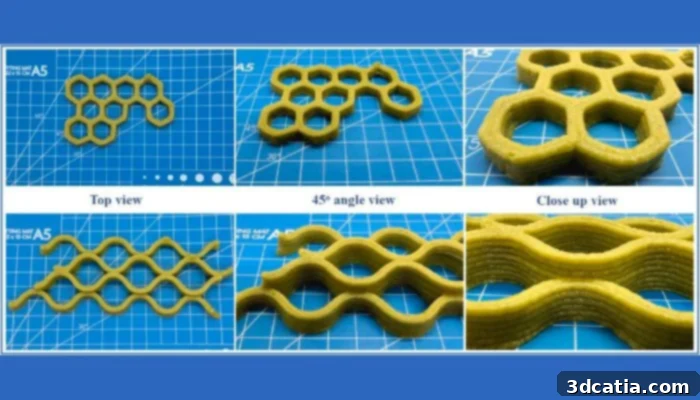
The 3D printed structure from different angles
UWE Bristol’s Pioneering 3D Printing Breakthrough
The UWE team, through diligent research and innovation, successfully developed a revolutionary approach to dysphagia-friendly food. They are the first to effectively utilize an extrusion-based 3D food printer to produce multi-ingredient, nutritionally balanced, and visually appealing meals that are不仅安全 to swallow but also easy to digest. This achievement is particularly noteworthy because creating complex meals with varying textures and nutrient profiles using 3D printing presents significant technical challenges, especially when aiming for precise consistency required for dysphagia diets. Most previous attempts at 3D printed food for dysphagia have been limited to single-ingredient or simplistic formulations.
The researchers meticulously selected and processed ingredients to ensure both safety and nutritional value. Their special meals were crafted using a blend of pureed garden peas, strained Greek yogurt, extra virgin olive oil, powdered organic mint leaves, and vegetable stock. This combination highlights a commitment to fresh, wholesome ingredients. A crucial aspect of their innovation involved extensive experimentation with novel combinations of food-grade thickeners and gelling agents. These agents were carefully chosen and calibrated to ensure that the printed meals possessed an appropriate texture and viscosity – soft enough to be easily swallowed without risk, yet firm enough to maintain their intricate printed shapes and provide a satisfying mouthfeel. This precise control over rheological properties is what differentiates their work and makes it genuinely groundbreaking for dysphagia management.
Enhanced Safety and Patient Control
Dr. Alexandros Stratakos, Associate Professor in Sustainable Agri-Food Production at UWE Bristol and the leader of this transformative research, underscored the paramount importance of safety in their innovation. He explained that “With our 3D printed food, there is significantly less risk of food particles sticking in the throat or the esophagus, which can be very problematic for people with dysphagia.” This reduction in aspiration risk is a game-changer, as it directly addresses one of the most dangerous complications of swallowing difficulties. Traditional pureed foods, while soft, can sometimes separate or become too sticky, still posing a risk.
Furthermore, Dr. Stratakos elaborated on the design’s benefits: “It requires less chewing and has a specially formulated structure which gives more control of the food to the person with dysphagia.” This enhanced control is critical. For individuals with impaired oral motor skills or reduced pharyngeal strength, the ability to manipulate food safely within the mouth and guide it down the throat without excessive effort can vastly improve their eating experience and reduce anxiety. The precise, consistent texture and integrity of the 3D printed structure provide a predictable and uniform bolus, making the swallowing process much more manageable and less stressful for the patient.
Prioritizing Taste, Nutrition, and Patient Well-being
While creating food that was demonstrably easy and safe to swallow was a primary objective, the UWE team recognized that true success lay in developing meals that also satisfied nutritional needs and offered a pleasant dining experience. To this end, they collaborated closely with a clinical nutritionist, ensuring that their 3D printed creations were not just functional but also holistically beneficial. This interdisciplinary approach ensured that the meals were fortified with essential vitamins, minerals, and macronutrients, addressing the common problem of malnutrition among dysphagia patients who often consume monotonous and nutritionally incomplete diets.
Dr. Stratakos highlighted this crucial differentiation: “Previous research on 3D printed food suitable for dysphagia has focused on meals with only one or a small number of ingredients and has paid less attention to the nutritional profile of the food. Our food product is the first that is suitable for people with dysphagia, but at the same time is nutritious, palatable and rich in calories.” The emphasis on palatability and visual appeal cannot be overstated. Food is not just fuel; it’s a source of pleasure, comfort, and social connection. By designing meals that look appealing and taste good, the UWE team aims to restore dignity and enjoyment to eating for dysphagia patients, combating the depression and social isolation often associated with restrictive diets.

Graphic explanation of the 3D printed food for dysphagia
Positive Reception and Future Vision in Healthcare
The practical application and potential impact of this technology are further amplified by its efficiency and positive public reception. The meals can be printed in various intricate and appealing shapes, adding a visual element often missing from traditional pureed diets, and are completed remarkably quickly, typically in around twenty minutes. This speed makes on-demand preparation feasible, reducing food waste and allowing for greater flexibility in meal planning.
Crucially, surveys conducted among UK-based dysphagia patients and their carers revealed an “overwhelmingly positive” response to the concept of 3D printed food. Respondents expressed a strong willingness to purchase these high-fiber and protein-rich meals if they were commercially available. This enthusiastic feedback underscores the significant unmet need for improved dysphagia solutions and the clear market demand for such innovative products. Dr. Stratakos envisions a future where food 3D printers are routinely introduced into care homes, hospitals, and even private residences, enabling food to be printed on-demand for patients. This would not only ensure freshness and personalized nutrition but also allow for a diverse menu, greatly enhancing the dietary options and overall quality of life for individuals with swallowing difficulties. Imagine a care facility where each resident could have a meal tailored to their exact dietary needs, texture preferences, and even cultural tastes, all printed freshly just before serving.
The Path Forward: Clinical Trials and Broad Impact
Building on their initial success, the UWE research team is actively pursuing new collaborations and grant applications to further advance their project. Their immediate goal is to secure the necessary funding to complete comprehensive clinical trials where the 3D printed meals can be rigorously tested with dysphagia patients in real-world settings. These trials will be critical in validating the long-term safety, efficacy, and nutritional benefits of the food, paving the way for regulatory approval and commercialization. The team’s confidence in their product is high; according to Dr. Stratakos, the researchers themselves have tasted the food and enthusiastically proclaim “it tastes great,” a simple yet powerful testament to its palatability.
If further developed and widely adopted, this innovation has the potential to make an extraordinary impact on the lives of people living with dysphagia globally. Dr. Stratakos succinctly summarized the urgency and importance of their work: “[Dysphagia] is a growing issue due to our aging population and will become a bigger healthcare burden both in the UK and internationally.” He emphasized that “This study highlights the importance of bringing together multidisciplinary expertise, in this case on food science, additive manufacturing and dietetics/nutrition, to develop novel solutions for real-world problems.” This collaborative spirit, merging cutting-edge technology with deep understanding of human health, is precisely what is needed to address complex societal challenges. This research exemplifies how intelligent application of 3D printing can move beyond industrial applications to genuinely improve human well-being and offer a more dignified and nutritious future for those most vulnerable.
To delve deeper into this transformative research and learn more about UWE Bristol’s pioneering efforts, you can read their official press release here.
What are your thoughts on this incredible innovation in 3D printed food for individuals with swallowing difficulties? We invite you to share your perspectives in a comment below or join the conversation on our Facebook and Twitter pages! Don’t forget to sign up for our free weekly Newsletter to receive all the latest news and advancements in 3D printing delivered straight to your inbox!
*All Photo Credits: The University of West England Bristol