
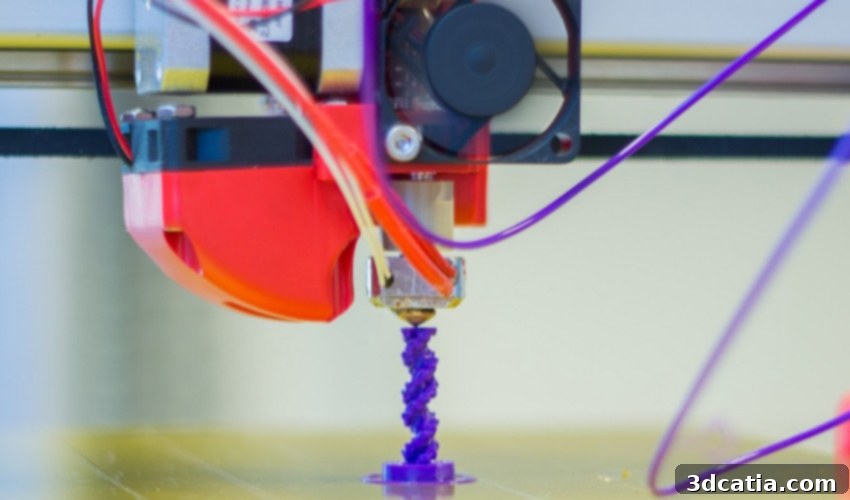
Understanding 3D Printer Emissions: Impact on Indoor Air Quality and Health Risks
The rapid adoption of 3D printing technology, moving from industrial settings to classrooms, offices, and even homes, has revolutionized manufacturing and personal creativity. However, as these innovative devices become more commonplace, a critical concern has emerged: the potential impact of 3D printer emissions on indoor air quality and, consequently, human health. While 3D printing has been around for over three decades, the unintended adverse effects on health have not always been thoroughly documented or widely understood. Recent years, driven by the increased ubiquity of these machines, have seen a surge in research aimed at characterizing these emissions and evaluating their potential toxicity.
Earlier studies, including a notable investigation from the Environmental Protection Agency (EPA), highlighted a significant gap in user awareness regarding the chemical compounds released during the 3D printing process. Many users, it turns out, were largely unaware of the presence of volatile organic compounds (VOCs) and ultrafine particles, or how various filament additives could influence the levels of these emissions. This lack of awareness underscores the urgent need for comprehensive research and readily accessible information for both hobbyists and professional users.
More recently, a new wave of studies has begun to comprehensively capture the effects of 3D printer emissions and identify crucial best practices to safeguard users in enclosed environments, such as offices, schools, and residential spaces. It’s important to remember that 3D printing encompasses various technologies, utilizing diverse materials like plastics, metals, and ceramics to construct objects. However, a vast majority of consumer-grade 3D printers, particularly those used in non-industrial settings, rely on plastic filaments during the material extrusion process. A groundbreaking study published on September 12th by researchers from the Georgia Institute of Technology meticulously examined the particles emitted from various types of plastic filament printing. They conducted several rigorous tests to gauge the direct impact of these emissions on respiratory cell cultures, forming a crucial part of a multi-year research initiative focused on characterizing particle emissions and assessing their potential for toxicity.
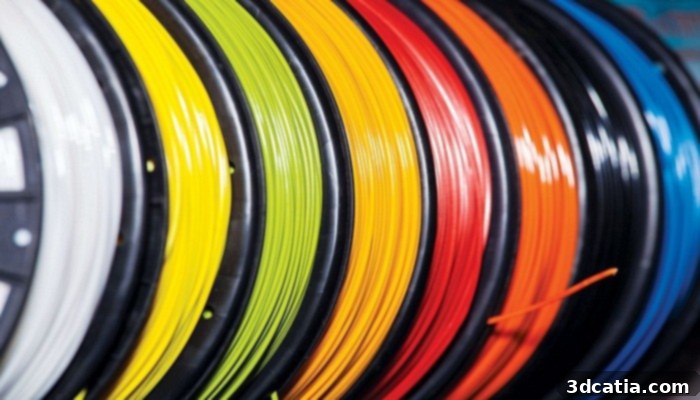
Many consumer-grade 3D printers use plastic filaments during material extrusion, contributing to indoor air pollution.
What is the Potential for Toxicity of Particles Emitted?
The Georgia Tech team’s findings provided critical insights into the nature of these emissions. A key discovery was the direct correlation between printing temperature and emission levels: the hotter the temperature required to melt the filament, the greater the quantity of particles and VOCs produced. This directly implies that ABS (Acrylonitrile Butadiene Styrene) filament, which necessitates a significantly higher melting temperature than PLA (Polylactic Acid) filament, consequently generated more emissions. However, the picture became more complex when researchers tested the direct impact on live cells. Despite lower overall emissions, PLA particles prompted a more pronounced toxic response at a cellular level.
Rodney Weber, who spearheaded the research, elaborated on these nuanced findings: “The toxicity tests showed that PLA particles were more toxic than the ABS particles on a per-particle comparison; but because the printers emitted so much more of the ABS, it’s the ABS emissions that end up being more of the concern.” This highlights that both the intrinsic toxicity of the particles and the sheer volume of emissions are crucial factors in assessing overall risk. Weber further added a sobering comparison: “Taken together, these tests indicate that exposure to these filament particles could over time be as toxic as the air in an urban environment polluted with vehicular or other emissions.” This statement underscores the seriousness of prolonged exposure, placing 3D printer emissions in a category comparable to common outdoor air pollutants.
Beyond the primary filament material, the team also discovered that the emitted particles possessed distinct chemical characteristics when compared to the raw filament itself. This divergence is often attributed to the intentional inclusion of various additives during the filament manufacturing process. Companies frequently incorporate small mass percentages of other compounds to achieve specific material characteristics, such as color, strength, flexibility, or UV resistance. These additives were shown to significantly influence the quantity and composition of emissions, particularly for ABS filaments. As Weber noted, “Because there can be great variability in the type and amount of additives added to ABS, a consumer may buy a certain ABS filament, and it could produce far more emissions than one from a different vendor.” This variability poses a challenge for consumers, as not all filaments are created equal in terms of their emission profiles. The study also critically examined how different environmental scenarios impact exposure levels. In a typical office or commercial building, where ventilation systems are often more robust, improved air exchange could substantially limit exposure. Conversely, in a standard residential setting, which often lacks specialized ventilation, the potential for exposure to harmful emissions could be considerably higher, raising concerns for home users and families.
Practical Measures for Safer 3D Printing
Given these findings, adopting preventative measures is paramount to mitigating the health risks associated with 3D printer emissions. Simple yet effective strategies can significantly reduce exposure to VOCs and ultrafine particles, ensuring a safer printing experience for everyone.
- Operating 3D printers only in well-ventilated areas: This is arguably the most crucial step. Adequate ventilation ensures that airborne particles and VOCs are removed from the immediate environment and replaced with fresh air. This can involve using local exhaust ventilation (like fume hoods or custom enclosures with exhaust fans directed outdoors), general room ventilation (ensuring good airflow with open windows and doors), or specialized air purification systems equipped with HEPA filters for particles and activated carbon filters for VOCs. Placing printers near windows or using external exhaust systems is highly recommended, especially for long print jobs or when using high-emitting materials like ABS.
- Setting the nozzle temperature at the lower end of the suggested temperature range for filament materials: Since emissions increase with higher temperatures, operating your printer at the lowest effective temperature within the filament manufacturer’s recommended range can significantly reduce the thermal degradation of the plastic, thereby minimizing the release of harmful compounds. Always refer to the filament’s specifications and experiment to find the optimal temperature that ensures good print quality while minimizing heat.
- Standing away from operating machines: While perhaps seemingly obvious, maintaining a reasonable distance from an active 3D printer can reduce personal exposure to the immediate plume of emissions. Ultrafine particles and VOCs tend to be most concentrated directly around the nozzle and print bed. Minimizing time spent in close proximity to the machine during operation, especially when the print starts and finishes, is a simple yet effective way to lower inhalation risk.
- Using machines and filaments that have been tested and verified to have low emissions: As the industry matures, a growing number of manufacturers are beginning to focus on producing printers and filaments designed for lower emissions. Look for products that have undergone third-party testing or come with certifications regarding their emission profiles. Researching filament vendors and opting for those transparent about their material composition and safety data sheets (SDS) can provide greater peace of mind. Some filaments are specifically formulated to be low-odor and low-emission, making them a preferable choice for indoor use.
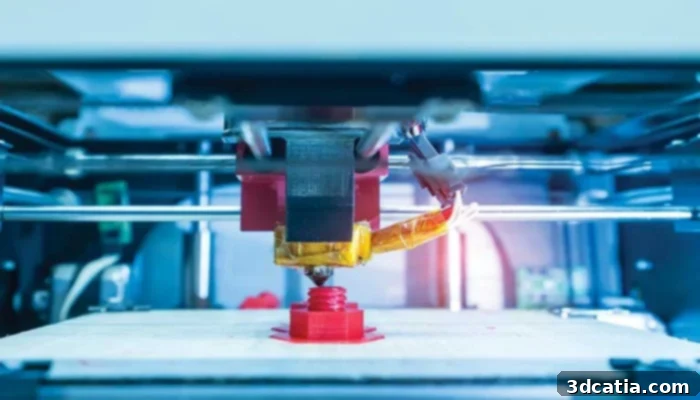
The composition of filament, including additives, significantly influences the type and amount of emissions.
The scientific community continues to advance its understanding of these risks. Even more recently, the 2020 Society for Risk Analysis symposium, held on December 15th, featured a dedicated session titled “Exposure and Risk Assessment of 3D Printing and Emerging Materials.” This symposium brought together multiple studies aimed at further characterizing and quantifying the release and composition, as well as the particle size distributions, of 3D printer emissions. The findings presented at this symposium largely corroborated earlier research, reinforcing the consensus on the importance of addressing these environmental and health concerns. More details on these findings can be explored HERE.
Understanding the nature of 3D printer emissions—specifically the release of ultrafine particles (UFPs) and a variety of volatile organic compounds (VOCs)—is crucial for protecting indoor air quality. UFPs, due to their minuscule size, can penetrate deep into the respiratory system and even enter the bloodstream, potentially leading to respiratory irritation, inflammation, and other adverse health outcomes over time. VOCs, on the other hand, can contribute to indoor air pollution, causing symptoms ranging from headaches and dizziness to more serious long-term health effects. The ongoing research serves as a vital call to action for both manufacturers and users to prioritize safety and responsible operation.
For more comprehensive information about the detailed study conducted by the Georgia Institute of Technology, you can find the full release HERE. It is imperative that as 3D printing continues to evolve and integrate into our daily lives, awareness of its potential health impacts grows in parallel. Were you fully aware of the toxicity of 3D printer emissions before reading this? We encourage you to share your thoughts and experiences in the comments below or join the conversation on our Facebook and Twitter pages! Don’t forget to sign up for our free weekly Newsletter to receive all the latest news and essential updates in the world of 3D printing directly in your inbox!