
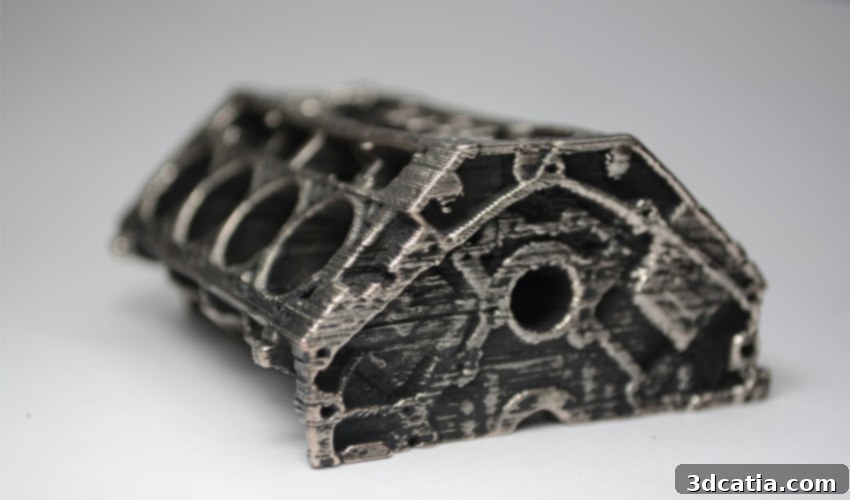
Democratizing Metal 3D Printing: The Virtual Foundry’s Filamet™ Revolutionizes FDM Technology
In the rapidly evolving landscape of additive manufacturing, one American startup is fundamentally changing how industries and individuals approach metal 3D printing. The Virtual Foundry, a pioneer in material science for Fused Deposition Modeling (FDM) / Fused Filament Fabrication (FFF) technologies, has introduced a groundbreaking solution: Filamet™. This innovative material empowers users of conventional desktop 3D printers to produce parts with an impressive metal content of 80% or more, effectively bringing high-value metal additive manufacturing within reach of a broader audience. The core philosophy behind Filamet™ is simple yet transformative: to democratize metal 3D printing, making it more accessible, affordable, and adaptable for a multitude of sectors that previously found the technology cost-prohibitive or overly complex.
The potential impact of this advancement on prototyping, short-run manufacturing, and even educational initiatives is immense. By lowering the barriers to entry, The Virtual Foundry is not just selling a product; they are fostering a new ecosystem of innovation. To gain deeper insights into their groundbreaking material developments and the broader significance of metal 3D printing, we recently had the opportunity to speak with key members of The Virtual Foundry team. Their perspectives shed light on how their technologies are poised to reshape the future of manufacturing.
The Genesis of Innovation: Unveiling The Virtual Foundry’s Journey
3DN: Can you introduce yourselves and tell us about the foundation and journey of The Virtual Foundry?
The inspiring story of The Virtual Foundry began with Brad Woods, the visionary inventor behind our celebrated Filamet™ line of open-market metal 3D printing filaments. Brad’s initial encounter with 3D printing involved a simple plastic object. However, his keen engineering eye quickly recognized a significant gap in the market: the immense potential and undeniable demand for accessible metal printing capabilities within the familiar FDM format. This realization sparked a dedicated pursuit for a practical, cost-effective solution to bridge the chasm between plastic and metal 3D printing. From this ambitious quest, The Virtual Foundry was officially born.
Today, The Virtual Foundry stands as a leading innovator, offering not just Filamet™ filaments but also a comprehensive suite of printing accessories and essential sintering furnaces. Our commitment extends beyond current offerings; we are relentlessly focused on the continuous development of novel materials and the exploration of cutting-edge methods for metal fabrication. We believe that this pivotal moment in history is setting the stage for the widespread adoption of metal 3D printing, and the innovative technologies pioneered by The Virtual Foundry are rapidly becoming the industry’s established standards, pushing the boundaries of what’s possible with desktop 3D printers.
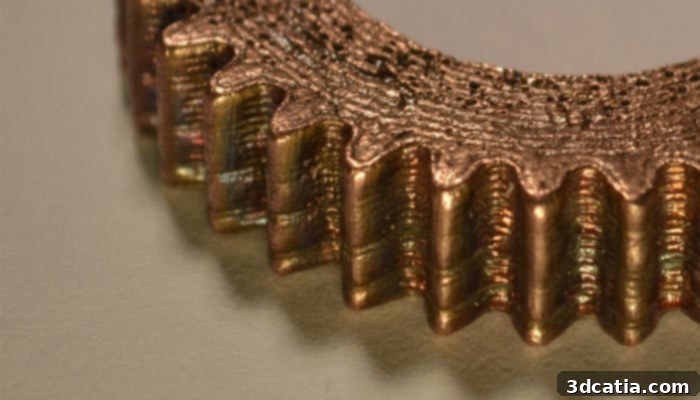
Filamet™: Redefining Metal Additive Manufacturing with FDM Accessibility
3DN: What is your groundbreaking invention, Filamet™, all about, and what are its key advantages in the metal 3D printing space?
Filamet™ represents a paradigm shift in metal additive manufacturing, primarily due to its ingenious open architecture design. This innovative approach allows virtually anyone with an existing FDM 3D printer to produce metal objects that boast an impressive 80% or greater metal content after post-processing. Unlike proprietary systems that lock users into specific hardware and materials, Filamet™ liberates the creative and manufacturing process, making advanced metal capabilities accessible to a much broader audience.
Beyond its remarkable compatibility, Filamet™ offers several other compelling advantages, with safety and cost efficiency being paramount. Traditional laser-based metal 3D printing solutions often involve handling fine, reactive metal powders that necessitate stringent safety protocols, including specialized respirators and costly handling equipment, alongside high capital investment. Filamet™ elegantly sidesteps these challenges. The fine metal powders are safely encapsulated within a PLA (Polylactic Acid) binder. This binder not only makes the material significantly safer to handle, requiring no specialized respirators or elaborate safety equipment, but also dramatically reduces the overall material cost compared to conventional metal additive manufacturing techniques. The process involves printing the “green part” with a standard FDM printer, followed by a debinding stage to remove the plastic binder, and finally, sintering in a furnace to fuse the metal particles into a dense, solid metal object. This innovative method leverages established desktop 3D printing hardware and existing sintering processes already prevalent in the market, enabling the creation of pure metal objects at a fraction of the cost and complexity. Complete processing packages, including all necessary debinding and sintering equipment, can start at under $20,000, making metal fabrication viable for small businesses, educational institutions, and even individual innovators.
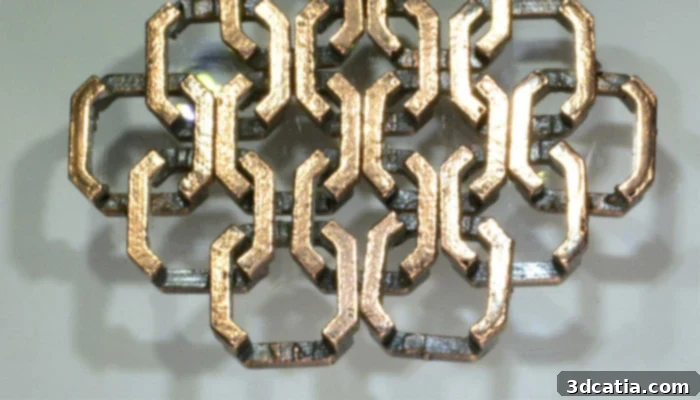
Transforming Industries: Applications and Adoption of Filamet™
3DN: For which industries is Filamet™ particularly suitable, and who are its current users leveraging this innovative metal 3D printing solution?
Filamet™ is a true game-changer because it vastly expands the capabilities of existing FDM hardware, making conventional 3D printers far more valuable and versatile. By enabling them to print metal, we are empowering companies to unlock new levels of innovation and efficiency without prohibitive upfront investments. We provide a comprehensive, full-cycle solution that encompasses not only the Filamet™ material but also the essential debinding and sintering equipment. This integrated approach allows virtually any organization to 3D print pure metal parts in-house, facilitating rapid prototyping, functional testing, and even short-run manufacturing with unprecedented ease.
The versatility and cost-effectiveness of our system also make it an ideal fit for educational settings. Institutions looking for a low-investment pathway into metal 3D printing find Filamet™ to be an unparalleled solution. Educators are already seamlessly integrating Filamet™ into coursework for advanced manufacturing and materials science. They recognize that this technology offers a remarkably simple and accessible solution to the often-complex challenges of metal additive manufacturing. The significantly lower cost of entry for metal printing and sintering with Filamet™ makes it an easy, yet profoundly important, addition to STEM (Science, Technology, Engineering, and Mathematics) and STEAM (Science, Technology, Engineering, Arts, and Mathematics) curricula, preparing the next generation of engineers and innovators with hands-on experience in cutting-edge metal fabrication.
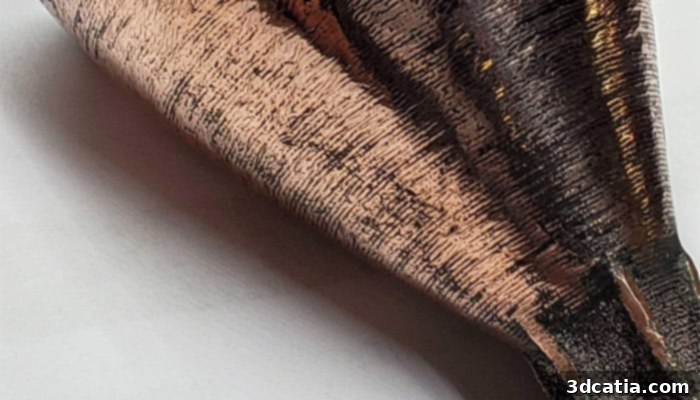
The applications of Filamet™ span across a diverse range of industries, demonstrating its broad utility. While certainly not limited to these, its current adoption includes critical sectors such as Aerospace, where it can enable rapid prototyping of complex components; Petroleum, for specialized tooling and spare parts; Prototyping, across all engineering disciplines to accelerate product development cycles; Injection Molding, for creating conformal cooling channels or specialized inserts; Dentistry, for custom surgical guides or even final prosthetics; Education, as a powerful learning tool for materials science and additive manufacturing; and Nuclear Energy, for research and development of specific components. This widespread adoption underscores the material’s robustness and the significant value it brings to various high-stakes and innovative environments.
The Future Horizon: New Materials and Expansion at The Virtual Foundry
3DN: What exciting plans does The Virtual Foundry have on the horizon for the near future, particularly regarding new materials and advancements?
At The Virtual Foundry, our commitment to innovation is unwavering, particularly in expanding our material offerings to meet the diverse needs of our growing customer base. Currently, our standard inventory proudly features essential metal filaments such as Stainless Steel 316L, highly conductive Copper, versatile Bronze, and robust Iron. These materials cover a wide spectrum of industrial and creative applications, providing excellent starting points for many projects.
However, our capabilities extend far beyond these standard offerings. We are exceptionally proud to offer over 15 additional specialized materials available by Special Order. Our expertise also includes developing custom solutions from virtually any material that can be successfully sintered. This extensive material list is incredibly diverse, encompassing everything from foundational materials like sand and glass to advanced, high-performance ceramics such as zirconium oxide. This bespoke material development service allows us to cater to highly specialized industrial requirements and cutting-edge research projects, truly pushing the boundaries of what is achievable with FDM-based metal 3D printing.
Looking ahead over the next few months, a key strategic focus for The Virtual Foundry will be to significantly expand our range of materials kept in standard inventory. This expansion is a direct response to increasing customer demand and our commitment to making even more specialized materials readily accessible. By continuously broadening our standard portfolio, we aim to empower more users to experiment, innovate, and integrate advanced materials into their workflows with greater ease and efficiency.
The Evolving Landscape of 3D Printing and Metal’s Pivotal Role
3DN: How do you personally envision the future development of 3D printing, and specifically, what is your outlook on the increasing importance of 3D metal printing?
The realm of 3D printing is fundamentally transformative, offering users an unparalleled ability to seamlessly translate abstract concepts into tangible realities. This dynamic field is characterized by relentless innovation, with technology advancing at a truly staggering pace. Within this broader landscape, metal FDM 3D printing, championed by solutions like Filamet™, is poised for exponential growth, evolving hand-in-hand with the rest of the additive manufacturing (AM) market. It brings forth an array of advantages and capabilities that were simply non-existent or inaccessible just a few years ago.
In today’s competitive environment, where companies are in a relentless race to bring their products to market faster and more efficiently, The Virtual Foundry serves as a critical strategic partner. Our technologies provide substantial efficiencies in both effort and cost, enabling businesses to accelerate their product development cycles and maintain a competitive edge. A cornerstone of our philosophy is an open architecture strategy. This innovative approach effectively detaches the materials from specific printing and processing hardware. The result is significantly higher equipment redundancies – meaning users are not locked into proprietary systems – and a much lower net cost for metal additive manufacturing. These strategic advantages collectively foster greater flexibility, allowing ideas to move through design, prototyping, and production systems with unprecedented speed and adaptability. This flexibility is crucial for rapid iteration and innovation, empowering users to create robust, functional metal parts on demand, whenever and wherever they are needed.

Empowering Innovation: A Final Message from The Virtual Foundry
3DN: Do you have any final words you’d like to share with our readers, perhaps a message about the impact of your work?
It is an incredibly thrilling experience to be at the forefront of such a revolutionary technology as metal 3D printing. Our dedicated and innovative team has meticulously crafted a product line within an open architecture framework that not only enhances the efficiencies of current work systems but also significantly expands the value and capabilities of our customers’ product offerings. We are not just providing a material; we are catalyzing a fundamental shift in how work is conceived, designed, and executed across various industries. We believe in empowering creators and manufacturers, enabling them to achieve new feats in innovation and production.
What are your thoughts on the groundbreaking developments from The Virtual Foundry and their transformative Filamet™ material for FDM metal printing? We encourage you to share your insights and opinions in a comment below or engage with us on our Facebook and Twitter pages! Don’t miss out on the latest advancements in additive manufacturing—be sure to sign up for our free weekly Newsletter, delivering all the essential 3D printing news directly to your inbox!