
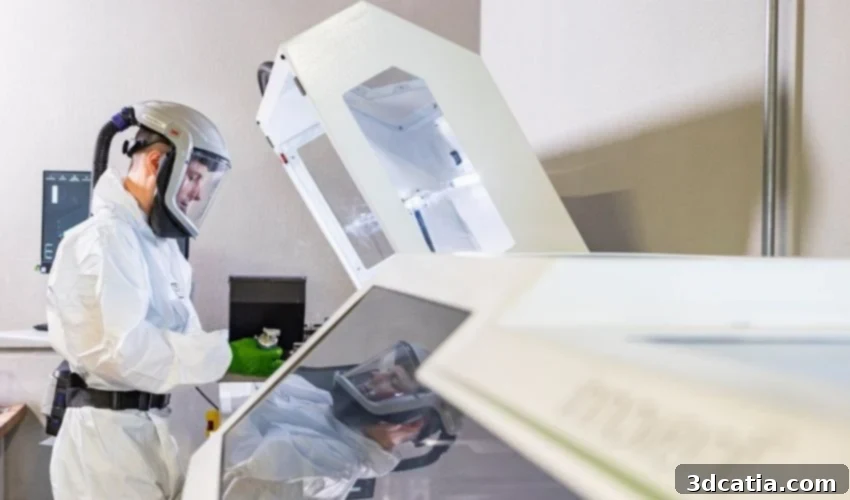
ExOne Bolsters European Footprint with Advanced Metal Binder Jetting Application and Adoption Center
ExOne, a recognized global leader in industrial binder jetting systems, has significantly expanded its Application and Adoption Center (EAC) in Europe. This strategic move introduces direct metal binder jet 3D printing capabilities to the 2,070-square-meter facility, complementing their well-established sand printing services. While ExOne already operates successful metal adoption centers in the United States and Japan, this marks a pivotal moment as it establishes the first such facility in Europe. This expansion seamlessly integrates two core pillars of ExOne’s global expertise: their robust German-developed sand business and their innovative American-born metal business. The new metal capabilities within the European EAC are specifically designed to highlight the profound benefits of metal binder jetting, particularly for high-growth sectors such as the metal injection molding (MIM) industry, offering unparalleled opportunities for regional customers.
The establishment of this advanced European center addresses a clear and growing market demand, as articulated by Eric Bader, ExOne GmbH General Manager. Bader emphasizes, “We observe a strong market demand for a dedicated application and adoption center within Europe. Different regional markets possess unique characteristics and operational requirements. While we have similar facilities in the States, the enhanced flexibility afforded by the EAC’s location in Germany offers immense value. It allows customers to engage directly with the technology, which is especially crucial in a post-pandemic landscape where travel and logistics present more complexities than ever. The EAC provides a tangible, live experience of the technology in action.” This latest expansion creates a comprehensive hub in Europe where the entire binder jetting process chain, from initial design consultation to final part production and post-processing, is contained under one roof. This holistic approach offers a significant advantage for customers across the continent, eliminating the previous necessity of shipping parts from the United States and thereby streamlining the entire development and production timeline. Now, businesses can explore and implement binder jetting solutions for every stage of their manufacturing process, including critical steps like debinding and sintering, directly within Europe.
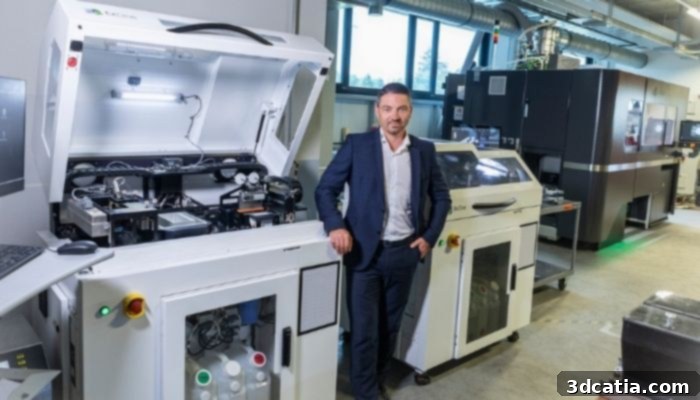
Eric Bader, the General Manager of ExOne GmbH, with some of the advanced ExOne printers available at the center, demonstrating the expansive capabilities now offered.
ExOne’s core mission with these centers is to introduce users to the transformative potential of its binder jetting technology, guiding them on how to optimize and leverage these systems for innovative applications. Recognizing the burgeoning interest in binder jetting and its diverse industrial applications, the expansion of the metal EAC aims to nurture this interest by providing a secure, risk-free environment. Here, customers can rigorously test and validate how binder jetting can deliver tangible benefits to their specific manufacturing challenges. A dedicated team of experts, spanning various disciplines including material science, advanced post-processing techniques, and application engineering, is available to assist customers at every stage of their journey. With this significant European expansion, ExOne proudly offers both cutting-edge sand and metal binder jetting capabilities through its network of EACs across Europe and the United States, solidifying its commitment to global innovation in additive manufacturing.
Distinguishing Sand and Metal Binder Jetting: Applications and Advantages
While ExOne excels in both sand and metal binder jetting, it’s crucial to understand the distinct differences between these two powerful additive manufacturing processes, particularly concerning their optimal applications. This differentiation further underscores the strategic importance of expanding the European Application and Adoption Center to encompass both technologies. Sand binder jetting, for instance, typically operates as a more indirect process. It is extensively utilized for the rapid and cost-effective production of highly complex cores and molds, which are then used in traditional casting operations. This method is ideal for creating intricate geometries and tooling prototypes, and can also support serial production of casting molds. By contrast, metal binder jetting is a direct manufacturing process exceptionally well-suited for producing small to medium-sized metal parts in high volumes. Its ability to create intricate, functional metal components with excellent mechanical properties makes it invaluable for various industries. The comprehensive ExOne Binder Jetting Family, encompassing both sand and metal capabilities, offers unparalleled flexibility, capable of producing metal parts ranging from just a few grams to hundreds of kilograms. This vast range empowers customers with immense design freedom and manufacturing agility to address a diverse spectrum of industrial requirements, all under the expert guidance available at the EAC.
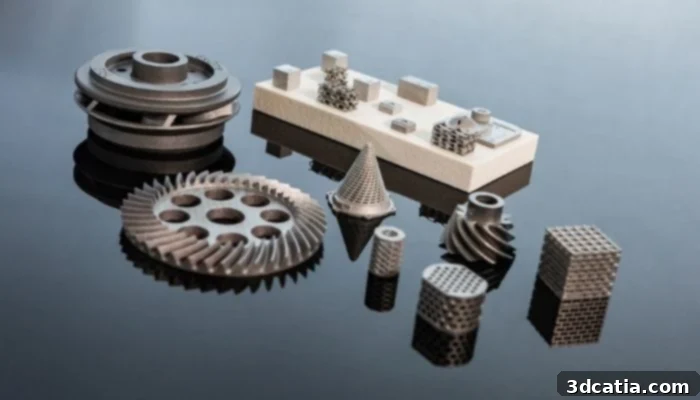
A diverse range of finished parts, showcasing the capabilities of both metal and sand binder jetting technologies, can now be made at the new expanded EAC.
With an EAC now fully equipped to handle both advanced metal and existing sand binder jetting applications, ExOne is empowering customers from an incredibly diverse array of industries. Oliver Hanitzsch, Regional Sales Manager, elaborates on this broad appeal: “It’s fascinating because we are genuinely not limited to specific industries! Currently, we engage with customers from a wide spectrum of sectors, including medical, luxury goods, sports equipment, automotive, and many more. This creates a horizontal cross-section across countless industries, which makes every day exciting. You wake up in the morning without knowing what unique application or challenge you’ll be presented with, highlighting the universal applicability and innovative potential of our technology.” This versatility is a testament to binder jetting’s ability to cater to bespoke requirements across manufacturing landscapes, offering solutions where traditional methods fall short or are too costly.
Leveraging Binder Jetting for the Metal Injection Molding Industry
One of the most compelling attractions of the new metal EAC is its profound potential and direct relevance for the metal injection molding (MIM) industry. Frequently, metal additive manufacturing technologies are compared with traditional injection molding, particularly when evaluating the optimal production method for specific parts. While the new European metal center is not positioned to entirely supersede metal injection molding in the region, ExOne firmly believes it will demonstrably underscore the critical importance and complementary value of metal binder jetting as an indispensable manufacturing tool. It offers unique advantages that address the limitations of traditional MIM, thereby expanding the capabilities and efficiency of metal part production.
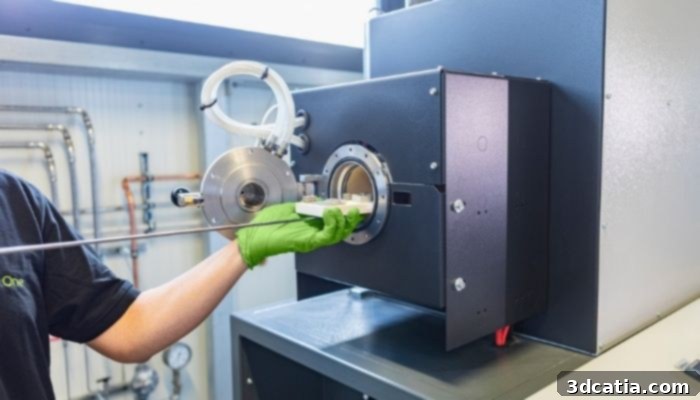
Dedicated experts in a variety of fields work diligently at the expanded EAC, providing crucial support and helping customers navigate their projects from concept to completion.
A significant advantage of additive manufacturing (AM) that proves highly attractive to many metal manufacturers, especially in contrast to metal injection molding, is the elimination of the need for expensive and time-consuming tooling. With metal AM processes like binder jetting, users bypass the laborious and costly process of creating a mold or die before commencing manufacturing. This significantly reduces lead times, drastically cuts upfront costs, and accelerates product development cycles. Parts can be designed, optimized, and then produced almost instantaneously, transforming the traditional manufacturing paradigm where tooling costs and lead times often present substantial barriers to innovation and quick market entry.
Furthermore, according to ExOne, the metal adoption and application center will be particularly appealing to customers who require parts in varying sizes or for short-run production. The ability to produce parts without the need for bespoke molds – which might only be used once – provides unparalleled agility and cost-effectiveness. Agility is arguably the primary benefit of metal AM for this specific sector. By harnessing ExOne’s advanced binder jetting technology, users gain the ability to generate multiple design iterations and produce functional prototypes or small batches in the same timeframe that would typically be consumed by merely designing and fabricating a single, specific tool. This iterative capability fosters rapid innovation and allows for quick adjustments based on performance testing. With the availability of the metal EAC in Europe, MIM customers can now directly experiment with binder jetting, thoroughly evaluating how this cutting-edge technology can integrate with and enhance their existing business models and manufacturing processes. For example, binder jetting facilitates the creation of highly complex tooling inserts with integrated internal cooling channels, a feat nearly impossible with traditional manufacturing. Such innovative designs can lead to significantly improved cycle times, reduced warping, and enhanced part quality in subsequent injection molding operations. To delve deeper into the capabilities and offerings of the metal ExOne adoption center, interested parties are encouraged to visit ExOne’s official website HERE or watch the informative video below for a visual tour and detailed explanation.
What are your thoughts on ExOne’s latest expansion of its metal application and adoption center in Europe? We invite you to share your perspectives and insights in a comment below or join the conversation on our Facebook, Twitter, and LinkedIn pages! Stay informed about the rapidly evolving world of 3D printing by signing up for our free weekly Newsletter here, delivering the latest industry news straight to your inbox!