
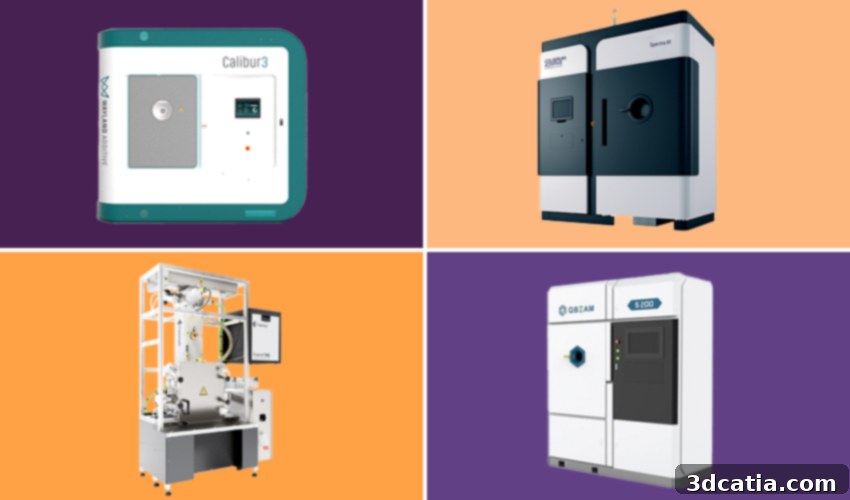
Exploring the Forefront of Electron Beam Melting (EBM) 3D Printers for Advanced Industrial Applications
The landscape of manufacturing is undergoing a profound transformation, with additive manufacturing, particularly 3D printing, revolutionizing production methods across numerous industrial sectors. At the forefront of this revolution, especially for high-performance metal components, stands Electron Beam Melting (EBM). Often referred to simply as EBM, this innovative process leverages a powerful, high-energy electron beam to meticulously melt layers of metal powder, such as reactive titanium alloys, superalloys, or conductive copper, to construct intricate and highly robust parts. This layer-by-layer fusion approach enables the creation of complex geometries and internal structures previously unattainable with conventional manufacturing techniques.
The resulting parts from EBM technology boast exceptional material density, superior mechanical properties, and outstanding fatigue performance, making EBM an indispensable tool in the most demanding industries. Its adoption is rapidly expanding within critical sectors like aerospace, where lightweight yet strong components are essential; medical, for customized implants and prosthetics; and automotive, for high-performance and specialty parts. For many years, the development and commercialization of this pioneering technology were largely spearheaded by a single Swedish company, Arcam. However, the market has since matured and diversified significantly. Today, a growing number of innovative manufacturers are developing and offering advanced EBM solutions, each bringing unique enhancements and capabilities to the table.
This article aims to provide a comprehensive overview of some of the leading EBM 3D printers currently available in the market. By exploring these diverse offerings, we hope to equip you with a clearer understanding of the technological advancements, unique features, and application potential of electron beam melting systems, helping you navigate the evolving landscape of metal additive manufacturing.
Colibrium Additive Spectra H: High-Integrity Production with Advanced Temperature Control
Colibrium Additive, a prominent name in the additive manufacturing space, presents the Spectra H, an industrial-grade EBM 3D printer engineered for demanding production environments. This robust machine significantly elevates the capabilities of electron beam melting, offering a generous extended print bed measuring 250 x 430 mm. This larger build volume facilitates the efficient production of bigger components or an increased number of parts within a single build, addressing the growing need for scalability in additive manufacturing. A key differentiator of the Spectra H is its ability to maintain process temperatures exceeding 1,000 °C, which is crucial for achieving high-integrity parts rapidly and consistently.
The elevated operating temperature is particularly beneficial for processing advanced materials, especially those that are typically prone to cracking or thermal distortion during solidification. By maintaining a high temperature throughout the build process, the Spectra H minimizes internal stresses and reduces the likelihood of defects, yielding parts with superior material properties. Enhancing this thermal stability are the machine’s moveable heat shields, which provide exceptional insulation. This innovative design ensures a highly stable and optimized thermal environment within the build chamber, directly contributing to the consistent quality and metallurgical integrity of the produced components.
Further boosting its productivity, the Spectra H features a powerful, self-calibrated 6-kilowatt electron beam. This high-power beam not only accelerates the melting process but also ensures consistent beam quality and focus, translating into attractive printing speeds for large-scale production runs. A standout innovation unique to Colibrium Additive’s Spectra EBM printers is the patented Point Melt technology. Unlike conventional EBM processes that typically melt powder in lines, Point Melt precisely fuses metal powder through an array of tiny, controlled “dots.” This method offers unprecedented precision in temperature control, significantly reducing thermal gradients within the powder bed. The result is a substantial decrease in residual stresses, often mitigating the need for extensive post-sintering, and ultimately delivering parts with remarkably improved surface finish and dimensional accuracy, streamlining the post-processing workflow.
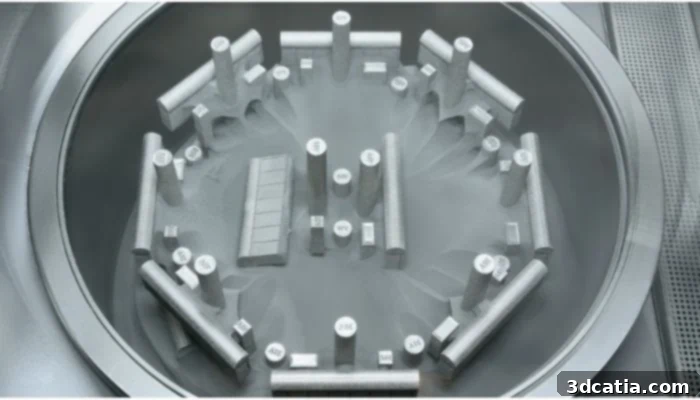
Interior of Colibrium Additive’s Spectra H machine (photo credits: Colibrium Additive)
Wayland Additive’s Calibur3 with NeuBeam® Technology: Pushing the Boundaries of Electron Beam AM
From the United Kingdom, Wayland Additive emerged in 2015, founded by a highly experienced team boasting deep roots in semiconductor engineering and extensive expertise in electron beam manufacturing. Their mission is ambitious: to transcend the limitations of both traditional laser-based and conventional electron beam additive manufacturing. They achieve this through their groundbreaking NeuBeam® technology, which addresses and effectively overcomes the stability challenges often associated with legacy electron beam systems.
The core innovation of NeuBeam® lies in its sophisticated charge neutralization step. This patented process involves precisely flooding the build chamber with positively charged ions, which effectively neutralizes the negative charge build-up within the powder bed. This precise charge control is a game-changer, as it eliminates the need for the pre-sintering of the powder bed, a common requirement in many EBM systems. The direct benefits are manifold: it leads to superior material properties, significantly faster build times, and a notable reduction in post-processing requirements, thus streamlining the entire manufacturing workflow and reducing overall cost per part.
This advanced NeuBeam® technology is commercially available in Wayland Additive’s flagship EBM 3D printer, the Calibur3. The Calibur3 is designed as an open system, offering unparalleled flexibility for users to develop and fine-tune new processing parameters. This open architecture makes it incredibly versatile and “material agnostic,” meaning it can accommodate a broad spectrum of metal powders, including challenging alloys that are difficult to process with other methods. Furthermore, the Calibur3 features a substantial build volume of 300 x 300 x 450 mm. This generous space allows for the production of either impressively large, single-piece components or a significantly higher quantity of smaller parts in a single print run, optimizing throughput and making it suitable for a wide array of industrial applications.
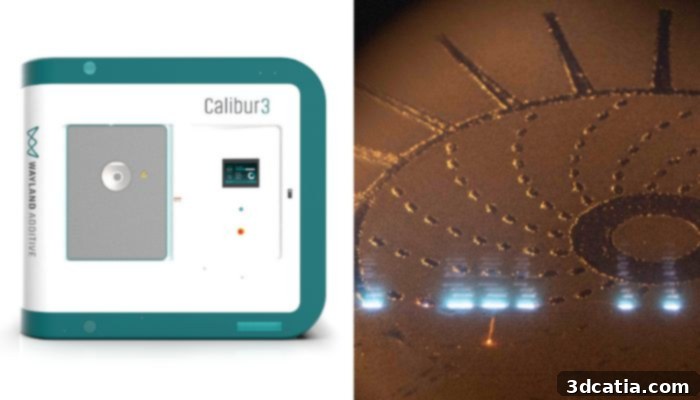
The Calibur3 3D printer (left) and the NeuBeam® process (right)(photo credits: Wayland Additive)
Freemelt® ONE: The Research-Focused EBM Platform for Advanced Material Development
Freemelt, a dynamic Swedish company, was established in 2017 by a team of visionary engineers who brought with them extensive experience from Arcam, a pioneering force in EBM technology. Their deep understanding of electron beam melting is channeled into creating advanced solutions for the additive manufacturing industry. Among their impressive lineup of EBM printers, the Freemelt® ONE stands out as a platform meticulously designed and optimized specifically for research and development purposes.
The Freemelt® ONE boasts a unique external housing-less design, providing researchers with unparalleled accessibility to the vacuum chamber. This open architecture greatly simplifies the integration of third-party equipment, sensors, and experimental setups, making it an ideal choice for academic institutions, corporate R&D departments, and material science laboratories pushing the boundaries of what’s possible with EBM. At its core, the printer utilizes a powerful 6 kW electron beam, engineered to maintain exceptional beam quality across its entire power range. This robust beam capability allows the Freemelt® ONE to achieve and sustain extraordinarily high processing temperatures, exceeding 1200 °C. Such high temperatures are critical for successfully processing and exploring a wide array of advanced and high-performance materials, including refractory metals and complex alloys, often challenging for other additive manufacturing techniques.
Further enhancing its research utility, the Freemelt® ONE features a spacious 70-liter vacuum chamber, providing ample space for experimental builds. Its innovative powder feeding system is designed for flexibility, efficiently handling small quantities of powder. This feature is invaluable for rapid material changes and iterative experimentation, significantly reducing material waste and accelerating the discovery process. Moreover, the optimized powder management system contributes to shorter pumping and cooling times, maximizing operational efficiency in a research setting. The printer’s sophisticated software suite, known as Field Construct, is a cornerstone of its precision. This software has been meticulously optimized for high-precision control of the electron beam using advanced magnetic fields. This approach ensures fast, accurate, and repeatable beam movements without the need for overly complex or proprietary hardware, offering researchers granular control over the melting process and enabling detailed study of processing parameters and their effects on material microstructure and properties.
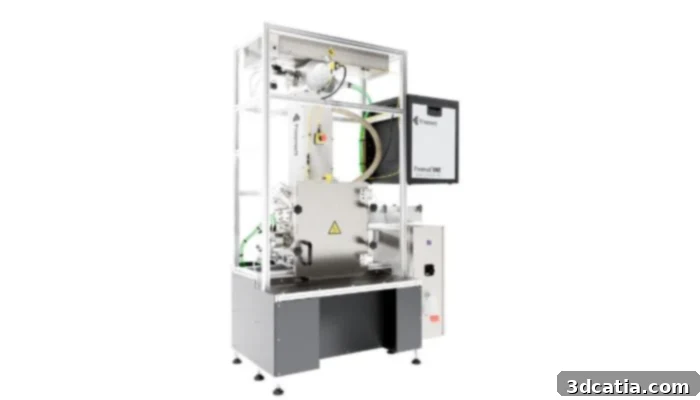
The Freemelt® ONE is an EBM printer without external casing and is ideal for laboratories and research centers (photo credits: Freemelt).
Xian Sailong Metal T200: Precision SEBM for Medical and Aerospace Applications
Xian Sailong Metal introduces the T200 3D printer, a sophisticated additive manufacturing solution meticulously engineered for the production of highly complex and critical metal parts. This machine is particularly tailored to meet the stringent demands of advanced sectors, prominently including the medical industry for customized implants and surgical instruments, and the aerospace sector for lightweight yet robust components. The T200 operates on the principles of SEBM (Selective Electron Beam Melting) technology, delivering exceptional performance and reliability.
At the heart of the T200 is a powerful and high-precision 6 kW electron beam. This robust beam is capable of preheating the powder bed to an impressive 1100°C, a critical feature for managing thermal stresses and achieving optimal metallurgical properties in the finished parts. This high preheating capability is especially advantageous when working with challenging materials such as titanium and its alloys, which are common in aerospace and medical applications. The printer offers a substantial maximum manufacturing volume of 200 × 200 × 450 mm, providing ample space for the efficient production of both large-scale components, such as complex orthopedic implants, and intricate parts like titanium-aluminum turbine blades, all within a single build.
Precision is a cornerstone of the T200’s design, highlighted by its remarkably fine electron beam diameter of less than 100 μm. This minute spot size enables the creation of incredibly detailed features and ensures exceptional resolution and continuity throughout the production process. Operating within a tightly controlled vacuum environment is another key advantage; this clean, oxygen-free atmosphere guarantees the production of purer parts, free from oxidation and contamination, thereby significantly reducing the need for extensive post-treatment. Furthermore, the T200 incorporates an optimized powder feed system, meticulously designed to enhance process stability and reduce dependency on the inherent flowability characteristics of different metal powders, ensuring consistent and reliable builds across a wide range of materials.

Photo Credits: Xian Sailong Metal
JEOL JAM-5200EBM: Robust, Efficient, and Environmentally Conscious EBM Manufacturing
JEOL, a globally recognized leader in electron beam technology, brings its expertise to additive manufacturing with the formidable JAM-5200EBM 3D printer. This industrial-grade machine is a testament to robust engineering, weighing in at a substantial 4,900 kg, indicative of its stability and capacity for heavy-duty production. At its core, the JAM-5200EBM employs a powerful electron beam with a maximum output of 6 kW, ensuring efficient and rapid melting of metal powders for various applications.
A significant operational advantage of the JEOL system is its optimized cathode, which boasts an impressive service life of approximately 1,500 hours. This extended lifespan directly translates into minimized production downtime, as the frequency of cathode replacement is dramatically reduced, thereby enhancing overall machine availability and productivity. Adding to its intelligence, the system features an advanced capability to automatically adjust the axis and shape of the electron beam dynamically, adapting precisely to the specific irradiation position required during the build process. This automated control ensures consistent beam quality and melting accuracy across the entire build platform.
Distinguishing itself from several other additive manufacturing technologies, the JAM-5200EBM operates without the need for helium gas to contain the powder. This fundamental difference enables manufacturing in a remarkably clean and environmentally friendly low-cost environment. Eliminating helium not only reduces operational expenses but also contributes to preserving the cathode surface, further extending its life and ensuring superior beam stability throughout the printing cycle. The printer is also equipped with a sophisticated remote monitoring system, providing operators with real-time insights and control, which facilitates the efficient, simultaneous production of multiple intricate parts within a single, optimized print run. Furthermore, the EBM process inherently minimizes the need for extensive support structures, rendering post-build cutting virtually unnecessary and drastically reducing material waste. The system is designed to allow for the effective reuse of un-melted metal powder, further optimizing resource utilization and significantly lowering overall production costs, making the JAM-5200EBM a highly sustainable and cost-effective solution for industrial metal additive manufacturing.
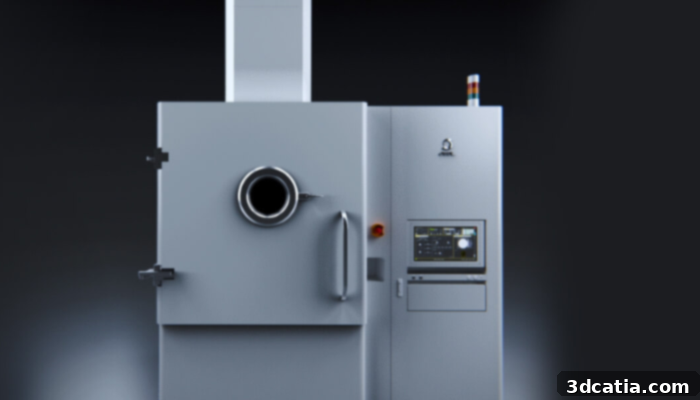
Photo Credits: JEOL
pro-beam additive PM EBM 30S: High-Efficiency Production and Versatility
Hailing from Germany, pro-beam additive distinguishes itself in the electron beam melting market with its impressive PM EBM 30S industrial 3D printer. This machine is a powerhouse, built for demanding industrial applications and characterized by its substantial dimensions of 6.4 x 3.5 x 3.3 meters. It features an exceptionally high maximum beam power of 150 kV, indicating its capability for very fast and efficient melting, setting it apart in terms of processing speed and throughput.
The PM EBM 30S is engineered for high productivity, enabling the manufacturing of multiple complex components in the shortest possible timeframes. A key innovation driving this efficiency is pro-beam’s implementation of advanced process parallelization techniques. This strategy effectively eliminates non-productive downtimes by optimizing the sequence of operations within the build chamber. The entire printing process is highly automated and digitally controllable, providing operators with precise command over every stage. This digital control also facilitates regular, on-demand quality checks throughout the build, ensuring consistent part integrity and adherence to stringent industry standards.
While capable of handling large components, the PM EBM 30S particularly excels in the production of small and delicate components, where precision and fine feature resolution are paramount. This versatility extends to its material compatibility; the system is designed to process not only conventional alloys suitable for EBM printing but also challenging, difficult-to-weld metals that are often problematic for other additive or traditional manufacturing methods. According to pro-beam additive, the PM EBM 30S is incredibly versatile, making it an ideal solution for a broad spectrum of applications. These include critical sectors such as aerospace, automotive industry, advanced medical technology, precision toolmaking, and cutting-edge research and development. The PM EBM 30S from pro-beam additive stands out as a solution synonymous with speed, precision, and broad applicability in the advanced manufacturing landscape.
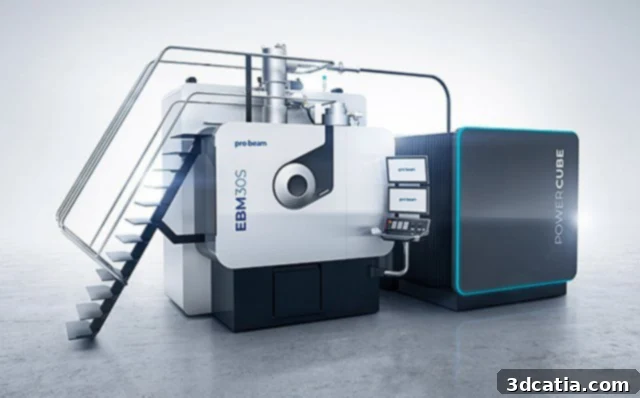
Photo Credits: pro-beam additive
Qbeam S200: Innovative EBSM® Technology for Cost-Effective Production
Introducing one of the dynamic new entrants in the electron beam additive manufacturing arena, the Chinese company Qbeam brings its innovative solutions to the global market. Their flagship EBM printer, the Qbeam S200, is powered by the company’s patented EBSM® (Electron Beam Selective Melting) technology. While adhering to the core principles of electron beam melting, Qbeam’s approach incorporates several distinctive features that set the S200 apart and enhance its performance and cost-effectiveness.
A key differentiator for the Qbeam S200 is its in-house developed EG3.1 electron gun. This proprietary gun is engineered to deliver exceptional performance, achieving impressively high scanning speeds that significantly contribute to faster build times. Furthermore, it produces a remarkably fine beam spot, measured at 140 μm, which ensures high resolution and the ability to fabricate intricate geometries with precision. The system offers precise control over the powder bed temperature, capable of reaching up to 1100 °C. This elevated and controlled temperature regime is crucial for minimizing internal stresses within the printed parts, leading to improved metallurgical properties and reduced susceptibility to warping or cracking, especially with stress-prone alloys.
Efficiency and reliability are further enhanced by the Qbeam S200’s advanced operational features. It boasts automatic calibration capabilities, significantly reducing setup times with calibration completed in less than 300 minutes. An integrated online monitoring system provides continuous, layer-by-layer quality control, allowing for real-time adjustments and ensuring the consistent integrity of every part produced. Crucially for operational economics, the Qbeam S200 incorporates an intelligent powder feeding and recycling system. This sophisticated system ensures an impressive 98% material utilization rate, drastically minimizing material waste and, consequently, significantly reducing overall operating costs. Given its blend of precision, speed, and cost-efficiency, Qbeam highly recommends the S200 for demanding applications in the medical, aerospace, and automotive sectors, where high-performance metal parts are critical.
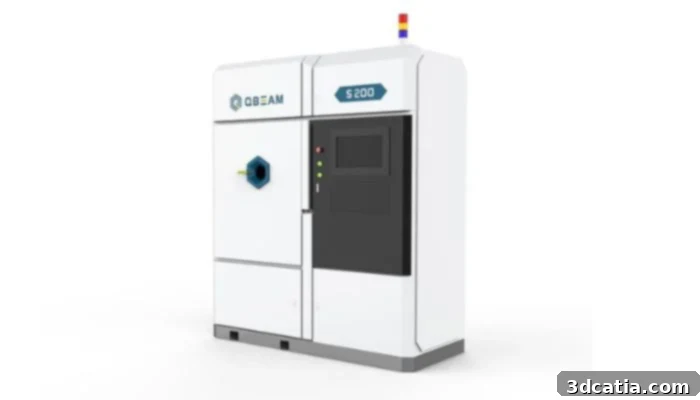
Photo Credits: Qbeam
TADA EZ300: High-Speed EBM from Mitsubishi Group’s Subsidiary
The EBM EZ300 3D printer represents an advanced offering from TADA, a key subsidiary of the venerable Japanese Mitsubishi Group, leveraging their extensive industrial expertise in its design and development. While the manufacturer has been somewhat reserved in publicly sharing comprehensive technical specifications for this industrial-grade machine, the available details highlight its focus on high productivity and reliability.
One of the most remarkable claims for the EZ300 is its reported build speed of 250 cubic centimeters per hour (cc/hour). If consistently achieved, this positions it as one of the fastest Electron Beam Melting solutions available in the industry today, offering significant advantages for high-volume production and accelerated manufacturing timelines. This impressive speed suggests optimized beam control, efficient powder melting, and rapid layer processing capabilities.
A proprietary innovation within the EZ300 is its uniquely designed rod-shaped cathode. This specific cathode design is engineered for an exceptionally long operational lifespan, reportedly enabling a heating time of 1,000 hours. Such an extended cathode life is a critical factor in industrial additive manufacturing, as it directly contributes to significantly boosted productivity by minimizing maintenance-related downtime for cathode replacement. This reliability allows users to undertake ambitious, long-term production projects without frequent interruptions. Furthermore, the EZ300 printer is confirmed to be compatible with steel powder, expanding its utility for various industrial applications where robust and cost-effective steel components are required, such as in automotive tooling or industrial machinery. This combination of speed, reliability, and material compatibility positions the TADA EZ300 as a compelling option for high-throughput metal additive manufacturing.
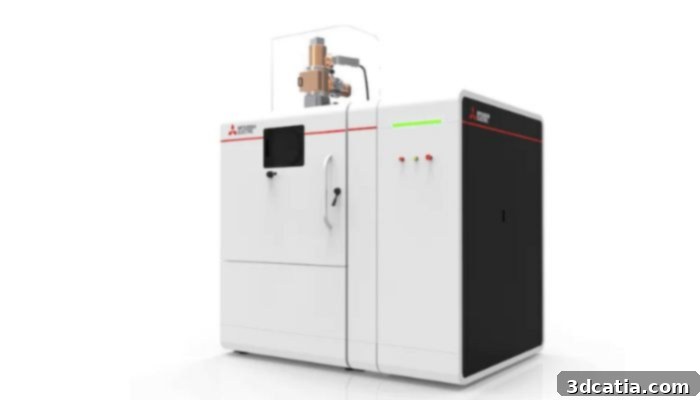
Photo Credits: TADA
The electron beam melting (EBM) market is clearly dynamic and innovative, offering a diverse range of advanced 3D printers designed to meet the rigorous demands of modern industrial applications. From Colibrium Additive’s high-integrity Spectra H with its unique Point Melt technology, to Wayland Additive’s revolutionary NeuBeam® in the Calibur3 for charge neutralization, and Freemelt® ONE’s open research platform, each system brings distinct advantages to the forefront. Xian Sailong Metal’s T200 emphasizes precision for medical and aerospace parts, while JEOL’s JAM-5200EBM focuses on robust, helium-free operation and resource optimization. pro-beam additive’s PM EBM 30S excels in high-efficiency production with process parallelization, and Qbeam’s S200 offers cost-effective manufacturing through its proprietary EBSM® and intelligent powder systems. Finally, TADA’s EZ300 promises high-speed capabilities and extended cathode life for maximized productivity.
These manufacturers are not just building machines; they are shaping the future of metal additive manufacturing by pushing boundaries in material processing, part quality, production speed, and operational efficiency. EBM technology continues to prove its value for creating complex, high-performance metal components, particularly those made from reactive and high-temperature alloys like titanium and nickel-based superalloys, which are vital for critical applications in aerospace, defense, medical, and high-performance automotive sectors.
We hope this comprehensive overview has provided valuable insights into the cutting-edge EBM 3D printers currently available. As the market continues to evolve, the capabilities and accessibility of electron beam melting are only set to grow, further integrating this powerful technology into mainstream industrial production.
What are your thoughts on these innovative EBM 3D printers? Do you have experience with electron beam melting, or do you prefer other metal additive manufacturing styles like selective laser melting (SLM) or directed energy deposition (DED)? We invite you to share your perspectives and engage with our community. Let us know in a comment below or connect with us on our LinkedIn, Facebook, and Twitter pages! For the very latest updates, news, and insights from the world of 3D printing, don’t forget to sign up for our free weekly Newsletter here, delivered straight to your inbox! You can also explore all our informative videos and engaging content on our YouTube channel.