
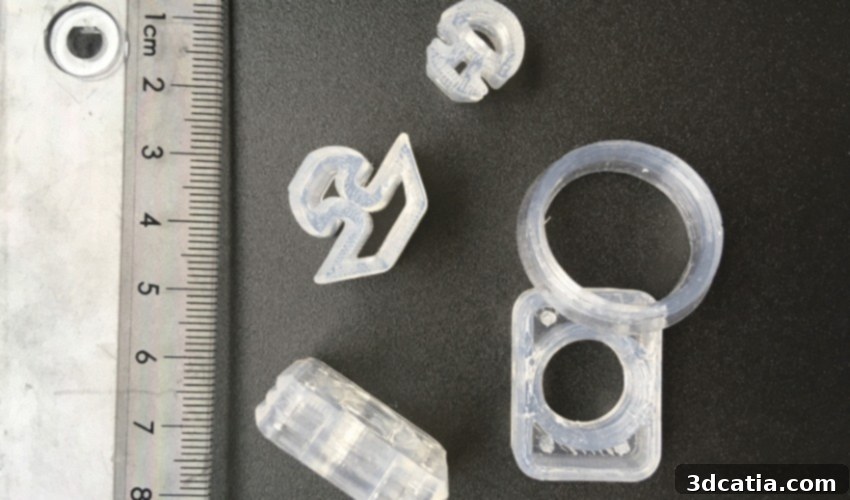
Revolutionizing Industrial Manufacturing: The Power of Liquid Additive Manufacturing for Silicone Seals and Beyond
In a myriad of industrial applications, seals stand as unsung heroes, performing critical functions that range from preventing leakage of liquids and gases to protecting sensitive components from dust and environmental ingress. The effectiveness of these components hinges on a precise set of material properties: they must be plastic and elastically malleable, possess robust chemical resistance, withstand extreme temperatures and the rigors of aging, and exhibit excellent wear resistance. Historically, silicone rubber, an elastomer composed of silicone, hydrogen, carbon, and oxygen, has emerged as an ideal material for seals due thanks to its exceptional properties. Traditionally, silicone rubber is processed in its liquid form through injection molding. However, this method presented significant limitations when it came to the burgeoning field of 3D printing. The inability to directly 3D print liquid silicone rubber meant that complex geometries, rapid prototyping, and small-batch custom production were largely out of reach. This barrier has now been overcome, thanks to groundbreaking advancements from InnovatiQ’s LiQ320 3D printer. Utilizing the innovative Liquid Additive Manufacturing (LAM) process, the LiQ320 marks a paradigm shift, enabling the industrial 3D printing of liquid injection molding silicone for the very first time. This technological leap promises to redefine manufacturing possibilities across countless sectors, from automotive and medical to electronics and beyond, offering unparalleled flexibility, efficiency, and design freedom in the production of high-performance silicone components.
The Unmet Need: Why Seals Demand Innovation
Seals are fundamental components in virtually every machine and system, crucial for ensuring operational integrity, safety, and longevity. Their role is to isolate environments, contain fluids or gases, and protect sensitive parts from contaminants. From the minute gaskets in electronic devices to robust seals in heavy machinery, their performance directly impacts the reliability of the entire assembly. For a seal to be truly effective, it must possess a unique combination of characteristics. It needs to be flexible and resilient enough to deform and recover its shape under pressure, maintaining a tight barrier. Chemical inertness is vital to resist degradation from various substances it might come into contact with. Furthermore, seals must endure broad temperature fluctuations, resist the effects of aging, UV radiation, and ozone, and possess high abrasion resistance to withstand continuous mechanical stress. Meeting these stringent requirements with traditional manufacturing often involves compromises in design flexibility or production efficiency.
Silicone rubber stands out as a material uniquely suited to these demanding specifications. Its inherent properties include excellent thermal stability, maintaining elasticity and performance across a wide temperature range, typically from -60°C to 200°C. It exhibits superior resistance to environmental factors such as weathering, ozone, and UV light, making it ideal for outdoor and harsh environments. Furthermore, silicone is chemically inert, non-toxic, and biocompatible, opening doors for its use in sensitive applications like medical devices and food processing equipment. Its remarkable flexibility, coupled with good electrical insulating properties, makes it a preferred choice for seals in the electrical and electronics industries. However, despite these advantages, the manufacturing of silicone seals has largely relied on conventional methods like injection molding. While effective for mass production of standard parts, injection molding requires expensive and time-consuming mold creation, making custom designs, complex geometries, and small production runs economically unfeasible. This is where Liquid Additive Manufacturing emerges as a transformative solution, unlocking the full potential of silicone rubber for advanced sealing applications.
InnovatiQ LiQ320: Revolutionizing Silicone 3D Printing
For years, the promise of 3D printing for elastomers like silicone rubber remained largely unfulfilled, primarily due to the inherent challenges of processing liquid materials layer by layer. Traditional additive manufacturing techniques were either incompatible with liquid silicones or resulted in parts with inferior mechanical properties compared to injection-molded counterparts. This gap meant that manufacturers couldn’t leverage the speed, design freedom, and customization benefits of 3D printing for one of the most versatile and high-performance materials available. InnovatiQ recognized this critical void and set out to bridge it, leading to the development of the LiQ320 3D printer.
The LiQ320 is not just another 3D printer; it represents a pioneering step in industrial additive manufacturing by introducing the Liquid Additive Manufacturing (LAM) process specifically tailored for liquid injection molding silicones. This innovation bypasses the need for complex and costly molds, enabling direct digital manufacturing of silicone components. By bringing liquid silicone rubber into the realm of industrial 3D printing, InnovatiQ has empowered engineers and designers to rapidly prototype, iterate, and produce functional end-use parts with unprecedented agility. The LiQ320’s ability to handle the same high-quality liquid silicones used in conventional injection molding means that the resulting 3D-printed parts exhibit comparable, if not superior, material properties, maintaining the integrity and performance expected from this robust elastomer.
Understanding Liquid Additive Manufacturing (LAM)
From Digital Design to Physical Object
Liquid Additive Manufacturing (LAM), as its name implies, is a sophisticated additive manufacturing process engineered for liquids and highly viscous materials, most notably liquid silicone rubber. Like any advanced AM process, the journey from concept to physical object begins with the creation of a detailed 3D digital model. This model is typically generated using Computer-Aided Design (CAD) software, where engineers meticulously design the desired component, specifying its dimensions, features, and tolerances. Once the CAD data is finalized, it undergoes a crucial conversion process for the printer’s programming software. During this stage, the parameters for the print job are meticulously optimized. This includes defining layer height, print speed, material flow rates, and curing intensities, all of which are critical for achieving the desired part quality and mechanical properties. The optimized data is then seamlessly transferred to the InnovatiQ LiQ320 3D printer, ready for manufacturing.
Precision Extrusion and Material Curing
When the printing process is initiated, the LiQ320 springs into action, commencing volumetric material extrusion. The core of the LAM process lies in its advanced material handling system. The liquid silicone rubber used in the LiQ320 typically consists of two distinct components, which are stored separately to prevent premature curing. These components are precisely drawn into the printhead, where they are mixed in a controlled and consistent ratio. The sophistication of the printhead technology is paramount here, allowing for exact metering and an ideal mixing ratio of the two components. This meticulous control is crucial because it directly influences the material’s properties and the subsequent cross-linking process. By managing the mixing at such a precise level, the LiQ320 enables the structural buildup of the object to be controlled not just layer by layer, but effectively at a molecular level, ensuring homogeneous material properties throughout the printed part. This molecular-level control dictates how the material cross-links, influencing its final mechanical strength, flexibility, and overall performance.

The printhead technology enables precise metering and an ideal mixing ratio, so that the application direction and thus the crosslinking can be influenced at the molecular level. (photo credits: InnovatiQ)
The material deposition process in LAM shares conceptual similarities with the Fused Deposition Modeling (FDM) process, where material is applied to the print bed layer by layer by an extruder. However, a significant distinction is that in LAM, the starting material is already in its liquid form, eliminating the need for melting and subsequent solidification cycles. This not only simplifies the process but also avoids potential thermal degradation or stresses associated with melting solid filaments. Crucially, as each individual layer of liquid silicone is deposited, it undergoes immediate curing. This on-the-fly curing is facilitated by a high-temperature halogen lamp, typically operating at approximately 2,000 watts, which thermally cross-links the material. This rapid thermal cross-linking ensures that each layer is solidified and bonded to the previous one before the next layer is deposited, building the object with exceptional precision and structural integrity.
The ability to precisely influence and control this thermal cross-linking process is a hallmark of Liquid Additive Manufacturing. For instance, creating intricate overhangs or complex geometries becomes feasible by rapidly and consistently cross-linking the material, ensuring structural stability as each layer is built upon the last. Conversely, for applications requiring specific material characteristics, such as glassy or softer structures, the cross-linking process can be carefully modulated. In such cases, the full cross-linking might only commence towards the very end of the printing process, allowing for a softer and more controlled curing. This unparalleled control over the curing kinetics allows for the tailoring of mechanical properties within a single print, opening up new avenues for functional part design. Another significant advantage derived from this thermal cross-linking is a considerable reduction in overall printing time. Because each layer cures almost instantaneously, the build speed is significantly enhanced compared to processes that require lengthy post-curing. Once the printing process is complete, the object can be immediately removed from the print bed, requiring no post-processing steps such as washing or secondary curing. This direct usability streamlines the manufacturing workflow, accelerating time-to-market for prototypes and finished components alike.
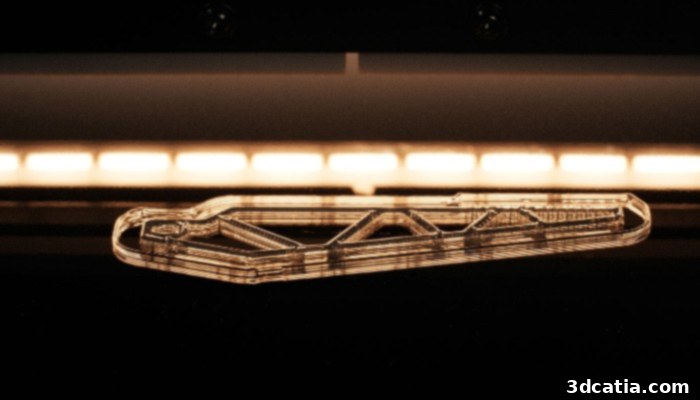
The high-temperature halogen lamp cures the individual layers, thermally crosslinking the material. (photo credits: InnovatiQ)
The Power of an Open Material Platform
A key differentiator of InnovatiQ’s LiQ320 and the Liquid Additive Manufacturing process is its Open Material Platform. This crucial feature liberates users from being locked into proprietary materials supplied by a single manufacturer. Unlike many other additive manufacturing systems that restrict material choice, the Open Material Platform empowers users to source liquid silicone rubber from various suppliers. This flexibility offers several significant advantages. Firstly, it allows companies to utilize their existing preferred materials or explore a wider range of specialized silicones tailored to specific application requirements, such as those with unique mechanical, thermal, or chemical properties. Secondly, it fosters innovation by enabling collaboration with material scientists and developers to create new, customized silicone formulations. Lastly, and perhaps most importantly from a business perspective, an open platform promotes competitive pricing and reduces material costs, giving users greater control over their supply chain and improving the overall economic viability of LAM for industrial production. This freedom of material choice makes LAM an even more attractive and adaptable solution for diverse manufacturing needs.
Versatile Applications of LAM Technology
The versatility and precision of Liquid Additive Manufacturing make it suitable for a broad spectrum of applications, ranging from rapid prototyping and the creation of individual bespoke objects to efficient small-scale industrial production. Its ability to produce functional parts with injection-molding-comparable properties opens doors in industries where high-performance elastomers are critical. The range of applications extends significantly into the automotive industry, where LAM can be used to produce custom gaskets, seals, dampeners, and sensor housings for electric vehicles, specialized engines, or interior components, allowing for rapid iterations and lightweight designs. Similarly, in medical technology, LAM is poised to revolutionize the creation of biocompatible devices, custom prosthetics, surgical guides, anatomical models, and flexible components for medical instruments, offering patient-specific solutions with unparalleled precision and speed. Beyond these, LAM holds immense potential for consumer electronics, aerospace, and general industrial manufacturing, particularly for producing customized grips, protective enclosures, vibration isolators, and, as we will explore in detail, specialized seals.
Transforming Gasket Manufacturing with 3D Printed Liquid Silicone
As previously highlighted, seals and gaskets are indispensable across countless industries, serving incredibly diverse purposes. In the construction sector, they are crucial for window seals, door seals, and insulation, ensuring energy efficiency and weather resistance. In the electrical industry, seals protect sensitive electronic components from a host of threats, including extreme heat, corrosive salts, environmental contamination, and moisture ingress. Given this extensive range of applications, the shapes, sizes, and complexities of seals are correspondingly varied, requiring tailor-made solutions for specific functional requirements. The demand for highly specialized seals continues to grow, particularly in sectors like electronics, where miniaturization and intricate designs necessitate small, complex gaskets that can be produced in smaller, more flexible batches.
Traditional manufacturing methods, primarily injection molding, struggle to respond flexibly and quickly to these evolving requirements. The need to first design and then manufacture a specific mold for each unique seal design introduces significant lead times and substantial setup costs. This economic barrier often makes small production runs of specialized seals unprofitable, forcing manufacturers to either compromise on design or absorb prohibitive costs. This limitation stifles innovation and agility in industries that demand rapid prototyping and quick adaptation to new designs or market shifts.
Liquid Additive Manufacturing directly addresses these critical challenges by eliminating the prohibitive lead times and set-up costs associated with mold manufacturing. This allows companies to respond with unprecedented speed and flexibility to emerging requirements and to adapt seamlessly to ever-shorter innovation cycles. Crucially, LAM-produced silicone seals maintain technical properties fully comparable to their injection-molded counterparts, while offering the unparalleled freedom to create virtually any geometric shape. This design freedom empowers engineers to develop highly optimized and customized seals that were previously impossible or uneconomical to produce. Furthermore, a truly revolutionary capability of LAM is the ability to print seals directly onto an existing component. In this streamlined process, the component is simply placed within the LiQ320 printer, and the liquid silicone rubber seal is precisely applied and cured directly onto its surface during the printing process, thanks to instantaneous thermal crosslinking. The result is a finished, integrated component that is ready for immediate use, eliminating assembly steps and reducing potential points of failure. The video below showcases various seals that have been efficiently and precisely produced using Liquid Additive Manufacturing, illustrating the technology’s practical impact.
The Future of Industrial Seals and Beyond
Liquid Additive Manufacturing represents a transformative leap forward in the production of silicone components, particularly seals and gaskets. By enabling the industrial 3D printing of liquid silicone rubber, InnovatiQ’s LiQ320 printer not only addresses the long-standing limitations of traditional manufacturing but also opens up a new realm of possibilities for design, customization, and production efficiency. The ability to produce complex geometries without molds, eliminate lead times, reduce costs for small batches, and even print directly onto existing parts fundamentally alters the landscape for industries reliant on high-performance elastomers. From intricate medical devices requiring biocompatible seals to robust automotive components demanding extreme durability, LAM provides an agile, precise, and economically viable solution. This technology is poised to accelerate innovation, shorten product development cycles, and enable the creation of highly specialized, high-performing products across a diverse range of sectors, cementing its place as a cornerstone of advanced industrial manufacturing.
Do you think that Liquid Additive Manufacturing could become the new standard for making seals and other critical silicone components? Let us know your thoughts in a comment below or join the discussion on our Facebook and Twitter pages! Don’t miss out on the latest advancements in 3D printing – sign up for our free weekly Newsletter here, delivering the most up-to-date 3D printing news directly to your inbox!
*Thumbnail photo credits: InnovatiQ