
Unveiling the Creative Journey: From 2D Graphics to 3D Printing Mastery with Digital Artist Mag-Net
In the expansive world of 3D printing, it’s remarkably easy to get lost in the sheer volume of readily available free STL files. Platforms like Thingiverse host hundreds of thousands of models, often allowing users to download and print without a second thought about the innovative minds behind their creation. Yet, every single one of these digital assets began as an idea, meticulously crafted by a designer. To shed light on the dedication and artistry involved, we had the privilege of speaking with Mag-Net, a truly passionate graphic 3D designer and a production manager hailing from Ohio. His journey into the realm of three-dimensional design is as intriguing as his captivating creations.
Mag-Net’s professional tenure in design is extensive, having immersed himself in the world of 2D design since 1999. This rich background in traditional graphic arts laid a solid foundation for his eventual foray into the third dimension. His transition began in 2007 when he first adopted Sketchup, initially as a powerful visualization tool for more complex 2D graphic design projects. It was through this experience, rendering and manipulating objects in a virtual 3D space, that he serendipitously discovered the burgeoning field of 3D printing, sparking a profound shift in his creative direction.
“When I first started designing POS displays, sports facilities, and various 3D signs, I always harbored a strong desire to bring my models into the physical world through 3D printing. However, at that time, access to 3D printers was still very limited and cost-prohibitive. I vividly recall the excitement I felt upon discovering that the capabilities and performance of 3D printers had dramatically improved, while simultaneously their prices had dropped to a point where purchasing one became a tangible possibility. This realization was a turning point for me, especially as I recognized so many fundamental similarities and transferable skills between my established work in 2D printing and this exciting new frontier of 3D printing!”
This early ambition to materialize his digital designs highlights a common aspiration among many graphic designers: to bridge the gap between virtual concepts and physical reality. Mag-Net’s experience underscores how the increasing accessibility of 3D printing technology has empowered a new generation of creators, allowing them to expand their artistic horizons and bring their visions to life in unprecedented ways. His keen observation about the parallels between 2D and 3D printing—in terms of conceptualization, spatial arrangement, and attention to detail—underscores the natural progression for designers transitioning between these mediums.

A vibrant model of Daffy Duck, meticulously crafted by Mag-Net.
The Wellspring of Creative Inspiration for 3D Modeling
For Mag-Net, inspiration is not a passive waiting game but an active immersion. He deliberately dives into the intricate worlds of established and highly recognized artists, drawing profound insight and creative energy from their masterpieces. His process often involves a fascinating exercise in artistic interpretation: he endeavors to reproduce elements of their work, not as mere copies, but by reinterpreting them through his unique lens and distinct personal style. This approach allows him to take celebrated works of art and present them to the contemporary world in fresh, compelling, and often unexpected ways, making them relevant to new audiences and mediums, particularly 3D printing.
This method of learning and creation is not just about emulation; it’s a deep study of form, composition, and narrative. By deconstructing the creations of others, Mag-Net gains a deeper understanding of artistic principles and technical execution, which he then applies to his own projects. This continuous learning cycle fuels his passion and hones his skills, pushing the boundaries of what he can achieve in 3D modeling.
“I find myself most profoundly inspired by the exceptional artists who have dared to invent entire universes within their work. There’s an immense joy in dedicating time to meticulously decode their creations, poring over reference images, and then extrapolating these elements into a coherent 3D image or model. This analytical and creative process is what truly motivates me. Through engaging in these intricate projects, I consistently realize that there are still countless techniques to master and an endless journey ahead to perfect my 3D modeling skills. It’s a continuous pursuit of excellence.”
Mag-Net’s quote beautifully encapsulates the blend of admiration and ambition that drives his creative process. His desire to delve into the intricate details of an artist’s “universe”—be it the distinctive character designs, the architectural marvels, or the atmospheric environments—is a testament to his dedication. This analytical approach, breaking down complex designs into their fundamental components and then rebuilding them in a three-dimensional digital space, is crucial for developing a versatile and sophisticated modeling skill set. It’s a journey of continuous learning, where each new project presents an opportunity to refine existing techniques and acquire new ones, ensuring his work remains fresh and innovative.
Mastering the Art of 3D Modeling: Tools and Workflow
When it comes to the technicalities of the 3D modeling process itself, Mag-Net employs a diverse suite of software programs, each chosen for its specific strengths and functionalities. This multi-tool approach is common among experienced 3D artists, allowing them to leverage the best features of different applications throughout their workflow.
“Towards the end of 2016, shortly after acquiring my first 3D printer, I embarked on my journey into 3D sculpting using the free Sculptris program. This intuitive software proved to be an excellent starting point, and my initial twelve models were designed entirely within its environment. A few months later, seeking more advanced capabilities, I began training with ZbrushCore, which offered a more robust set of sculpting tools. To truly push the boundaries of detail and complexity in my designs, I recently invested in the full version of Zbrush, and I am continually impressed by its powerful new tools and features. For the crucial finalization steps before printing – addressing aspects like precise sizing, optimal alignments, and generating necessary supports – I rely on MeshMixer, which is indispensable for ensuring a successful physical print.”
Mag-Net’s progression through different software mirrors a typical learning curve for many aspiring 3D modelers. Starting with Sculptris, a free and user-friendly digital sculpting application, allowed him to grasp fundamental concepts without a significant financial commitment. Sculptris excels at organic, free-form sculpting, making it ideal for character creation and intricate details. As his skills and ambitions grew, ZbrushCore provided a stepping stone to more professional-grade sculpting, offering a richer toolset for finer control and more complex geometries.
The eventual upgrade to the full Zbrush suite signifies a commitment to high-fidelity 3D modeling. Zbrush is widely regarded as the industry standard for digital sculpting, particularly in fields like character design, concept art, and detailed props, known for its ability to handle incredibly dense meshes and its vast array of brushes and tools. This allows Mag-Net to realize even the most intricate artistic visions. Finally, the integration of MeshMixer into his workflow is critical. This software acts as a bridge between the digital model and the physical print, enabling essential tasks such as mesh repair, analysis, and the generation of structural supports, all of which are vital for successful 3D printing and ensuring the integrity of the final object.
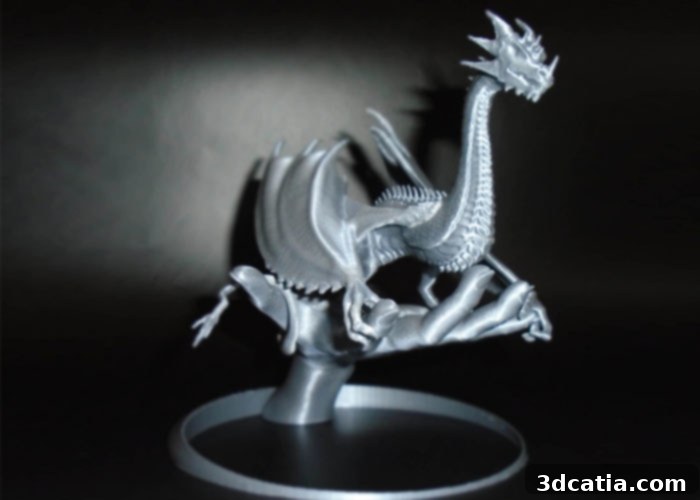
His Trusted 3D Printer and Future Aspirations
Mag-Net’s current workhorse for bringing his digital creations into the physical world is a Prusa i3 Mk2. This FDM (Fused Deposition Modeling) printer is highly regarded within the 3D printing community for its reliability, open-source nature, and excellent print quality. He primarily utilizes PLA (Polylactic Acid) filament, a popular and biodegradable plastic known for its ease of use and suitability for a wide range of applications. For his prints, he typically opts for default settings, achieving a smooth and detailed finish with a 0.15mm layer height. This setting strikes an optimal balance between print speed and the resolution of intricate details, showcasing the careful planning he puts into each physical manifestation of his art.
While the Prusa i3 Mk2 serves him well for his current projects, Mag-Net clearly has his sights set on the next frontier in 3D printing technology. His artistic vision is ever-evolving, and he recognizes the potential of other printing methods to unlock new levels of detail and precision.
“I am patiently awaiting the day when the price of SLA (Stereolithography) printers becomes more accessible so I can finally acquire one. The ability to add even finer details to my models and print them at significantly smaller scales is a major draw for me. However, I’m also starting to face a pleasant problem: my library is rapidly running out of room to display all my creations!”
Mag-Net’s anticipation for SLA printers highlights a common desire among designers who focus on highly detailed models. SLA technology, which uses a laser to cure liquid resin layer by layer, is renowned for its exceptional resolution, smooth surface finishes, and ability to reproduce incredibly fine features that FDM printers sometimes struggle with. This would undoubtedly open up new avenues for his character designs and intricate artistic interpretations. His humorous mention of running out of space in his library speaks volumes about his prolific output and the tangible joy he derives from seeing his digital concepts become physical objects, a testament to the satisfying nature of additive manufacturing.
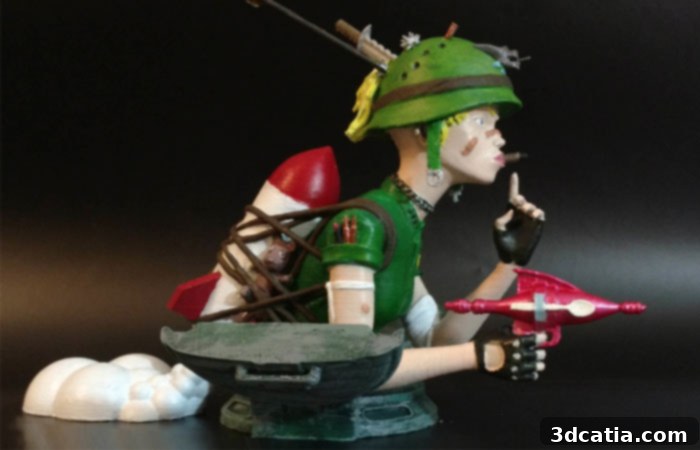
As our conversation drew to a close, we naturally inquired about his most cherished creations: which model held a special place in his heart during the design phase, and which one, once printed, became a particular favorite.
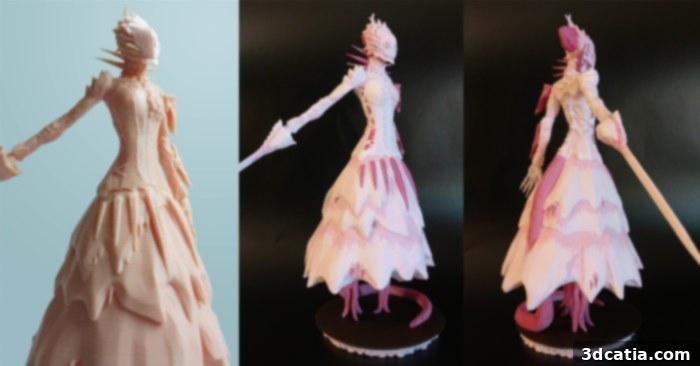
“My favorite creation is almost always the most recent model I’ve completed; this initial burst of enthusiasm typically lasts about a week. But if I were truly pressed to choose a definitive favorite, I would have to say the Tsumugi model from Knights of Sidonia. I absolutely adore the original design of that character. Furthermore, the way the pattern and textures are constantly shifting and evolving within its design fascinated me. I honestly wish I could have dedicated another month to that particular design, just to infuse it with even more intricate details and bring it closer to my ultimate vision.”
This sentiment reveals a lot about the creative spirit – the constant drive for novelty and the perpetual feeling that a piece is never truly “finished,” always capable of further refinement. The Tsumugi model from Knights of Sidonia clearly resonated deeply with Mag-Net. His appreciation for its “original design” and the “constantly changing textures” suggests a complex character that offered rich opportunities for interpretation in 3D. His desire to spend an additional month adding more detail speaks to the profound connection artists often form with their work and their relentless pursuit of perfection, knowing that every subtle curve and textured surface contributes to the overall narrative and aesthetic impact of the piece. It’s this dedication to detail and passion for artistic interpretation that makes Mag-Net’s work truly stand out.
To delve further into Mag-Net’s impressive portfolio and discover more of these remarkable 3D models, you can explore all his creations on Cults. Additionally, to stay updated with his latest designs, insights, and journey in the dynamic world of 3D printing and digital art, you can follow Mag-Net on Twitter.
What are your thoughts on Mag-Net’s captivating 3D models and his unique approach to digital artistry? We encourage you to share your feedback and impressions in the comment section below, or engage with us on our Facebook and Twitter pages! Don’t forget to sign up for our free weekly Newsletter, ensuring you receive all the latest news, interviews, and innovations in 3D printing directly to your inbox!