
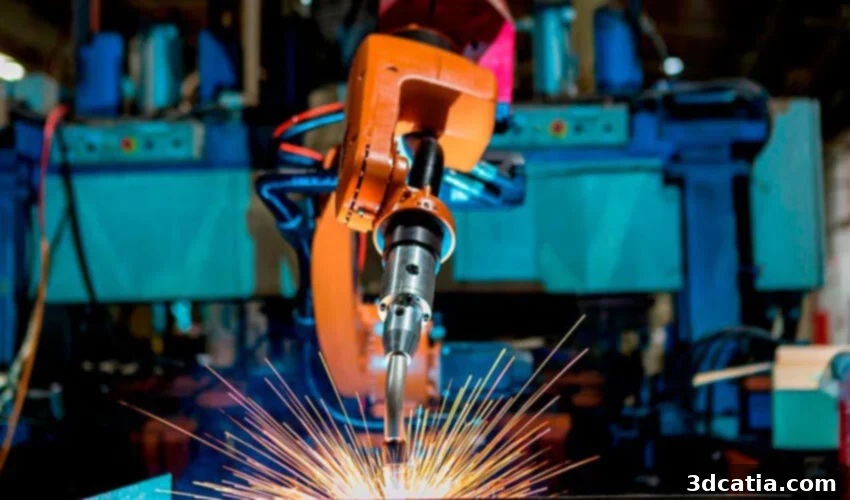
Unpacking the Top 3D Printing Trends of 2022: Growth, Consolidation, and Innovation in Additive Manufacturing
As 2022 drew to a close, it provided a valuable opportunity to reflect on the dynamic landscape of the additive manufacturing (AM) industry. This year showcased continuous progress and a clear trajectory toward greater industrialization, building on foundations laid in previous years. We observed the sector’s robust recovery from the global pandemic, coupled with an accelerating shift towards large-scale operations and large-format 3D printing. Concurrently, sustainability remained a central pillar of innovation and strategic development among industry players.
The inherent connection between sustainability and 3D printing is widely recognized. Additive manufacturing is frequently lauded for its potential to foster more environmentally friendly production processes, primarily through waste reduction. While no technology is without its challenges, particularly regarding plastic consumption, the industry’s commitment to sustainable development has intensified. This is evident in the continued expansion of the Additive Manufacturing Green Trade Association (AMGTA), which has grown to include 50 member companies – a significant increase since early 2021. This growth underscores a collective dedication among AM leaders to explore and implement greener manufacturing practices.
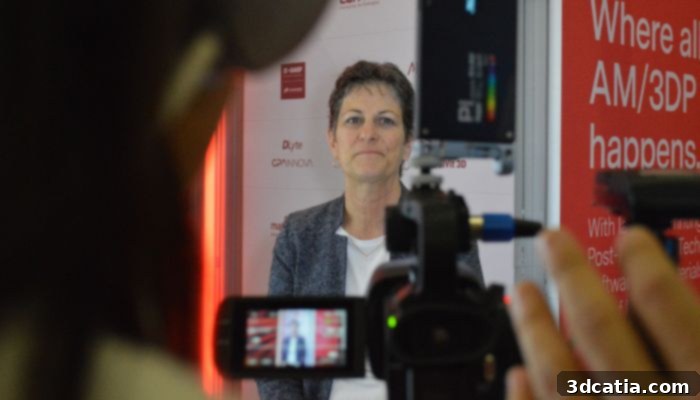
Sherri Monroe is the Executive Director of the AMGTA, an association which has grown rapidly as interest in 3D printing’s role in more sustainable manufacturing is explored (photo credits: 3Dnatives)
Beyond these enduring themes, 2022 also introduced several new, defining trends that reshaped the additive manufacturing landscape. This article delves into these key developments, examining how the industry has evolved, what new directions it has taken, and what these changes portend for the future of 3D printing. By taking a comprehensive look back at the year, we aim to uncover the crucial insights that emerged from the 3D printing sector.
Consolidation Takes Center Stage in 3D Printing
Contrary to some early-year predictions that suggested the 3D printing market was unlikely to consolidate in the near term, 2022 emphatically proved otherwise. Despite remarkable expansion across the industry, the year was profoundly marked by significant consolidation. This trend manifested not only through high-profile acquisitions and mergers but also through strategic partnerships, redefining competitive landscapes and market structures.
One of the most impactful consolidation events of the year was the merger between Ultimaker and MakerBot in May 2022. For those with a long history in 3D printing, MakerBot holds a special place as one of the pioneering desktop 3D printer companies, emerging from the open-source RepRap movement before being acquired by Stratasys in 2013. Ultimaker, on the other hand, is renowned for its reliable desktop solutions and the ubiquitous Cura software, a preferred slicer among 3D printing enthusiasts. This merger brought together two giants in the desktop FDM segment, promising a powerful new entity.
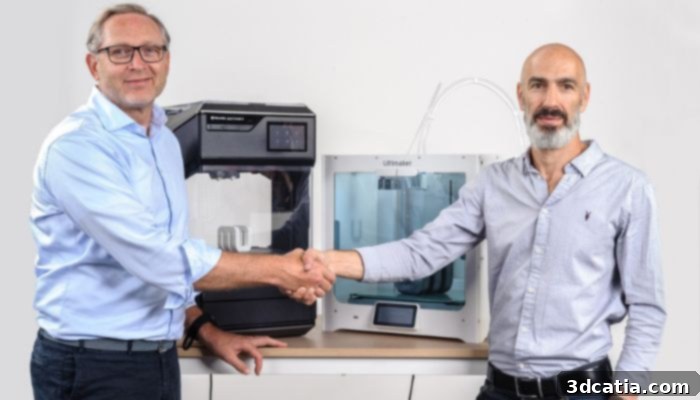
Nadav Goshen (left) and Juergen von Hollen (right) shaking hands on the closing of the merger (photo credits: Ultimaker)
The merger officially closed in September, leading to the creation of a new brand, UltiMaker. Both companies emphasized that this union was crucial for “fueling global 3D printing innovation” by synergizing their existing strengths and investing heavily in new research and development. Nadav Goshen, the former CEO of MakerBot and now CEO of UltiMaker, articulated this vision in a press release: “As we begin the next chapter together as UltiMaker, we will continue to focus on developing 3D printing innovations to advance the availability of accessible and easy-to-use 3D printing solutions. By combining our teams and technical expertise, we can work towards developing and delivering a comprehensive portfolio of products to support professional, educational and light-industrial applications.” This highlights a strategic move to dominate various segments of the market with a broader, integrated offering.
The consolidation trend was not limited to this single merger. Early in the year, in February, 3D Systems, after a period of divestiture in 2021, strategically re-entered the FDM market by acquiring Titan Robotics and Kumovis. This marked a significant return to a segment it had largely exited. Later, in August, 3D Systems further expanded its portfolio by seeking to acquire dp polar GmbH, a German innovator known for its high-speed AM systems optimized for mass production of customized components, signaling a clear push towards high-volume manufacturing capabilities.
Similarly, August saw Stratasys, a foundational leader in 3D printing, acquire Covestro’s 3D printing materials business, strengthening its material science expertise. Carbon, a notable player in resin-based 3D printing, also made its first acquisition with ParaMatters, a software company specializing in generative design. These moves collectively revealed a discernible pattern: AM companies are increasingly striving to build comprehensive, end-to-end solutions by acquiring firms that complement their existing strengths, whether in materials development, advanced software, or specialized hardware.
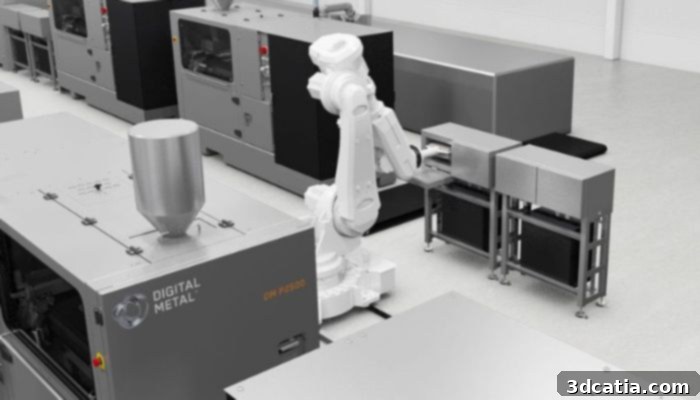
With its acquisition of Digital Metal, Markforged will move into the metal binder jetting market (photo credits: Digital Metal)
This quest for expanded capabilities was also evident as companies sought to integrate diverse AM technologies into their offerings. A prime example is Markforged, a company celebrated for its carbon-fiber and metal 3D printing processes, which announced its strategic move into the metal binder jetting market through the acquisition of Digital Metal. This acquisition is a testament to Markforged’s rapid growth and its ambition to become a direct competitor to industry heavyweights like Desktop Metal in the American market, especially in the burgeoning metal additive manufacturing space.
Furthermore, the consolidation wave was not exclusive to established AM companies. 2022 also witnessed major tech corporations, previously less active in the sector, acquiring 3D printing firms. Globally renowned camera manufacturer Nikon, for instance, launched a Public Takeover Offer for SLM Solutions in September, subsequently acquiring approximately 92.38% of the company upon the offer’s expiry. This signifies a growing interest from adjacent industries in leveraging additive manufacturing capabilities. In a similar vein, the publicly listed Fast Radius, which experienced a sharp decline in performance after its IPO, was acquired by SyBridge Technologies for $15.9 million through a sale process under the US bankruptcy code, illustrating the financial pressures some companies faced amidst the growth.
Beyond outright acquisitions, consolidation in 2022 also encompassed a significant increase in strategic partnerships. These collaborations, particularly between software developers, post-processing specialists, and 3D printer manufacturers, are designed to offer customers comprehensive “one-stop shop” solutions. This holistic approach is critical for the ongoing industrialization of additive manufacturing, streamlining complex workflows and making AM more accessible and efficient for large-scale production.
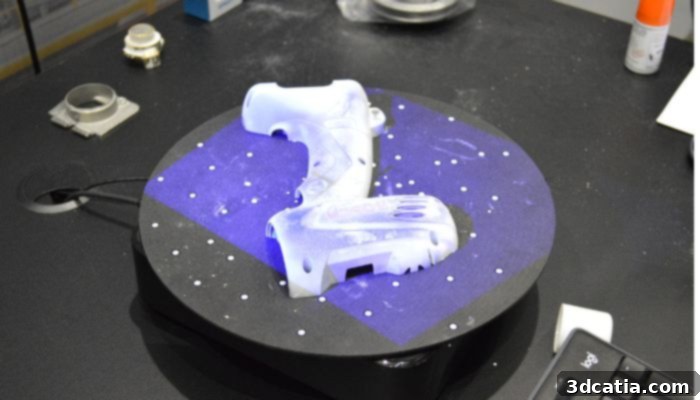
The importance of software is clear when you look at many of the acquisitions of partnerships in the AM sector over the course of 2022 (photo credits: 3Dnatives)
Illustrating this, Wayne Davey, Global Head of Sales and Go To Market for HP’s Personalization and 3D printing business, commented on the cooperation between AMT and HP. This partnership focuses on automation and software to develop a fully comprehensive solution for customers. He stated, “We are excited to take our partnership to the next level with AMT given their shared vision, shared customer, and proven portfolio of post processing technology. At HP we believe leveraging partnerships that bring unique expertise to the end-to-end Multi Jet Fusion workflow are key to accelerating the scale of additive manufacturing to production.”
Similarly, DyeMansion, a leading provider of post-processing solutions, partnered with Nexa3D to achieve similar synergistic benefits. Kevin McAlea, Chief Operating Officer at Nexa3D, explained the rationale: “It’s only natural that we would partner with DyeMansion, a leading provider of automated post-processing solutions for powder bed fusion, to ensure that our industrial customers can leverage high-throughput manufacturing capabilities from end-to-end as well as reduce their total cost of operation.” These examples underscore a growing industry sentiment that collaboration and integration are paramount for strengthening market positions and driving further adoption of additive manufacturing, solidifying consolidation as a defining trend of 2022.
Market Disruption Amidst Continued Growth
While consolidation and growth painted a picture of an maturing industry, 2022 also brought significant disruptions, proving that progress is rarely linear. From the onset of the year, external events introduced unforeseen challenges and shifts within the 3D printing market. A major catalyst for this disruption was the ongoing conflict in Ukraine, which officially began with the Russian invasion on February 24th, 2022, following months of escalating tensions that traced back to the annexation of Crimea in 2014.
Although seemingly distant from the intricacies of 3D printing, the additive manufacturing community responded swiftly and cohesively to the crisis. In the immediate aftermath, prominent industry figures and companies issued strong condemnations of the attack. Many 3D printing companies, including key players like EOS, ceased operations with Russian customers, while others mobilized to organize humanitarian aid and donations. This unified response demonstrated the industry’s commitment to global responsibility and ethical conduct.
Support for Ukraine extended beyond the initial reactions, continuing throughout the year. Notable initiatives included silent auctions launched by the “Together We Are Strong” collective, an alliance founded by companies such as Nexa3D, EOS, BigRep, Wohlers Associates powered by ASTM International, SYGNIS, Digital University, and 3YOURMIND. These auctions, held at major 3D printing events like Rapid + TCT 2022 and Formnext, raised crucial funds and awareness.
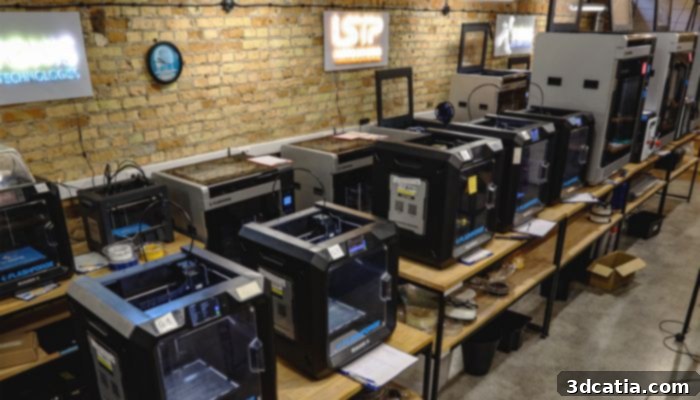
Companies like Poland-based Sygnis (whose 3D printing farm is pictured here) used 3D printing to help the war effort (photo credits: Sygnis)
The 3D printing community also provided tangible support by leveraging its unique capabilities. Individuals and companies globally collaborated to produce 3D printed parts for humanitarian and defense efforts. A powerful example was the creation of open-source tourniquet files, enabling rapid production of life-saving medical devices for injured civilians. Furthermore, companies like Unlimited Tomorrow and Oxford Performance Materials committed to sending 3D printed prosthetics to the war-affected region, showcasing the technology’s profound impact in crisis situations. New Ukrainian organizations, such as “3D Printing for Ukraine,” emerged, harnessing additive manufacturing to directly aid their country. In this instance, the disruption originated externally, but the AM community rose to the challenge, demonstrating its agility and humanitarian potential.
Beyond geopolitical conflicts, broader supply chain disruptions continued to pose significant challenges throughout 2022. While 3D printing is often heralded as a solution to supply chain vulnerabilities, as vividly demonstrated during the initial stages of the COVID crisis, the global shortages of critical materials like plastics and microchips affected nearly every industry, including AM. These issues were further compounded by the Ukraine war, which redrew trade routes almost overnight and restricted the movement of essential raw materials, creating ripple effects across the global economy.
Finally, despite robust growth in the AM sector over recent years, 2022 also presented less optimistic signals. A worrying trend was the series of layoffs announced by several prominent companies within the industry. While partly attributable to the ongoing market consolidation, these workforce reductions also reflected a broader downturn impacting the tech sector globally due to prevailing economic uncertainties and a looming recession. Major players like Desktop Metal, Nexa3D, Xerox, and Carbon all announced significant cuts to their workforces. Desktop Metal alone reduced its global workforce by 12%, signaling a period of strategic recalibration.
Ric Fulop, CEO of Desktop Metal, framed these reductions as essential “cost optimization measures,” noting, “As outlined on prior financial results calls, we have been focused on identifying opportunities to optimize our expense structure while maintaining our growth opportunities. We believe this initiative, which builds on steps we began to take in the second half of 2021 to integrate our teams, positions Desktop Metal to meet our near- and long-term financial commitments and supports our path to profitability.” This statement underscores a shift in focus for many companies, prioritizing financial sustainability and a clear path to profitability, even if it meant adjusting previous growth projections.
Automation and Software: Driving 3D Printing’s Industrial Future
The increasing importance of automation and sophisticated software in additive manufacturing was an undeniable trend in 2022. As 3D printing continues its march towards full industrialization, the need to automate various stages of the workflow has become paramount. This is particularly crucial for achieving the large-scale, high-throughput production demanded by modern industries. Throughout the year, we witnessed the emergence and refinement of numerous technologies and software solutions specifically designed to meet these evolving requirements, making production more efficient, reliable, and cost-effective.
As highlighted in our discussion on market consolidation, a clear indicator of this trend was the proliferation of strategic partnerships between 3D printing solution manufacturers and software providers. This synergy was especially pronounced in the realm of post-processing. Often less glamorous but equally critical as other AM steps, post-processing involves treating a printed part to achieve its final desired properties, such as surface finish, strength, or accuracy. This stage remains notoriously time-consuming and labor-intensive, as a recent report by PostProcess on post-processing trends confirmed. Automation offers a transformative solution to these challenges, a reality embraced by the industry through partnerships like those between AMT and HP, and DyeMansion and Nexa3D, which aim to streamline and accelerate these crucial final steps.
However, post-processing is just one area where automation gained traction. Software’s role has become increasingly vital across the entire AM workflow, particularly for monitoring and quality control. This is a key requirement for producing reliable, high-performance end-use parts, especially in demanding applications like aerospace and medical. Consequently, many companies are heavily investing in either developing proprietary software solutions to facilitate a seamless, complete end-to-end AM workflow or forging strategic partnerships with specialized software providers to enhance overall automation capabilities and data-driven decision-making.
Markforged serves as an excellent example, steadily enhancing its “The Digital Forge Platform,” an intelligent ecosystem designed to optimize its printing solutions. In 2022, Markforged notably enabled the integration of simulation software within The Digital Forge. Shai Terem, President and CEO of Markforged, emphasized the critical need for deeper integration into manufacturing operations: “Simulation enables our customers to adopt The Digital Forge deeper into their manufacturing operations by replacing more mission-critical tooling and end-use metal parts with validated and optimized 3D printed advanced composite parts with Continuous Fiber Reinforcement. Cloud-based software innovation like Simulation is core to our mission to bring industrial part production to the point of need.” This strategic focus on simulation and integrated software is crucial for validating part performance, accelerating iteration cycles, and ultimately scaling additive manufacturing for true industrial production.
Furthermore, Artificial Intelligence (AI) continued to solidify its presence within the 3D printing sector, particularly in enhancing automation. More companies are embracing machine learning and AI-driven software to improve critical processes such as real-time monitoring of print jobs, predictive maintenance, and defect detection. Researchers are also actively leveraging AI to boost productivity and explore new possibilities within AM, pushing the boundaries of what the technology can achieve.
A compelling example of AI’s transformative potential is a recent collaboration involving several Fraunhofer institutes: the Fraunhofer Research Institution for Additive Manufacturing Technologies (IAPT), the Fraunhofer Institute for Ceramic Technologies and Systems (IKTS), the Fraunhofer Institute for Toxicology and Experimental Medicine (ITEM), the Fraunhofer Institute for Mechanics of Materials (IWM), and the Fraunhofer Institute for Digital Medicine (MEVIS). These institutions united to combine AI with 3D printing to create highly customized finger implants. While still in its nascent stages, this groundbreaking project vividly demonstrates the immense possibilities that arise when 3D printing is synergistically combined with advanced software, artificial intelligence, and sophisticated automation, particularly in complex medical applications requiring unparalleled precision and personalization.
The Ascendance of Binder Jetting Technology
Finally, and notably, one particular 3D printing technology consistently captured attention throughout 2022: binder jetting. While not always the most discussed additive manufacturing process in previous years, binder jetting truly began to establish a significant foothold in 2022. Driven by advancements in compatible materials and the entry of new key players, it unequivocally earned its place among the top 3D printing trends of the year, signaling a major shift in its market perception and potential.
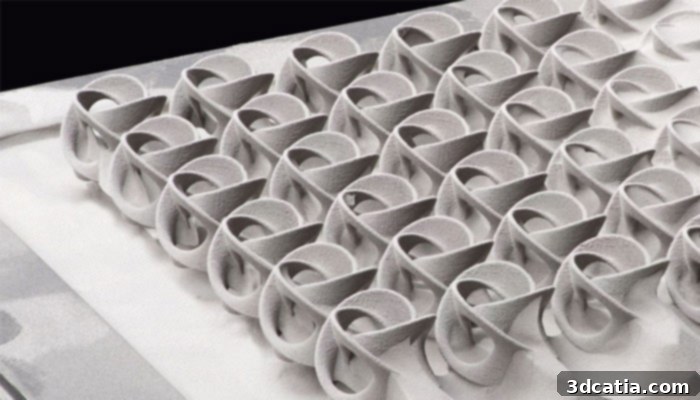
Photo credits: Digital Metal
A primary factor fueling binder jetting’s rise in 2022 was significant material development. Desktop Metal, in particular, expanded its already impressive range of available materials. While the company continued its heavy investment in metal and sand – two of the most common materials for binder jetting, exemplified by the launch of ExOne’s S-Max Flex Sand 3D printer – it also ventured into less conventional materials. Desktop Metal’s explorations into wood binder jetting, rubber, and even foam demonstrate a clear strategy to broaden the technology’s industrial applications. This diversification firmly establishes binder jetting as a viable method for producing not only intricate cores and molds but also functional end-use parts across a much wider array of industries.
The binder jetting market itself underwent considerable transformation in 2022. Following Desktop Metal’s acquisition of ExOne in 2021, the market initially appeared to shrink due to the consolidation of two major competitors. However, 2022 saw the emergence of powerful new players, injecting fresh competition and innovation. As previously mentioned, Markforged made a significant entry into this space.
The American manufacturer’s acquisition of Digital Metal unequivocally positioned it in the metal binder jetting market, establishing it as a direct and formidable competitor to Desktop Metal in various application fields. But this wasn’t the only major development. 2022 also marked the official launch of HP’s highly anticipated metal 3D printing solution. While HP’s polymer solutions utilize its proprietary Multi Jet Fusion (MJF) process, its new foray into metal additive manufacturing is powered by metal binder jetting. The groundbreaking Metal Jet S100 machine was first unveiled at IMTS 2022 and subsequently received significant attention at Formnext, cementing its status as a major market contender.
The strategic decisions by both HP and Markforged to commit to metal binder jetting underscore a shared belief in the technology’s unparalleled capability for mass production of end-use metal parts. Ramon Pastor, Global Head and General Manager of 3D Metals at HP Inc., articulated this vision: “Since announcing the breakthrough Metal Jet technology in 2018, we have been working to develop the industry’s most advanced commercial solution for 3D metals mass production. 3D printed metal parts are a key driving force behind digital transformation and the new Metal Jet S100 Solution provides a world-class metals offering for our customers, from the first designs right through to production, but more importantly helps them to realize the unlimited potential for digital manufacturing.” This clearly indicates that binder jetting is viewed as a pivotal technology for enabling truly digital, scalable manufacturing of metal components.
In conclusion, 2022 proved to be a remarkably eventful year for the additive manufacturing sector. While established trends like industrialization and a focus on sustainability continued their steady progression, the year was defined by several compelling new developments. The industry witnessed an unprecedented wave of consolidation through strategic mergers and acquisitions, demonstrating a drive towards integrated, end-to-end solutions. Simultaneously, external and internal disruptions, ranging from geopolitical conflicts to economic pressures and layoffs, tested the resilience and adaptability of AM companies. Crucially, the accelerating adoption of automation and advanced software solutions emerged as a foundational element for scaling production and ensuring quality. Finally, the significant advancements and strategic entries into the binder jetting market underscored its rising prominence as a key technology for mass production of both plastic and metal components. 2022 was anything but dull, setting an exciting and dynamic stage for what awaits the 3D printing world in 2023.
What are your thoughts on the 3D printing trends we’ve highlighted for 2022? Are there any other significant developments you believe were pivotal? We’d love to hear your predictions for additive manufacturing in 2023. Share your insights in a comment below or connect with us on our Linkedin, Facebook, and Twitter pages! Don’t forget to sign up for our free weekly Newsletter here to get the latest 3D printing news delivered straight to your inbox! You can also find all our videos on our YouTube channel.
*Cover Photo Credits: 3Dnatives