
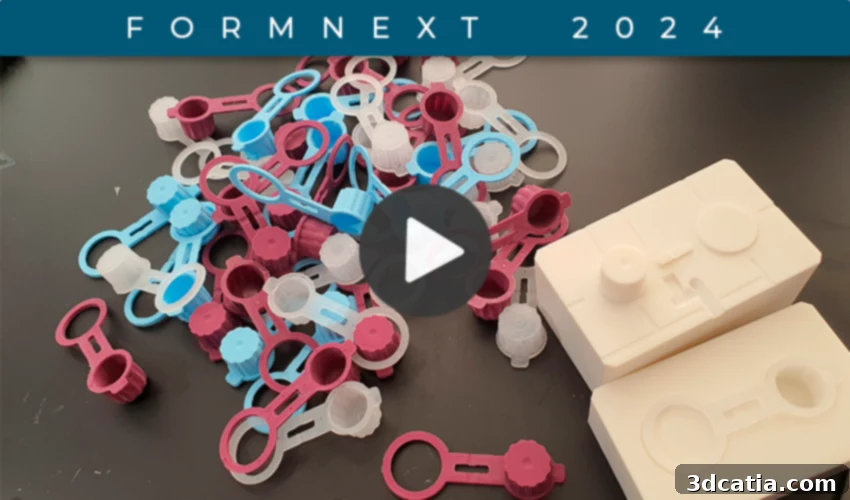
Axtra3D’s Lumia X1: Revolutionizing High-Speed SLA with Hybrid PhotoSynthesis and Advanced Material Innovation
In the rapidly evolving landscape of additive manufacturing, Axtra3D emerges as a pioneering force, headquartered in both the USA and Italy. This dynamic startup is dedicated to pushing the boundaries of resin-based 3D printing through its specialized high-speed Stereolithography (SLA) systems. At the heart of their innovation lies the flagship Lumia X1 printing system, an engineering marvel that integrates two groundbreaking proprietary technologies: Hybrid PhotoSynthesis (HPS) polymerization and TruLayer for superior layer separation. Unlike conventional 3D printing methods, the Lumia X1 brilliantly combines the precision of a laser, characteristic of classic SLA, with the rapid volumetric curing capabilities of a display, typically found in Digital Light Processing (DLP) systems. This ingenious fusion harnesses the inherent strengths of both technologies, yielding components that set new benchmarks in accuracy, resolution, and surface finish. To delve deeper into this unique printing process and Axtra3D’s vision, we had the distinct pleasure of speaking with Rajeev Kulkarni, Axtra3D’s Chief Solutions Officer (CSO), at the prestigious Formnext 2024 event.
Mr. Kulkarni provided invaluable insights into the intricacies of Axtra3D’s process, detailed the capabilities of the Lumia X1, and outlined its diverse application spectrum. A significant highlight of our discussion was the introduction of the new TrueSil-X50 silicone material. This innovative material boasts 100% purity, making it particularly attractive and essential for demanding sectors such as the medical industry. Furthermore, Kulkarni elaborated on Axtra3D’s strategic business models and elucidated the company’s ambitious self-perception as a “Form Leader” within the additive manufacturing ecosystem, signaling their commitment to shaping the future of industrial production.
The Genesis of Hybrid PhotoSynthesis (HPS): Bridging SLA and DLP
Traditional resin-based 3D printing technologies, SLA and DLP, each present their own set of advantages and limitations. Stereolithography (SLA), utilizing a laser to trace and cure each layer, is renowned for its exceptional precision, intricate detail, and ability to produce smooth surface finishes, making it ideal for high-fidelity prototypes and complex geometries. However, its sequential point-by-point curing process can be relatively slow, especially for larger parts. Digital Light Processing (DLP), on the other hand, employs a projector to flash an entire layer’s image at once, drastically accelerating print times. While DLP excels in speed and throughput, its resolution is typically tied to the pixel density of the projector, which can sometimes limit the achievable detail or the size of parts that can be printed without compromising fidelity. Axtra3D’s Hybrid PhotoSynthesis (HPS) technology was conceived to transcend these inherent trade-offs, combining the best of both worlds.
HPS intelligently integrates a high-precision laser and a powerful display unit within a single printing process. The laser component is leveraged for its unparalleled accuracy, meticulously tracing fine features, sharp edges, and critical dimensions, thereby ensuring outstanding resolution and surface integrity – hallmarks of superior SLA printing. Concurrently, the display unit rapidly cures the broader, less intricate areas of each layer, providing the high-speed volumetric polymerization characteristic of DLP. This synergistic approach allows the Lumia X1 to achieve an unprecedented balance of speed and precision. Parts printed with HPS exhibit not only remarkable accuracy and resolution but also an exceptionally smooth surface finish, often reducing or eliminating the need for extensive post-processing. This innovative combination ensures that Axtra3D’s systems can deliver complex, high-quality parts at speeds previously unimaginable for such levels of detail.
TruLayer Technology: Enhancing Precision and Reliability
Complementing the Hybrid PhotoSynthesis engine is Axtra3D’s equally innovative TruLayer technology. In resin 3D printing, the consistent and clean separation of a newly cured layer from the build plate or previous layers is crucial for print success and part quality. Inconsistent separation can lead to layer shifting, delamination, or complete print failure. TruLayer is engineered to optimize this delicate process, ensuring reliable and precise layer separation with every cycle. This advanced mechanism minimizes peel forces and reduces stress on the printed part during the separation phase, which is particularly vital for delicate geometries and large builds. By providing a stable and consistent foundation for each successive layer, TruLayer significantly contributes to the overall accuracy, structural integrity, and repeatability of parts produced by the Lumia X1. The combination of HPS for superior curing and TruLayer for flawless layer separation creates a robust and highly dependable additive manufacturing platform, capable of meeting the stringent demands of industrial applications.
The Lumia X1: A New Standard for Industrial 3D Printing
The Lumia X1 printing system is Axtra3D’s flagship offering, designed to address the most demanding requirements across various industries. By synergistically integrating Hybrid PhotoSynthesis and TruLayer, the Lumia X1 overcomes the long-standing compromises between speed, resolution, and build volume in resin 3D printing. This system is engineered for industrial environments where both rapid prototyping and end-use part production are critical. Its ability to produce parts with micron-level accuracy and exceptional surface quality at high speeds makes it invaluable for applications in sectors such as:
- Medical and Dental: For creating highly accurate surgical guides, custom prosthetics, dental aligners, crowns, and implants. The precision and surface finish are paramount for biocompatibility and functional fit.
- Automotive: For developing complex prototypes, functional parts, and intricate components that require high dimensional accuracy and robustness.
- Aerospace: Where lightweight, high-performance parts with stringent material properties and geometric accuracy are essential for critical applications.
- Consumer Electronics: For rapid iteration of new product designs, production of custom enclosures, and miniature components with fine details.
- Industrial Tooling: Fabrication of jigs, fixtures, and molds that demand high precision and durability.
The Lumia X1 offers a compelling competitive edge by enabling manufacturers to accelerate their product development cycles, reduce time-to-market, and achieve higher quality components with greater efficiency. Its advanced capabilities open new avenues for innovation, allowing engineers and designers to realize previously impossible geometries and complex functional parts.
Material Innovation: TrueSil-X50 Silicone
A significant revelation from CSO Rajeev Kulkarni at Formnext 2024 was the introduction of Axtra3D’s TrueSil-X50, a revolutionary 100% pure silicone material developed specifically for 3D printing. Silicone 3D printing has historically been challenging due to the material’s unique rheological properties and the complexities of curing. TrueSil-X50 represents a major breakthrough, offering a truly pure silicone solution that is especially critical for medical applications where material purity, biocompatibility, and sterilization capabilities are non-negotiable. The ability to 3D print pure silicone opens up a myriad of new possibilities across various industries:
- Medical Devices: Fabrication of custom anatomical models, surgical trainers, flexible implants, prosthetics, and soft robotic components for medical procedures. Its purity and biocompatibility are paramount.
- Soft Robotics: Creating highly compliant and flexible components for advanced robotic systems, enabling more dexterous and adaptive interactions.
- Seals and Gaskets: Producing customized seals, O-rings, and gaskets with complex geometries and high sealing performance for various industrial applications.
- Consumer Products: Development of flexible prototypes, wearable components, and customized accessories that require soft-touch characteristics.
The development of TrueSil-X50 underscores Axtra3D’s commitment not only to hardware innovation but also to expanding the material possibilities within additive manufacturing. By enabling the precise 3D printing of pure silicone, Axtra3D is empowering industries to create advanced, functional parts that were previously difficult or impossible to produce with traditional methods.
Axtra3D as a “Form Leader”: Shaping the Future of Additive Manufacturing
During our conversation, Rajeev Kulkarni articulated Axtra3D’s vision of being a “Form Leader.” This philosophy extends beyond merely manufacturing advanced 3D printers; it encapsulates a commitment to fundamentally redefine what is achievable in terms of part geometry, precision, and surface quality. Being a “Form Leader” means:
- Innovation in Geometry: Empowering users to design and produce parts with unprecedented complexity, finer details, and more accurate dimensions.
- Setting New Standards: Establishing benchmarks for accuracy, resolution, and surface finish that push the entire industry forward.
- Transforming Ideas into Tangible Forms: Facilitating the transition from complex digital designs to high-quality physical objects with greater fidelity than ever before.
- Material Advancement: Leading the charge in developing and integrating new, high-performance materials like TrueSil-X50, which expand the functional capabilities of 3D printed parts.
Axtra3D’s business models are designed to support this leadership vision. While the specifics of their models were discussed in detail by Kulkarni, they likely encompass direct sales of the Lumia X1 systems, providing comprehensive support and training, and potentially offering specialized printing services for companies requiring access to their unique technology without direct hardware investment. By focusing on both groundbreaking hardware and innovative materials, Axtra3D aims to solidify its position as a key enabler for the next generation of industrial additive manufacturing, offering solutions that drive efficiency, accelerate innovation, and deliver superior results to its clientele worldwide.
Experience Axtra3D at Formnext 2024
For those still in Frankfurt, attending Formnext 2024, a visit to the Axtra3D stand is highly recommended. Located in Hall 11.1, C39, their booth offers a unique opportunity to witness the Lumia X1 in action, explore sample parts showcasing the exceptional quality achieved through Hybrid PhotoSynthesis and TruLayer, and discuss potential applications directly with Axtra3D’s team of experts. Formnext, being the premier global exhibition for additive manufacturing and industrial 3D printing, serves as the perfect platform for Axtra3D to demonstrate its cutting-edge innovations and engage with industry leaders, partners, and potential customers. Don’t miss the chance to see firsthand how Axtra3D is setting new standards for speed, precision, and material versatility in the additive manufacturing space.
Are you already familiar with Axtra3D and the groundbreaking Lumia X1 system? What are your thoughts on their Hybrid PhotoSynthesis and TruLayer technologies? Will you be visiting their stand at Formnext to explore their innovations and learn more about TrueSil-X50? We encourage you to share your insights and questions with us! Let us know in a comment below or connect with us on ourLinkedIn,Facebook, andX (formerly Twitter) pages! To stay updated with the very latest developments in 3D printing technology, make sure to sign up for our free weeklyNewsletter here, delivering top news directly to your inbox! You can also find an extensive collection of our videos, including in-depth interviews and technology demonstrations, on our officialYouTube channel.