
Revolutionizing Healthcare: The Transformative Power of 3D Printing at Point-of-Care
The medical sector stands out as a frontier where additive manufacturing has witnessed an extraordinary surge in adoption and innovation. This advanced technology, often referred to simply as medical 3D printing, has become increasingly popular, profoundly impacting various aspects of patient care and surgical procedures. Its integration is so pervasive that we are now seeing a significant rise in dedicated 3D printing facilities within hospitals, bringing cutting-edge capabilities directly to the point-of-care. However, for many healthcare professionals and institutions, the journey of integrating 3D technologies into a clinical setting can seem daunting. Fundamental questions arise: where does one begin, and what critical considerations are paramount when applying these technologies specifically to point-of-care applications?
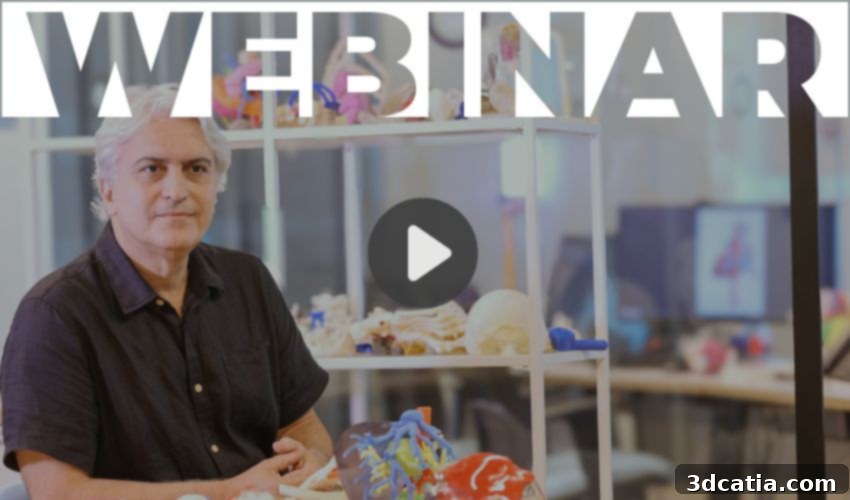
These pressing questions, among others, were comprehensively addressed in an insightful webinar titled “Making Your First Steps Into 3D Printing at Point-of-Care.” This engaging session featured Dr. Solomon Dadia, a leading authority and Head of Surgical Innovation and 3D Printing at one of the world’s most advanced medical institutions. Dr. Dadia shared his invaluable personal journey and practical blueprint for successfully establishing and operating a state-of-the-art 3D printing laboratory within a hospital environment.
Attendees of the webinar gained a deep understanding of how medical 3D printing is fundamentally reshaping the landscape of surgical planning and execution. The technology empowers surgeons with unprecedented precision, leading to significantly enhanced patient outcomes across a spectrum of complex procedures. Dr. Dadia specifically highlighted his extensive work leveraging 3D technologies to augment intricate orthopedic surgeries and elevate the standard of advanced patient care. This includes creating highly accurate anatomical models for pre-surgical visualization, developing patient-specific surgical guides for precise instrument placement, and even fabricating custom implants that conform perfectly to individual patient anatomies. The ability to visualize and rehearse complex operations beforehand drastically reduces risks, improves surgical efficiency, and ultimately contributes to faster recovery times and better functional results for patients.
For those keen to delve deeper into this critical area of medical innovation, the full replay of the webinar is available below. This is an unparalleled opportunity to learn directly from one of the foremost voices in 3D medical innovation, gaining practical, actionable insights into establishing and managing a successful 3D printing lab. Dr. Dadia offers step-by-step guidance, making this webinar an indispensable resource for anyone looking to explore and implement the future of healthcare through 3D technology in a leading hospital setting. Understanding the practicalities of material selection, printer calibration, software integration, and team training are all crucial aspects that were touched upon, ensuring a holistic view for aspiring medical innovators.
Key Topics Uncovered in the Webinar: Navigating 3D Printing in a Medical Setting
The webinar provided a comprehensive overview of several vital areas crucial for understanding and implementing 3D printing in a medical context. These included:
- The Entrepreneurial Journey: Dr. Dadia meticulously detailed his personal narrative and the methodical process involved in establishing a cutting-edge 3D printing lab from its nascent stages. This covered everything from initial conceptualization and securing funding to selecting appropriate technologies and building a skilled multidisciplinary team. His account serves as an inspiring roadmap for others considering similar ventures.
- Real-World Applications in Innovative Surgeries: The session showcased compelling, real-world examples of how 3D printing is applied in highly specialized surgical fields. Particular emphasis was placed on its transformative impact in orthopedic oncology, where patient-specific models aid in complex tumor resections and reconstruction; Cranio-Maxillofacial (CMF) surgery, which benefits from precise facial and skull reconstruction guides; and advanced plastic reconstruction, where custom implants and guides ensure superior aesthetic and functional outcomes. These examples illustrated the direct impact on patient lives and the significant advantages over traditional methods.
- Navigating Challenges and Celebrating Success: Dr. Dadia candidly discussed the significant obstacles encountered during the initial adoption and integration of 3D printing technology within a hospital framework. These challenges often include high initial investment costs, stringent regulatory hurdles, the need for specialized technical expertise, and integrating new workflows into existing hospital protocols. Simultaneously, he illuminated the pivotal breakthroughs and key successes that validated the efforts, demonstrating how perseverance leads to tangible improvements in patient care and operational efficiency.
- Shaping the Future of Surgery: The webinar provided a forward-looking perspective on the evolving and increasingly indispensable role of 3D printing in continually transforming patient care. Discussions revolved around personalized medicine, the potential for bioprinting in tissue engineering, and how 3D printing facilitates a more patient-centric approach to treatment, offering bespoke solutions that were previously unimaginable. This highlighted the potential for 3D printing to become a standard tool in various surgical disciplines.
- Interactive Q&A Session: A dedicated question-and-answer segment allowed attendees to directly engage with Dr. Dadia, posing their specific inquiries regarding 3D printing applications, challenges, and future prospects. This direct interaction provided invaluable clarity and personalized insights from a seasoned expert.
About Dr. Solomon Dadia: A Pioneer in Medical 3D Printing Innovation
 Dr. Solomon Dadia is recognized globally as a visionary leader at the forefront of surgical innovation and 3D printing. He currently serves as the Head of the Levin Center of Surgical Innovation and 3D Printing at the prestigious Tel Aviv Sourasky Medical Center in Israel. His pioneering work in this field began in 2016, when he established the hospital’s dedicated surgical 3D printing service while simultaneously holding the esteemed position of Deputy Director of Orthopedic Oncology for the National Unit at Sourasky. This dual role allowed him to immediately integrate 3D printing into critical surgical practices, demonstrating its profound utility.
Since then, Dr. Dadia has been instrumental in spearheading the widespread introduction of advanced 3D planning and printing into a multitude of major surgical disciplines. His relentless efforts and expertise have earned him a pivotal role in collaborating with Israel’s Ministry of Health, where he actively contributes to defining and implementing the future standards of care leveraging additive manufacturing technologies. His work is not merely theoretical; it directly shapes national healthcare policies and practices, ensuring that more patients benefit from these life-changing advancements.
Beyond his administrative and strategic roles, Dr. Dadia is an acclaimed lead surgeon with a unique specialization and extensive expertise in exceptionally complex orthopedic oncology surgeries. His commitment to pushing the boundaries of medical science is further underscored by his past experience as a research associate at the renowned MSk Lab at Imperial College London, UK. From 2014 to 2016, he served as a clinical advisor within a dynamic multidisciplinary team, engaging in cutting-edge research focused on software development and the intricate processes of 3D printing and planning for patient-specific instruments. These instruments are meticulously designed to enhance the precision and safety of bone tumor resection surgeries, ensuring maximal tumor removal while preserving healthy tissue.
Today, Dr. Dadia’s profound knowledge and practical experience make him a highly sought-after lecturer and consultant worldwide. He continues to pioneer the innovative use of 3D printing technology across an expanding array of surgical specialties, including Cranio-Maxillofacial (CMF), head & neck, pediatrics, spine, and plastic reconstruction surgeries, among others. His contributions are continuously broadening the scope of what is surgically possible and improving patient outcomes significantly.
Academically, Dr. Dadia boasts an impressive background, having earned his medical degree with honors from the Technion – Israel Institute of Technology, a testament to his early academic excellence. He further pursued a post-graduate degree in trauma and orthopedics from the Kaplan Medical Center, Israel, solidifying his foundational surgical expertise. Moreover, he is a distinguished graduate fellow in orthopedic oncology and joint arthroplasty, having completed his specialized training at the esteemed Royal Orthopaedic Hospital in Birmingham, UK. This comprehensive educational and practical background underpins his authority and innovative spirit in the field.
The rapid adoption of 3D printing for point-of-care applications in the healthcare sector represents a paradigm shift, promising a future of highly personalized and exceptionally precise medical interventions. We invite you to share your thoughts on these groundbreaking developments. Let us know your opinions and experiences in a comment below or join the conversation on our LinkedIn, Facebook, and Twitter pages! Don’t miss out on the latest advancements and sign up for our free weekly newsletter here to receive the most recent 3D printing news directly to your inbox! Additionally, you can find all our educational and insightful videos on our YouTube channel.