
Ultimate Guide to Choosing the Best 3D Printing Filament for FDM
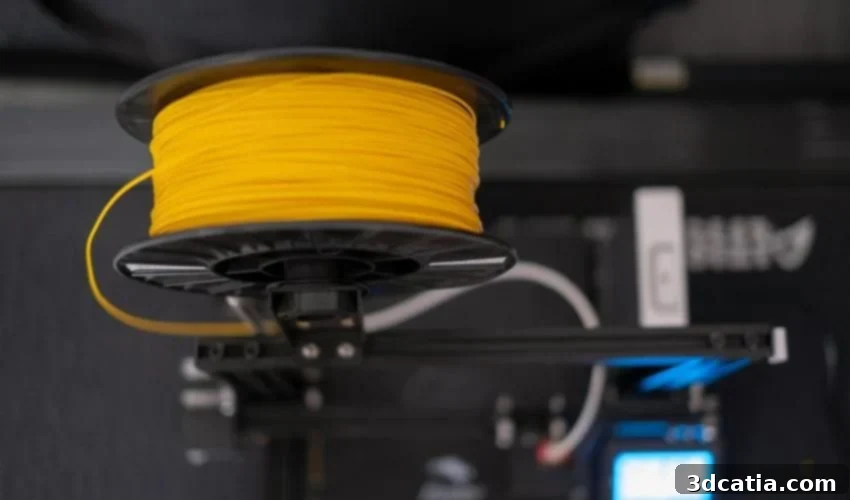
Once you’ve navigated the exciting journey of selecting your first 3D printer, a pivotal decision awaits: the choice of printing material. Whether you’re operating an FDM printer or a resin printer, the material you feed into your machine is not just an accessory; it’s the fundamental element that will dictate the quality, mechanical properties, aesthetic characteristics, and ultimate success of your 3D prints. For users of Fused Deposition Modeling (FDM) technology, this means delving into the diverse world of filaments. This comprehensive guide will illuminate the vast array of FDM 3D printing filaments available on the market, exploring their unique attributes, ideal applications, and potential challenges. Our goal is to equip you with the knowledge to confidently choose the filament that perfectly aligns with your project requirements, skill level, and printer capabilities, ensuring optimal results every time.
Understanding the Diverse World of FDM 3D Printing Filaments
Before embarking on your filament selection journey, it’s crucial to grasp the distinct characteristics and applications of the most common FDM filament options. Each material boasts a unique profile of strengths, weaknesses, and ideal printing conditions, making them suitable for different types of projects and user experiences. Let’s explore the prominent players in the filament arena.
PLA (Polylactic Acid)
PLA is undeniably one of the most popular and widely recommended choices for 3D printing enthusiasts, especially beginners. Its stellar reputation stems from its eco-friendly composition, derived from renewable resources such as corn starch and sugar cane, which significantly reduces its environmental impact. Beyond sustainability, PLA is renowned for its exceptional ease of use. It prints at a relatively low extrusion temperature (typically 180-220°C) and requires minimal or no heated bed (40-60°C is often sufficient, or even ambient). This characteristic minimizes common printing issues like warping and bed adhesion problems, making it incredibly forgiving for those new to 3D printing. PLA produces prints with good dimensional accuracy and a smooth finish, ideal for aesthetic models, prototypes, educational projects, and non-functional parts. While it’s relatively rigid, it can be brittle under stress, limiting its use in high-strength or high-temperature applications. However, its vast color palette, including specialty options like silk, glitter, and glow-in-the-dark, makes it a versatile choice for visually appealing creations.
ABS (Acrylonitrile Butadiene Styrene)
ABS is a stalwart in the 3D printing world, valued for its superior strength, impact resistance, and durability compared to PLA. It’s the same material used in LEGO bricks, giving you an idea of its robustness. However, ABS presents a greater challenge for beginners. It requires higher extrusion temperatures (220-260°C) and, crucially, a heated build plate (90-110°C) to prevent warping and ensure proper layer adhesion. The ideal printing environment for ABS often includes a heated enclosure to maintain a stable ambient temperature, minimizing thermal stress and maximizing print success. During printing, ABS can emit noticeable fumes, so adequate ventilation is highly recommended. Despite these challenges, its excellent mechanical properties, heat resistance (up to around 100°C), and suitability for post-processing with acetone vapor smoothing make it an excellent choice for functional prototypes, tool components, and parts exposed to moderate heat and impact.
ASA (Acrylonitrile Styrene Acrylate)
ASA is often considered ABS’s more advanced cousin. It shares many of ABS’s desirable properties, such as high strength, impact resistance, and heat tolerance, but with a significant advantage: superior UV resistance and weatherability. This makes ASA the preferred material for outdoor applications or parts that will be exposed to sunlight and harsh environmental conditions without degrading or yellowing. While it still benefits from a heated bed (90-110°C) and an enclosure to prevent warping, ASA generally exhibits less warping than ABS and produces fewer noxious fumes, making it somewhat easier to print. Its excellent aesthetic finish and durability make it perfect for automotive parts, outdoor enclosures, electrical components, and durable prototypes requiring long-term environmental stability.
PETG (Glycolized Polyethylene Terephthalate)
PETG strikes an impressive balance, combining the ease of printing found in PLA with the strength and durability characteristics of ABS. This makes it an incredibly versatile material and a popular choice for a wide range of applications. PETG boasts solid inter-layer adhesion, leading to very strong parts, and impressive impact resistance. It also offers good chemical resistance and temperature resistance (around 80°C), surpassing PLA in these aspects. Printing temperatures typically range from 230-250°C, with a heated bed (70-90°C) being highly recommended. PETG is known for its natural transparency, allowing for translucent prints when desired, but it’s also available in a vibrant spectrum of opaque colors. While generally easier to print than ABS, it can be prone to stringing, requiring careful retraction settings. It’s an excellent choice for functional parts, mechanical components, protective casings, and items requiring both durability and a clear or glossy finish.
TPU (Thermoplastic Polyurethane)
TPU represents the flexible end of the filament spectrum. As a thermoplastic elastomer, it offers exceptional elasticity, shock absorption, and abrasion resistance. It’s the ideal material for prints that require a certain degree of pliability, bendability, or a soft, rubber-like feel. TPU is widely used for wear parts, gaskets, seals, protective coatings, phone cases, drone parts, and even soft robotics components. Its flexibility can vary based on its Shore hardness rating, ranging from very pliable to semi-rigid. Printing with TPU can be more challenging due to its elastic nature, which can cause issues like stringing and clogging, particularly with Bowden-style extruders. Direct-drive extruders are often preferred for more reliable TPU printing. Typical print temperatures are between 220-240°C, with a heated bed (40-60°C) often helping with adhesion. Mastering TPU opens up a world of possibilities for truly unique and functional flexible designs.
Nylon
Nylon (Polyamide) is revered for its outstanding strength, durability, and impressive resistance to wear and abrasion. This makes it a go-to material for demanding engineering applications where high mechanical stress and friction are present. It’s commonly used for printing gears, bearings, functional prototypes, hinges, and other high-stress functional parts. Nylon also offers a low coefficient of friction, contributing to its excellent wear resistance. However, Nylon is notoriously hygroscopic, meaning it readily absorbs moisture from the air, which can severely degrade print quality if not properly stored and dried before use. It typically requires higher extrusion temperatures (240-270°C) and a heated bed (60-80°C), along with an enclosure, to achieve optimal results and minimize warping. Its exceptional strength-to-weight ratio and chemical resistance make it an invaluable material for advanced users seeking robust, long-lasting prints.
Composite Filaments
Composite filaments take common base materials like PLA, ABS, or Nylon and enhance them by infusing them with other materials such as wood fibers, metal particles, carbon fibers, or glass fibers. This fusion creates materials with unique properties and aesthetics.
- Wood-filled filaments: Offer a wood-like finish, can be sanded and stained, and produce an authentic wood aroma during printing. Ideal for aesthetic models, artistic pieces, and architectural prototypes.
- Metal-filled filaments: Contain finely ground metal powders, giving prints the weight, feel, and sometimes even the ability to be polished like real metal. Great for jewelry, props, and decorative items.
- Carbon fiber-reinforced filaments (e.g., Carbon Fiber PLA, NylonX): Significantly increase the stiffness, strength, and dimensional stability of the base material. They are lighter and stronger than pure plastic but can be abrasive. Excellent for drone frames, functional parts, and jigs.
- Glass fiber-reinforced filaments: Similar to carbon fiber, these enhance strength and stiffness, often offering improved impact resistance.
These specialty filaments expand creative possibilities but often require specific printing considerations, such as reinforced nozzles for abrasive particles.
High-Performance Filaments
High-performance filaments, such as PEEK (Polyether Ether Ketone), PEKK (Polyetherketoneketone), and PEI (Polyetherimide, often branded as ULTEM), represent the pinnacle of FDM materials. These advanced polymers are designed for the most demanding industrial and aerospace applications, offering extreme strength, rigidity, chemical resistance, and incredibly high operating temperatures (often exceeding 200°C, sometimes up to 260°C). Their exceptional properties come with significant requirements: very high extrusion temperatures (350-450°C), extremely high heated bed temperatures (120-150°C or more), and highly specialized, fully enclosed, heated print chambers to prevent warping and ensure successful prints. Printing these materials typically requires industrial-grade 3D printers and specialized knowledge, making them unsuitable for most hobbyist or prosumer machines due to cost and technical demands. They are used for critical functional components, medical devices, and aerospace parts.
Crucial Considerations Before Purchasing Your FDM Filament
Before committing to a particular filament, it’s imperative to understand that not all 3D printers are created equal, and not all are compatible with every material. The capabilities of your printer play a significant role in determining which filaments you can successfully use. Neglecting these specifications can lead to print failures, printer damage, or simply wasted material. Here are the key printer specifications you must check:
Printer Compatibility and Specifications
- Maximum Extrusion Temperature: This is arguably the most critical factor. Your printer’s hotend must be capable of reaching and maintaining the melting temperature required by the filament. For example, a printer limited to 240°C won’t be able to print Nylon (240-270°C) or high-performance polymers, which require much higher temperatures. Check your hotend’s maximum safe operating temperature.
- Maximum Heated Bed Temperature: Many filaments, especially ABS, ASA, PETG, and Nylon, require a heated print bed to prevent warping (also known as “lifting” or “curling”) and ensure proper adhesion. Ensure your printer’s build plate can reach the recommended temperatures for your chosen material.
- Closed Enclosure / Heated Chamber: For materials like ABS, ASA, and Nylon, a stable, warm ambient temperature around the print is crucial to prevent rapid cooling and subsequent warping. A fully enclosed printer, or one with a heated build chamber, provides this controlled environment. Without it, printing these materials can be significantly more challenging.
- Direct Drive vs. Bowden Extruder: While most filaments work with both, flexible filaments like TPU perform significantly better with direct-drive extruders, where the extruder motor is positioned directly above the hotend. Bowden systems, with a long tube between the motor and hotend, can cause flexible filaments to buckle or knot.
- Reinforced Nozzle Requirements: As we will discuss, some filaments contain abrasive particles that can wear down standard brass nozzles quickly.
Storage and Drying of Hygroscopic Filaments
Certain 3D printing filaments, most notably TPU, Nylon, PETG, and even some types of PLA, are highly hygroscopic – meaning they readily absorb moisture from the surrounding air. This isn’t just a minor inconvenience; moisture absorption can severely degrade print quality and mechanical properties. Signs of wet filament include sputtering or popping sounds during extrusion, excessive stringing, inconsistent extrusion, poor layer adhesion, and a noticeable reduction in print strength and finish. To combat this, it is paramount to store these filaments in a dry environment. Airtight containers with desiccant packets (like silica gel sachets) or vacuum-sealed bags are excellent solutions to shield them from humidity. However, if your filaments have absorbed too much moisture, they can often be salvaged. You can dry them in a dedicated filament dehumidifier or a low-temperature oven (typically 40-70°C, depending on the filament type – always check manufacturer recommendations) for several hours to restore their optimal printing properties. Proper storage and drying are crucial steps that can drastically improve print quality and reduce frustration, especially with sensitive materials.
Abrasive Filaments and Reinforced Nozzles
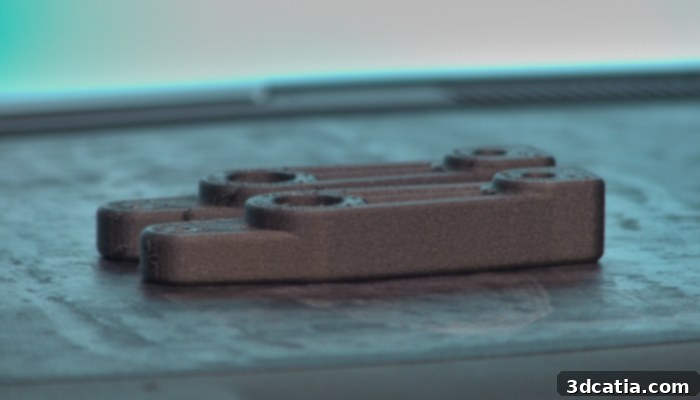
PA-CF (carbon-fiber-reinforced nylon) parts are strong, durable and rigid, but require an abrasive-resistant nozzle.
While composite filaments offer fantastic aesthetic and mechanical enhancements, those containing hard additives like metal particles, carbon fibers, or glass fibers can be highly abrasive. Printing with such materials through a standard brass nozzle will cause rapid wear, leading to increased nozzle diameter, poor print quality, and ultimately, the need for replacement. To extend the life of your printer’s hotend and maintain consistent print quality when using abrasive filaments, we strongly recommend upgrading to a reinforced nozzle. Common options include:
- Hardened Steel Nozzles: A popular choice, offering significantly improved wear resistance over brass at a reasonable cost.
- Nickel-Coated Brass Nozzles: Provide a harder surface than plain brass and often have better thermal conductivity than hardened steel, offering a good balance.
- Nozzles with Reinforced Ruby or Diamond Tips: These are the most durable and resistant to abrasion, offering superior longevity and print quality, though at a higher price point.
Investing in the right nozzle ensures that your printer can handle these specialized materials without premature wear and tear.
Selecting the Perfect Filament for Your Project
Now that you have a comprehensive understanding of the different types of filaments and essential printer considerations, let’s distill this knowledge into practical tips for choosing the ideal material for your specific 3D printing project. Making the right choice involves a careful evaluation of your project’s demands, the filament’s properties, and your printer’s capabilities.
- Consider the Application and End Use: Begin by thinking about what your finished part needs to do. Will it be purely aesthetic (e.g., a display model, figurine)? Will it need to withstand impact or stress (e.g., a tool handle, functional prototype)? Will it be exposed to heat, chemicals, or outdoor elements (e.g., automotive part, garden fixture)?
- For purely decorative or low-stress indoor parts, PLA is often sufficient due to its ease of use and finish.
- If you require tough, durable parts with good impact resistance, ABS or PETG are excellent choices.
- For parts demanding flexibility and shock absorption, TPU is the unrivaled option.
- When exceptional strength, wear resistance, or low friction is needed, especially in engineering contexts, Nylon is often the answer.
- For outdoor exposure and UV resistance, ASA outperforms ABS.
- Evaluate Key Physical Properties: Beyond general strength, delve into specific properties crucial for your application.
- Heat Resistance: How much heat will the part encounter? PLA has low heat resistance, while ABS, ASA, PETG, and especially high-performance filaments offer progressively higher thermal stability.
- Chemical Resistance: Will the part come into contact with oils, solvents, or other chemicals? PETG, ABS, ASA, and Nylon generally offer better chemical resistance than PLA.
- Transparency/Aesthetics: Do you need a clear part, or a specific finish? PETG naturally offers transparency, while composite filaments can provide wood, metal, or carbon fiber looks.
- Flexibility/Rigidity: Does the part need to bend or remain completely rigid? This dictates choosing between flexible filaments like TPU or rigid ones like PLA, ABS, or carbon fiber composites.
- Assess Ease of Printing and Printer Compatibility: Your skill level and printer’s capabilities are vital.
- If you’re a beginner, opt for easy-to-print filaments like PLA to build confidence. As you gain experience, you can move to PETG, then ABS/ASA, and finally Nylon or composites.
- Always double-check that your printer can physically handle the chosen filament’s requirements (extrusion temperature, bed temperature, enclosure). Trying to print high-temp materials on a low-spec printer will lead to failure.
- Budget, Price, and Availability: While not the sole deciding factor, cost is always a consideration. Some filaments are significantly more expensive than others (e.g., high-performance polymers vs. standard PLA). Ensure the chosen material fits within your project budget. Also, consider the availability of the filament from reliable suppliers.
- Post-Processing Requirements: Consider if your part will require any post-processing. ABS, for instance, is excellent for acetone vapor smoothing, which creates a glossy, seamless finish. Other materials might require sanding, painting, or annealing (heat treating) for increased strength. Choose a filament that is amenable to your desired post-processing techniques.
- Color and Finish Options: While often an aesthetic consideration, the available range of colors and unique finishes (matte, glossy, silk, glow-in-the-dark, metallic, transparent) can be crucial for your project’s visual appeal. Many filaments, especially PLA, come in an astonishing variety of options.
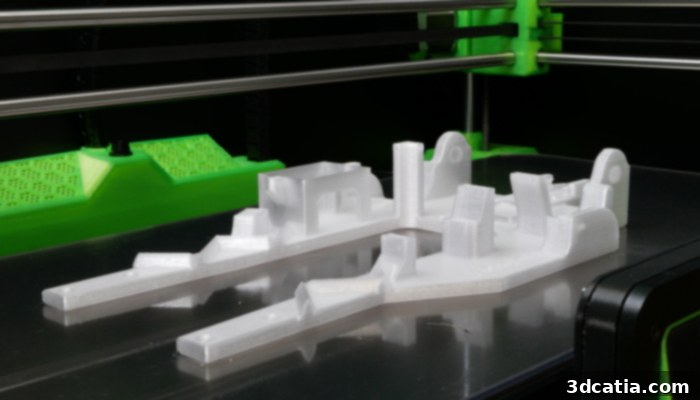
PETG is naturally transparent, but is available in a variety of colors.
Brand and Supplier Recommendations
To ensure the best possible 3D printing results, the quality of your filament cannot be overlooked. It’s often advisable to start by using the same brand of filament as your 3D printer, as many manufacturers optimize their filaments to work seamlessly with their hardware and provide pre-configured profiles. Beyond printer-specific brands, you can confidently turn to reputable specialist brands renowned for their consistent quality, tight tolerances, and wide material offerings. Brands like Polymaker, KIMYA, and Nanovia are well-regarded in the 3D printing community for their innovative and reliable filaments. Additionally, established petrochemical giants such as BASF also produce high-quality filaments, leveraging their expertise in polymer science. These brands invest heavily in research and development, offering a diverse range of materials designed to meet various printing needs, from basic PLA to advanced engineering composites. Opting for established suppliers helps minimize print failures due to inconsistent filament diameter, impurities, or poor winding, ensuring a smoother and more successful printing experience.
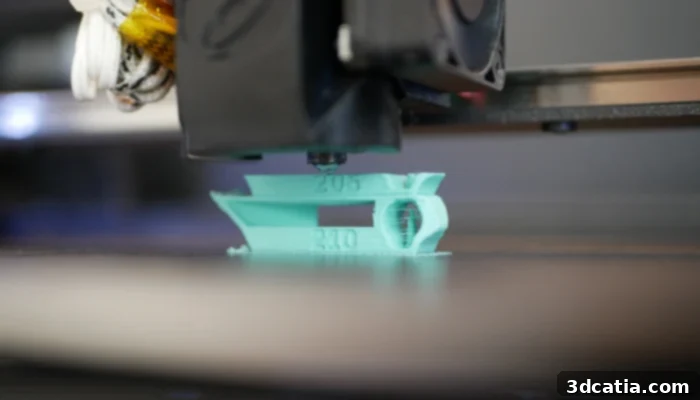
Always print test and calibrate parts, like a temperature tower, to ensure optimum printing results for each new filament.
By meticulously following these guidelines and conducting thorough research, you’ll be well-equipped to choose the perfect filament for any FDM 3D printing project. Always prioritize consulting your printer’s technical specifications and, crucially, run calibration prints and test parts (such as temperature towers or retraction tests) when trying a new filament or brand. This iterative process ensures optimal filament compatibility and helps fine-tune your printer settings for the best possible results. Remember, the world of 3D printing filaments is vast and constantly evolving; don’t hesitate to experiment with different materials and settings to discover what works best for your specific needs and unlock new creative possibilities.
What do you think about this comprehensive guide to choosing the best 3D printing filament? We’d love to hear your insights! Let us know in a comment below or connect with us on our LinkedIn, Facebook, and Twitter pages! Don’t forget to sign up for our free weekly newsletter here for the latest 3D printing news delivered straight to your inbox! You can also find all our engaging videos and tutorials on our YouTube channel.