
Helsinki Music Centre Unveils the Revolutionary 3D-Printed Rieger Organ: A New Era for Musical Innovation
The advent of a new year is traditionally marked by celebrations and, for many, the timeless allure of classical music. Across the globe, January 1st resounds with concerts that set a vibrant and melodious tone for the coming twelve months. The iconic New Year’s Concert by the Vienna Philharmonic Orchestra, for instance, draws millions of viewers annually, a testament to the enduring power of tradition. However, beyond these established events, other cultural hubs and capital cities are embracing innovative approaches to usher in the new year with unique musical spectacles. One such groundbreaking event recently captivated audiences at the Helsinki Music Centre, where a magnificent 3D-printed organ, crafted by the esteemed organ builder Rieger, celebrated its world premiere on January 1st, 2024. This remarkable instrument promises to redefine the boundaries of organ music and technology, setting an inspiring precedent for the year ahead. French organist Olivier Latry had the distinct honor of inaugurating the instrument, with plans for other internationally renowned organists to showcase its extraordinary capabilities in future concerts.
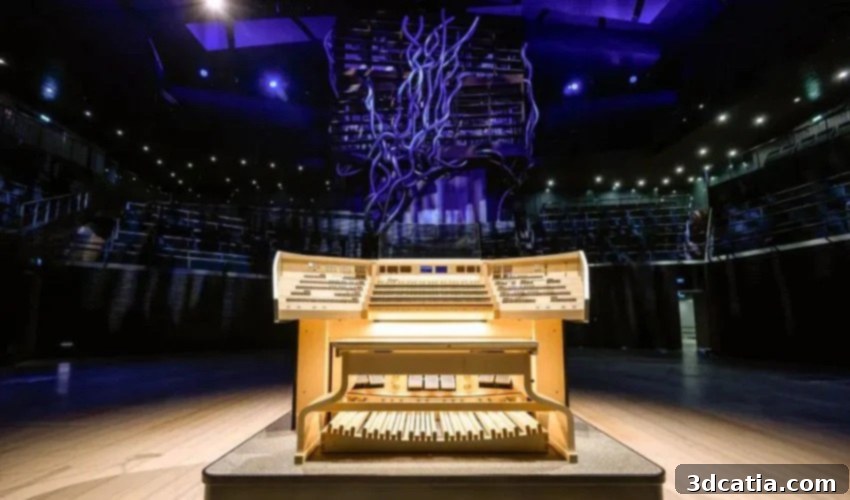
This monumental 3D-printed Rieger organ is not merely an instrument; it is a fusion of centuries-old craftsmanship and cutting-edge additive manufacturing. It proudly holds the distinction of being the largest organ not only in Finland but across the entirety of Scandinavia, making it one of the largest organs globally. Its design embodies a harmonious blend of traditional organ building principles with the transformative potential of modern 3D printing technology. The organ boasts an impressive network of over 260 meters of sounding pipes and intricate wind lines, meticulously engineered to produce an unparalleled auditory experience. What truly sets these components apart is their composition: they are made from a 100% recyclable, Finnish, wood-based UPM Formi 3D biocomposite. This innovative material contributes to a special and resonant sound quality that differentiates it from conventional organs. Beyond its sonic prowess, the Rieger organ is also a visual masterpiece. Its pipes and wind lines are not merely functional elements but are artfully interwoven into a captivating, modern sculpture, creating a striking aesthetic presence that complements the organ case and the grandeur of the concert hall.
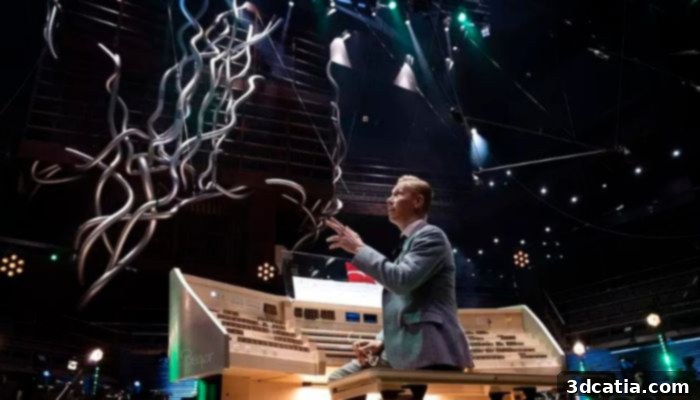
Finnish organist Jan Lehtola with the innovative 3D-printed Rieger organ. (Photo credits: JUHANI NIIRANEN / HS)
From a sonic perspective, the Rieger organ offers an exceptionally broad spectrum of possibilities. As a true hybrid instrument, it transcends geographical and music-historical sound ideals, enabling organists to explore an incredibly diverse repertoire. This innovative design allows for a flexibility previously unattainable in traditional organs, opening new avenues for musical expression. It integrates various features specifically engineered to expand its sound capabilities and enhance playing technique. A prime example is its movable soundboard, a revolutionary component that effectively transforms the organ into a “super synthesizer.” This feature grants unprecedented control over the sound, making it particularly appealing and empowering for organists who specialize in more contemporary or experimental pieces. At its inaugural concert, listeners were treated to a magnificent demonstration of this versatility, as the program spanned a vast musical landscape, ranging from the intricate compositions of Johann Sebastian Bach to the rich tapestry of the Romantic period, and further into the avant-garde works of the 20th century. This breadth of sound firmly establishes the 3D-printed Rieger organ as a versatile powerhouse, capable of delivering authentic performances across multiple musical eras while also pushing the boundaries of what an organ can be.
Finnish organist Jan Lehtola, who was deeply involved in the project from its nascent stages, eloquently articulated one of the core aspirations behind this ambitious undertaking: “One of our goals in the whole project was that the sound of the organ would surround the listener and come to the skin.” This profound desire to create an immersive and visceral auditory experience was, however, coupled with a significant number of challenges that required innovative solutions and persistent dedication. The journey to realizing such a grand vision in a contemporary concert hall presented a unique set of hurdles that distinguished it from traditional organ installations.
One primary challenge revolved around the acoustics of concert halls. Unlike the cavernous and often reverberant spaces of churches, where organs have historically thrived, modern concert halls possess much more sensitive and controlled acoustics. This difference means that organs, when placed in such environments, have not always delivered their full potential or perceived value. Furthermore, for an organ’s sound to fully develop and resonate effectively, it requires ample space. An instrument positioned with its back directly against a wall, for instance, can suffer a significant loss of sound quality, leading to an unsatisfactory and diminished listening experience. Overcoming these acoustic complexities required meticulous planning and innovative design to ensure the 3D-printed Rieger organ could project its sound with clarity and richness within the Helsinki Music Centre. Beyond the intricate sound engineering and acoustic considerations, the project also faced considerable financial hurdles. Although the Helsinki Music Centre (Musiikkitalo), completed in 2011, had always envisioned a concert organ as a central feature, the ambitious organ project only began to take concrete shape in 2015 due to the necessity of securing sufficient funding. This multi-year delay underscores the immense investment and fundraising efforts required for such a state-of-the-art musical instrument.
From Vision to Reality: The Journey of the 3D-Printed Organ
The creation of this magnificent instrument was a lengthy and geographically expansive endeavor, transforming from an ambitious idea into a tangible reality over several years. The 3D-printed Rieger organ stands as a shining example of international collaboration, uniting expertise and resources from across Europe. From its inception, the project benefited from the guidance of a distinguished panel of expert organists, whose invaluable insights helped shape the instrument’s design and capabilities. The final organ, comprising 124 meticulously crafted parts, is the product of a seamless partnership between entities in Finland, Spain, and Austria. UPM, a Finnish company, played a pivotal role by supplying the innovative biocomposite material specifically developed for this project. This advanced material was then transported to Burgos, Spain, where it was precisely printed into the complex shapes required for the organ’s pipes and other components. Following the 3D printing process, these intricate parts were shipped to the renowned organ builder Rieger, located in Vorarlberg, Austria, a company celebrated for its centuries-old tradition of exceptional organ craftsmanship, who took on the critical task of assembling and voicing the instrument.
Upon the completion of the hand-building phase in Austria, the numerous parts of the Rieger organ embarked on their final journey to Helsinki, where they were carefully reassembled within the grand concert hall of the Musiikkitalo. The process of bringing an organ to life is highly intricate and time-consuming. Each individual pipe required precise adjustment and tuning on-site to ensure optimal sound quality and harmony. It is therefore hardly surprising that the construction and installation of such a complex instrument typically span several weeks, often extending into many months of dedicated work by skilled artisans and technicians. The ambitious project reached its triumphant conclusion at the end of 2023, culminating in the official inauguration of the 3D-printed organ on January 1st, 2024. Kaisa Näreranta, Executive Director of the Helsinki Music Centre Foundation and the dedicated Project Manager for the Organ project, expressed immense satisfaction, stating, “The organ sounds magnificent. It’s wonderful to open the concert hall to the public and enjoy both the music and the visual experience that our new organ and performers will provide starting from January.” Her words capture the profound sense of achievement and excitement surrounding this innovative addition to the world of classical music.
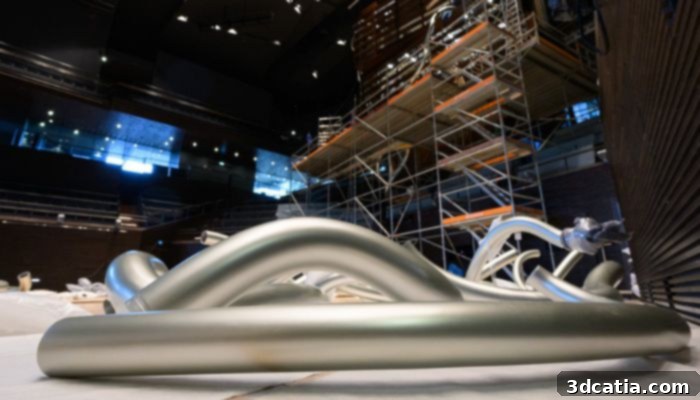
The visually striking and acoustically optimized 3D-printed organ pipes. (Photo credits: Musiikkitalo)
The meticulous manufacturing process, alongside the innovative material choice, played an integral role in shaping the unique sonic characteristics of the Rieger organ. The wood-based biocomposite material, UPM Formi 3D, selected for its acoustic qualities, proved exceptionally well-suited for large-format 3D printing. Its minimal shrinkage during cooling and rapid solidification properties were crucial for producing the precise and complex geometries required for organ pipes. This choice not only contributed to the instrument’s distinct sound but also aligned with a strong commitment to sustainability. The material itself is 100% recyclable, echoing the broader ethos of 3D printing as a sustainable manufacturing method, which significantly reduces waste and allows for on-demand production. This thoughtful integration of eco-friendly practices into such a grand artistic endeavor highlights a forward-thinking approach to both technology and environmental responsibility.
Beyond the compelling sustainability benefits and acoustic advantages, the decision to employ additive manufacturing for the organ was driven by several other practical considerations. 3D printing offers inherent reliability, ensuring consistent quality and precision in the production of complex components. Its remarkable flexibility allows for the creation of intricate and customized designs that would be challenging, if not impossible, to achieve with traditional manufacturing techniques. Furthermore, and crucially for a project of this scale, 3D printing proved to be a cost-efficient solution in many aspects. This economic advantage played a particularly significant role given the substantial financial investment required for the organ project, which amounted to more than 4 million euros. Of this considerable sum, approximately 3.17 million euros were allocated solely to the manufacturing of the instrument itself, underscoring the scale and ambition of the undertaking. The efficiency and capabilities of additive manufacturing were thus instrumental in making this monumental project financially viable.
To foster broader public engagement and secure the long-term success of the organ project, the Helsinki Music Centre Foundation ingeniously launched a naming campaign for the organ pipes. This initiative allowed individuals and organizations to symbolically adopt a part of this historic instrument, fostering a sense of ownership and connection. The material manufacturer UPM actively participated in this campaign through its impactful Biofore Share and Care program, further underscoring its deep commitment to supporting the arts and cultural initiatives. Hanna Maula, Vice President of Communications at UPM, eloquently articulated the company’s philosophy: “At UPM, we have a long tradition of supporting the arts, and we wanted to participate in the Helsinki Music Centre Foundation’s donation campaign. We have named all the fantastic facade pipes of the organ.” This collaboration not only provided vital financial support but also highlighted the powerful synergy between industry, innovation, and artistic endeavor. For those eager to delve deeper into the fascinating details of the 3D-printed Rieger organ, comprehensive information is available on the Musiikkitalo website, accessible HERE.
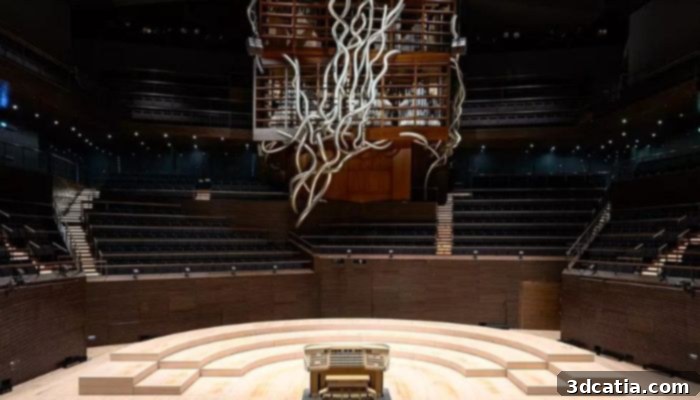
The magnificent 3D-printed Rieger organ proudly stands as the largest organ in Scandinavia. (Photo credits: Musiikkitalo)
What are your thoughts on this revolutionary 3D-printed organ and its impact on the future of musical instruments? We invite you to share your perspectives in a comment below or engage with us on our social media channels, including LinkedIn, Facebook, and Twitter! Don’t miss out on the latest advancements in additive manufacturing; be sure to sign up for our free weekly Newsletter here to receive breaking 3D printing news directly in your inbox. Additionally, you can explore a wealth of compelling content and videos on our YouTube channel, where we continually feature the most exciting innovations in the 3D printing world.
*Title image credit: Musiikkitalo