
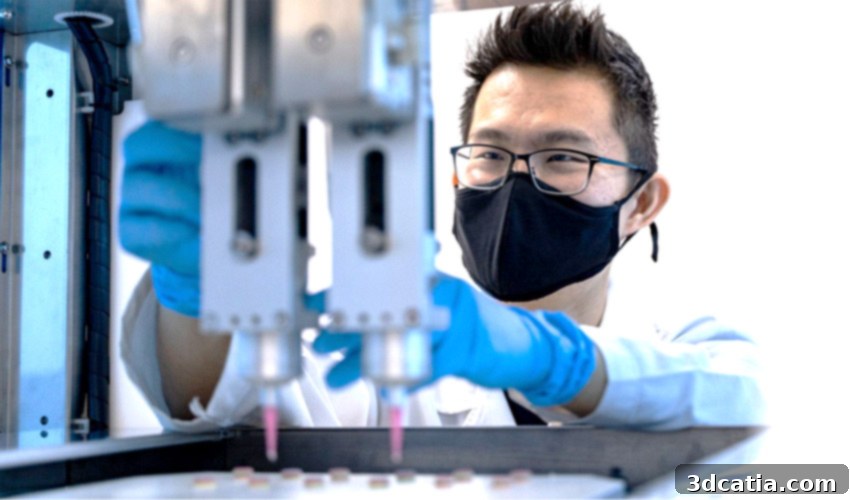
Transforming Pharmaceuticals: How 3D Printing and Craft Health are Revolutionizing Personalized Medicine
The global biopharmaceutical industry stands as a formidable pillar of the world economy, driving unprecedented innovation and contributing significantly to public health and economic prosperity. A recent report from the International Federation of Pharmaceutical Manufacturers and Associations (IFPMA) highlighted this impact, revealing that in 2022, the combined “direct, indirect, and induced effects” of the industry channeled an astounding $1.838 trillion into the global GDP. This remarkable contribution underscores the industry’s critical role, with research and development (R&D) expenditures serving as a primary catalyst. In fact, annual R&D spending within the biopharmaceutical sector dwarfs that of other high-tech industries, being 8.1 times greater than the aerospace and defense industry. This intensive investment fuels a relentless pursuit of scientific breakthroughs, positioning the pharmaceutical landscape as one that is constantly evolving and driven by innovation.
At the forefront of this wave of innovation is additive manufacturing, commonly known as 3D printing. While 3D technologies have long been integrated into the broader medical sector for applications ranging from prosthetics to surgical guides, their transformative potential within the pharmaceutical industry is now rapidly unfolding. These advanced fabrication methods are increasingly being leveraged to design and produce tailor-made medicines, precisely engineered to address the unique needs of individual patients. Beyond customized dosages, 3D printing offers the groundbreaking ability to combine multiple treatments into a single, convenient tablet – a “polypill” – thereby considerably simplifying medication regimens and improving patient adherence. Leading this innovative charge is Craft Health, a pioneering Singapore-based startup that has made the reality of personalized, controlled pharmaceutical products its specialty. We had the opportunity to speak with one of its visionary co-founders to delve deeper into their mission and groundbreaking 3D printing solutions.
3DN: Could you introduce yourself and your connection to 3D printing? How did Craft Health come about?
My name is Wei Jiang Goh, and my professional journey began as a pharmacist, practicing in a hospital setting here in Singapore. This foundational experience provided me with invaluable insights into the daily challenges faced by both patients and healthcare providers regarding medication management. My academic path then led me to pursue a unique PhD-MBA double degree scholarship at the National University of Singapore (NUS). It was during this period that I truly discovered and cultivated a profound passion for the exciting convergence of cutting-edge technology and commercial application, realizing its immense potential to solve real-world problems. Towards the culmination of my PhD, I engaged in discussions with Dr. Seng Han Lim, who is now my esteemed co-founder, about collaborating to tackle a persistent challenge that resonated deeply with both of us, given our shared backgrounds as practicing hospital pharmacists.
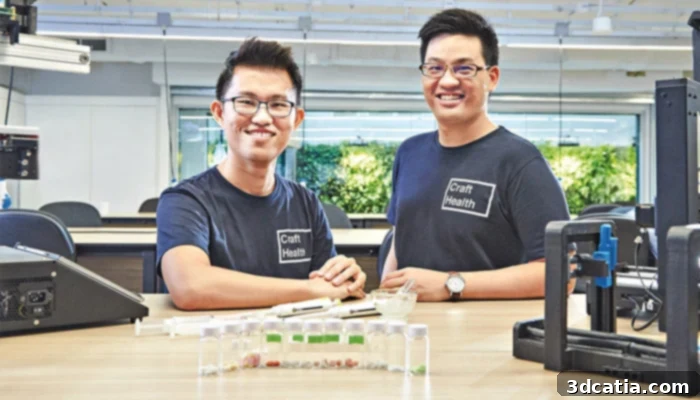
Dr. Lim Seng Han (left) and Dr. Wei Jiang Goh (right), the co-founders of Craft Health
Our collective experience in the hospital environment brought into sharp focus the pervasive issue of polypharmacy – the administration of too many medications to a single patient. We witnessed firsthand, on a daily basis, patients being discharged with bags brimming with various pills, often leading to confusion, medication errors, and profound ‘pill-taking fatigue.’ This scenario is frequently linked to poorer patient outcomes, including reduced adherence to prescribed regimens, increased risk of adverse drug interactions, and a significant diminishment in overall quality of life. Recognizing the gravity of this challenge, we dedicated considerable time to brainstorming innovative solutions. It was during these deliberations that we realized the immense potential in Dr. Lim’s ongoing PhD thesis work, which centered on leveraging 3D printing technology for the personalization of medicines.
We quickly understood that by combining Dr. Lim’s expertise in 3D printing personalized medicines with our extensive pharmaceutical formulation skills, we possessed a unique capability. This synergy allowed us to envision 3D printing as a powerful tool to consolidate multiple medications into a single “polypill.” Such an approach promised to dramatically reduce the daily pill burden for patients, thereby directly addressing and mitigating the complexities and negative consequences associated with polypharmacy. Driven by this clear vision, we successfully secured a small grant to rigorously test and validate our innovative technology. The positive results from these initial trials paved the way for the establishment of Craft Health in Singapore in 2019, marking the beginning of our journey to revolutionize drug delivery.
3DN: How are Craft Health products manufactured using your platform?
Craft Health™ is dedicated to empowering a diverse range of stakeholders within both the nutraceutical and pharmaceutical industries. This includes vital entities such as hospitals, clinics, compounding pharmacies, as well as pharmaceutical and supplement manufacturing companies. Our mission is to alleviate various critical pain points they encounter through the deployment of our advanced Craft Health™ 3D printing platform. This innovative platform is designed to streamline processes and introduce unprecedented flexibility into drug and supplement production.
The specific pain points we address are manifold and impactful. They include facilitating accelerated new product development through 3D printing’s capabilities as a rapid prototyping tool, enabling faster iterations and testing of novel formulations. Crucially, our platform provides a sophisticated solution for combining multiple medicines or supplements into a single, convenient polypill, a significant step in managing complex regimens. Furthermore, it offers unparalleled customization of the physical form of tablets, allowing for precise control over shape, geometry, color, and even taste, which can greatly enhance patient acceptance and adherence. A key strength is the ability to achieve specific, highly customized active ingredient release profiles—be it immediate, delayed, or sustained release—tailored to therapeutic needs. Finally, the platform supports just-in-time manufacturing, reducing waste and inventory needs while increasing responsiveness to demand.
The core of Craft Health™’s innovation lies in its comprehensive Craft Health™ 3D printing platform, which integrates three indispensable elements designed to work in perfect synergy:
- CraftMake: This is our state-of-the-art 3D printer, distinguished as one of the world’s first specifically engineered for pharmaceuticals and nutraceuticals. A critical feature of CraftMake is its utilization of a proprietary heat and UV-free technique. This gentle manufacturing process is paramount for preserving the integrity and efficacy of heat-sensitive active pharmaceutical ingredients (APIs) and sensitive biological compounds, ensuring that the therapeutic properties of the medications are not compromised during production.
- CraftControl: Our intuitive and intelligent 3D printing software is the brain behind the operation. It comes pre-programmed and optimized with a myriad of precise printing parameters specifically tailored for the accurate and consistent 3D printing of pills and tablets. CraftControl ensures that every batch maintains uniform quality, dosage accuracy, and desired physical characteristics, crucial for pharmaceutical compliance and patient safety.
- CraftBlends: This comprises our proprietary mix of non-active ingredients, carefully selected and sourced from the United States Food & Drug Administration (USFDA) Generally Regarded As Safe (GRAS) list. The formulation of CraftBlends is meticulously designed to create a 3D printable paste that can be precisely modulated to achieve specific controlled release profiles. This flexibility allows for the development of medicines with immediate release for rapid action, delayed release to bypass the stomach, or sustained release for prolonged therapeutic effects, directly addressing diverse patient needs and therapeutic requirements.
Working in unison, these three interconnected elements are meticulously optimized to enable the 3D printing of both nutraceuticals and pharmaceuticals in an exceptionally precise, controlled, and consistent manner, all while maintaining a relatively high throughput. This integrated approach ensures not only the quality and safety of the final product but also the efficiency of the manufacturing process. Our core capabilities at Craft Health therefore encompass comprehensive formulation development, advanced 3D printing expertise, and reliable pilot-scale production, all conducted within a stringent Class 10K cleanroom environment to meet the highest standards of pharmaceutical manufacturing and regulatory compliance.
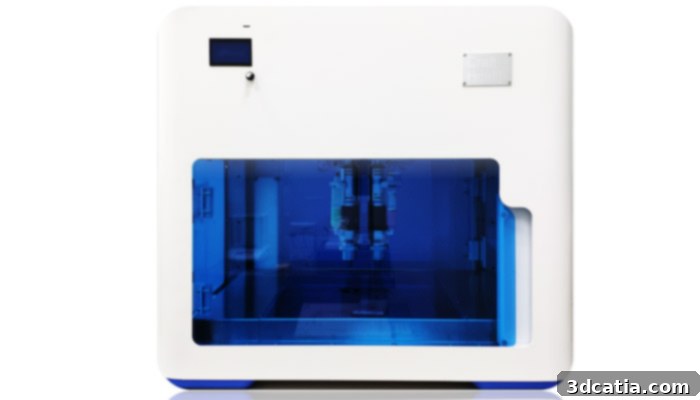
CraftMake makes it possible to produce drugs without the use of heat or UV rays, preserving API integrity.
3DN: What are the main advantages of additive manufacturing in the pharmaceutical industry?
The advent of 3D printing, or additive manufacturing (AM), ushers in a new era of possibilities for the pharmaceutical industry, offering a multitude of benefits that promise to profoundly impact patient care and drug development. These advantages extend far beyond mere novelty, addressing long-standing challenges in medication efficacy, patient adherence, and manufacturing flexibility.
Firstly and perhaps most significantly, AM facilitates the mass customization of medicines. Unlike traditional manufacturing methods that produce standardized doses, 3D printing allows for precise adjustments in dose, the selection of active pharmaceutical ingredients, and even the formulation of highly specific release profiles—whether immediate, sustained, or delayed. This level of personalization is revolutionary for populations with unique needs, such as pediatric patients requiring micro-doses, geriatric patients with multiple comorbidities, or oncology patients whose drug requirements can fluctuate dramatically. Tailoring medication to the individual can significantly improve therapeutic outcomes and minimize adverse effects.
Secondly, 3D technologies provide powerful tools for modifying or masking the taste profile of unpleasant-tasting drugs. Many essential medications, especially for children, possess bitter or off-putting flavors that lead to non-adherence. Through precise layering and incorporation of flavoring agents, AM can render these drugs more palatable, drastically improving patient compliance, particularly in vulnerable populations. Furthermore, 3D printing allows for the design of complex shapes or geometries that are impossible to achieve with traditional tablet presses. These intricate designs can be engineered to achieve specific controlled release profiles, offering new avenues for targeted drug delivery to particular organs or tissues within the body, enhancing therapeutic precision and reducing systemic side effects.
What’s more, 3D printing offers an elegant and effective solution to the pressing issue of polypharmacy. By combining several different active drugs into a single, cohesive tablet – a polypill – it dramatically reduces the number of pills a patient must take daily. This not only streamlines complex medication regimens, making them easier to manage for patients and caregivers, but also significantly lowers the risk of medication errors, enhances patient adherence, and ultimately contributes to better overall health outcomes and a higher quality of life. This simplification is crucial for patients juggling multiple chronic conditions.
Finally, additive manufacturing empowers the pharmaceutical industry with unparalleled flexibility for small-batch production. Traditional manufacturing processes are typically optimized for economies of scale, making the production of small series for testing purposes, or for niche patient populations (like those with rare diseases), prohibitively expensive and often unprofitable. 3D printing, however, allows for agile manufacturing of limited quantities of drugs. This capability is invaluable for early-stage R&D, preclinical and clinical trials (especially Phase I and II where patient numbers are small), and for the development of orphan drugs or personalized therapies. It drastically reduces the time and cost associated with bringing new, targeted treatments from concept to clinical application.
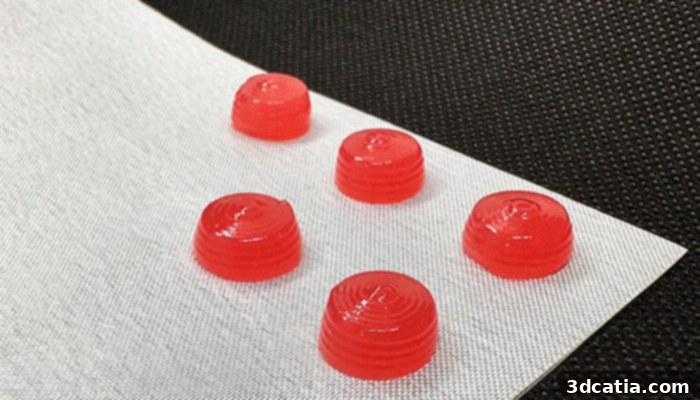
Examples of 3D printed medicines showcasing diverse shapes and potential for personalized dosages.
3DN: What are Craft Health’s future projects and strategic directions?
At Craft Health, our future trajectory is sharply focused on advancing two pivotal vertical markets, leveraging the full capabilities of our innovative 3D printing platform to address unmet medical needs and enhance pharmaceutical delivery. Our commitment to pioneering personalized medicine guides these strategic initiatives.
Firstly, we have made significant strides in developing a sophisticated Colon-targeting Drug Delivery System (DDS) through our Craft Health 3D Printing Platform. The colon represents an often-neglected yet critical site for treating various diseases, where traditional drug delivery faces considerable challenges due to degradation in the upper gastrointestinal tract. By ingeniously combining advanced geometric design with specialized material selection, our DDS is engineered to precisely target the large intestine, ensuring that therapeutic agents are delivered directly to the site of action. This precision holds immense promise for developing a pipeline of novel therapeutics, particularly for challenging conditions such as colorectal cancer and inflammatory bowel disease (IBD), where localized drug action is crucial for efficacy and minimizing systemic side effects. We are actively collaborating with various research groups and clinical partners to bring these targeted therapies to fruition.
Secondly, we are strategically expanding our presence and offerings within the compounding pharmacy sector. Compounding pharmacies play a vital role in creating customized medications for individual patients, yet their processes can often be labor-intensive, prone to variability, and limited in their ability to achieve complex formulations. Our specialized range of 3D printers, exemplified by CraftMake, is poised to transform this landscape. These printers can consistently and continuously produce pharmaceutical and nutraceutical preparations with unprecedented precision. By integrating our 3D printing technology, compounding pharmacies stand to benefit from significantly reduced labor costs, increased production output, and the ability to offer a wider array of custom-tailored medications with superior consistency and quality. This represents a significant leap forward in empowering pharmacies to deliver highly personalized patient care efficiently.
Lastly, in a landmark initiative, we are proud to announce our collaboration with a leading Singapore hospital to launch Southeast Asia’s very first clinical trial involving 3D printed medicines. This groundbreaking trial underscores our dedication to bringing these innovative therapies to clinical validation and real-world patient benefit. The initial use case for this trial will be a novel polypill specifically designed for tuberculosis (TB) treatment. Adherence to prescribed medication regimens is critically important in TB, a highly contagious disease, where non-compliance can lead to drug resistance and continued spread. By consolidating multiple TB medications into a single, easier-to-take polypill, we aim to significantly improve patient adherence, thereby enhancing treatment efficacy, reducing transmission rates, and positively impacting public health outcomes in the region and beyond. This trial represents a major milestone in the global adoption of 3D printed pharmaceuticals.
3DN: Any last words for our readers regarding the future of 3D printed medicines?
We invite all our readers to keep a close watch on this rapidly evolving space, particularly next year, as Craft Health continues to innovate at the forefront of 3D printed medicines. The potential to personalize healthcare and revolutionize drug delivery is immense, and we are incredibly excited about the advancements we are making. For those eager to learn more about our pioneering work and the future of pharmaceutical innovation, we encourage you to visit our official website HERE.
What are your thoughts on Craft Health and the transformative potential of 3D printed medicines? We’d love to hear from you! Please share your insights in a comment below or engage with us on our LinkedIn, Facebook, and Twitter pages! And don’t forget to sign up for our free weekly Newsletter here, to get the latest 3D printing news delivered straight to your inbox! You can also find all our compelling videos and demonstrations on our YouTube channel.
*All Photo Credits: Craft Health