

Hyperion Robotics: Pioneering Sustainable 3D Printed Construction for Global Impact
The construction sector stands at the precipice of a technological revolution, with additive manufacturing emerging as a transformative force. For years, industry leaders have been rigorously exploring the vast potential of 3D printing to redefine building processes. What was once considered a futuristic concept – the idea of a 3D printed house – has now become a tangible reality, with numerous successful 3D printed structures erected worldwide. This shift has led to an increasing number of innovative companies adopting additive manufacturing for diverse construction applications. Among these pioneers is Hyperion Robotics, a dynamic startup based in Finland. Established in 2019, Hyperion Robotics gained international recognition in the summer of 2020 through a significant partnership with an American non-profit organization. Their ambitious project involves utilizing 3D printing technology to construct schools in Madagascar, aiming to dramatically enhance access to education in this developing African nation. Intrigued by the company spearheading such a impactful initiative, we connected with Dr. Ashish Mohite, Hyperion Robotics’ Chief Design Officer, to delve deeper into their vision and operations.
Unveiling Hyperion Robotics: A Vision for Automated, Sustainable Construction
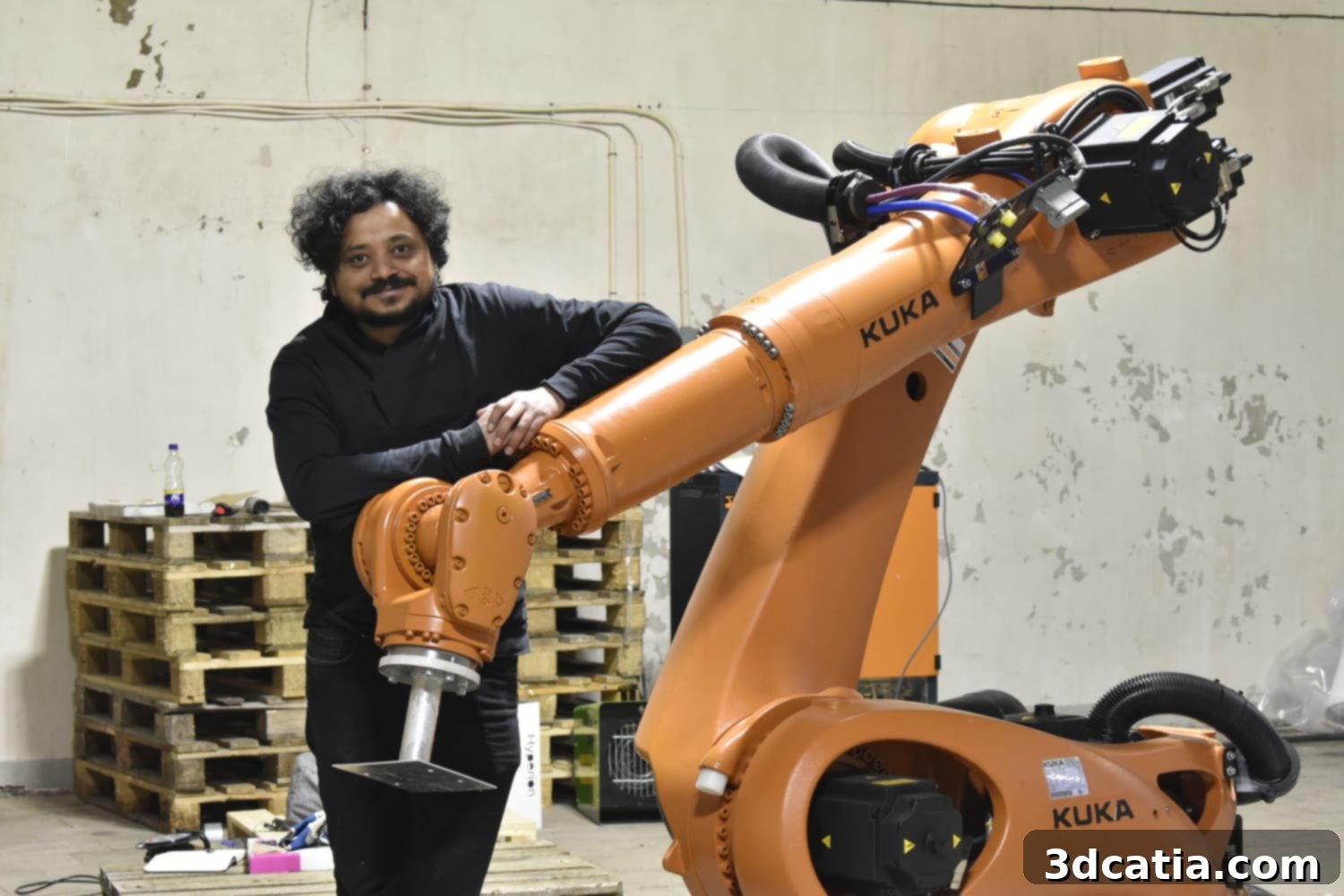 “My name is Ashish Mohite, and I am an architect with a background as a PhD researcher at Aalto University in Finland,” Dr. Mohite begins, introducing himself. “My journey into 3D printing research began nine years ago, cultivating a deep expertise in this evolving field. As co-founder and Chief Design Officer of Hyperion Robotics, my primary focus is on integrating automation, advanced robotics, and cutting-edge 3D printing technology to fundamentally transform the construction industry. Our goal is to make it significantly more efficient, environmentally sustainable, and responsive to modern demands.” He further explains, “The company was officially launched in Finland in 2019. I joined forces with my co-founder, Fernando De los Rios, who serves as Hyperion’s CEO. My extensive experience in 3D printing and architecture was brought to bear on a pervasive problem I personally encountered in home building and large-scale construction projects, both in India and Europe: the sheer inefficiency and lack of automation. Our collective ambition is to make a profound impact on what is widely regarded as one of the least automated and most conservative industries globally, driving it towards a future of innovation and progress.”
The Core of Innovation: Hyperion Robotics’ 3D Printing Technologies
When discussing their technological foundation, Dr. Mohite elaborates, “Our proprietary 3D printing system is built upon robust industrial robotic arms. Currently, we primarily deploy Kuka robots in our various projects, leveraging their precision and reliability. However, it’s crucial to emphasize that we are ‘robot agnostic.’ This means our advanced, user-friendly software – designed to be intuitive for anyone, even those without extensive technical backgrounds – along with our specialized 3D printing equipment, can be seamlessly integrated with a wide array of robotic systems. This flexibility allows us to adapt to diverse project requirements and existing infrastructure.”
He continues, focusing on materials: “On the materials front, we utilize a custom-engineered concrete mix. A key innovation here is its significantly reduced cement content, achieved by incorporating carefully selected recycled waste components. This not only makes our mix more sustainable but also allows for optimization tailored to different applications and environmental conditions, ensuring durability and performance regardless of the specific build. We are actively collaborating with our industrial partners to continuously develop even more sustainable and higher-performance mixes, pushing the boundaries of what concrete 3D printing can achieve. Furthermore, we’ve developed a highly specialized method for incorporating reinforcement directly into the 3D printing process, which significantly enhances the structural integrity and longevity of our printed structures. We pride ourselves on offering our technology as a comprehensive, end-to-end solution for our clients, mirroring the established workflow where construction companies and developers typically engage with subcontractors. Our approach is inherently adaptable, allowing us to customize our offerings precisely according to the unique needs of each project and client.”
Notable Ventures: Hyperion Robotics’ Impactful Projects to Date
“At Hyperion Robotics, we are committed to engaging in projects that are not only innovative but also carry significant impact,” Dr. Mohite states. “To illustrate, we recently concluded the Create Summer School, an intensive program focused on concrete 3D printing. This initiative was a collaboration with our esteemed academic partner, the CREATE Group from the Southern Denmark University in Odense. During this summer school, we conducted hands-on 3D printing workshops and executed a variety of concrete experiments, engaging a diverse group of students from various academic backgrounds. This project marks one of our initial collaborations with the CREATE Group, which is expertly led by Professor Roberto Naboni. Through this partnership, we are actively striving to push the theoretical and practical boundaries of 3D printing within the built environment. Concurrently, we are exploring innovative methods to substantially reduce the construction industry’s significant carbon footprint, leveraging the state-of-the-art testing facilities available at the University to validate our sustainable approaches.”
He adds, “Another profoundly interesting and impactful project we are involved in is with Thinking Huts. This American NGO has a commendable mission: to 3D print schools in countries across Africa, regions where a substantial portion of the child population currently has little to no access to formal education. This initiative perfectly aligns with our values of leveraging technology for social good and addressing critical global challenges through sustainable construction methods.”
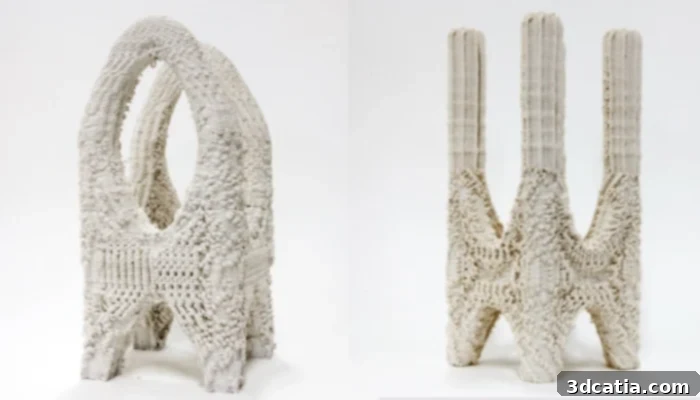
3D printed prototypes of artificial reefs. (Image credits: Hyperion Robotics)
The Thinking Huts Project: Bridging the Educational Divide in Madagascar with 3D Printing
Delving deeper into one of their most inspiring initiatives, Dr. Mohite elaborates, “The Thinking Huts project holds immense significance for us, as it brilliantly merges groundbreaking innovation, core sustainability principles, and a profound social impact. In Madagascar and across many parts of Africa, millions of children face severe limitations in accessing quality education, largely due to a lack of adequate infrastructure. Recognizing this critical challenge, we made the conscious decision to join forces with Maggie Grout and her dedicated team at Thinking Huts, serving as their crucial technology partner. Our contribution extends beyond just providing our advanced robotic systems; we bring our extensive know-how in both 3D printing and construction methodologies to the table. This collaborative effort is aimed at successfully building the very first 3D printed school in Madagascar. We are incredibly confident in the success of this inaugural project.”
“Once this pioneering school is successfully completed and operational,” he continues, “it will serve as an invaluable steppingstone. This achievement will bring Thinking Huts significantly closer to their overarching mission of vastly increasing global access to education for underserved communities. Looking ahead, our vision is to rapidly scale this impact. We anticipate deploying more of our advanced robots and providing ongoing support to help them construct schools on a much larger scale, potentially benefiting tens of thousands of children who currently lack educational opportunities. The speed and efficiency of 3D printing, combined with its ability to use local materials and create durable, resilient structures in challenging environments, make it an ideal solution for addressing such urgent humanitarian needs. This project truly embodies how technological advancement can be harnessed to create meaningful, life-changing social good, offering a scalable and sustainable path to education where traditional construction methods are often prohibitive.”
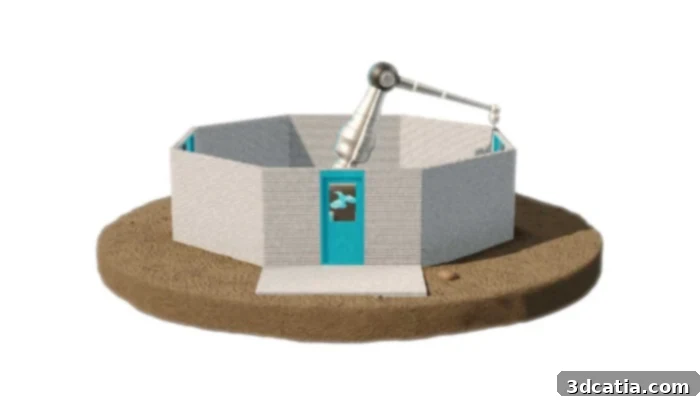
An illustration of a 3D printed school in Madagascar for The Thinking Huts project.
Hyperion Robotics’ Vision for the Future: Automated Construction Sites
“At Hyperion Robotics, we hold a bold and transformative vision for the future of construction: we envision a world where construction sites are fully automated, seamlessly operated by intelligent robots,” Dr. Mohite shares with enthusiasm. “We are determined to be a primary driving force behind this impending revolution, leading the industry into an era of unprecedented efficiency and innovation. Our immediate and strategic goal is the global deployment of our cutting-edge 3D printing systems. This involves not only providing our existing clients with unparalleled experience and robust support but also solidifying these crucial relationships. By fostering strong, successful partnerships, we aim to strategically leverage these collaborations to penetrate new markets and attract a broader spectrum of customers. These are clients who share our conviction that the conventional architecture and construction industries are ripe for change, and who are eager to make a tangible, positive impact in the world through sustainable and advanced building practices. We are actively laying the groundwork for exciting new ventures and collaborations that will shape this automated future. Furthermore, we have several truly incredible projects currently in our pipeline, which we are very excited to announce to the public in the very near future, further cementing our role as innovators in the field.”
The Evolving Landscape of 3D Printing in Construction & Architecture
Reflecting on the broader industry, Dr. Mohite offers his perspective: “We are incredibly excited and optimistic about the dynamic evolution and remarkable growth trajectory of the construction 3D printing industry. While the foundational concept of construction 3D printing has been explored for a couple of decades, much like many nascent technologies, it has naturally required a significant period to mature and achieve widespread viability. However, we are now witnessing truly exponential changes across the sector. We see large-scale projects, once deemed impossible, now being built with astonishing speed and efficiency. These include critical initiatives such as affordable low-income housing and essential infrastructure development, demonstrating the technology’s practical scalability and societal benefit.”
He adds, “What is particularly encouraging is that even traditionally ‘old and conservative’ companies – those often resistant to rapid technological shifts – are increasingly recognizing the imperative for change. They are beginning to invest tens of millions of euros, actively seeking to be integral participants in this transformative wave. This level of investment from established players signals a clear turning point, indicating that 3D printing is no longer a niche curiosity but a mainstream force in construction. We sincerely hope that this burgeoning interest and growth continue unabated, and that we will progressively witness the emergence of entirely new types of projects, innovative materials, and diverse applications around the globe, continually pushing the boundaries of what is possible in the built environment.”
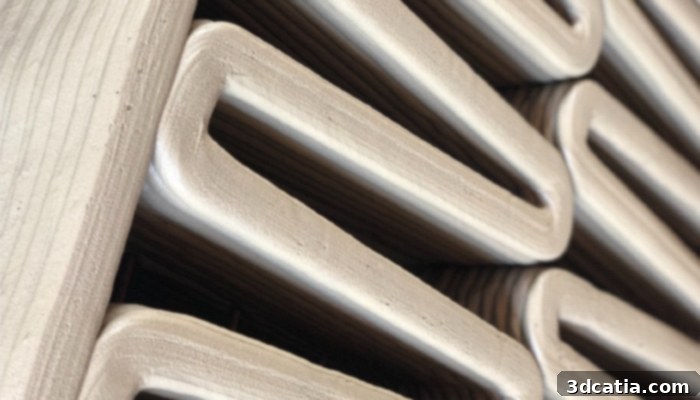
Concrete 3D printing result up close.
Join the Revolution: A Call to Action from Hyperion Robotics
“Our core mission at Hyperion Robotics is clear and compelling: to fundamentally transform the construction industry, making it not just more efficient but also profoundly more sustainable and automated,” Dr. Mohite emphasizes in his closing remarks. “To achieve such an ambitious goal, we recognize that it requires the collaborative contribution of all involved parties – a truly global effort. This includes active participation from industrial leaders and pioneering academic institutions, dedicated individuals passionate about innovation, and supportive governments around the world who understand the long-term benefits of advanced construction.”
He extends an invitation: “We are perpetually on the lookout for talented individuals, forward-thinking companies, and visionary institutions who share our fervent passion for how technology – specifically, advanced 3D printing and sophisticated robotics – can revolutionize the very methods by which we design and construct our built environment. If you are intrigued by the potential of concrete 3D printing, if you envision starting an innovative project utilizing our cutting-edge robotic technology, or if you aspire to partner with us in our quest to revolutionize architecture and construction, please do not hesitate to reach out via THIS LINK. We eagerly await the opportunity to collaborate and forge new pathways forward. Additionally, we encourage all our readers to stay tuned and follow our latest developments and exciting project announcements on our official website and various social media channels, as we continue to push the boundaries of what is possible in automated and sustainable construction.”
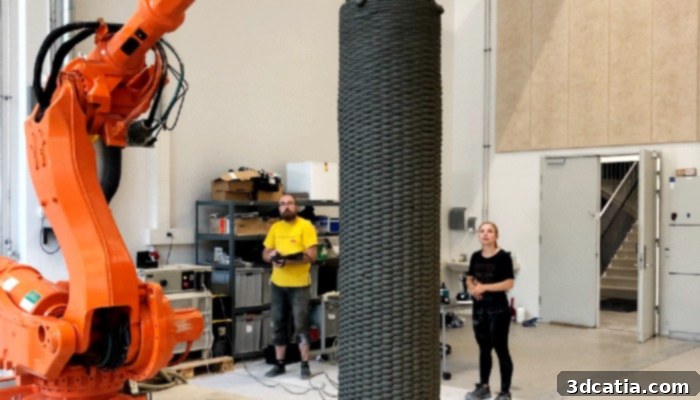
A Kuka industrial robot 3D printing a large concrete piece.
For those interested in delving deeper into the innovative world of Hyperion Robotics and exploring their groundbreaking projects, more detailed information can be found on their official website, accessible HERE. What are your thoughts on this pioneering additive manufacturing construction startup? We invite you to share your perspectives in the comments section below or engage with us on our Facebook and Twitter pages! Don’t miss out on the latest news and advancements in the 3D printing industry; be sure to sign up for our free weekly Newsletter, delivering all the essential updates directly to your inbox!