
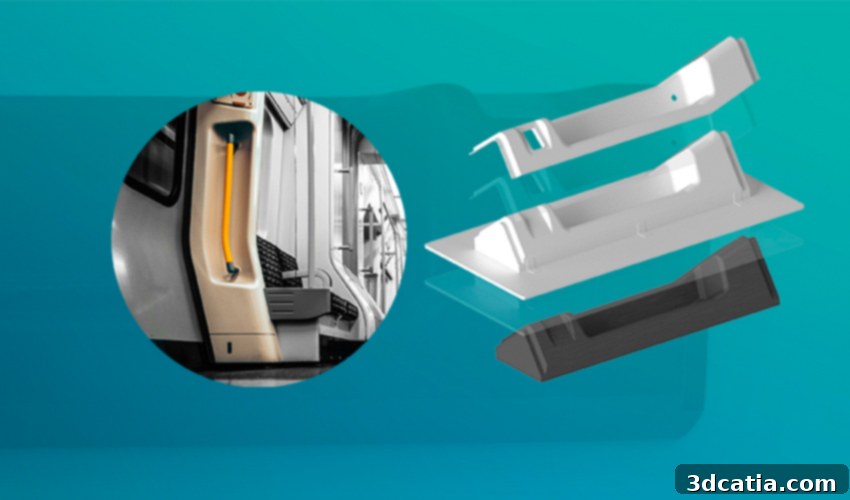
Revolutionizing Thermoforming: Boost Efficiency and Cut Costs with Advanced 3D Printed Molds
In today’s highly competitive manufacturing landscape, thermoforming companies and manufacturers relying on thermoformed components face unprecedented pressure. The need to improve production efficiency, significantly minimize waste, and drastically lower operational expenses is paramount. Compounding these challenges is a growing scarcity of skilled labor, making traditional manufacturing processes increasingly difficult and costly to sustain. Fortunately, additive manufacturing (AM), commonly known as 3D printing, offers a transformative solution to these industry-wide hurdles.
With the advent of advanced additive manufacturing technologies, businesses can now access high-performance molds that not only facilitate the creation of top-notch parts but also dramatically reduce lead times and labor expenses when compared to conventional mold-making approaches. The potential for innovation and optimization is immense. To delve deeper into these groundbreaking advancements, an exclusive webinar titled “Revolutionizing Thermoforming: Unleashing Efficiency to Drastically Reduce Mold Production Time & Costs” is available on demand. This comprehensive session will illuminate how you can achieve rapid validation by testing new shapes and deliver first parts up to an impressive 65% faster through the strategic use of 3D printed molds.
Watch the Webinar Now!
Experts from 3D Systems, a pioneer in additive manufacturing, showcase compelling evidence from their thermoforming customers. These companies report running thousands of shots with 3D printed molds, experiencing virtually no signs of wear or performance degradation. This remarkable durability challenges traditional perceptions of mold longevity and opens new avenues for sustainable, high-volume production. We invite you to register now and discover firsthand how other leading companies have leveraged our cutting-edge pellet extrusion technology to significantly decrease costs and shorten lead times, especially for the creation of large thermoforming molds.
Subtractive versus Additive Manufacturing Molds: A Paradigm Shift
The choice of mold manufacturing method significantly impacts the efficiency, cost, and design capabilities of thermoforming operations. Traditionally, molds have been created using subtractive manufacturing processes, which involve removing material from a larger block to achieve the desired shape. Common methods include CNC machining of metals and ceramics, or even hand-sculpting wood. These processes typically entail extensive CNC milling and tooling, where material is selectively carved away using a spindle. While effective, subtractive methods are inherently wasteful, producing considerable material scrap, and are often limited by the geometric constraints of the tools and machines used. Complex geometries, internal features, and rapid iterations can be prohibitively expensive and time-consuming.
In stark contrast, additive manufacturing offers numerous advantages over subtractive manufacturing, particularly when it comes to mold production for thermoforming. AM begins with nothing and builds a part layer by layer on a build platform, using only the necessary material. This fundamental difference underpins a cascade of benefits:
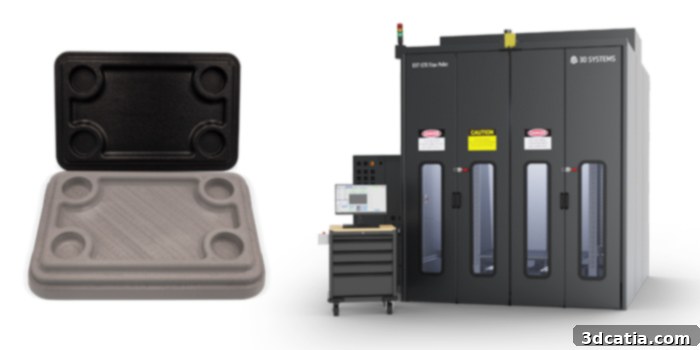
Register here to watch the webinar and discover the benefits of 3D printing in thermoforming.
Enhanced Design Flexibility and Performance
Additive manufacturing liberates designers from the traditional constraints imposed by tooling and material removal. It allows for the optimization of geometric features tailored precisely to specific application needs, without the compromises often required by conventional processes. This includes the ability to create intricate internal structures, such as conformal cooling channels or, more relevant for thermoforming, porous molds. The creation of porous molds is a game-changer as it optimizes molten plastic flow by eliminating the need for drilled vacuum channels. This not only improves the consistency and quality of the thermoformed part but also reduces cycle times by facilitating more even and rapid vacuum application across the mold surface.
Accelerated Production Speed and Turnaround Times
One of AM’s most compelling advantages is its speed. 3D printing can produce complex molds within hours or days, a stark contrast to the weeks or even months often needed for traditional mold-making processes. This rapid turnaround significantly accelerates the product development cycle, enabling quicker prototyping, faster validation of designs, and ultimately, bringing new products to market with unprecedented speed. This agility is crucial for businesses operating in fast-paced industries where quick iteration and response to market demands are key to success.
Significant Cost Efficiency and Waste Reduction
The economic benefits of additive manufacturing are multi-faceted. Firstly, this method minimizes material waste by producing near net shapes. Instead of removing vast amounts of material from a large block, AM only uses the necessary material, thereby reducing raw material costs and waste disposal expenses. Secondly, the costs of materials for 3D printed molds, particularly advanced polymers, are often much lower compared to traditional ceramic, metal, and wood molds. Polymers, in particular, offer a longer shelf life and superior resistance to environmental factors like moisture and temperature compared to wood, contributing to mold longevity and reduced replacement frequency.
Furthermore, the labor costs associated with manual mold creation or complex CNC programming are significantly reduced. The highly automated nature of 3D printing allows skilled personnel to focus on higher-value tasks, addressing the challenge of skilled labor scarcity head-on. The elimination of expensive, custom tooling for each mold iteration also contributes to overall cost savings, making customized and specialized molds more accessible and economical.
Digital Inventory and Material Versatility
Another powerful advantage is the concept of a digital inventory. By retaining digital files of molds, companies can eliminate the need for physical storage space, which can be substantial for traditional molds. When a mold is no longer needed, it can be recycled, and a replacement can be quickly and easily produced through reprinting from its digital file. This not only saves space but also streamlines inventory management and enables rapid, on-demand production of molds anywhere in the world.
Additive manufacturing also allows for the creation of parts from a wide range of polymers, including standard and high-performance thermoplastics, thermoset resins, filled polymers, and photopolymer resins. This material versatility means that mold properties can be precisely tailored to the specific requirements of the thermoforming application, optimizing performance and part quality. Beyond polymers, advanced AM systems can even process metals for highly specialized applications. Additive manufacturing systems come in various sizes, from compact desktop units suitable for rapid prototyping to large-format industrial machines capable of producing enormous molds, offering unparalleled versatility in production capabilities.
Webinar Agenda: What You Will Learn
The “Revolutionizing Thermoforming” webinar provides a structured approach to understanding and implementing these advanced solutions. The agenda is designed to cover all critical aspects:
- Introduction: Setting the stage for the challenges and opportunities in modern thermoforming.
- The Customer Challenge: An in-depth look at common pain points including cost pressures, extended lead times, and inventory management complexities.
- The Additive Solution: Exploring industrial, large-format platforms; a comparison of pellet extrusion versus filament extrusion; and invaluable tips & best practices for printing robust and efficient molds.
- Assorted Customer Use Cases: Real-world examples demonstrating how companies have successfully integrated 3D printed molds and achieved significant results.
- Conclusion and Q&A: A summary of key takeaways and an opportunity for attendees to engage directly with experts.
Meet the Expert Speaker

Haley Stump
Leading this insightful webinar is Haley Stump, the accomplished Application Engineer Lead for the Titan division of 3D Systems. Haley is at the forefront of numerous exciting projects involving the advanced EXT Titan Pellet 3D printing system, a technology pivotal for large-format, high-performance mold production. Her unique background includes a previous role as a Titan customer, where she successfully developed time and cost-saving manufacturing methods for a global retail merchandising company. She joined the esteemed 3D Systems team in Colorado Springs in 2022 and now works closely with the sales team to provide tailored additive solutions for a diverse range of applications, including patterns, tooling, rapid prototyping, and sophisticated end-use products.
Don’t miss the opportunity to learn from Haley Stump and other experts about how 3D printing is fundamentally transforming thermoforming operations. This webinar is an essential resource for any company looking to stay ahead in a challenging market, offering practical strategies to reduce costs, shorten lead times, and enhance overall production efficiency.
What did you think of this webinar on-demand about thermoforming and 3D printing? We encourage you to share your thoughts in a comment below or join the conversation on our LinkedIn, Facebook, and Twitter pages! For the very latest news and insights in the world of 3D printing, don’t forget to sign up for our free weekly newsletter here, delivered straight to your inbox! You can also find all our engaging videos and educational content on our YouTube channel.
*All photo credits: 3D Systems