
Revolutionizing Industries: This Week’s Top 5 3D Printing Innovations from Healthcare to Sustainability and Beyond
Welcome to our curated collection of this week’s most compelling 3D printing videos, showcasing the dynamic and ever-expanding capabilities of additive manufacturing. From life-changing medical breakthroughs to practical workshop enhancements and pioneering environmental initiatives, this compilation highlights the diverse impact of 3D technology across various sectors. Join us as we explore how innovators are pushing the boundaries, making 3D printing more accessible, efficient, and impactful than ever before.
Our journey begins with The Royal Institution, presenting a fascinating discussion on the applications of 3D printing within the healthcare industry. This segment unveils the remarkable potential of synthetic organs to dramatically improve patient outcomes and revolutionize personalized medicine. Next, we delve into an in-depth exploration of the iconic Stanley Cup, revealing how its design and functionality can be significantly enhanced through advanced 3D printing techniques. Following this, Alessandro Vanni of Artisan Made shares invaluable 3D printing tips designed to skyrocket productivity within any workshop setting. The spirit of innovation continues with Youtuber ‘growithjessie,’ who meticulously documents her three-month long quest to convert discarded plastic bottles into usable 3D printer filament, championing sustainable manufacturing. Finally, we conclude with a thrilling experiment conducted by Morley Kert, investigating the robustness and print quality of 3D printers while navigating rugged terrain and even the open ocean. Prepare to be inspired by the ingenuity and versatility of 3D printing as we dive into these incredible stories of technological advancement!
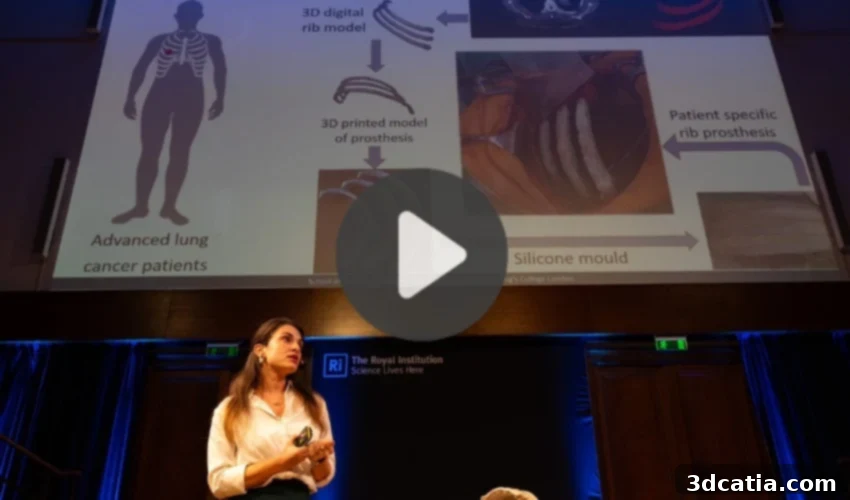
Top 1: Dr. Pontiki Reveals 3D Printed Synthetic Organs and Their Potential Within the Medical Industry
Leading our lineup is Dr. Antonia Pontiki, a distinguished researcher in biomedical engineering, who illuminates the profound and transformative role of 3D printing in modern healthcare. Her insightful presentation, featured by The Royal Institution, underscores how this technology is not just an enhancement but a game-changer in creating highly customized medical solutions. Dr. Pontiki meticulously details its current applications, ranging from the development of patient-specific anatomical models crucial for both medical education and complex surgical planning, to the fabrication of advanced prostheses that offer unprecedented levels of comfort and functionality. More excitingly, she delves into the cutting edge of bioprinting, showcasing its potential to create intricate tissues and even fully functional synthetic organs. This segment provides a comprehensive overview of how 3D printing is being leveraged to pave the way for a new era of healthcare—one characterized by personalization, precision, and significantly more effective patient treatment pathways. The ability to precisely tailor medical devices and replicate complex biological structures holds immense promise for addressing organ shortages, improving surgical success rates, and ultimately, enhancing the quality of life for countless patients globally.
Top 2: 3D Printed, Improved Stanley Cups
In a fascinating demonstration of consumer product innovation, engineers at Slant 3D unveil how additive manufacturing can be utilized to craft an objectively superior version of the highly sought-after Stanley Cup. This video goes beyond mere aesthetics, focusing on how 3D printing allows for significant functional enhancements. Slant 3D showcases the creation of a cup that not only retains its visually appealing design but also boasts dramatically increased insulation capabilities and enhanced durability. Crucially, their approach addresses a significant concern raised about the original product by demonstrating a lead-free alternative. The engineers provide a meticulous, step-by-step walkthrough of their design and manufacturing process, illustrating the inherent advantages of 3D printing for rapid prototyping and iterative design improvements. This deep dive into the customization and material science behind a beloved consumer item highlights the remarkable capabilities of 3D printing in developing products that are not just innovative but also safer and more robust. By dissecting the unique features that contribute to the Stanley Cup’s immense popularity, Slant 3D effectively demonstrates how additive manufacturing empowers designers to create customizable, durable, and truly innovative consumer goods, meeting both market demand and evolving consumer expectations for quality and safety.
Top 3: Maximizing Workshop Productivity With 3D Printing
Our next feature, presented by Alessandro Vanni of Artisan Made, delves into the practical and highly effective applications of 3D printing for tackling everyday challenges and significantly boosting efficiency within a workshop environment. Vanni, with his extensive experience, generously shares a wealth of insights and actionable tips designed to improve workflow and dramatically enhance productivity. The video is a testament to the versatility and accessibility of 3D printing, demonstrating how this technology can be ingeniously employed to create custom solutions that are often superior and more cost-effective than commercially available alternatives. He showcases compelling examples, such as 3D printing custom drill holders tailored precisely to specific tools, innovative sandpaper organizers that streamline material access, and efficient blast gates crucial for optimizing dust collection systems. Beyond these specific examples, Vanni underscores the economic benefits, highlighting how adopting 3D printing can lead to substantial cost savings and greater independence for small businesses and individual makers. The ability to design and produce bespoke parts on demand empowers users to overcome limitations imposed by standard off-the-shelf components, fostering a more organized, efficient, and ultimately, a more productive workspace. This segment is an invaluable resource for anyone looking to leverage additive manufacturing to revolutionize their workshop operations.
Top 4: Recycle Plastic Water Bottles Into 3D Filament
In a compelling exploration of sustainable manufacturing, content creator ‘growithjessie’ embarks on an ambitious three-month endeavor: transforming discarded plastic water bottles into viable filament for 3D printing. Her meticulously documented journey offers a fascinating glimpse into the possibilities of circular economy principles applied to additive manufacturing. Through engaging narration and clear visual demonstrations, she guides viewers through the often-challenging conversion process. This includes the intricate steps of collecting, cleaning, shredding, and finally extruding the plastic into a consistent filament suitable for 3D printers. The video provides invaluable insights into the technical hurdles encountered, such as maintaining precise temperature control, dealing with equipment malfunctions, and optimizing the plastic’s properties for successful extrusion and printing. Despite facing numerous obstacles, ‘growithjessie’ illuminates the immense potential of 3D printing technology in addressing environmental concerns. Her project not only demonstrates a tangible way to reduce plastic waste but also highlights the viability of creating local, affordable, and sustainable sources of 3D printer filament. This initiative serves as a powerful testament to how grassroots innovation can contribute significantly to environmental sustainability and inspire a wider adoption of eco-conscious practices within the 3D printing community.
Top 5: Testing 3D Printing’s Travel Resilience
Concluding our compilation, Morley Kert presents a truly riveting experiment designed to test the limits of 3D printing technology in extreme conditions. Kert sets out to determine the feasibility and impact on print quality when 3D printers are operated while driving on rugged roads and navigating unpredictable environments. He poses a compelling question: Can contemporary 3D printers withstand the constant bumps, vibrations, and jolts inherent in travel, or will the integrity of the prints inevitably suffer? The video takes viewers on a suspenseful and adventurous ride, documenting the printer’s performance across a variety of challenging terrains. From the relatively smooth stretches of highways to the jarring conditions of rugged off-road trails, and even the rocking motion of ocean waters, Kert pushes the boundaries of what is typically considered a stable printing environment. The findings reveal the surprising resilience and robust adaptability of modern 3D printing technology, showcasing its potential for mobile and on-site manufacturing. This experiment has significant implications for applications such as rapid prototyping in remote locations, on-the-spot repairs in challenging field conditions, and even humanitarian efforts where access to stable power and environments is limited. It’s a testament to the engineering and design of these machines, proving they are far more adaptable than many might assume.
We hope you enjoyed this week’s dive into the fascinating world of 3D printing. From the intricate biology of synthetic organs to the robust practicality of mobile manufacturing, the versatility and impact of additive manufacturing continue to astonish. Which video resonated with you the most this week? What are your thoughts on the groundbreaking advancements in synthetic organs and their potential to transform medical practice? Share your insights and join the conversation by leaving a comment below, or engage with us on our LinkedIn, Facebook, and Twitter pages! Don’t miss out on the latest developments – be sure to sign up for our free weekly newsletter here, delivering the freshest 3D printing news straight to your inbox. You can also discover all our innovative videos and more captivating content on our official YouTube channel. Stay tuned for more groundbreaking insights into the world of additive manufacturing!
*Cover Photo Credits: The Royal Institute