
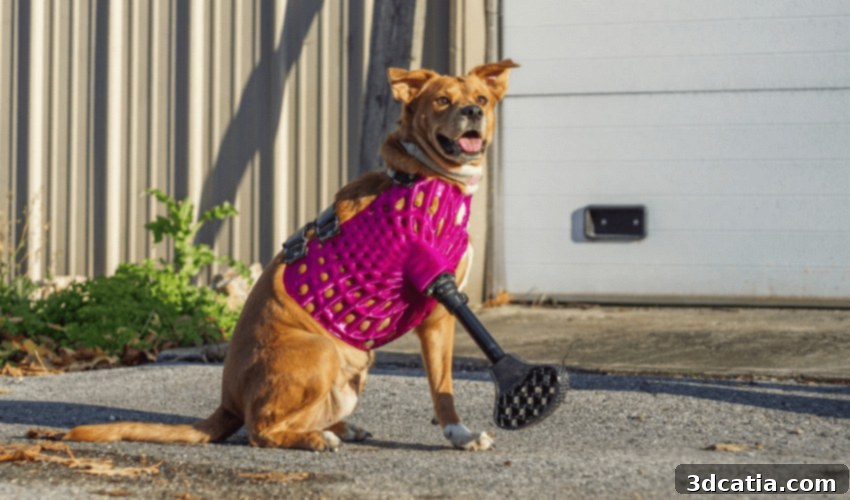
Revolutionizing Animal Welfare: How DiveDesign Pioneers Custom 3D Printed Prosthetics and Orthotics
The landscape of animal care and rehabilitation has been profoundly transformed by groundbreaking advancements in 3D technology. What was once considered a futuristic concept is now a tangible reality, with 3D printing actively enhancing the lives of animals, particularly those rescued from challenging circumstances. Many of these animals arrive with severe injuries or congenital conditions that prevent them from living independently and enjoying a good quality of life. Recognizing this pressing need, a growing number of innovative companies have harnessed the power of additive manufacturing and advanced 3D scanning techniques. These technologies facilitate the rapid development of custom prototypes and functional devices designed to address unique animal mobility challenges.
Leading this charge in the United States is DiveDesign, a distinguished product design and development firm based in New Jersey. DiveDesign has established itself as a crucial partner for organizations dedicated to animal welfare, specializing in the creation of bespoke 3D printed prosthetics and orthotics. Unlike mass-produced solutions, each device is meticulously tailored to the individual animal’s anatomy and specific requirements, ensuring optimal fit, comfort, and functionality. To delve deeper into their pioneering work and the profound impact of additive manufacturing on animal rehabilitation, we had the privilege of speaking with Adam Hecht, a key member of the DiveDesign team, about their innovative projects and the development of these life-changing animal devices.
3DN: Could you introduce yourself and tell us about your connection to 3D printing?
My name is Adam Hecht, and I, along with my esteemed partner Alex Tholl, had the vision and drive to found DiveDesign LLC. Our journey into 3D printing wasn’t just a strategic business decision; it was born from a desire to innovate and provide superior solutions. From the very inception of our company, we have embraced 3D printing – or additive manufacturing – as a core competency. Through a myriad of client projects and our own internal research and development initiatives, we have adeptly adopted and utilized 3D printing in a multitude of diverse ways. This versatile technology has allowed us to better serve the intricate and often unique needs of our clients, pushing the boundaries of what’s possible and fundamentally challenging the conventional wisdom of traditional manufacturing processes. Our connection to 3D printing is deeply rooted in our commitment to solving complex problems with cutting-edge, efficient, and highly customizable solutions.
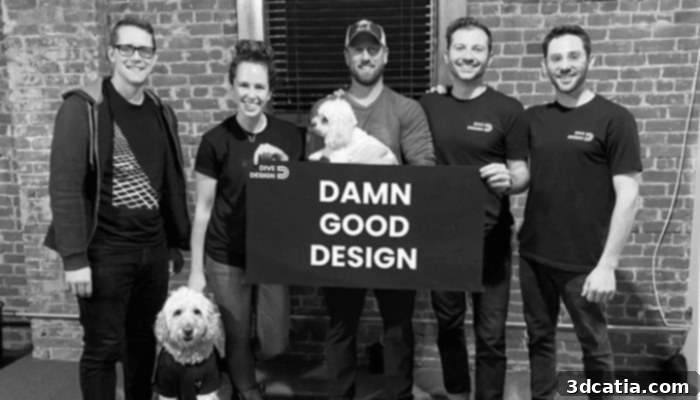
The DiveDesign team. On the right, Adam Hecht..
3DN: What is DiveDesign and how was it founded? When did you start working with animals, specifically on animal prosthetics?
DiveDesign is not just a design firm; we are a dedicated product design and development firm that prides itself on forging strategic partnerships and cultivating lasting relationships with visionary brands. Our mission is to continuously test new ideas, challenge established norms, and engineer innovative solutions that serve as a catalyst for industry-wide change. The company was co-founded by Alex Tholl and myself, stemming from our collective efforts to expand upon our growing freelance work in the field of industrial design. Over the past few years, we have diligently built and nurtured a talented, multidisciplinary team of designers, engineers, and manufacturing specialists. This expert team now serves a diverse array of industries, each with unique and ongoing product development requirements, always seeking to push the envelope of design and functionality.
Our venture into the specialized field of animal prosthetics and orthotics began quite organically, through a pivotal collaboration with our esteemed client and friend, Derrick Campana. Derrick, renowned as the owner of Bionic Pets and the inspiring personality behind the television show “Wizard of Paws,” reached out to us facing a significant challenge. He was struggling immensely to keep pace with the overwhelming demand for full-limb prosthetics for dogs and other animals. While the orders for these life-changing devices were plentiful, the traditional manufacturing process was painstakingly slow, labor-intensive, and simply not feasible for the volume required. The time and cost involved in creating each custom prosthetic by hand were unsustainable. DiveDesign stepped in to help design a cutting-edge digital tool, which, when combined with advanced 3D scanning technology, revolutionized the production pipeline. This innovative approach allowed us to efficiently and accurately 3D print these essential new animal prosthetics for him, drastically reducing lead times and enabling Bionic Pets to assist many more animals in need, thus marking our dedicated entry into the animal welfare sector through advanced additive manufacturing.
3DN: Could you tell us about the 3D technologies you utilize in your animal prosthetics projects and other endeavors?
At DiveDesign, our technological toolkit is centered around powerful and versatile 3D printing and scanning solutions. For our clients’ diverse projects, encompassing everything from consumer electronics to industrial equipment, we extensively utilize numerous Fused Deposition Modeling (FDM) 3D printing machines. These FDM printers are instrumental in creating both low and high-fidelity prototypes, allowing for rapid iteration and validation of designs at various stages of development. The ability to quickly produce physical models helps us refine concepts, test ergonomics, and ensure functional performance before committing to final production methods.
Crucially, FDM technology is also the cornerstone for building the specialized animal prosthetics we develop. This method provides the flexibility and reliability required for creating durable, functional, and customizable devices for pets and other animals. Complementing our FDM capabilities, 3D scanning plays an equally vital role in these animal projects. When designing a prosthetic or orthotic, precise anatomical data is paramount. 3D scanning allows us to capture the exact contours and dimensions of an animal’s limb or body part with incredible accuracy. This digital blueprint forms the foundation for our custom designs, ensuring a perfect, comfortable, and therapeutic fit for each animal. Beyond animal devices, 3D scanning is also integrated into other unrelated projects, particularly where reverse engineering, quality inspection, or the digitization of physical objects is required. The synergy between 3D scanning for precise data capture and FDM 3D printing for rapid, custom fabrication is what truly enables our innovative work in animal mobility solutions.
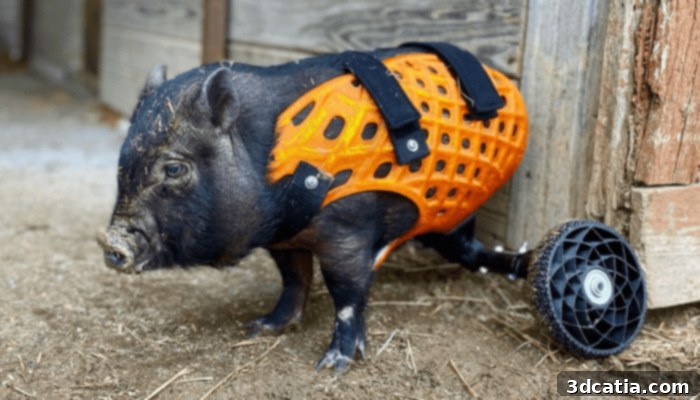
Tammy, a rescued piglet with a prosthetic hind leg (photo credits: DiveDesign)
3DN: Why did you decide to use 3D printing for animal prosthetics, and what are the key benefits of this approach?
Our decision to fully embrace 3D printing, specifically FDM, for creating animal prosthetics was driven by its unparalleled advantages over traditional manufacturing techniques. One of the most significant factors is the extremely low barrier to entry associated with FDM. This means that setting up and operating these machines is more accessible and cost-effective compared to complex, conventional manufacturing setups. Furthermore, FDM technology is inherently easily modifiable, allowing for quick design iterations and adjustments based on an animal’s specific needs or as they grow and heal. This iterative capability is crucial when dealing with biological subjects where precise fits and comfort are non-negotiable.
The extensive range of material choices compatible with FDM is another immense benefit. From rigid, durable plastics to flexible, rubber-like filaments, we have access to thousands of material options. This allows us to select materials best suited for each animal’s weight, activity level, and the specific functional requirements of their prosthetic or orthotic. For instance, creating comfortable sockets requires flexible materials, while structural components demand strength and rigidity.
Initially, we sought machines that offered a larger build volume, which is critical for fabricating full-limb prosthetics for larger dogs or other animals, and those compatible with flexible materials to ensure comfort and anatomical conformity. The culmination of these technological capabilities has yielded several transformative benefits. One of the biggest advantages is the ability to achieve mass production of highly customized parts. In traditional manufacturing, customization is costly and time-consuming. However, with 3D printing, each animal’s prosthetic can be vastly different in design, size, and function, yet our machines can operate continuously, around the clock. This incredible efficiency allows us to keep up with the high demand for custom animal prosthetics, making the process both scalable and economically viable.
Moreover, this efficiency in production frees up invaluable time for our expert design and engineering team. Instead of being bogged down by manual fabrication, we can now allocate significant resources to pioneering new types of prosthetic joints, designing innovative wheeled cart systems for animals with more extensive mobility issues, developing specialized adaptors, and generally advancing the field of pet rehabilitation. This continuous innovation ensures that animals receive the most advanced and effective mobility solutions available, truly furthering advancements in the pet industry and improving countless lives.
3DN: What is your vision as a company, and do you have any exciting future projects coming up at DiveDesign?
Our overarching vision at DiveDesign is to sustain our growth trajectory and selectively collaborate with clients who share our ethos for innovation. We aim to partner with brands and individuals who are not afraid to challenge the boundaries of traditional design, who aspire to be true leaders and disruptors within their respective industries. To achieve this, DiveDesign is committed to several key strategic initiatives. We plan to continue growing our talented team, bringing in more diverse expertise to enhance our capabilities. A significant investment will be made in acquiring more advanced 3D printing machines, which will further expand our rapid prototyping capabilities and production capacity, allowing us to take on even more ambitious and complex projects, particularly in the realm of custom animal prosthetics and orthotics.
Looking ahead, our project pipeline is brimming with exciting developments. We are currently in the advanced stages of developing a revolutionary workout device, designed to fundamentally change the way individuals interact with traditional exercise machines, whether in the comfort of their home or at the gym. This device incorporates novel design principles and advanced materials to offer an enhanced user experience and improved performance. Simultaneously, we are dedicating significant resources to designing and prototyping entirely new cart systems for canines with severe mobility issues, offering them unprecedented levels of freedom and comfort. These carts will integrate advanced ergonomic principles and lightweight, durable materials for optimal support. Furthermore, we are eagerly anticipating traveling to several trade shows in the coming months. After a period of reduced travel and interaction, this presents a fantastic opportunity to showcase our latest innovations, connect with industry leaders, and explore new collaborative ventures, which is very exciting for the entire team!
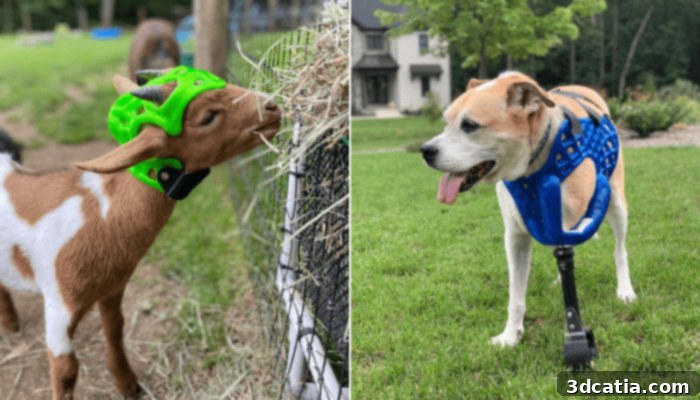
Photo Credits: DiveDesign
3DN: Any last words for our readers interested in 3D printing, product design, or animal welfare?
For those eager to learn more about DiveDesign, our innovative product development processes, and how we are leveraging 3D printing to make a tangible difference, we invite you to explore our work on our official website HERE. We believe in the power of collaboration and are always seeking new opportunities to apply our expertise. Whether your business is looking to optimize complex workflows, invigorate an existing product lineup with fresh, innovative designs, or needs a partner to bring a ground-breaking concept to life, please do not hesitate to reach out to us. We are confident that we can be a good fit to help your business achieve its goals and realize its full potential through strategic product design and advanced additive manufacturing solutions.
What are your thoughts on DiveDesign’s incredible work using 3D printing to create custom animal prosthetics and significantly improve animal welfare? We’d love to hear your perspective! Share your comments below or engage with us on our Facebook and Twitter pages. And for those who want to stay at the forefront of the additive manufacturing revolution, don’t forget to sign up for our free weekly newsletter to receive all the latest 3D printing news and insights straight to your inbox!