
Unveiling the World of Micro 3D Printing: Leading Machines and Innovative Applications
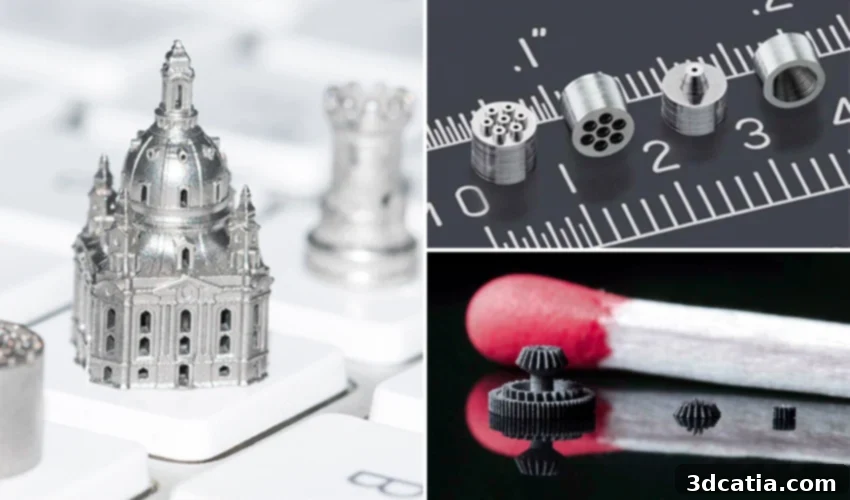
3D microprinting, often referred to as micro-scale additive manufacturing or micro-fabrication, represents a groundbreaking advancement in manufacturing technology. This sophisticated technique empowers designers and engineers to create incredibly intricate and minuscule objects, operating at resolutions on the micrometer scale and even smaller. Once a niche technology, 3D microprinting is rapidly gaining traction across various industries, driven by the increasing demand for miniaturized components and highly detailed prototypes. The market is continually expanding with more accessible and powerful micro 3D printing solutions emerging. These specialized machines are engineered to deposit successive, ultra-thin layers of material, precisely constructing parts that are not only tiny but also boast extraordinary levels of detail and complexity. Beyond its foundational role in the electronics industry, where it’s instrumental in miniaturizing devices and enhancing performance, micro 3D printing is making significant inroads into critical sectors such as healthcare, biotechnology, and optics. This comprehensive overview delves into some of the most prominent 3D microprinters currently available on the market, exploring their diverse capabilities, whether they utilize resins, powders, or even glass as their primary printing material.
Boston Micro Fabrication – 2μm Series Printer
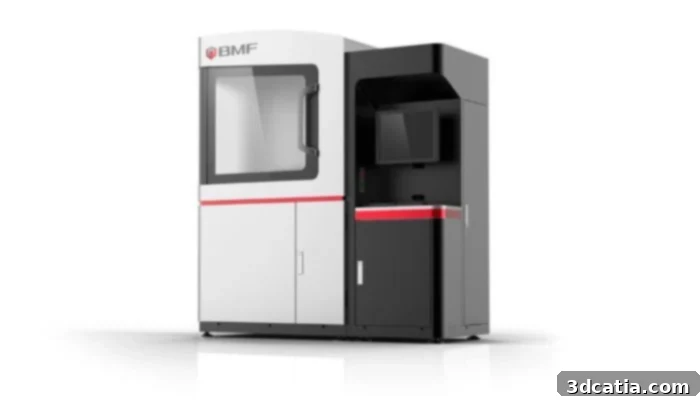
Setting a benchmark for ultra-high resolution, Boston Micro Fabrication’s 2μm series offers unparalleled precision in micro-scale additive manufacturing. This advanced 3D printer is compatible with a wide array of materials, making it exceptionally versatile for numerous applications. It is particularly well-suited for the development of prototypes that demand absolute fidelity to CAD designs, ensuring maximum likeness to the intended final product. The printer’s distinctive name, the 2μm series, is a direct reflection of its cutting-edge movement platform, which delivers an impressive resolution of up to 2 micrometers. Furthermore, its innovative step-and-repeat method facilitates efficient printing over a larger area, optimizing throughput for complex micro-structures. Complementing these core capabilities are additional sophisticated attributes, including real-time image monitoring for precise control, exposure compensation for consistent material curing, and an advanced autofocus system that guarantees sharp, accurate layer deposition. Within this series, customers can choose between two primary models: the microArch® S130 and the microArch® S230. The key distinction between these models lies primarily in their build platforms. The microArch® S230 boasts a larger build volume of 50 x 50 x 50 mm, providing greater flexibility for more substantial micro-parts, while the microArch® S130 offers a still generous 50 x 50 x 10 mm. Notably, the microArch® S230 extends its material compatibility to include ceramics, in addition to a broad range of high-performance light-sensitive resins, further broadening its application potential.
Nano Dimension Offers a Micro DLP Solution With Fabrica 2.0
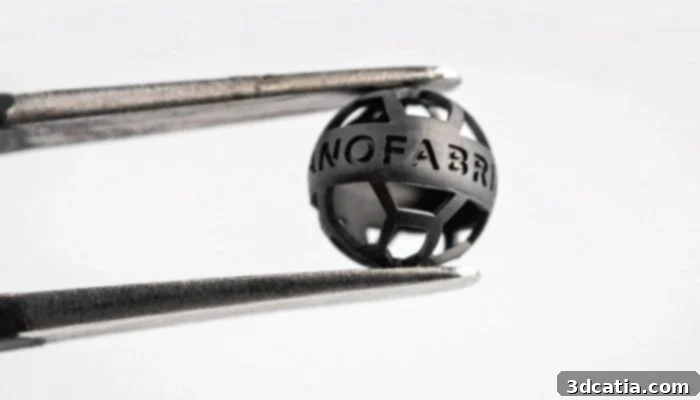
The next remarkable micro 3D printer hails from a company that intrinsically links its identity to the micro-scale: Nano Dimension. Despite the company’s name, the Fabrica 2.0 3D printer has an interesting origin story. It was initially developed by Nanofabrica, a pioneer in high-precision micro-fabrication, which was subsequently acquired by Nano Dimension in 2021 and rebranded as Fabrica Group. While the Fabrica 2.0 is now fully integrated under the Nano Dimension umbrella, it leverages Nanofabrica’s innovative resin micro 3D printing technology. This solution utilizes Micro Digital Light Processing (DLP) for additive manufacturing, a technique renowned for its speed and precision. According to Nano Dimension, the Fabrica 2.0 achieves printing rates that are an astounding 5 to 100 times faster than many other traditional micro-manufacturing processes, thereby significantly accelerating production cycles. This makes it an ideal choice for industries requiring high-mix, low-volume batches, particularly for intricate tooling and complex micro-components. The Fabrica 2.0 delivers an impressive resolution of 1.9 µm, with variable layer thicknesses ranging from 1 to 5 µm, allowing for exceptional detail. While its print dimensions, at 50mm x 50mm x 100mm, are not overtly large, the company places a strong emphasis on its unparalleled precision, proudly describing its capabilities as “additive manufacturing micron by micron.” This commitment to minute detail makes the Fabrica 2.0 a critical tool for cutting-edge micro-scale applications.
NanoOne by UpNano
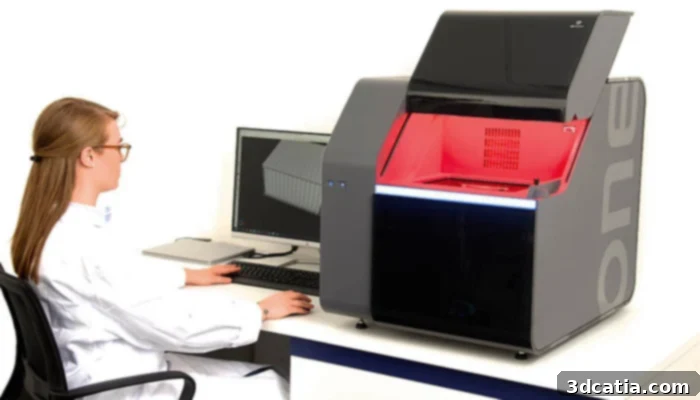
UpNano, an innovative Austrian company, is at the forefront of high-resolution 3D printing systems. Their expertise extends beyond the mere production of advanced printing hardware, encompassing the development of sophisticated operating software, process-optimized materials, and essential accessories. At the heart of their offerings is the NanoOne micro 3D printer, a system built upon the highly precise principle of multiphoton lithography. What sets the NanoOne apart is its remarkable ability to combine the exceptional precision inherent in 2-photon polymerization with an impressive throughput of less than 450 mm³ per hour. This dual capability makes the system uniquely suitable for a broad spectrum of applications. It excels not only in demanding scientific research environments, where accuracy is paramount, but also in the batch and small-series production of industrially applicable micro-parts. A significant focus of the NanoOne system is its capacity for high-resolution bioprinting. This involves the 3D printing of structures incorporating living cells, effectively bridging the gap between polymer material science and cutting-edge cell research. Thanks to its inherent speed and advanced technological foundation, the NanoOne is poised to revolutionize fields requiring the delicate and precise fabrication of biological constructs, opening new avenues for medical and biotechnological innovation.
MICROFAB-3D by MicroLight3D
The MicroFAB-3D, developed by MicroLight3D, stands as an open and highly versatile 3D microfabrication platform specifically engineered for research applications. This state-of-the-art system is a high-resolution 3D printing solution that leverages direct laser writing technology, employing two-photon curing for unparalleled precision. A key advantage of this technology, as highlighted by MicroLight3D, is its ability to move beyond the constraints of the traditional “layer-by-layer” approach. This innovative method enables the printing of significantly more complex geometries, offering greater design freedom without the need for cumbersome support materials or extensive post-processing steps, thereby streamlining the microfabrication workflow. The print size offered by the MicroFAB-3D is remarkably adaptable and can be finely controlled through proprietary software provided by the company, allowing for features as incredibly small as 0.2 microns wide. This level of detail is crucial for advanced scientific and engineering applications.
Regarding printing materials, MicroLight3D offers a specialized range of 10 proprietary photosensitive resins, each meticulously optimized for two-photon curing technology to ensure optimal performance and print quality. Beyond their own offerings, the MicroFAB-3D’s technology boasts broad compatibility with a wide spectrum of commercially available resins. Critically, it is also certified for use with biocompatible materials, including hydrogels and various proteins. This broad material compatibility makes the MicroFAB-3D an indispensable tool for developing sophisticated micro-medical devices, from intricate drug delivery systems to advanced tissue engineering scaffolds.
Indeed, the MicroFAB-3D is thoughtfully designed to serve a diverse array of scientific and engineering fields. Its applications span across vital areas such as microfluidics, for creating miniature lab-on-a-chip devices; micro-optics, for fabricating highly precise optical components; cell culture, enabling advanced biological research; micro-robotics, for developing minute autonomous systems; and the creation of novel meta-materials with engineered properties. This versatility underscores its position as a powerful research instrument.
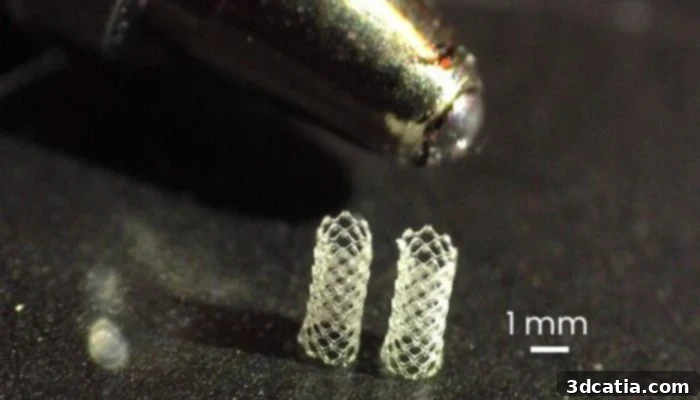
2 mm high stents printed in a biocompatible material with the Advanced function of MicroFAB-3D. Photo credit: MicroLight3D
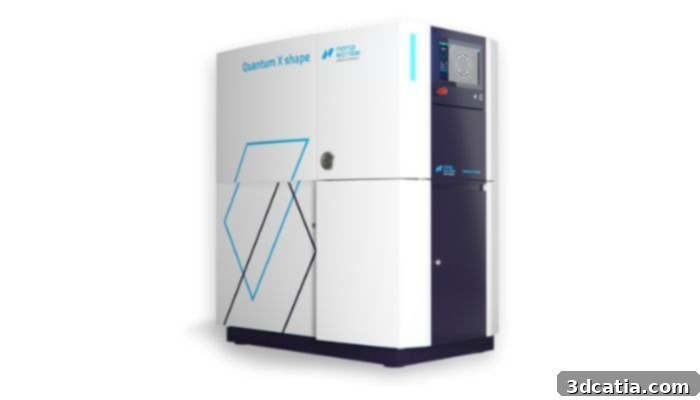
Nanoscribe Quantum X Shape
The Nanoscribe Quantum X Shape represents a pinnacle of microfabrication technology, employing the innovative technique of two-photon grayscale lithography (2GL®). This cutting-edge technology, coupled with its advanced voxel tuning capability, allows for the creation of incredibly accurate and highly detailed micro-structured surfaces. It is particularly adept at printing complex 2.5D structures, bridging the gap between two-dimensional patterns and full three-dimensional objects with exceptional precision. The Quantum X Shape finds critical applications in the development of sophisticated biomedical devices, enabling the fabrication of intricate implants and diagnostic tools. It is equally valuable in the field of micro-optics, where it can produce highly efficient lenses, waveguides, and other optical elements with sub-micrometer resolution. Furthermore, it is a key enabler for micro-electromechanical systems (MEMS), facilitating the creation of tiny sensors, actuators, and other integrated mechanical components.
This 3D printer is specifically designed to accelerate rapid prototype development, allowing researchers and engineers to quickly iterate and refine their micro-scale designs. To enhance collaborative efforts and remote monitoring, Nanoscribe offers the nanoConnectX, a multi-user configuration that enables seamless process oversight from various locations. This feature is particularly beneficial for large research institutions and industrial labs. Another significant advantage is the XLF Print Set, which allows for the relatively rapid printing of centimeter-sized objects, with a maximum build volume of up to 50 x 50 x 12 mm³. This capability is remarkable for micro-scale printing, offering a generous build envelope for larger micro-components while maintaining high precision. Consequently, the Nanoscribe Quantum X Shape is a versatile instrument, capable of delivering exceptional results not only within the demanding micro range but also extending its utility into the macro range for certain applications, making it a comprehensive solution for advanced fabrication needs.
MultiPhoton – MPO 100
As a prominent subsidiary of Heidelberg Instruments Mikrotechnik GmbH, Multiphoton Optics GmbH made a significant impact in 2022 with the introduction of its MPO 100 micro 3D printer, specifically engineered for demanding industrial applications. This robust machine boasts substantial hardware dimensions of 1300 x 110 x 1950 mm and a considerable total weight of 1000 kilograms, reflecting its industrial-grade construction and stability. Despite its external footprint, the MPO 100 offers an impressive build area of 100 x 100 x 100 mm. The manufacturer proudly emphasizes that this represents a remarkably high printing volume for the realm of 3D microprinting, providing users with ample space to produce even more complex and larger microstructures than typically possible. The MPO 100 is designed as a powerful multi-user tool, primarily employing two-photon polymerization (TPP) technology. TPP is a sophisticated direct laser writing technique characterized by an interaction between light and matter that occurs exclusively within the extremely confined space of the precisely directed laser spot. This focused interaction allows for exceptional resolution and the creation of truly three-dimensional structures with intricate internal features. Ultimately, the MPO 100 finds its most impactful applications across critical sectors such as optics, photonics, mechanics, and advanced biomedical engineering, where ultra-precision and complex geometries are paramount.
The Hammer Lab35 3D Micro-Printer
Developed by the innovative Austrian manufacturer Incus, the Hammer Lab35 machine represents a significant leap forward in the design and production of metal micro-parts. This advanced system is primarily geared towards serving the highly demanding medical, electronic, and jewelry sectors, where precision and material integrity are paramount. The Hammer Lab35 operates on the principle of Lithography-based Metal Manufacturing (LMM), a process that ingeniously combines photopolymerization with fine metal powders meticulously dispersed within a photosensitive resin. This unique approach allows for the creation of intricate metal components with high accuracy. Once the printing phase is successfully completed, the “green parts” – the initial unfired components – are efficiently removed from the print cake, a process Incus claims takes only about 15 minutes, significantly speeding up the initial stages of production. Following this, the green parts undergo a series of crucial post-processing steps: thorough cleaning, precise debinding to remove the polymer binder, and finally, high-temperature sintering. These post-processing stages are essential to achieve the full metallurgical properties and mechanical strength characteristic of the final metal part. In terms of material compatibility, the Hammer Lab35 is remarkably versatile, capable of working with stainless steel, copper, titanium, and a wide range of other metals that are compatible with the well-established Metal Injection Molding (MIM) process, ensuring broad applicability across various industrial needs.
Exaddon and Its Ceres System for Microfabrication
The Swiss company Exaddon is a dedicated innovator in the field of high-precision 3D microprinting, committed to developing solutions that cater to a broad spectrum of demanding applications. They have distinguished themselves with their revolutionary CERES metal additive microfabrication system, a groundbreaking tool designed for the specific needs of users, scientists, and companies pushing the boundaries of miniaturization. The CERES system possesses the unique capability to create exceptionally complex metal parts at the micrometer scale, fabricating objects in sizes ranging from an incredibly fine 1 µm up to a substantial 1000 µm. A significant advantage of this technology is its operation at room temperature, which helps preserve material properties and simplifies the fabrication environment. Crucially, the CERES system typically does not require any post-processing steps, significantly streamlining the manufacturing workflow and reducing overall production time and cost. The operation of this sophisticated system is managed through CAPA software, developed in-house by Exaddon. This software features an intuitive interface that allows users to seamlessly connect and control all aspects of the printing process, enhancing user experience and precision. Beyond its ease of use, the CERES system offers exceptional material versatility, capable of printing with pure metals such as copper, gold, nickel, and silver. Its outstanding sub-micrometer resolution makes it an indispensable tool for advanced research centers and industrial innovators seeking to pioneer new developments in micro-scale metal additive manufacturing. For a deeper understanding of its unique manufacturing method, interested parties can refer to the accompanying video.
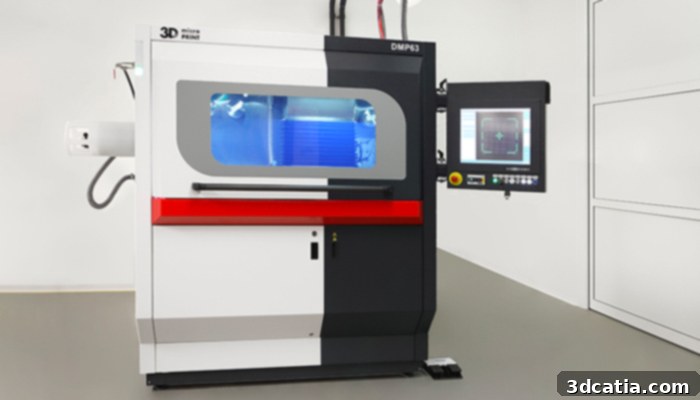
3D Microprint – DMP60 series
The DMP60 series represents the second generation of micro laser sintering machines from the German manufacturer 3D MicroPrint. Founded in 2013 through a strategic collaboration between EOS, a global leader in industrial 3D printing, and 3D-Micromac, a specialist in laser micromachining, 3D MicroPrint has established itself as a frontrunner in precision microfabrication. The DMP60 is an industrial-grade machine series engineered to deliver high productivity when working with both non-reactive and reactive materials, offering versatility for a wide range of applications. A notable feature is its integrated zero-point clamping system, which not only offers increased time savings during setup but also simplifies the subsequent post-processing steps, enhancing overall operational efficiency.
Designed for utmost precision, the DMP60 features an exceptionally fine laser spot size of under 30 micrometers, allowing for the creation of incredibly detailed and accurate micro-parts. With a building platform measuring 60mm in diameter and a maximum build height of 30mm, this printer is perfectly suited for producing small, complex components with high resolution. The ability to achieve layer thicknesses ranging from a mere 1 to 5 micrometers ensures that the final designs are rendered with exquisite detail and surface finish. For industrial clients concerned with operational economics, the DMP60’s initial cost is available upon request, offering a tailored solution. Furthermore, its robust gas-tight design, complete with air locks, contributes to significantly low running costs by optimizing gas consumption and ensuring a stable, controlled printing environment, making it an economically sound investment for sustained micro-manufacturing.
Nanogrande MPL-1
Nanogrande is an innovative Canadian-based 3D printing company that has carved a niche in advanced microscale printing through its proprietary FluidBed™ patented technology. The MPL-1, their flagship micro-printer, is specifically designed for demanding industrial applications, utilizing ultra-fine metal powders to achieve remarkable precision and detail. While optimized for incredibly small components, it offers a maximum build size of 250 cm³, providing sufficient volume for various micro-manufacturing needs. A key performance indicator for the MPL-1 is its impressive build speed of 1 minute per layer, accelerating the production of intricate metal micro-parts. It is optimized for an optimal particle size range of 0.3 to 10 microns, ensuring fine resolution and material integrity.
The MPL-1 operates with a range of proprietary powders and chemicals, including widely used industrial metals such as stainless steel, copper, and titanium. While the printer is expertly engineered for processing nanoparticles, it also demonstrates versatile compatibility with micron-sized particles, expanding its utility across various material specifications.
According to Nanogrande, the MPL-1 currently serves industries with minimal barriers to entry that require high-precision metal fabrication within a small build envelope. This includes specialized sectors like watchmaking, where intricate gears and components are essential; the jewelry industry, for crafting delicate and complex designs; and manufacturers of miniature electronic components, where miniaturization and precision are critical for performance. The MPL-1 thus enables these industries to achieve levels of detail and complexity previously unattainable with traditional manufacturing methods.
FemtoPrint and Glass Micro 3D Printing
FemtoPrint stands as a truly unique entity not only on this list but within the broader landscape of 3D printing, primarily due to its pioneering use of glass as a primary printing material. This innovative Swiss company is entirely dedicated to the fabrication of complex 3D printed microdevices crafted from glass and other transparent materials. FemtoPrint offers a comprehensive suite of services, tailored solutions, and its very own advanced platform, aptly named FEMTOPRINT®. The company positions its solution as an ideal 3D printing platform, serving both rigorous academic research and demanding industrial applications where glass micro-components are essential. At its core, the technology operates by harnessing light as a highly powerful and precise “ink” source. A meticulously focused laser beam is directed inside the glass, where it locally modifies the refractive index – the material’s ability to bend light – and its density. This precise modification allows for intricate pattern creation within the solid glass. As articulated on the company’s website, “Depending on exposure parameters, waveguides can be formed to realize complex integrated optical components or three-dimensional structures with additional chemical etching.” For the resulting final parts, users can anticipate an exceptional resolution of under 1 µm, enabling the creation of extraordinarily fine features. Furthermore, FemtoPrint offers advanced capabilities to combine these intricate 3D microdevices with processes like metal deposition and surface functionalization, opening up possibilities for fabricating unique and highly integrated 3D structures with enhanced functionalities. This innovative approach makes FemtoPrint a game-changer for micro-optics, microfluidics, and various other fields requiring high-performance, transparent micro-components.
The world of 3D microprinting is continuously evolving, pushing the boundaries of what’s possible in miniaturization and precision manufacturing. From resin-based systems achieving sub-micrometer resolutions to printers working with specialized metals and even transparent glass, the solutions highlighted here represent the cutting edge of this transformative technology. These advanced machines are not just creating smaller parts; they are enabling new innovations across critical sectors like electronics, healthcare, optics, and advanced materials science, promising a future where increasingly complex and functional micro-devices are commonplace. What are your thoughts on this selection of leading micro 3D printing solutions? Are there any groundbreaking machines or technologies that you believe deserve a spot on this list? We invite you to share your insights and comments below, or connect with us on our Linkedin, Facebook, and Twitter pages! Don’t miss out on the latest advancements and news in the 3D printing industry – make sure to sign up for our free weekly Newsletter here, delivering the most important updates straight to your inbox! You can also explore all our insightful videos and demonstrations on our dedicated YouTube channel.