
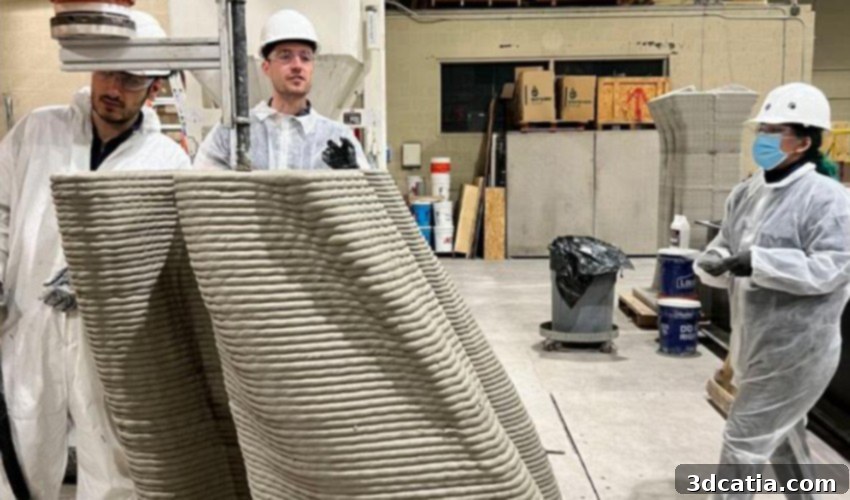
Penn State Pioneers 3D Printed Homes: A Sustainable Solution for Alaska’s Housing Crisis
In the vast, rugged landscapes of Alaska, where the severity of harsh winters amplifies an already critical housing crisis, researchers at Penn State University are spearheading a groundbreaking initiative. Under the visionary leadership of Professor José Pinto Duarte, the Stuckeman Chair in Design Innovation and Director of the Stuckeman Center for Design Computing within the College of Arts and Architecture’s Stuckeman School, the team has embraced 3D printing technology as a powerful tool to address the state’s urgent need for affordable, resilient, and sustainable housing. Their ambitious goal is to construct homes that are not only more cost-effective but also significantly warmer and more durable, specifically designed to withstand Alaska’s extreme environmental conditions.
Alaska faces an acute demand for new housing units, with current projections indicating a requirement of approximately 27,500 homes over the next decade. This pressing need is driven by issues such as pervasive overcrowding and substandard, unsanitary living conditions prevalent across many Alaskan communities. Traditional construction methods have consistently fallen short in meeting this escalating demand, particularly in Alaska’s numerous remote regions. The challenging terrain, vast distances between settlements, and limited infrastructure create formidable logistical hurdles for transporting materials and skilled labor, making conventional building prohibitively expensive and time-consuming. However, a significant boost to this innovative approach comes from a $376,000 grant awarded by the U.S. Department of Housing, empowering Penn State University to develop and deploy affordable 3D printed concrete homes as a transformative solution to the state’s housing challenges.
Addressing Alaska’s Unique Housing Challenges with Innovation
The housing predicament in Alaska is multifaceted, stemming from a combination of geographical isolation, harsh climatic conditions, and socio-economic factors. Many communities are accessible only by air or sea for much of the year, leading to exorbitant costs for materials and a severely restricted building season. The existing housing stock is often old, energy-inefficient, and ill-equipped to handle the extreme cold, necessitating high heating costs for residents. Furthermore, the limited availability of construction workers willing to operate in such demanding environments contributes to project delays and increased expenses. By turning to advanced manufacturing techniques like 3D concrete printing, Penn State aims to circumvent many of these traditional barriers, offering a streamlined, efficient, and locally adaptable construction process that promises to deliver robust homes designed for resilience and affordability. This innovative approach holds the potential to revolutionize how homes are built in challenging environments, making sustainable living more accessible to remote populations.
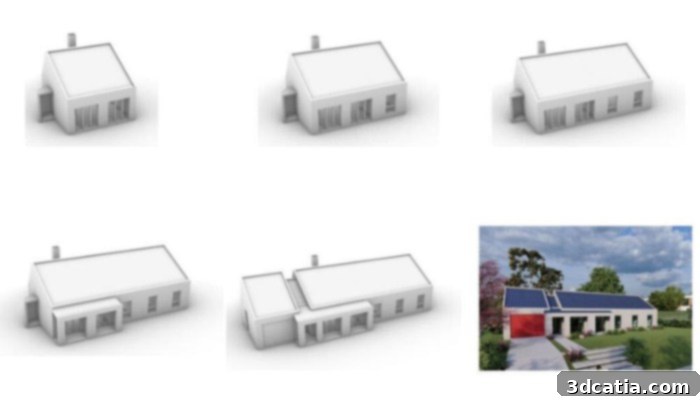
Renderings of the 3D printed concrete houses, showcasing their design for Alaskan conditions.
The Power of Collaboration: AddConLab and XHI Driving 3D Construction
At the heart of this transformative project is a strategic partnership between two key entities: Penn State’s Additive Construction Laboratory (AddConLab) and the Xtreme Habitats Institute (XHI). AddConLab brings cutting-edge research and expertise in large-scale additive manufacturing for construction, focusing on developing materials and processes optimized for structural integrity and performance in extreme conditions. Their work includes innovating concrete mixes that can be efficiently extruded by 3D printers while curing quickly and maintaining strength. XHI, a dedicated non-profit organization, complements this technical prowess with its mission to explore and implement innovative technologies that can significantly enhance living conditions for Alaskan residents, particularly in challenging environments. This collaboration ensures that the project benefits from both rigorous scientific development and a deep understanding of the practical needs and unique constraints of Alaskan communities, blending academic innovation with real-world application.
The combined efforts of AddConLab and XHI are focused on deploying a state-of-the-art mobile 3D concrete printer. This specialized system is designed to overcome many of the logistical hurdles inherent in Alaskan construction. Its mobility allows for on-site fabrication, dramatically reducing the need for extensive material transportation from distant supply chains. This “print-on-demand” capability is especially vital for remote areas where traditional supply lines are either non-existent or prohibitively expensive. By utilizing locally sourced aggregates and materials whenever possible, the project not only lowers construction costs and minimizes the carbon footprint associated with transport but also fosters local economic development by creating demand for regional resources and potentially new job opportunities. The inherent speed of 3D printing promises rapid construction cycles, a critical advantage given Alaska’s short viable building season, and will allow for more homes to be built in a fraction of the time compared to traditional methods. Furthermore, the precise layering capabilities of 3D printing enable the creation of optimized wall structures with integrated insulation channels, leading to superior thermal performance crucial for energy efficiency in extreme cold. This integrated design approach ensures that each home is not just built quickly but built smartly, offering long-term resilience and sustainability.
Innovating Construction in Nome: A Pioneering Case Study
The team’s initial focus is on the remote city of Nome, a strategic choice to demonstrate the viability and impact of this technology in one of Alaska’s most challenging environments. Nome, known for its extreme weather and isolated location, provides an ideal testing ground for resilient 3D printed housing. Leveraging Alaska’s brief summer window, which typically offers the most favorable conditions for outdoor construction, the project aims to begin erecting its first 3D printed homes. This limited timeframe necessitates highly efficient and rapid construction techniques, which 3D printing is uniquely positioned to deliver. The construction process involves printing robust concrete wall specimens layer by layer, forming the structural shell of the homes. A critical aspect of the design for Nome’s harsh climate is the strategic integration of reinforced steel bars within designated cavities of the 3D printed concrete. This reinforcement is essential for enhancing the flexural structural strength of the houses, making them resilient against the formidable horizontal wind pressures and seismic activity that are characteristic of Alaskan winters and permafrost regions. This innovative approach ensures that the homes are not only rapidly constructed but also engineered to withstand the most extreme weather patterns, offering unparalleled safety and durability.
Designing for Durability and Energy Efficiency
Beyond structural integrity, the design of these 3D printed homes incorporates advanced thermal properties, crucial for reducing heating costs in such a cold climate. The multi-layered concrete walls can be printed with internal voids that can then be filled with various insulation materials, creating a highly energy-efficient envelope. This feature is paramount for minimizing heating costs in a region where energy can be prohibitively expensive due to logistical challenges. The flexibility of 3D printing also allows for custom designs that can maximize passive solar gain, orienting windows and building footprints to harness natural sunlight, further reducing reliance on external heating sources. By combining strength, superior insulation, and smart architectural design, these 3D printed homes aim to provide long-term comfort and significant economic savings for residents, making them truly sustainable and practical solutions for Alaskan communities facing energy poverty.
Overcoming Significant Hurdles for Alaskan 3D Printed Housing
While the promise of 3D printed homes in alleviating Alaska’s housing shortage is immense, Professor Duarte and his team are acutely aware of the substantial obstacles that lie ahead. One major challenge is designing homes that comply with Nome’s stringent energy efficiency standards. Meeting these rigorous requirements, which are designed to ensure habitability and minimize operational costs in extreme cold, often entails significant additional costs for specialized materials and advanced insulation techniques. These stringent codes can also complicate the construction timeline as innovative approaches are developed and certified for use with 3D printing technology.
Furthermore, Nome’s extreme remote location presents formidable logistical challenges. Situated hundreds of miles from major cities and established road networks, transporting essential construction materials and heavy equipment to Nome incurs vastly increased expenses. This isolation necessitates meticulous planning and innovative supply chain solutions to keep the project economically viable. The cost and complexity of freight alone can easily inflate project budgets, demanding a streamlined process that capitalizes on the benefits of local material sourcing and the inherent efficiency and reduced material waste of 3D printing, thereby mitigating some of these transportation burdens.
Another critical environmental concern in Nome is the annual summer thawing of permafrost. This phenomenon, caused by rising temperatures, poses a significant threat to foundation stability, as the ground can become unstable and shift, potentially causing structural damage to buildings over time. Addressing this requires careful site selection, comprehensive geotechnical surveys to identify stable ground, and the implementation of innovative foundation solutions. Techniques such as elevated pile foundations or thermosyphon systems, which regulate ground temperatures to prevent thawing, may be crucial. These specialized solutions add complexity and cost but are indispensable for ensuring the long-term durability and safety of the 3D printed homes in this unique geological context, highlighting the need for truly resilient construction methods.
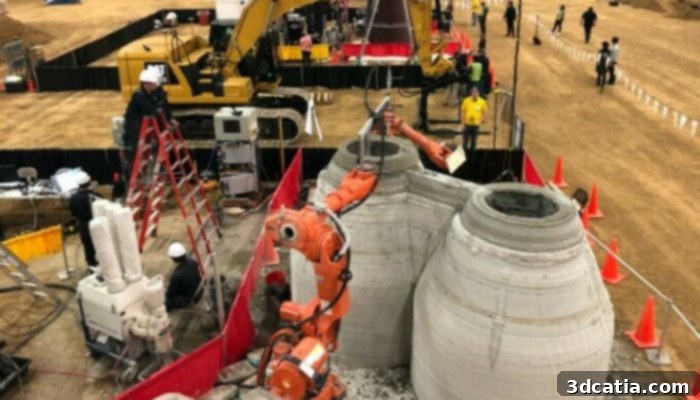
Construction of a structure using AddConLabs’ 3D concrete printer, illustrating the layered printing process.
The Future of Affordable Housing: A Vision for Global Expansion
Despite these considerable hurdles, Professor Duarte and his dedicated team remain highly optimistic about the project’s ultimate success and its far-reaching implications. Their vision extends beyond Nome, with discussions already underway for constructing an estimated 400 new houses over the next five years, significantly impacting Alaska’s housing landscape. This ambitious target underscores the scalability and potential of 3D printing technology in addressing large-scale housing deficits not just in Alaska, but in similar challenging environments worldwide. The efficiency and speed offered by additive manufacturing make such high-volume production feasible within relatively short timeframes, providing a tangible solution to critical housing shortages.
Professor Duarte expressed his broader aspirations, stating, “I hope the project may lead to more projects like this in other states, including Pennsylvania and maybe beyond the United States.” This sentiment highlights a crucial belief in the universal applicability and adaptability of additive construction technologies. He further emphasized his conviction in the technology’s transformative power: “I strongly believe 3D printing technology at the construction scale can help overcome the shortage of affordable housing and improve the situation of disadvantaged communities.” This pioneering project in Alaska serves as a vital proof-of-concept, demonstrating how cutting-edge technology can be harnessed to deliver practical, impactful solutions to pressing social needs globally. The success in Alaska could pave the way for similar initiatives in other regions facing extreme climates, labor shortages, or logistical challenges, ultimately making decent, affordable housing accessible to more people and fostering resilient communities.
Beyond providing immediate housing solutions, this project also has the profound potential to foster local skill development and economic growth within Alaskan communities. Training local residents in the operation and maintenance of 3D printing equipment could create new, high-tech job opportunities and empower communities to take a more active and self-reliant role in their own development. This holistic approach ensures that the benefits of the technology extend beyond simply building structures, contributing to the long-term resilience, sustainability, and prosperity of the regions it serves. This model of community engagement and technological empowerment could be replicated in other remote or underserved areas, creating a ripple effect of positive change. You can find out more detailed information about this pioneering project by visiting the official Penn State MRI news page here.
What are your thoughts on utilizing 3D printing technology to tackle Alaska’s significant housing shortage? We invite you to share your perspectives in the comments section below or engage with us on our social media platforms: LinkedIn, Facebook, and Twitter. Don’t miss out on the latest advancements in 3D printing; sign up for our free weekly newsletter here to receive news directly in your inbox! You can also explore all our video content on our YouTube channel.
*All Photo Credits: AddConLab – College of Arts & Architecture