
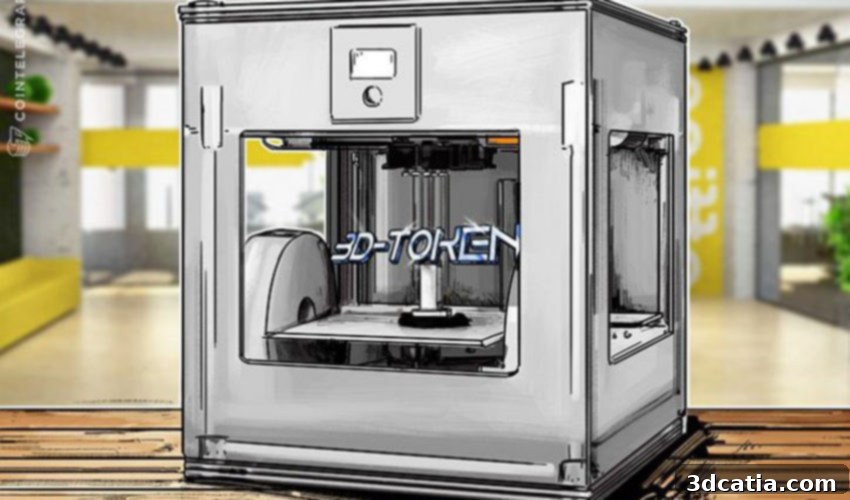
Decentralized Manufacturing: How Blockchain is Revolutionizing 3D Printing with 3D-TOKEN
The convergence of cutting-edge technologies often marks pivotal moments in industrial evolution, and it’s now undeniable that blockchain technology has entered the realm of 3D printing. This integration, whether viewed with optimism or skepticism, signifies the maturation of additive manufacturing to a point where its potential for decentralization is being seriously explored. While the landscape of Initial Coin Offerings (ICOs) has been fraught with challenges and marred by numerous scams, leading to a cautious approach from many investors, the emergence of projects like 3D-TOKEN presents a more earnest and potentially transformative application of cryptocurrency within the manufacturing sector. This initiative stands out as one of the first truly serious attempts to leverage blockchain for the advancement of 3D printing, aiming to redefine how products are designed, produced, and distributed globally.
At its core, 3D-TOKEN envisions a groundbreaking paradigm: a global, decentralized ‘Just-In-Time Factory’ built upon an interconnected network of local 3D printers worldwide, all orchestrated by blockchain technology. This ambitious concept draws parallels with existing platforms like 3D Hubs, which successfully connect users with local 3D printing services, but 3D-TOKEN takes this model a significant step further through decentralization. Originating from the prestigious Italian ‘Politecnico di Torino’ University, the project boasts academic rigor and a clear mission: to democratize additive manufacturing on a global scale. By eliminating central intermediaries and fostering direct peer-to-peer interactions, 3D-TOKEN seeks to unlock new efficiencies, reduce production costs, and enhance the accessibility of 3D printing services for businesses and individuals alike.
The strategic foundation of 3D-TOKEN lies in tapping into the vast, rapidly expanding ecosystem of desktop 3D printers. In 2015 alone, over 270,000 such printers were in circulation, a number that has grown exponentially since, indicating a massive, underutilized distributed manufacturing capacity. 3D-TOKEN’s core belief is that by orchestrating this expansive network of individual and commercial 3D printers through a blockchain-based platform, they can create a resilient, efficient, and truly decentralized ‘network hub.’ This approach promises to transform these disparate machines into a cohesive, on-demand manufacturing force, capable of producing goods locally, reducing supply chain complexities, and responding swiftly to market demands. The implications for custom manufacturing, prototyping, and even spare parts production are profound, offering a flexible alternative to traditional centralized manufacturing pipelines.
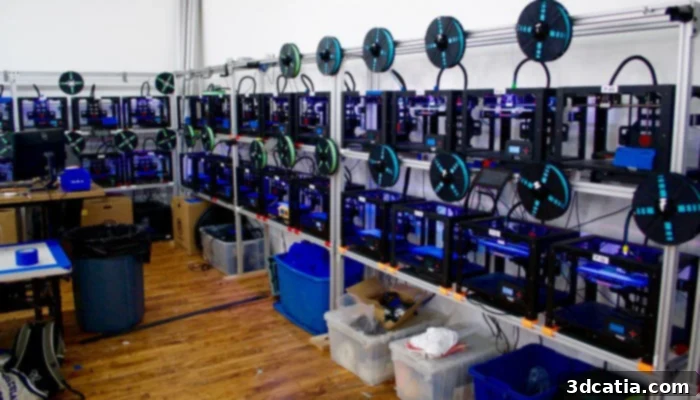
Pioneers like Voodoo Manufacturing demonstrate the scalability of utilizing numerous 3D printers for efficient part production, a model that aligns with 3D-TOKEN’s vision.
Unlocking the Potential: 3D Printing and Blockchain Synergy
The integration of blockchain technology brings several transformative advantages to additive manufacturing. By its nature, blockchain offers an immutable, transparent, and secure ledger for transactions and data. In the context of 3D printing, this translates into verifiable intellectual property protection for designers, authenticated production processes, and transparent supply chains for consumers and businesses. Smart contracts, an integral part of blockchain, can automate agreements between design owners, printer operators, and buyers, ensuring fair compensation and quality control without the need for manual oversight or trust in a central authority. This level of trust and automation is crucial for a distributed manufacturing model, guaranteeing that designs are produced accurately, payments are processed automatically, and the entire production history of an item is verifiable.
3D-TOKEN is not just a theoretical concept; the company asserts that it has already established a foundational network of 100 active 3D printers. Their immediate ambition through the 3D-TOKEN initiative is to exponentially scale this network to 3,000 printers by the close of 2019, projecting a collective production capacity of an impressive 300 tons of material. This massive increase in distributed manufacturing power would significantly bolster the feasibility of their decentralized factory model. While the specifics on *how* their blockchain-based platform will lead to reduced production costs are yet to be fully detailed, the inherent efficiencies of eliminating intermediaries, optimizing logistics through local production, and fostering competition among network participants typically contribute to cost savings in decentralized systems. Furthermore, the enhanced transparency and security provided by blockchain could reduce instances of fraud and disputes, leading to a more streamlined and economically viable production process.
A compelling indicator of 3D-TOKEN’s potential and credibility is its established collaboration with the renowned retail chain Flying Tiger Copenhagen, which boasts over 600 stores globally. This strategic partnership has already yielded tangible results, including the upcoming launch of a unique 3D-printed lamp. Such a collaboration demonstrates not only the practical application of 3D-TOKEN’s technology but also its ability to penetrate mainstream consumer markets. By partnering with a large-scale retailer, 3D-TOKEN is showcasing how decentralized additive manufacturing can move beyond niche applications to deliver custom, on-demand products to a broad customer base, signaling a significant step towards the mass adoption of blockchain-powered 3D printing. This also validates the feasibility of using a distributed network for real-world commercial products.
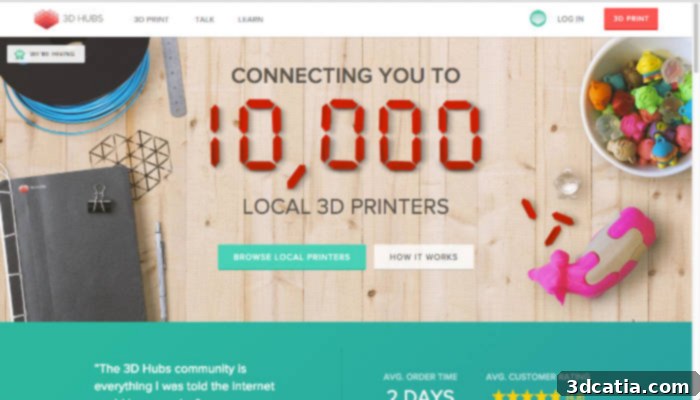
Platforms like 3D Hubs have already proven the success of connecting a vast network of 3D printers, currently over 10,000, underscoring the market’s demand for distributed manufacturing.
The 3D-TOKEN Ecosystem and its ICO
The proprietary cryptocurrency facilitating transactions and governance within this decentralized ecosystem is known as 3DT. Operating as an Ethereum-based token, 3DT aligns with the widely accepted ERC-20 standard, placing it in the same league as other notable tokens like Augur, OmiseGO, and Golem. The Initial Coin Offering (ICO) for 3DT concluded on February 11th, and the company has announced that the token will soon be listed on various global exchanges, making it accessible to a wider investor and user base. The utility of 3DT extends across multiple facets of the 3D-TOKEN network: holders can leverage their tokens to crowdfund innovative 3D printing projects, invest in promising designs, or even commission production. Furthermore, 3DT can be used directly to purchase .stl files (3D model designs) or physical 3D prints from the network. Beyond transactional purposes, holding 3DT tokens also grants users the opportunity to receive profits generated from the overall network’s activities, incentivizing participation and long-term engagement in the decentralized manufacturing ecosystem. This multifaceted utility is designed to foster a vibrant and self-sustaining community around additive manufacturing.
The financial backing for 3D-TOKEN highlights significant investor confidence, with the company reporting that more than $1 million has already been invested in its ICO. This substantial capital demonstrates a belief in the project’s vision and its potential to disrupt traditional manufacturing. While established centralized services like 3D Hubs have successfully connected thousands of 3D printers and users, 3D-TOKEN seeks to differentiate itself through the inherent benefits of blockchain – enhanced security, immutable records, automated smart contracts, and genuine decentralization, which could lead to greater efficiency and lower transaction costs over time. The fundamental technologies of 3D printing and blockchain are both showing no signs of slowing down; indeed, they are increasingly recognized as pillars of the fourth industrial revolution. Therefore, 3D-TOKEN’s initiative could very well be marking the genesis of a new era in manufacturing, where decentralized systems, empowered by blockchain and additive manufacturing, play a dominant role in shaping global supply chains and product creation. Only the unfolding narrative of innovation and adoption will reveal the true extent of this transformative potential.
To learn more about this pioneering project, you can visit the official 3D-TOKEN website here. Explore their vision and how they plan to reshape the future of manufacturing.
What are your thoughts on the exciting intersection of 3D printing and blockchain technology? We encourage you to share your insights in a comment below or connect with us on our Facebook and Twitter pages! Don’t miss out on the latest advancements and news in the world of 3D printing – sign up for our free weekly Newsletter to receive all the crucial updates directly in your inbox!