
Toy Rescue: Dagoma’s 3D Printing Initiative Revolutionizes Toy Repair and Embraces Sustainability
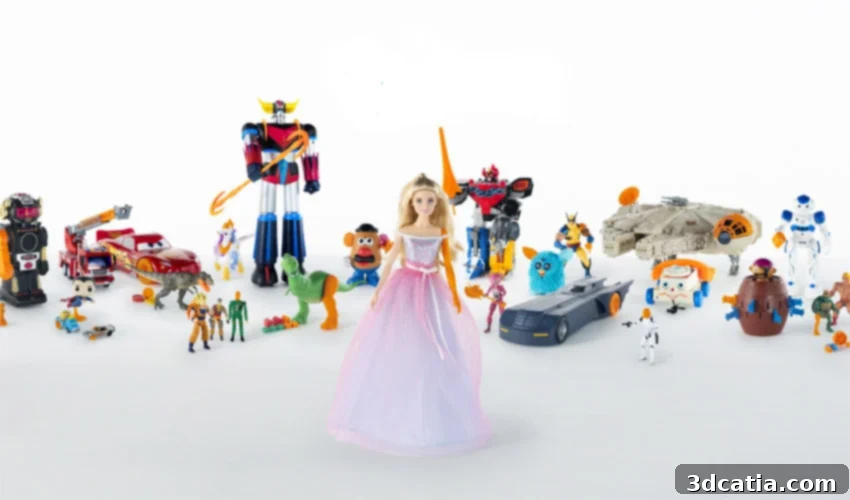
In an innovative move to combat the escalating problem of toy waste, French manufacturer Dagoma has unveiled its groundbreaking “Toy Rescue” initiative. This program is designed to significantly reduce the staggering number of toys discarded annually by providing easily accessible spare parts. Instead of consigning cherished playthings to landfills, individuals can now readily replace a missing arm, a broken leg, a lost wheel, or any other damaged component. Traditionally, repairing a beloved toy has often been an exercise in futility, primarily due to the near-impossibility of sourcing specific replacement parts. With Toy Rescue, Dagoma is fundamentally altering this landscape by making these crucial components available, completely free of charge, thereby empowering countless toys to enjoy a second, extended life.
The environmental and economic implications of toy consumption are substantial. In France, the manufacturer’s home country, an astounding 213 million toys were sold in 2018 alone, reflecting an average annual expenditure of approximately €275 per child. Alarmingly, Dagoma estimates that around 40 million toys are prematurely discarded each year. This colossal volume of waste not only represents a significant financial loss but also contributes massively to environmental pollution and landfill burden. A deeper look reveals that the vast majority of these discarded toys are not entirely defective; rather, their premature retirement is often triggered by the absence of a single, irreplaceable part. It is not unreasonable to assume that this wasteful pattern is replicated across numerous other countries worldwide, suggesting a broad potential for such a repair-focused initiative to make a global impact on waste reduction and foster a more sustainable approach to consumer goods.
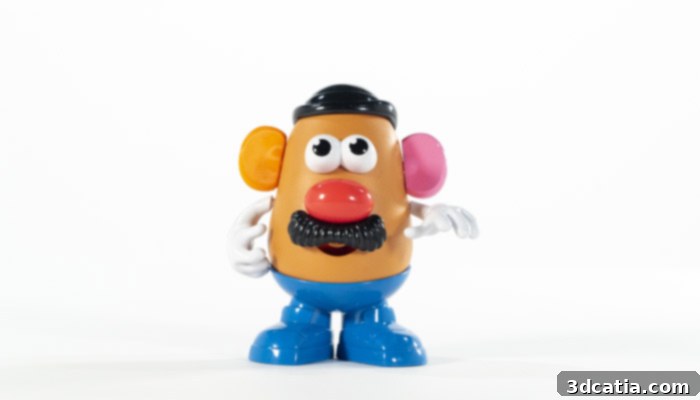
Mr. Potato lost an ear? You can now 3D print it! | Credits: Dagoma
How the Toy Rescue Collaborative Platform Leverages 3D Printing for Repair
The genesis of the Toy Rescue platform lies in comprehensive and meticulous research. Dagoma initiated this project by assembling a dedicated team of designers whose primary task was to identify the most frequently lost or broken toy parts spanning the last four decades. This extensive historical analysis allowed them to pinpoint common vulnerabilities and popular replacement needs across a wide array of toys. Once these critical parts were identified, the manufacturer meticulously created precise digital 3D models of each component. These digital files were then made freely available for 3D printing on Dagoma’s specialized platform. Today, the platform proudly boasts a catalog of over 100 distinct models, offering solutions for a diverse range of toy repair scenarios. This foundational work ensures that the most common repair needs are directly addressed, providing practical and immediate solutions for consumers.
For users, engaging with the Toy Rescue platform is designed to be a straightforward and intuitive experience. Navigating to the platform, individuals can easily browse through various toy categories to locate the specific part they require. Whether it’s a replacement arm for a Spiderman action figure, a new head for a Barbie doll, an ear for Mr. Potato Head, or even specific pie charts to complete a game of Trivial Pursuit, the platform offers a wide array of digital files for immediate download. To further assist users, Dagoma provides detailed printing tips accompanying each model, ensuring optimal results. Furthermore, they offer suggestions for different filament colors, allowing for customization or faithful replication of the original part. In instances where a user cannot locate the exact part they are searching for within the existing database, the platform offers a valuable feature: the ability to submit a request directly to Dagoma’s design team. Users are encouraged to provide precise details, including the toy’s model, the specific part missing, and any other relevant information, enabling the team to potentially design and add the requested component to the growing library. This user-driven feedback loop is crucial for the continuous expansion and relevance of the Toy Rescue initiative.
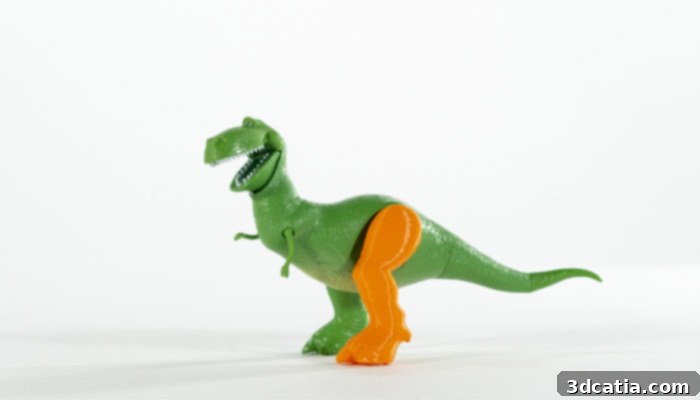
Rex’s orange leg was 3D printed | Credits: Dagoma
One common concern for individuals looking to utilize this service might be the necessity of owning a 3D printer. However, Dagoma has ingeniously circumvented this potential barrier. Owning a personal 3D printer is absolutely not a prerequisite for benefiting from Toy Rescue. Instead, the initiative fosters a strong sense of community through the “Club Dagoma,” a network of dedicated makers. Users who do not possess a 3D printer can reach out to this collaborative community, and local makers will readily assist in printing the required part. This communal approach significantly broadens the accessibility of the Toy Rescue platform, ensuring that anyone, regardless of their access to 3D printing technology, can participate in toy repair. As evident, Toy Rescue transcends being merely a platform; it represents a vibrant collaborative ecosystem primarily focused on encouraging repair over disposal. Matthieu Regnier, CEO of Dagoma, eloquently articulates the core mission: “The objective of Toy Rescue is to give everyone the opportunity to repair an object that they thought had to be thrown away.” This vision extends beyond mere functionality, aiming to instill a deeper appreciation for objects and promote a more sustainable consumer mindset. This initiative directly contributes to the circular economy by extending product lifecycles and minimizing waste, making it a powerful example of how additive manufacturing can drive environmental responsibility. The ongoing expansion of the platform means more and more models are being added, strengthening the repair ecosystem. All available files can be found HERE, with additional insights provided in the comprehensive video below, which beautifully illustrates the simplicity and impact of the program.
The significance of Dagoma’s Toy Rescue initiative extends beyond the immediate benefit of repairing toys; it embodies a profound shift towards a more sustainable future. By democratizing access to spare parts through 3D printing and fostering a collaborative community, Dagoma is actively combating the pervasive “throwaway culture” that characterizes modern consumerism. This program not only reduces landfill waste and the environmental impact associated with new toy manufacturing but also empowers individuals to adopt a “repair culture.” Children who witness their beloved toys being fixed rather than replaced are likely to develop a greater appreciation for their belongings and a more environmentally conscious mindset from a young age. Moreover, the open-source nature of many of these 3D models fosters innovation and allows for community contributions, potentially leading to an even wider array of available parts. The potential for this model to expand beyond toys, addressing repair needs for other household items and consumer electronics, is immense, truly paving the way for a more resourceful and eco-friendly society. This initiative is a shining example of how technology, specifically additive manufacturing, can be harnessed for the greater good, transforming how we interact with our possessions and fostering a culture of longevity and sustainability. It encourages consumers to think differently about product lifecycles and the value of repair, moving away from linear consumption towards a more circular economic model.
We invite you to share your thoughts on the innovative Toy Rescue platform. How do you believe such initiatives can further impact sustainability and consumer habits? Let us know your perspective in a comment below, or engage with us on our vibrant social media channels, including our Facebook and Twitter pages! For all the latest news, breakthroughs, and insights in the dynamic world of 3D printing, be sure to sign up for our free weekly Newsletter, delivered directly to your inbox. Join the conversation and become part of a community dedicated to exploring the future of additive manufacturing and its potential for a more sustainable world.