
Oman Pioneers Sustainable Architecture with First 3D Printed Mosque: The Al Khair Project in Salalah
Oman is embarking on a monumental journey, setting a new benchmark for sustainable construction and architectural innovation with the groundbreaking announcement of its first-ever mosque to be built using state-of-the-art 3D printing technology. This ambitious endeavor, named the “Al Khair” Mosque, signifies a crucial milestone for the nation, propelling it to the forefront of integrating cutting-edge digital fabrication methods into traditional infrastructure. Situated majestically within the picturesque Dahariz Waterfront area of Salalah, a city known for its breathtaking natural beauty and rich cultural heritage, the project is a collaborative masterpiece. Innotech Oman, a leader in technological solutions, is partnering with Oday Architecture, renowned for its visionary designs, to bring this revolutionary concept to life. The collaboration aims to leverage large-scale 3D printing not only for the foundational structure but also for the intricate and nuanced architectural details, seamlessly weaving Oman’s profound Islamic heritage with a forward-thinking, innovative design ethos. This initiative is poised to redefine construction paradigms, offering a tangible vision of how tradition and technology can harmoniously coexist and elevate architectural expression, positioning Oman as a regional leader in smart and sustainable urban development.
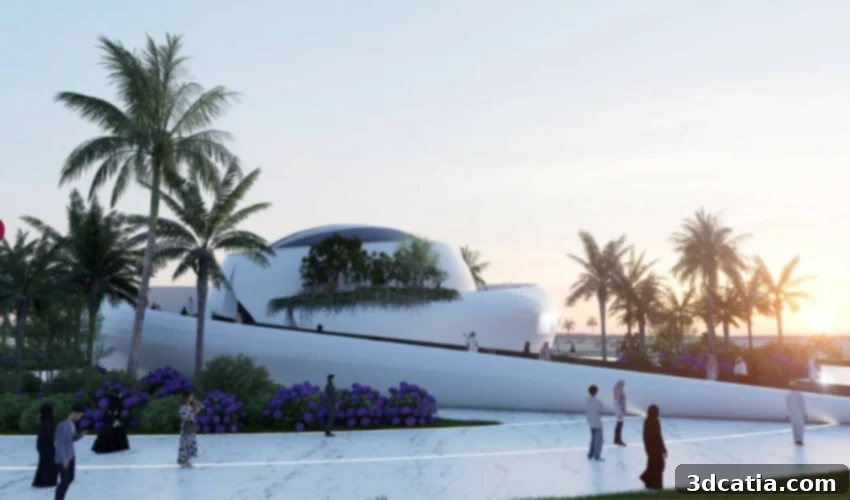
The architectural philosophy behind the Al Khair Mosque is a testament to both aesthetic brilliance and functional ingenuity. It draws profound inspiration from the graceful fluidity of a spiral ribbon, a motif that elegantly encapsulates the mosque’s core design elements. This dynamic spiral form extends beyond mere aesthetics, meticulously shaping a series of shaded walkways that invite contemplation and offer respite from the intense sun, guiding visitors towards the main prayer hall with a sense of progression and reverence. Furthermore, the design thoughtfully integrates tiered green spaces, creating a serene and ecologically conscious environment that enhances the spiritual experience and provides natural cooling. The adoption of advanced 3D printing methods is not merely a technical choice but a strategic one, empowering builders to manifest these incredibly intricate and complex forms with unprecedented speed and precision. This digital fabrication approach dramatically minimizes material waste, a significant benefit in sustainable construction, by only depositing material where it is structurally or aesthetically required. The heart of the mosque, an exquisitely oval-shaped prayer hall, is designed to be a sanctuary of light and peace. A grand central skylight strategically positioned above the prayer area will flood the interior with an abundance of natural light, transforming the space into an ethereal realm. This natural illumination serves not just a practical purpose but also a profound symbolic one, representing spiritual guidance and enlightenment descending upon the worshippers. The interplay of light, form, and greenery is intended to create an immersive spiritual journey, deeply connected to both faith and nature.
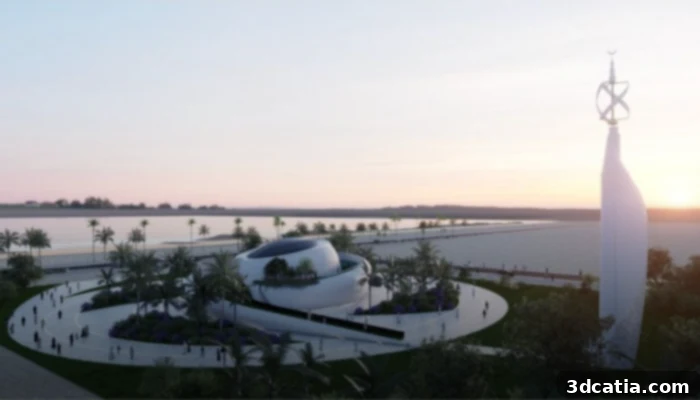
Ahmed bin Mohsen Al Ghassani, the esteemed Chairman of Dhofar Municipality, has passionately underscored the transformative potential of 3D printing in this landmark project. He articulated that this innovative construction methodology will yield substantial benefits, primarily through a remarkable reduction in both the overall construction timeline and the quantity of materials consumed. This efficiency translates directly into significant cost savings, expedited project completion, and a dramatically minimized environmental footprint, aligning perfectly with Oman’s overarching commitment to sustainable development and ecological responsibility. A cornerstone of the Al Khair Mosque’s robust sustainability agenda is its steadfast reliance on locally sourced, coastal-friendly materials. This deliberate choice not only stimulates and supports the local economy but also ensures that the building materials are inherently suitable for the unique climatic conditions of Salalah’s coastal environment, enhancing the mosque’s longevity, resilience, and integration with its surroundings. Furthermore, the project is pioneering in its sophisticated integration of advanced energy-harvesting systems. Leveraging the abundant natural resources of the region, the mosque’s design will seamlessly incorporate solar panels to harness sunlight, wind turbines to capture kinetic energy, and even motion-based systems, potentially utilizing pedestrian movement or other forms of kinetic energy generation. These integrated systems are designed to make the Al Khair Mosque largely self-sufficient in its energy needs, positioning it as a radiant model for sustainable urban development and eco-conscious architectural practices not only within Oman but across the broader Gulf region and beyond. It exemplifies a holistic approach to building, where every design and material choice contributes to environmental stewardship, resource efficiency, and long-term sustainability.
The innovative construction method employed for the Al Khair Mosque signifies a profound paradigm shift in how large-scale public buildings, especially those with deep cultural and spiritual significance, can be conceptualized and brought to fruition. Traditional construction often grapples with the complexities and inefficiencies of creating intricate architectural forms, typically relying on labor-intensive and material-heavy conventional formwork. This traditional approach is frequently associated with high costs, extended construction schedules, and a significant amount of material waste due to the need for molds and temporary structures that are often discarded. In stark contrast, 3D printing technology offers unparalleled advantages. It enables architects and builders to exert precise, digital control over even the most complex, curvilinear, and organic shapes, allowing for unprecedented design freedom without incurring prohibitive costs or time penalties. The elimination of conventional formwork, a major bottleneck in many construction projects, is a key benefit, significantly streamlining the building process and reducing both material consumption and manual labor. This forward-thinking approach is not an isolated experiment but deeply resonates with Oman’s broader national vision. The Sultanate is actively committed to embracing advanced technologies across various sectors, particularly for critical infrastructure development, while simultaneously upholding and preserving its rich cultural identity and heritage. The Al Khair Mosque stands as a powerful symbol of this dual ambition, demonstrating that technological advancement can serve as a powerful tool for cultural expression and preservation, rather than being a force that displaces tradition. It showcases how modern digital fabrication methods can be respectfully integrated to create structures that are both deeply rooted in history and boldly oriented towards the future, setting a global example.
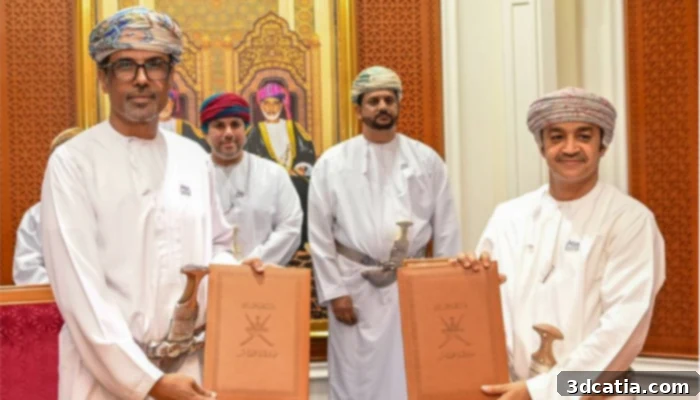
The Dhofar Municipality Government signed the agreement to build the mosque in partnership with Innotek Oman and Adi Architects.
Upon its anticipated completion, the Al Khair Mosque is not merely expected to be a place of worship but is poised to emerge as a prominent spiritual and architectural landmark along Salalah’s stunning coastline. Its distinctive silhouette and innovative construction methodology will draw attention, not just from within Oman but from global architectural and technological communities, fostering admiration and scholarly interest. The project’s pioneering utilization of large-scale 3D printing for such a significant public building holds immense potential to inspire and catalyze similar revolutionary projects across the entire Gulf region and indeed, worldwide. It sets a precedent for how future infrastructure can seamlessly combine time-honored traditions with cutting-edge, forward-looking construction methods, particularly for religious and cultural edifices. Oman is not alone in this innovative stride; the region is rapidly embracing 3D printing in construction as a viable and efficient solution. Alongside Oman, neighboring nations such as Saudi Arabia have already unveiled their own pioneering 3D printed mosques, showcasing a growing regional trend towards digital fabrication in sacred architecture. Similarly, the United Arab Emirates has also been at the forefront, completing its own 3D printed mosque in Dubai, further solidifying the Gulf’s position as a hub for construction innovation and sustainable building practices. These collective developments vividly illustrate the rapidly evolving perception of 3D printing—no longer viewed as a niche or experimental technology, but rather as an increasingly viable, efficient, and transformative tool for mainstream construction. This shift underscores a future where architectural ambition is no longer constrained by conventional limitations, opening new vistas for design, sustainability, and rapid development in urban landscapes.
The implications of projects like the Al Khair Mosque extend far beyond architectural novelty. They represent a fundamental rethinking of urban development, resource management, and the very economics of construction. By significantly reducing labor requirements and material waste, 3D printing in construction offers a promising pathway to more affordable housing, faster disaster recovery infrastructure, and the ability to build in remote or challenging environments that would otherwise be inaccessible or too costly using traditional methods. The inherent ability to customize designs with unprecedented ease and cost-efficiency means that future structures can be perfectly tailored to local cultural contexts, specific functional needs, and unique environmental conditions. This level of personalization, previously cost-prohibitive for large-scale projects, becomes a standard and accessible feature with additive manufacturing. Moreover, the thoughtful integration of smart technologies, as robustly seen with the energy-harvesting systems in the Al Khair Mosque, points towards a future of truly intelligent buildings that actively contribute to their surrounding ecosystems and energy grids rather than merely consuming resources. The comprehensive data generated during the 3D printing process can also provide invaluable insights for continuous improvement in design, material science, and operational efficiency, making each subsequent project even more efficient and sustainable. This iterative improvement loop is a hallmark of digital manufacturing and promises to accelerate innovation in the construction sector globally. As more nations and municipalities recognize these profound benefits, 3D printing is poised to become an indispensable tool in the global effort to build more sustainably, efficiently, and resiliently, paving the way for the realization of smart cities and adaptive infrastructure.
Oman’s initiative with the Al Khair Mosque perfectly encapsulates the nation’s forward-thinking vision, balancing its rich historical tapestry with an unwavering commitment to modern progress and environmental responsibility. This project is not merely about erecting a building; it is about establishing a lasting legacy of innovation, showcasing how advanced technology can be leveraged to create sacred spaces that are both awe-inspiring in their design and ecologically sound in their operation. By taking this bold and pioneering step, Oman is not only enhancing its own infrastructure and spiritual landscape but is also contributing significantly to the global discourse on sustainable urbanism and the future of architecture. The lessons learned, the techniques refined, and the benchmarks set by the Al Khair Mosque will undoubtedly serve as invaluable references for architects, engineers, and urban planners worldwide grappling with similar challenges of rapid urbanization, resource scarcity, and environmental imperatives. It demonstrates a clear path forward for other countries seeking to elegantly marry their profound cultural heritage with the demanding requirements of the 21st century, proving unequivocally that tradition and innovation are not mutually exclusive but can, in fact, be powerful allies in shaping a more sustainable, efficient, and inspiring future for humanity. The Al Khair Mosque is thus more than just a magnificent structure; it is a profound symbol of hope, progress, and the boundless possibilities that emerge when human ingenuity embraces the transformative power of technology.
What are your thoughts on this groundbreaking development? We invite you to share your insights and opinions in a comment below or join the conversation on our LinkedIn or Facebook pages! Plus, don’t forget to sign up for our free weekly Newsletter to get the latest 3D printing news straight to your inbox. You can also find all our compelling videos and interviews on our YouTube channel.
All Image Credits: Government of Oman / Oman News Agency (ONA)