
Unveiling the Future: Top 5 Revolutionary 3D Printing Videos of the Week
Welcome to our weekly showcase of the most captivating and innovative developments in the world of additive manufacturing! Each week, the 3D printing industry pushes boundaries, revealing technologies that promise to reshape design, production, and even our daily lives. From groundbreaking new machines that democratize advanced processes to sophisticated automation systems and essential material insights, there’s always something new to discover. This curated selection brings you the very best 3D printing videos that caught our eye this week, offering a deep dive into the innovations driving the sector forward. We invite you to explore these compelling insights, learn from industry leaders, and witness the incredible potential of 3D printing firsthand. Don’t forget to tell us which video impressed you the most in the comments below or share your thoughts on our Facebook and Twitter pages. We’d also love for you to share your favorite picks with your network!
TOP 1 – Formlabs Fuse 1 SLS Printer Demo: Democratizing Industrial Power
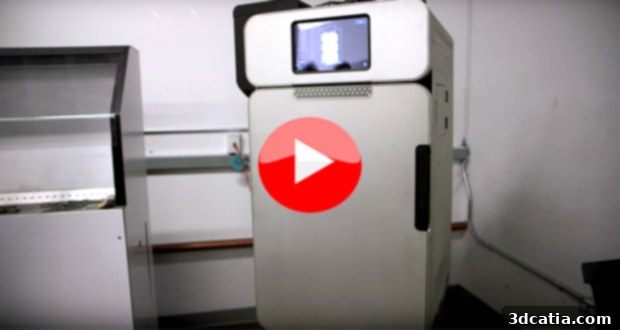
This week’s most anticipated highlight comes from Formlabs, a company already renowned for making high-quality stereolithography (SLA) 3D printing accessible with their Form series. Now, Formlabs is set to revolutionize another segment of additive manufacturing with the launch of the Fuse 1, their groundbreaking Selective Laser Sintering (SLS) printer. For years, SLS technology, known for its ability to produce highly durable, functional parts with complex geometries without requiring support structures, has been largely confined to industrial settings due to its exorbitant cost and operational complexity. The Fuse 1 aims to break down these barriers, making industrial-grade SLS printing more affordable and user-friendly than ever before.
In this insightful video, you’re invited behind the scenes at Formlabs’ bustling headquarters in Boston. This exclusive tour offers an in-depth look at the Fuse 1 in action, demonstrating its seamless workflow and impressive capabilities. Viewers will gain a comprehensive understanding of how this innovative machine operates, from powder loading and laser sintering to post-processing and part extraction. The demo highlights the Fuse 1’s intuitive interface and robust performance, showcasing its potential to transform various industries, including engineering, product design, and small-batch manufacturing. By dramatically lowering the entry barrier for SLS technology, Formlabs is not just introducing a new printer; they are fundamentally reshaping the future of functional prototyping and end-use part production. This democratized access means more businesses, educational institutions, and innovators can now leverage the strength and design freedom of SLS, pushing the boundaries of what’s possible with additive manufacturing. Witnessing the Fuse 1 in this demo provides a compelling vision of how advanced 3D printing is becoming increasingly attainable for a wider audience, fostering innovation on an unprecedented scale.
TOP 2 – Behind the Scenes at Concept Laser: The Giants of Metal 3D Printing
Have you ever wondered about the colossal machines and intricate processes involved in creating metal parts through additive manufacturing? Our second top video this week offers a rare glimpse into the heart of one of the leading innovators in this field: Concept Laser. This German company holds a pivotal position in the metal 3D printing landscape, particularly recognized for its development of LaserCUSING technology, a proprietary method for laser powder bed fusion. Their expertise and advanced systems were so significant that they attracted the attention of General Electric (GE), an industrial powerhouse, which acquired Concept Laser not too long ago to solidify its own ambitious push into additive manufacturing. This strategic acquisition underscored the growing importance of metal 3D printing for critical industries.
The video takes you on an exclusive tour of Concept Laser’s state-of-the-art facility in Germany, a hub of groundbreaking research, development, and manufacturing. Here, you’ll witness firsthand some of the world’s largest and most sophisticated 3D metal printers in operation. These massive machines are capable of processing a wide array of high-performance metals, including titanium alloys, aluminum, and various steel grades, producing components for demanding applications in aerospace, medical, automotive, and energy sectors. The tour provides insights into the sheer scale of these operations, showcasing how Concept Laser’s technology enables the production of complex, lightweight, and incredibly durable parts that would be impossible or prohibitively expensive to create with traditional manufacturing methods. You’ll learn about the meticulous processes involved, from powder handling and environmental controls to the precise laser sintering and post-processing steps. This behind-the-scenes look not only highlights the impressive engineering feats but also offers a deeper understanding of the vital role Concept Laser plays in advancing industrial additive manufacturing and its profound impact on global manufacturing capabilities. It’s a compelling testament to the power of metal 3D printing in shaping the future of high-performance engineering.
TOP 3 – Formlabs Form Cell: The Dawn of Automated Print Farms
Continuing their stride in making advanced 3D printing more accessible and efficient, Formlabs also introduced another groundbreaking innovation alongside the Fuse 1: the Form Cell. This ingenious system represents a significant leap towards automation in additive manufacturing, transforming the way companies manage and scale their 3D printing operations. The Form Cell is essentially a robotic manufacturing solution designed to integrate seamlessly with Formlabs’ popular Form 2 SLA printers, enabling users to create a robust and highly efficient print farm.
The core of the Form Cell lies in its intelligent robotic arm, which takes over many of the manual tasks traditionally associated with 3D printing. This system can autonomously control multiple Form 2 SLA printers, automating processes such as part removal from the build platform, material dispensing, and even initiating new prints. By streamlining these repetitive tasks, the Form Cell dramatically increases throughput and reduces the need for constant human intervention, leading to significant time and labor savings. Imagine being able to run a fleet of printers 24/7 without needing an operator on standby, consistently producing parts with minimal downtime. This level of automation is critical for businesses looking to scale their additive manufacturing capabilities, whether for high-volume prototyping, small-batch production of end-use parts, or specialized applications in fields like dentistry and jewelry. The video vividly demonstrates how the Form Cell operates, showcasing its precision and efficiency as it navigates between printers, handles parts, and prepares for the next print job. It’s a compelling illustration of how Formlabs is not only developing advanced 3D printers but also building comprehensive ecosystems that bring additive manufacturing closer to the fully automated production lines seen in traditional manufacturing, marking a pivotal step towards industrial readiness for 3D printing technology.
TOP 4 – The Bean 3D Printer: Crowdfunding the Next Generation of Affordable Detail
Kickstarter has become an invaluable platform for innovators in the 3D printing space, often serving as a launchpad for disruptive technologies that reshape our perceptions of what’s possible and affordable. Our fourth video of the week highlights one such success story: the Bean 3D printer. This particular machine captured widespread attention for its audacious claim of being the cheapest high-resolution 3D printer on the market, quickly surpassing its funding goals and demonstrating a strong demand for accessible, high-quality additive manufacturing.
The Bean 3D printer typically leverages Digital Light Processing (DLP) or LCD-based resin 3D printing technology, known for its ability to produce incredibly detailed and smooth prints. Unlike filament-based FDM printers, resin printers cure liquid resin layer by layer using a projector or LCD screen, resulting in exceptional surface finish and intricate geometries, making them ideal for miniatures, jewelry, dental models, and highly detailed prototypes. The video showcases how the Bean printer achieves this level of detail at an unprecedented price point, essentially democratizing professional-grade resin printing for hobbyists, small businesses, and educational institutions. Its affordability aims to break down the financial barriers that often prevent individuals and smaller organizations from accessing advanced 3D printing capabilities. By making high-fidelity 3D printing more attainable, the Bean printer isn’t just offering a new product; it’s catalyzing a shift in the landscape, encouraging more people to experiment, innovate, and integrate 3D printing into their creative and professional workflows. The promise of an ultra-affordable, high-resolution machine challenges the notion that quality must come at a premium, truly revolutionizing how everyday users can engage with and benefit from advanced additive manufacturing technology. The success of its crowdfunding campaign is a testament to the market’s hunger for innovation that combines performance with affordability.
TOP 5 – Soluble Solutions: Simplifying Complex Geometries with Smart Supports
For anyone deeply immersed in the nuances of 3D printing, understanding and managing support structures is a constant challenge. Our final video of the week offers an illuminating discussion that promises to enhance your printing experience, focusing on the game-changing world of soluble support materials. Support structures are indispensable for creating objects with overhangs, bridges, and intricate internal cavities, preventing prints from collapsing during the additive process. However, removing traditional, non-soluble supports can be a painstaking process, often leading to damaged parts, rough surfaces, and significant post-processing time. This is where soluble solutions come into play, offering a revolutionary approach to tackling complex geometries.
This insightful review features a knowledgeable expert who delves into the practical applications and immense benefits of using soluble support materials such as PVA (Polyvinyl Alcohol) or BVOH (Butenediol Vinyl Alcohol Copolymer). These advanced materials are designed to be water-soluble or dissolvable in specific solutions, meaning that once your print is complete, you simply immerse the part in water, and the support material dissolves away, leaving behind a perfectly formed object. This process virtually eliminates the risk of damaging delicate features during removal and drastically reduces manual labor. The video highlights scenarios where soluble supports are absolutely essential, such as when printing intricate internal channels, moving parts within a single print, or highly aesthetic models that require pristine surface finishes. The expert explains the properties of these materials, best practices for their use in dual extrusion setups, and how they contribute to cleaner, more accurate, and more complex prints. This review is an incredibly valuable resource for both beginners and seasoned enthusiasts, providing practical tips and a comprehensive understanding of how soluble supports can unlock new design possibilities and streamline your 3D printing workflow. It’s an enlightening session that will undoubtedly help you approach your next complex print with greater confidence and superior results, making it the perfect way to cap off your week of 3D printing exploration.