
Exploring the Latest in 3D Printing: Industry Applications and Breakthroughs
Welcome to our comprehensive weekly compilation, where we dive deep into the fascinating world of 3D printing and its widespread adoption across various industries. This week, we highlight how additive manufacturing is not just a niche technology but a pivotal force revolutionizing established sectors. From ensuring food safety and quality control to pushing the boundaries of engineering in high-stakes environments like Formula 1 racing, 3D technology continues to demonstrate its versatility and transformative potential. We’ll begin by exploring its critical role in the food and beverage sector, where precise 3D inspections are becoming standard for mass production. Furthermore, we’ll underscore the vital importance of specialized 3D printing training, featuring insights from a student, Pablo Ramírez López, who has honed his expertise in this cutting-edge field. Our journey will also take us to the heart of Amsterdam to marvel at an extraordinary 3D-printed bridge and then accelerate into the fast-paced world of Formula 1, where additive manufacturing is redefining performance. Finally, we’ll introduce you to the innovative BCN3D Stratos software, a product designed to optimize the 3D printing workflow. Join us as we explore these exciting advancements and much more!
Top 1: Enhancing Food Production with Advanced 3D Technology
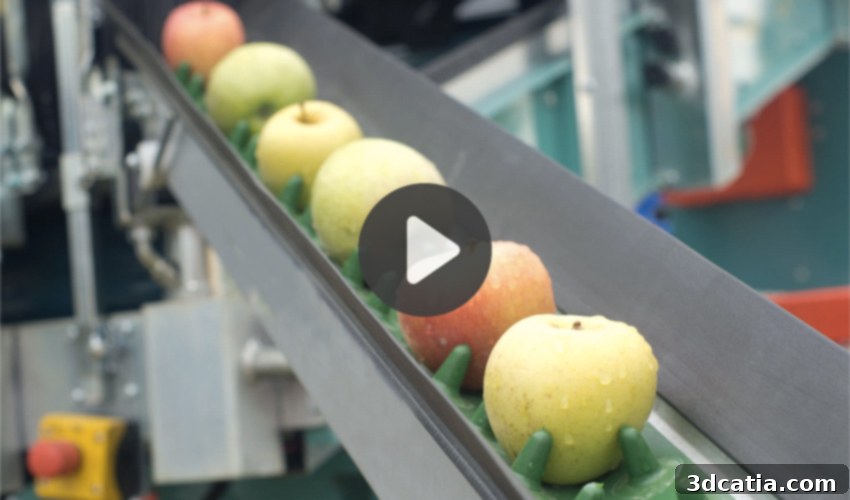
The implementation of 3D technologies in industrial production plants is rapidly expanding, driven by the imperative to optimize processes and elevate quality standards. In the food and beverage industry, where hygiene, safety, and precision are paramount, 3D inspection methods are proving invaluable. This video segment illustrates the diverse types of 3D inspections that can be meticulously performed within food production environments. These inspections are specifically tailored to meet the rigorous requirements of food manufacturing, significantly enhancing overall quality assurance. By leveraging volumetric measurement and sophisticated 3D scanning technologies, manufacturers can precisely identify even the smallest errors, inconsistencies, or imperfections along the production line. This proactive approach not only streamlines the entire manufacturing process but also dramatically reduces the margin of error, ensuring that food products consistently meet the highest standards for safety, size, and appearance. The integration of these advanced 3D solutions minimizes waste, improves regulatory compliance, and ultimately delivers a safer, more consistent product to consumers. Discover how these innovations are transforming food quality control:
Top 2: How Additive Manufacturing is Reshaping Industry in the Balkans
While the application of metal in additive manufacturing (AM) has traditionally been closely associated with laser-based processes, such as laser powder bed fusion, the landscape of metal 3D printing is continuously evolving with the development of innovative new solutions. This particular 3Dnatives webinar, titled “How is AM Revolutionizing Industry in the Balkans?” offers a compelling examination of the profound impact that additive manufacturing has had across Southeast Europe. The region has witnessed exceptional strategic investment from leading AM manufacturers, leading to a significant expansion in the availability and variety of AM technologies. Today, a broad spectrum of industries in the Balkans, from automotive and aerospace to medical and industrial tooling, are actively embracing these advanced manufacturing techniques. This transformation is fostering new opportunities for innovation, accelerating product development cycles, and enhancing regional competitiveness on a global scale. The webinar delves into specific case studies and highlights the collaborative efforts that are driving this technological revolution, showcasing how the Balkans are becoming a hub for additive manufacturing excellence. Tune into this insightful webinar to uncover the extensive transformation unfolding in the Balkans:
Top 3: Amsterdam’s Groundbreaking 3D Printed Metal Bridge
A monumental achievement in both engineering and design, Amsterdam’s 3D-printed metal bridge stands as a testament to the boundless possibilities of additive manufacturing. On July 15th, a historic moment unfolded as the Queen of the Netherlands officially inaugurated this remarkable structure, nestled in the vibrant heart of the Dutch capital’s Red Light District. Conceived and brought to life by the visionary MX3D company, the bridge was meticulously fabricated using Wire Arc Additive Manufacturing (WAAM) technology. This cutting-edge process allowed for the precise deposition of molten metal, layer by layer, to construct the complex, organic forms of the bridge. The project, which took MX3D six years of dedicated effort and required no less than 6,000 kilograms of steel, represents a significant leap forward in large-scale metal 3D printing. Measuring an impressive 12.2 meters long, 6.3 meters wide, and 2.1 meters high, the bridge is not only a functional crossing but also a smart piece of infrastructure. It is ingeniously equipped with a sophisticated network of sensors designed to collect invaluable data on crowd behavior, structural integrity, and the environmental impact of tourism. This data will provide crucial insights for urban planning and smart city initiatives, making the MX3D bridge a living laboratory for future sustainable infrastructure. Its striking design and innovative construction method have cemented its status as an iconic landmark, showcasing how advanced manufacturing can integrate seamlessly with historical urban landscapes. Witness this engineering marvel in action:
Top 4: Introducing BCN3D Stratos Software for Enhanced 3D Printing
In a move set to empower users and streamline workflows, the Spanish additive manufacturing pioneer, BCN3D, recently unveiled its highly anticipated new 3D printing software solution: BCN3D Stratos. This sophisticated slicing software is meticulously designed to significantly increase the ease of use and extend the functionalities available to operators, thereby creating a seamless and efficient bridge between the software and BCN3D’s esteemed family of Epsilon and Sigma series 3D printers. BCN3D Stratos serves as the crucial link that translates digital designs into precise printing instructions, optimizing every aspect of the printing process from start to finish. With an intuitive interface and advanced features, this software enables companies and individual professionals alike to fully harness the capabilities of their BCN3D machines, maximizing production efficiency and achieving superior results. According to BCN3D, Stratos’s advanced algorithms for design simulation and its comprehensive suite of functionalities allow for the effortless generation of high-quality parts, reducing trial-and-error and accelerating iteration cycles. This commitment to user-centric design ensures that even complex projects can be managed with remarkable simplicity and accuracy, making advanced additive manufacturing accessible to a broader audience. Explore the introductory video below to see BCN3D Stratos in action and understand its potential to revolutionize your 3D printing experience:
Top 5: The Additive Manufacturing Revolution in Formula 1 Racing
The high-octane world of automotive racing, particularly Formula 1, consistently pushes the boundaries of engineering and innovation. In this fiercely competitive sector, 3D printing has become an indispensable tool embraced by numerous professionals and virtually all top-tier teams. The ability to rapidly prototype, produce lightweight components with complex geometries, and custom-manufacture on demand provides a significant competitive edge. For instance, McLaren Racing forged a strategic four-year partnership with additive manufacturing giant Stratasys in 2017, leveraging their expertise for various components, from jigs and fixtures to aerodynamic parts. Similarly, the Williams F1 team partnered with EOS back in 2015, integrating advanced metal 3D printing into their development cycles for crucial performance elements. Now, it’s the turn of the legendary Alfa Romeo team to further embrace additive manufacturing. The Italian racing outfit recently announced a pivotal partnership with AM Solutions, focusing specifically on the critical post-processing phase of their 3D-printed race car components. Post-processing is vital in additive manufacturing, especially for high-performance applications like F1, as it refines the surface finish, enhances mechanical properties, and ensures the dimensional accuracy required for extreme conditions. This collaboration highlights the growing recognition that the entire additive manufacturing workflow, from design to final part, is crucial for achieving peak performance and maintaining a competitive advantage on the track. Witness how 3D printing is accelerating innovation in Formula 1:
We hope you enjoyed our curated selection of videos showcasing the dynamic advancements and widespread applications of 3D printing across diverse industries. From enhancing food safety to building smart infrastructure and optimizing high-performance racing cars, additive manufacturing continues to prove its immense value and transformative power. The insights shared by students like Pablo Ramírez López further underscore the importance of specialized training in shaping the next generation of innovators in this field. What were your favorite innovations from this week’s compilation? We’d love to hear your thoughts! Share your opinions in a comment below or join the conversation on our Facebook and Twitter pages. Don’t miss out on any future developments; make sure to sign up for our free weekly newsletter, delivering all the latest news and breakthroughs in 3D printing directly to your inbox!