
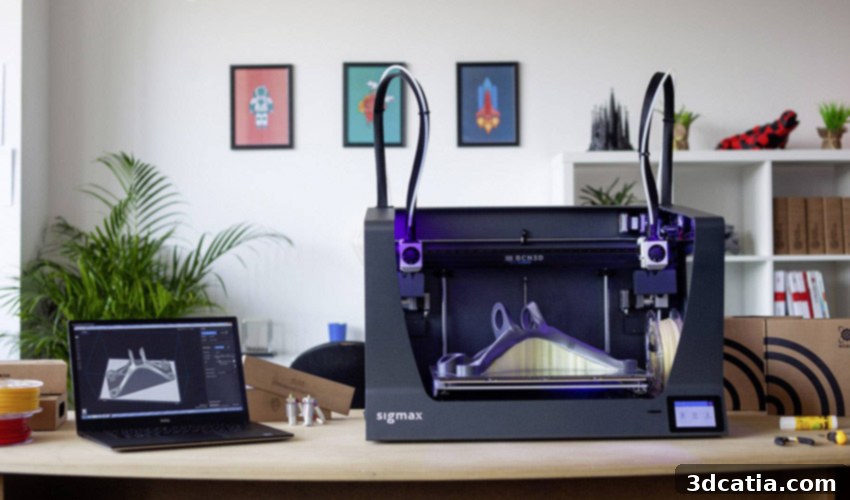
BCN3D Sigmax R19 Review: A Deep Dive into Professional FDM 3D Printing with IDEX Technology
Emerging from the innovative ecosystem of the Polytechnic University of Catalonia in Barcelona in 2012, BCN3D Technologies has steadily evolved from its origins offering KIT machines to become a prominent manufacturer of professional-grade 3D printers. This journey culminated in late 2018 with the unveiling of their advanced R19 generation, featuring the versatile Sigma R19 and its larger counterpart, the Sigmax R19. These machines represent BCN3D’s commitment to delivering high-performance additive manufacturing solutions tailored for engineering, prototyping, and small-batch production environments.
At the heart of the R19 family’s appeal is the pioneering IDEX (Independent Dual Extruder) technology. This innovative system, present in both the Sigma and Sigmax models, allows for two printheads to operate completely independently along the X-axis. This fundamental design choice unlocks a suite of capabilities that significantly enhance versatility and efficiency. Beyond the ability to combine different materials or colors in a single print, IDEX technology truly shines in its Mirror and Duplication modes, which enable simultaneous printing of identical or mirrored parts. This effectively halves production times for series manufacturing, a critical advantage for professional users. The R19 series further distinguishes itself with a comprehensive array of premium features, including a vibrant full-color touchscreen for intuitive operation, a robust Dual Drive extrusion system developed by Bondtech™ for consistent material flow, a high-performance hotend meticulously engineered by E3D, an end-of-filament sensor to prevent failed prints, and a heated build plate capable of reaching up to 100°C, alongside a maximum printing temperature of 280°C to accommodate a wide range of technical thermoplastics.
The 3Dnatives Lab recently had the privilege of conducting an in-depth evaluation of the BCN3D Sigmax R19, a model renowned for its substantial manufacturing volume of 420 x 297 x 210 mm. This generous build space, coupled with its advanced features and a market price of €4,434 (including tax), positions the Sigmax R19 as a formidable contender in the highly competitive professional FDM 3D printer segment. Professionals seeking a reliable, high-throughput, and versatile desktop 3D printing solution will find much to appreciate in the Sigmax R19. Below, we present our comprehensive review, detailing every aspect from unboxing to advanced printing capabilities.
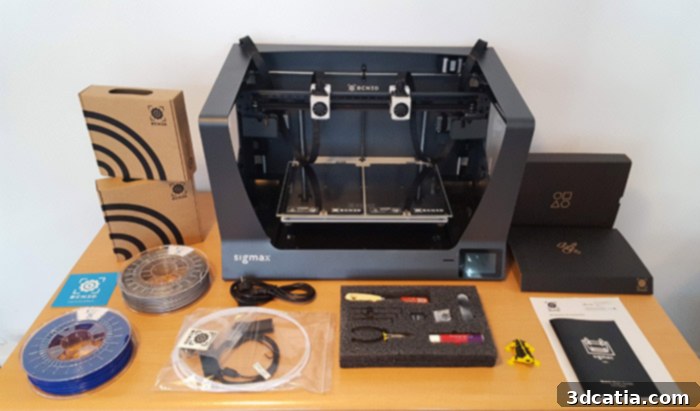
Unboxing the Sigmax R19 | Credits: 3Dnatives
1 – Unboxing and Initial Impressions of the BCN3D Sigmax R19
The sheer scale of the Sigmax R19 was immediately apparent upon delivery of its substantial packaging. With external dimensions measuring 675mm x 440mm x 680mm and a robust weight of approximately 20 kilograms (44 pounds), it’s clear this is a machine built for serious work. The unboxing process itself was a testament to thoughtful design. Upon opening the top of the box, we discovered a meticulously organized compartment housing all the necessary tools and accessories, each nestled securely within custom-cut foam inserts. This attention to detail ensured a smooth and satisfying initial experience, making it incredibly easy to retrieve each component. The comprehensive list of included items covered everything needed for a swift setup: a large magnetic glass build plate, essential for reliable adhesion and easy part removal; a precision calibration gauge; a bottle of build plate adhesive; a sturdy spatula and fine tweezers for post-processing; a set of allen keys for maintenance; an SD card pre-loaded with designs and software; a collection of shims for precise calibration; two Teflon filament guide tubes; the power cable; two 500g spools of PLA filament to get started immediately; and, of course, the indispensable quick start guide and warranty documentation.
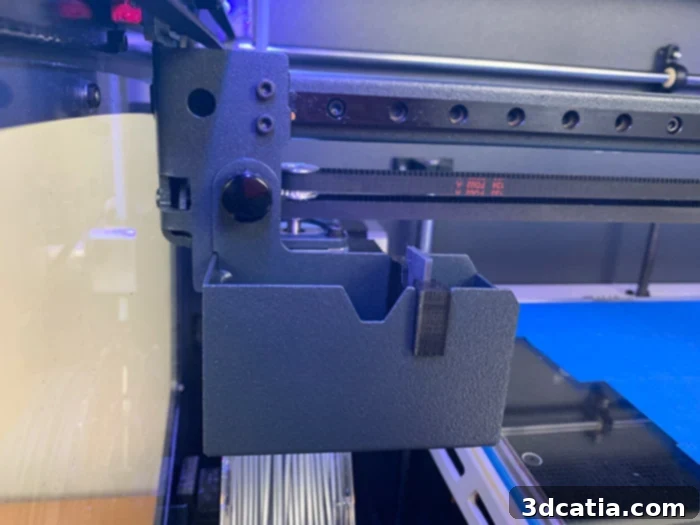
Filament collection box | Credits: 3Dnatives
Beyond its impressive size, the Sigmax R19 exudes a sense of modern professionalism. Its dark grey steel frame not only contributes to its substantial and sturdy feel but also imparts a sleek and contemporary aesthetic that would complement any workshop or office environment. The design prioritizes both functionality and user engagement. On the front panel, the full-color touchscreen is elegantly integrated into the bottom right, providing an intuitive interface for controlling print jobs and machine settings. Adjacent to it, the conveniently placed SD card slot allows for easy transfer of 3D designs. The power cable connection is discreetly located at the back of the machine, maintaining a clean frontal appearance. A particularly striking design element is the transparent side panels, which offer an unobstructed view of the printing process from various angles, allowing users to monitor progress and troubleshoot as needed. As an open-chamber machine, the sophisticated IDEX dual extrusion system is readily visible, showcasing BCN3D’s engineering prowess. Each independent extruder is strategically positioned on either side of the print area, complete with its own dedicated filament collection box and nozzle cleaner. These thoughtful additions automatically collect any residual plastic after each print, ensuring the machine remains remarkably clean and tidy, minimizing manual maintenance.
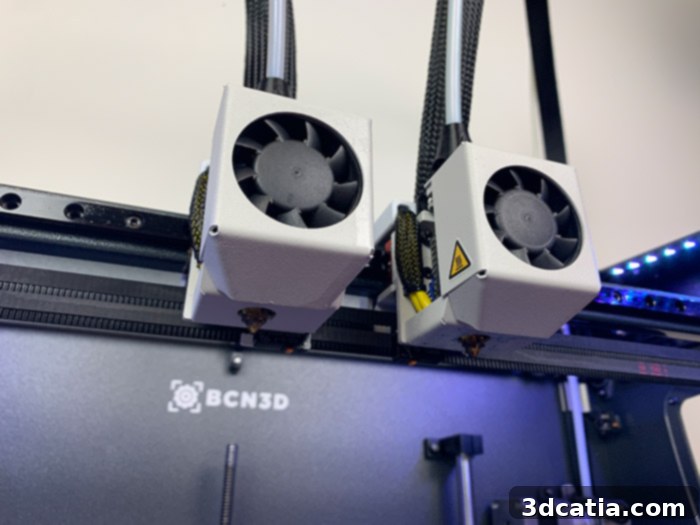
The dual extruder on the Sigmax R19 | Credits: 3Dnatives
The expansive build plate naturally occupies the central expanse of the printer, offering ample space for large models or multiple parts. Complementing this, the filament spools are neatly housed in their dedicated slots, positioned intelligently on the left and right sides of the build plate, directly feeding their respective extruders. A noteworthy detail that underscores BCN3D’s commitment to the 3D printing ethos is the incorporation of numerous 3D printed components within the machine itself. Elements such as the internal spool holders, various clips, the Teflon filament tube guides, and several cable protectors are all produced via additive manufacturing. This commitment is substantial, with the Sigmax R19 featuring over 45 3D printed parts, showcasing the potential of the technology it embodies. To further enhance visibility and user convenience, the entire print area is well-illuminated by integrated LED light strips positioned at the top of the chamber, ensuring a clear view of ongoing prints even in low-light conditions.

Filament spools on each side of the 3D printer| Credits: 3Dnatives
2 – Installation and Calibration: Setting Up the BCN3D Sigmax R19 for Optimal Performance
The initial installation process for the BCN3D Sigmax R19 proved to be commendably straightforward, taking our team approximately 20 minutes from unboxing to operational readiness. We encountered no significant hurdles, a testament to BCN3D’s user-centric approach. The manufacturer provides a comprehensive quick start guide, meticulously detailing each step required to set up the printer. For those who prefer digital instructions or visual aids, all setup procedures are also conveniently accessible via the printer’s touchscreen interface, complete with clear animations that illustrate precisely what needs to be done. This dual-format guidance ensures that users of all experience levels can confidently proceed with the setup.
The hardware setup begins with attaching the magnetic build plate, a process simplified by its effortless snap-on mechanism. This design choice not only eases installation but also facilitates quick removal for print extraction. Next, the filaments need to be loaded. The spools are placed into their dedicated, neatly integrated slots on either side of the print chamber. The filament end is then simply inserted into a guided hole, which feeds the material through the PTFE (Teflon) tubes all the way to the extruders. Following this, users insert the Teflon tubes securely into the hotends and affix the provided clips to hold them in place. With these physical connections established, the machine is then plugged in, and the remaining setup steps are guided entirely through the intuitive touchscreen interface.
Upon powering on the Sigmax R19, the vibrant touchscreen immediately engages the user, prompting an initial printer registration. This process involves visiting BCN3D’s website to register the machine’s serial number, which in turn generates a unique four-digit registration code required to proceed. While the website registration itself was completed in mere seconds, we unfortunately experienced a delay in receiving the promised four-digit code within the advertised “1-2 business days.” A follow-up call to BCN3D’s customer service a few days later, however, was met with excellent support, and we received our registration number on the same day. It’s important to note that this registration was not a prerequisite for continuing with the printer setup and calibration, allowing us to proceed without interruption while awaiting the code.
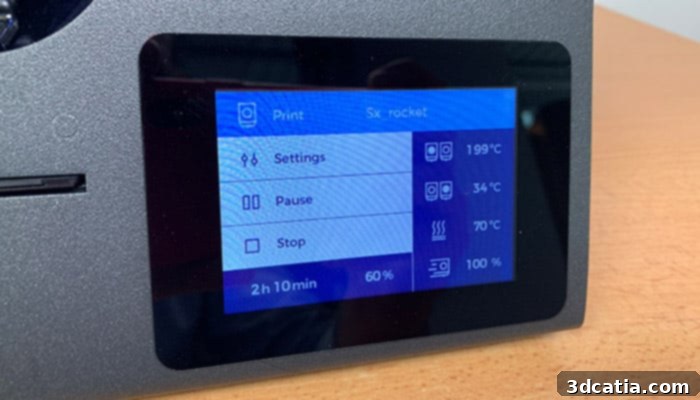
The touchscreen | Credits: 3Dnatives
Calibrating the Sigmax R19, while requiring some initial time investment, was executed in a highly user-friendly manner. The touchscreen interface expertly guides the user through a series of essential calibration steps, including printing surface calibration to ensure optimal first layer adhesion, as well as precise X, Y, and Z axis calibrations. A particularly unique and crucial procedure for the Sigmax R19, especially when leveraging its Duplication or Mirror modes for high-quality series printing, involves the manual installation of shims. These small, precisely engineered spacers are used to mechanically correct any minute Z-offset discrepancies between the two independent extruders, ensuring that both printheads operate at the exact same height relative to the build plate. This level of mechanical fine-tuning is a distinctive feature of BCN3D printers that we haven’t encountered on other FDM machines to date, underscoring the brand’s commitment to IDEX precision. Detailed instructions for this process are readily available on BCN3D’s website, and all necessary tools are conveniently included in the unboxing kit. A crucial tip during this shim installation is to ensure the printer is completely powered off and that the nozzles have cooled down significantly (in our case, they had reached 200°C during the prior calibration stages). Once these meticulous calibration steps were successfully completed, we were ready to download BCN3D’s customized slicer software and embark on our 3D printing journey.
3 – BCN3D Cura Software: Powering the IDEX Experience
When it comes to the software ecosystem, BCN3D has made a strategic and intelligent decision: rather than developing a slicer from scratch, they opted to build upon the robust and widely acclaimed foundation of one of the most famous slicers in the 3D printing community, Ultimaker Cura. The resulting software, simply named BCN3D Cura, leverages the established architecture and comprehensive settings available in the standard Cura platform, while seamlessly integrating specialized functionalities that are unique to BCN3D’s hardware. The most significant addition, and the core differentiator, is the inclusion of the Mirror and Duplication modes, which are made possible by BCN3D’s innovative IDEX (Independent Dual Extruder) technology. This approach offers users the familiarity and reliability of a proven slicer, enhanced with powerful features specifically designed to maximize the potential of their BCN3D printer.
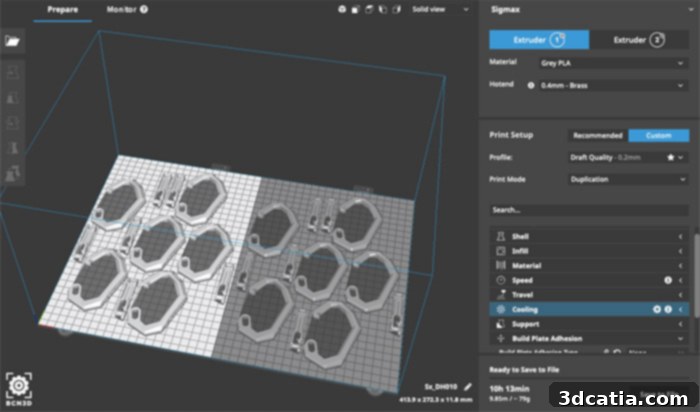
The Sigmax uses a custom version of Cura to slice the 3D models
The implementation of Mirror and Duplication modes within BCN3D Cura is remarkably intuitive and transforms the workflow for batch production. By simply activating either the “Mirror” or “Duplication” option, the virtual build plate within the software is intelligently divided into two equivalent, independently managed printing zones. In Mirror mode, the software intelligently replicates the loaded 3D model by creating a symmetrical copy along the X-axis. This is particularly useful for printing parts that require left and right-hand versions, such as components for an assembly. Conversely, the Duplicate mode precisely copies the desired model onto the second printing zone in an identical orientation. In both scenarios, the fundamental benefit is the ability to print two distinct instances of a part simultaneously, effectively reducing the overall manufacturing time by half. This parallel processing capability is a game-changer for businesses and professionals needing to produce multiple units of a design efficiently without compromising on quality.
To illustrate the profound impact of these IDEX-enabled modes, consider the creation of a relatively simple 3D model, such as the carabiner showcased below, which typically requires 2 hours of printing time for a single unit. If a user needed to produce 10 units of this carabiner using a standard FDM printer or the Sigmax R19 in its single-extruder “Standard” mode, the total printing time would naturally accumulate to 20 hours (10 units x 2 hours/unit). However, by utilizing either the Mirror or Duplication mode in BCN3D Cura, the Sigmax R19 can produce these same 10 units in a mere 10 hours. This dramatic reduction in production time directly translates to increased throughput, faster iteration cycles, and significant cost savings for professional users. The ability to halve the printing time for series production is a core value proposition of the BCN3D Sigmax R19, making it an incredibly efficient tool for rapid prototyping, jig and fixture creation, and even end-use part manufacturing in batches.
4 – First 3D Prints and Performance Evaluation of the Sigmax R19
The BCN3D Sigmax R19 stands out for its exceptional material versatility, capable of printing with a broad spectrum of thermoplastics. This includes common prototyping materials like PLA and ABS, as well as advanced engineering-grade filaments such as Nylon, PET-G, flexible TPU, water-soluble PVA for supports, and various Composites. While the printer is designed to accept filaments from other manufacturers, BCN3D strongly recommends using their proprietary filaments to consistently achieve the highest quality prints, as their materials are optimized for the machine’s specific extrusion system. The machine itself is designed to accommodate two 500g spools, conveniently located within the printer’s side compartments adjacent to the build plate. For users who wish to utilize larger, heavier spools that wouldn’t fit in these internal slots, BCN3D provides a clever solution: the designs for two external filament spool holders come preinstalled on the included SD card, allowing users to 3D print them and attach them to the rear of the machine, thereby extending material capacity.
In line with our standard review protocol at the 3Dnatives’ Lab, our initial print tests began with a rigorous torture test and the universally recognized “benchy” 3D printer calibration model. These early prints allowed us to assess the printer’s foundational performance. After several prints, we did observe a minor squeaking noise emanating from the rods supporting the extruders. However, this was quickly and easily remedied with a small application of WD40, indicating a simple lubrication need rather than a mechanical fault. We were thoroughly impressed with the print results; the finished pieces consistently exhibited remarkable detail and precision, affirming the Sigmax R19’s capability for high-fidelity output.
Building on this success, we moved on to experimenting with the printer’s dual-color printing capabilities, a key advantage of the IDEX system. This test also proceeded exceptionally well, yielding a near-perfect result when printing BCN3D’s iconic Gaudi’s Dragon of Park Güell design. The transition between colors was clean, and there was minimal bleed or stringing, showcasing the effectiveness of the independent extruders. We then challenged the Sigmax R19 with more demanding materials, switching to PETG for structural components and even incorporating PVA as a dissolvable support material for intricate designs. Across all these material changes and complex geometries, the prints maintained a consistently high level of quality.
While the overall printing experience was overwhelmingly positive, one minor aspect that could be improved was the magnetic build plate attachment system. Although designed for convenience, the magnets were not exceptionally strong. This resulted in the entire build plate sometimes shifting slightly or shaking when applying force with a spatula during print removal. We frequently found ourselves needing to completely remove the build plate from the 3D printer to achieve sufficient leverage for detaching prints without disturbing the machine. This is a small ergonomic consideration that, if enhanced, could further streamline the post-printing workflow.
Finally, the ultimate test for the Sigmax R19 was to thoroughly evaluate its defining feature: the IDEX technology. We initiated prints in both “Duplication” and “Mirror” modes, pushing the system to its limits for batch production. Unsurprisingly, the printer once again delivered exceptional results. Both extruders worked in perfect synchronicity, producing identical and mirrored parts with the same outstanding quality and precision observed in single-extruder prints. This flawless execution of IDEX technology cemented our impression of the Sigmax R19 as a highly efficient and reliable professional FDM 3D printer, perfectly suited for applications requiring high throughput and geometric flexibility. Its ability to simultaneously print multiple parts significantly boosts productivity, making it an invaluable asset for any professional or industrial setting.
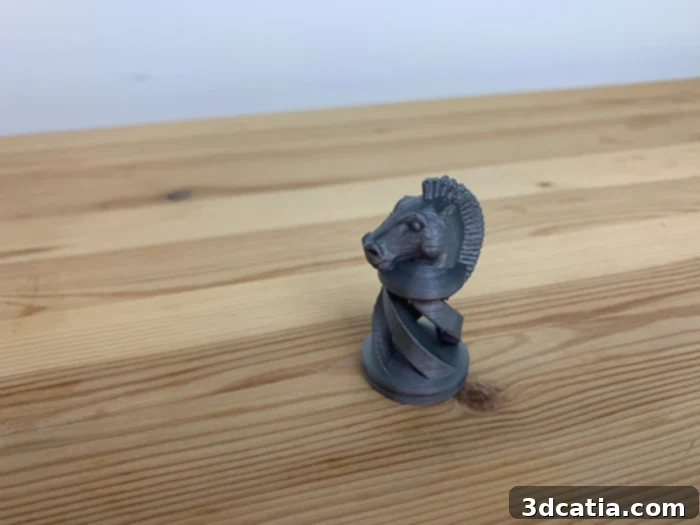
Another Spiral Chess model by JaaYoo
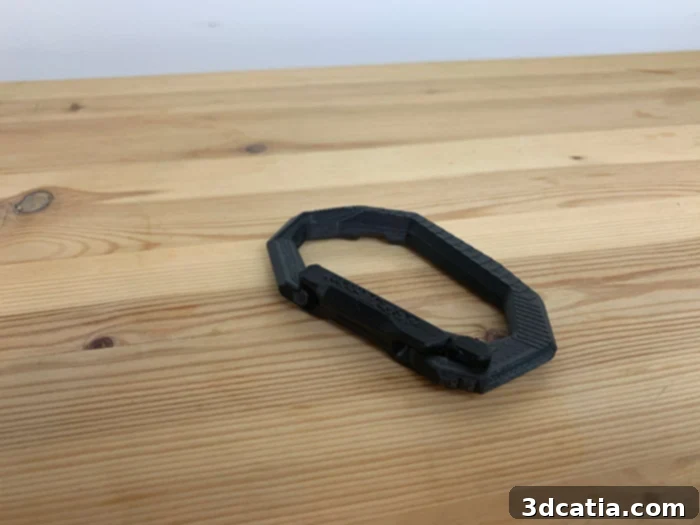
Origami Carabiner model by DDF3D
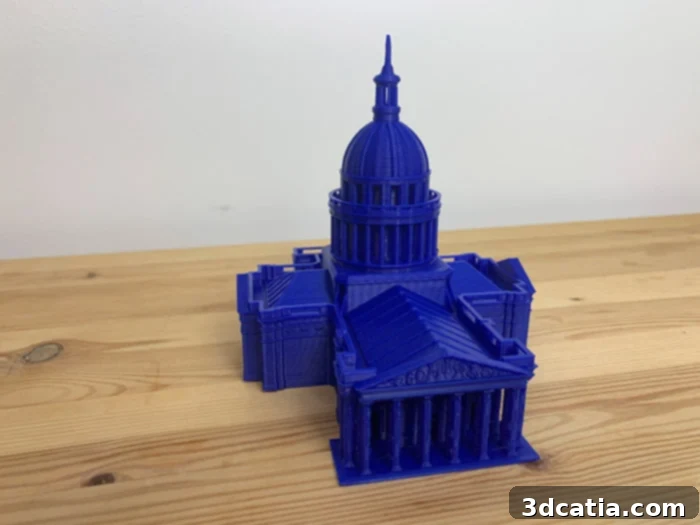
Pantheon model by Max7th
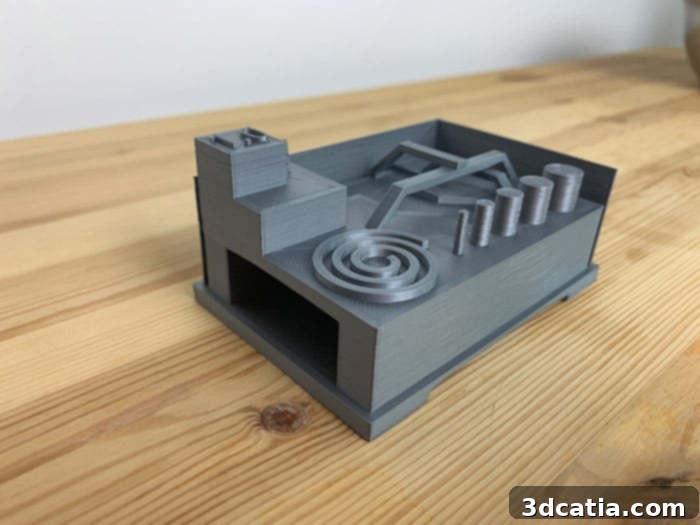
Torture Test by Makerbot
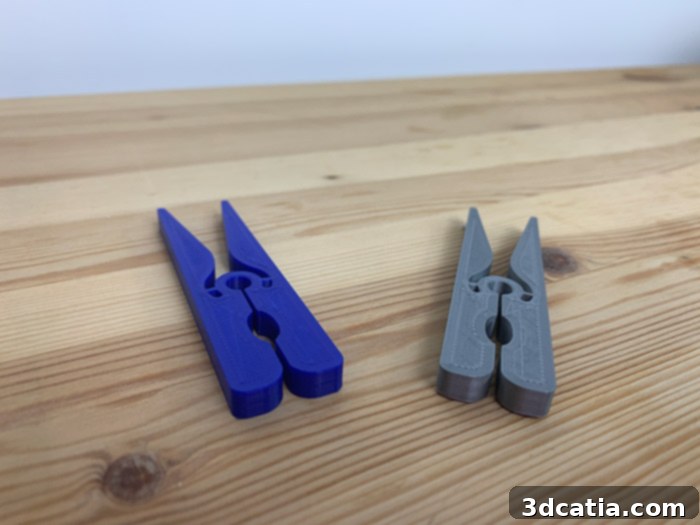
Clothes pegs model by BCN3D
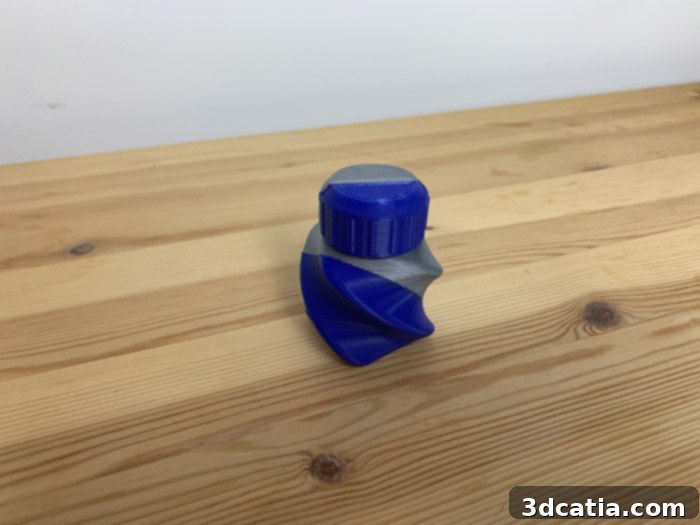
Twisted Bottle & Screw Up model by David Mussaffi
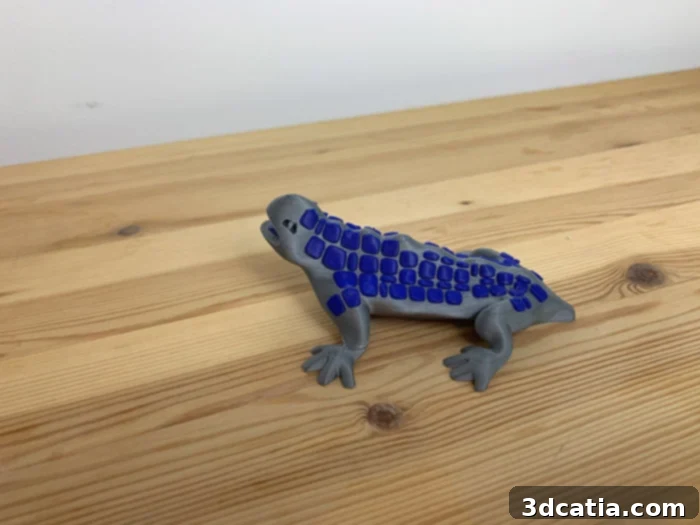
Dual Draudi model by BCN3D
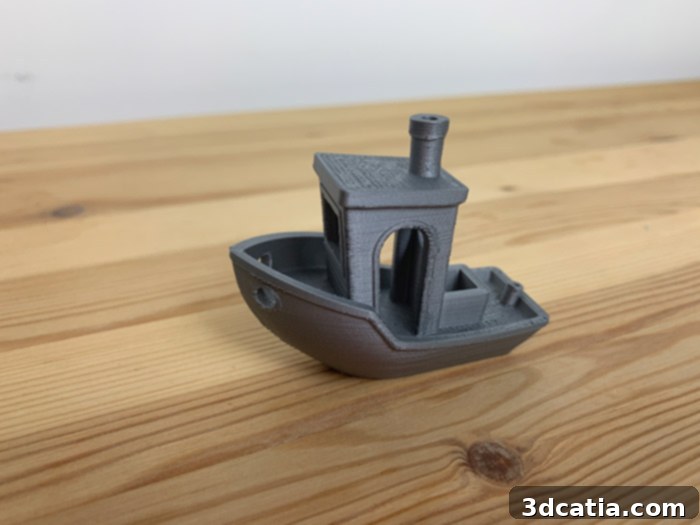
Benchy3D model by CreativeTools
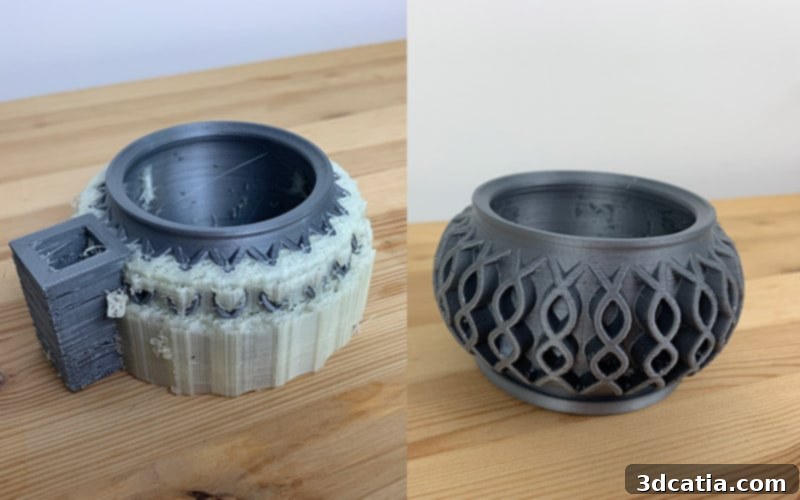
Succulent Planter 11 model by cgpena, 3D printed with PVA supports
Our comprehensive review reveals the BCN3D Sigmax R19 to be an exceptional professional FDM 3D printer. Its robust build, intuitive user experience, and innovative IDEX technology, particularly the efficiency-boosting Mirror and Duplication modes, make it a powerful tool for various demanding applications. While the magnetic build plate could benefit from stronger magnets, this minor drawback is easily overshadowed by the printer’s overall performance, material versatility, and print quality. For professionals seeking a reliable, high-throughput solution for prototyping, engineering, and small-batch manufacturing, the Sigmax R19 stands out as a top-tier choice that delivers consistent, high-quality results across a wide range of materials and complex geometries.
For more 3D printer tests & reviews from 3Dnatives Lab, go to our dedicated page HERE.