
Mastering FFF 3D Printing: Optimizing Parameters with 3DOptimizer for Superior Prints
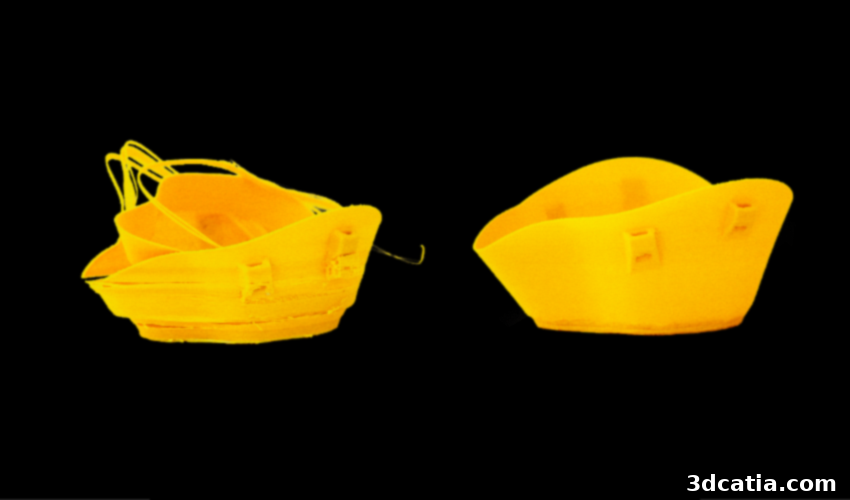
In the rapidly evolving landscape of additive manufacturing, Fused Filament Fabrication (FFF), also widely known as FDM 3D printing, stands as a cornerstone technology for both enthusiastic hobbyists and advanced industrial users. However, consistently achieving high-quality, reliable, and mechanically strong 3D prints can often feel more like an unpredictable art than a precise science. This challenge primarily stems from the intricate and often overwhelming task of fine-tuning numerous printing parameters. Many users frequently grapple with issues such as costly faulty prints, frustratingly slow production speeds, and final parts that unfortunately lack the desired mechanical strength or visual appeal. Directly addressing these critical and widespread issues, 3DOptimizer emerged from its initial development within a prominent 3D printer company, where it was first conceived to assist customers with complex 3D printing parameter adjustments. Today, the company offers a highly sophisticated software solution meticulously designed to systematically optimize FFF 3D printing settings, promising to virtually eliminate common print failures, significantly increase printing speed without compromising quality, and dramatically improve the mechanical strength of final parts, unlocking new possibilities for functional applications. Curious about the transformative potential of advanced parameter optimization as a truly effective solution for more efficient and successful additive manufacturing in the future, we had the distinct pleasure of sitting down with Janis Grinhofs, the visionary Founder and CEO of 3DOptimizer, to delve into their innovative and practical approach.
Introducing 3DOptimizer: Your Partner for Flawless FFF Prints
 Janis Grinhofs introduces 3DOptimizer as an indispensable software tool, expertly engineered to empower owners of nearly all filament-based 3D printers in developing precise, robust, and effective printing settings. He passionately emphasizes the paramount importance of this capability, as incorrect software settings are universally recognized as the single most common reason for the vast majority of failed 3D prints, leading to wasted material, time, and considerable frustration. Fundamentally, the product is conceived for anyone who aspires to achieve more from their 3D printing endeavors: whether their goal is enhanced print stability, superior mechanical strength for demanding applications, a consistently better visual quality for aesthetic parts, or simply the foundational ability to “make it work” reliably in the first place, especially when confronting new printers or challenging materials. By intelligently streamlining the often-complex parameter selection process, 3DOptimizer aims to demystify intricate settings and ensure that users can consistently achieve their desired outcomes, moving beyond tedious guesswork and into a realm of predictable, successful fabrication.
The Genesis of Innovation: Why 3DOptimizer Was Launched
The inception of 3DOptimizer was not initially a standalone commercial venture but rather a pragmatic solution born out of an undeniable internal necessity at Mass Portal, a prominent 3D printer manufacturing company. Janis Grinhofs explains that the project began as an in-house initiative, driven by the critical need to establish a robust and reliable method for supporting their customers with consistently working printing settings. The consistent and repeatable positive results observed internally—where the system worked flawlessly every single time, without the indispensable presence of an experienced “guru” to oversee and fine-tune the process—made it unequivocally clear that this innovative approach held immense potential to benefit a much broader audience of 3D printer users globally. Recognizing this significant market opportunity and the universal, unmet need for such an empowering tool, an independent software spin-off company was strategically established in mid-2018.
The robust foundation of 3DOptimizer’s sophisticated software rests on a combination of rigorous internal research meticulously conducted by the esteemed materials scientist Dr. Georgijs Bakradze, complemented by the collective, extensive experience of the entire team in continually pushing the boundaries of FFF printer capabilities and achieving exceptional print quality. Dating back to comprehensive research into the FFF 3D printing process in 2016, the team realized that there were two critical, largely unaddressed pieces missing in the prevailing FFF technology: the crucial importance of effective drying of printing materials and the development of systematic process parameters. The first identified challenge directly led to the successful development of highly effective filament dryers, such as the Mass Portal FD1 and later the more advanced FD5. The second, and arguably more complex, challenge of efficient process parameter development culminated in the highly anticipated release of 3DOptimizer. Crucially, Janis highlights that, to their extensive knowledge, 3DOptimizer proudly stands as the first widely available tool and methodology that achieves accurate parameter optimization without relying on often-unreliable statistical models or intricate, time-consuming simulations, offering a uniquely practical, empirical, and highly effective approach to 3D printing success.

The innovative team behind 3DOptimizer: Dr. Georgijs Bakradze, Egils Arajs, Aivars Vaivods, and Janis Grinhofs.
How 3DOptimizer Systematically Optimizes Your Printing Process
For users operating within “closed systems,” where printing material is typically procured from the printer vendor, often at a premium, predefined settings are generally provided, ensuring a certain baseline level of compatibility and performance. However, the vast majority of the global 3D printing community utilizes “open” machines—whether they are self-built, extensively customized, or standard printers that allow for a diverse and flexible choice of filament brands and types. These users are frequently left to rely on generic settings supplied by slicing software, which, by their very nature, rarely account for the unique characteristics and subtle idiosyncrasies of specific printer-material combinations. When these generic settings inevitably prove insufficient, users are plunged into a frustrating, time-consuming, and material-wasting cycle of experimental trial and error. This traditional process is typically unsystematic and highly inefficient, involving the tedious adjustment of one parameter at a time and printing numerous test objects until a barely satisfactory result is achieved, if at all. This often leads to significant frustration, wasted valuable resources, and an undesirable lack of consistent print quality, ultimately hindering the full and exciting potential of additive manufacturing.
3DOptimizer directly confronts and resolves this pervasive challenge by offering the first publicly available software tool and method specifically designed to transform this chaotic and inefficient process into a systematic, repeatable, and profoundly efficient workflow. At its very core, 3DOptimizer intelligently guides users through a carefully curated series of practical printing tests that progressively help in developing the most accurate and effective settings for any specific printer and material combination. Unlike many simulation-based tools that merely predict theoretical outcomes, 3DOptimizer employs a unique, empirical approach: it determines optimal parameters through actual, real-world printing tests, adapting and refining settings as it goes. This practical, hands-on methodology means that remarkably accurate settings can even be developed for machines that may have subtle issues, such as slightly worn nozzles, minor sensor inaccuracies, or other mechanical variances. The software simply identifies and selects the parameter values that *actually work* optimally on the user’s specific setup, irrespective of what a theoretically “suggested” value might be. The ultimate output of the 3DOptimizer process is a comprehensive set of meticulously optimized configuration parameters ready for your chosen slicing software. Users can seamlessly download pre-configured settings tailored for the most popular slicers or manually input the precise values into any slicer software they prefer, ensuring maximum flexibility, control, and immediate applicability for their projects.
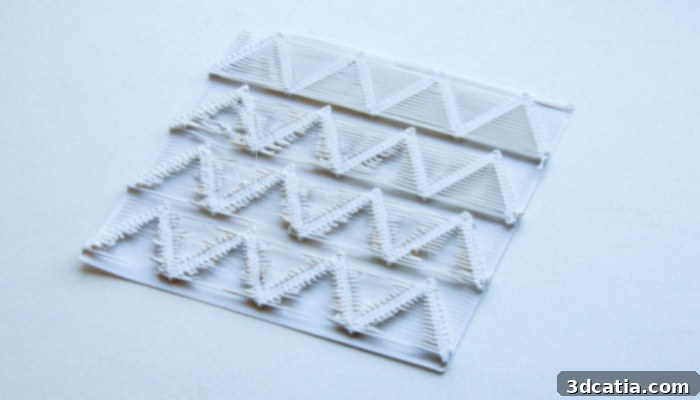
Demonstrating a bridge test, one of the practical calibration tests utilized by 3DOptimizer to ensure optimal FFF 3D printing parameters. (All image credits: 3DOptimizer)
Efficiency Redefined: How Long Does Optimization Take with 3DOptimizer?
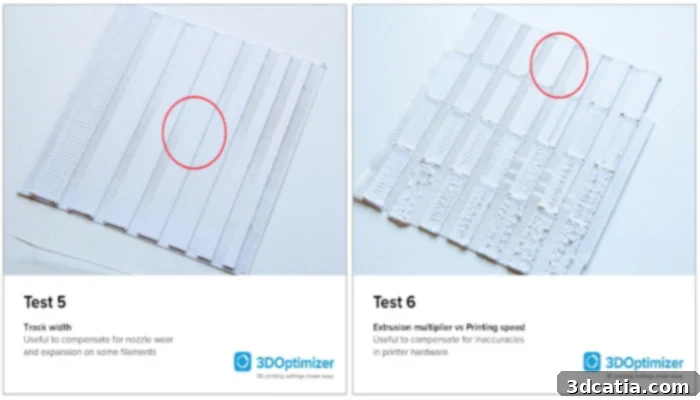
3DOptimizer presents a comprehensive suite of 12 distinct and meticulously designed tests, which together allow for the precise determination of up to 22 core FFF/FDM printing parameters. The inherent elegance of this system lies in its intelligent adaptability: not all tests will necessarily be required for every single machine and material combination. Users are efficiently guided through only the most relevant tests based on their specific setup and desired printing outcomes, minimizing unnecessary steps. A realistic timeframe for arriving at perfectly calibrated settings can genuinely range from just a few dedicated hours to a day or two in the most complex scenarios, particularly when experimenting with entirely new materials or highly customized printer configurations. This represents an enormous and undeniable saving of both valuable time and expensive material when directly compared to the traditional, unstructured, and often frustrating method of endlessly “playing around” with settings. It is crucial to clarify that these meticulously optimized parameters are inherently machine- and material-specific, meaning they are universally applicable and reliable for any part subsequently printed on that particular printer and filament setup. 3DOptimizer focuses intensely on establishing these fundamental process parameters and, therefore, intentionally does not include tests for geometry-specific parameters, such as the optimal number of perimeters or the ideal infill type, nor does it delve into tweaking firmware settings. Its core strength and purpose lie in establishing the most robust and harmonious relationship between your specific 3D printer and its chosen printing filament.
Achieving Your Printing Goals: Key Optimization Targets
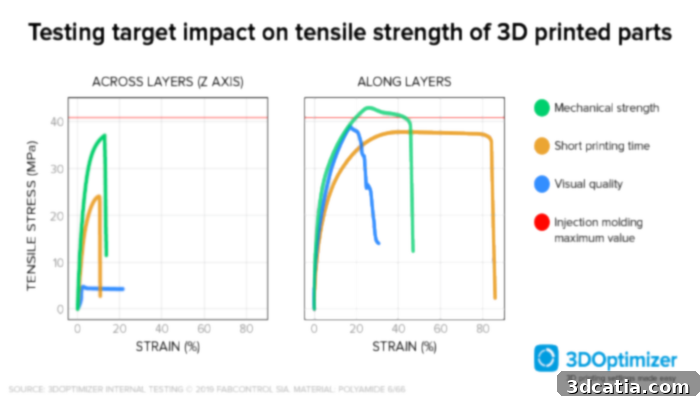
A standout and truly valuable feature of 3DOptimizer is its inherent flexibility in allowing users to develop printing settings precisely tailored to three distinct and critically important targets: achieving the shortest possible printing time for rapid prototyping or production, prioritizing exceptional visual quality for aesthetic or display parts, or maximizing the mechanical strength of printed parts for functional or engineering applications. Janis elaborates that while various sets of process parameters might all technically result in a printable part, the resulting mechanical strength can differ dramatically, particularly across the critical layer adhesion points which are often the weakest links in FFF prints. For applications that demand high performance, especially when utilizing advanced engineering materials where superior strength and durability are paramount, it is absolutely essential to employ a process that extracts the absolute best possible result from the specific machine and material combination. 3DOptimizer excels magnificently in this regard by meticulously matching the unique capabilities and characteristics of the 3D printer with the precise properties of the selected material. This meticulous matching ensures that users can consistently print the strongest, most durable, and most reliable parts achievable with their specific setup, effectively transforming potential weaknesses into undeniable strengths and unlocking entirely new possibilities for both functional prototyping and robust end-use part production across various industries.
Empowering All Users: Benefits for Companies and Individuals
The profound utility and versatility of 3DOptimizer extend across the entire spectrum of 3D printing users, from enthusiastic individual hobbyists and small businesses to large-scale enterprises and research institutions. For companies, 3DOptimizer offers an invaluable resource to implement a consistent, repeatable, and standardized method for FFF/FDM process parameter development across their entire organization. This not only significantly streamlines internal operations and ensures consistently high product quality, but also substantially enhances customer support capabilities for both 3D printer manufacturers and material suppliers. By providing a clear, systematic, and data-driven approach, businesses can more effectively guide their clients, drastically reducing troubleshooting time, minimizing material waste, and ultimately improving overall customer satisfaction and loyalty. On the other hand, for individual 3D printer owners, the sheer complexity and steep learning curve associated with FFF settings present the biggest and most common hurdle. This is particularly true for newcomers just starting their journey in 3D printing or for seasoned users attempting to work with notoriously difficult and challenging advanced materials. The intricate nature of these settings is a very real barrier, and even for individuals with strong technical backgrounds, it can lead to considerable delays in achieving acceptable or desired results, often causing frustration and abandonment of projects. 3DOptimizer is meticulously designed to democratize this expert knowledge, effectively transferring the sophisticated means and methods “to make it work” from the exclusive domain of highly experienced “gurus” and the controlled environments of 3D printer and material manufacturers’ labs directly into the capable hands of every 3D printer owner. It skillfully simplifies the intricate, making advanced, reliable, and high-quality 3D printing accessible and consistently successful for everyone, regardless of their prior experience.
Future Horizons: Enhancing Compatibility and Accessibility
Looking dynamically ahead, the core development focus for 3DOptimizer in the foreseeable future is squarely on significantly improving compatibility with an even wider and more diverse array of 3D printers available on the market. Janis Grinhofs clarifies that two fundamental and crucial preconditions must be met for 3DOptimizer to function optimally and deliver its precise results: first, the printer bed must be accurately and consistently leveled, ensuring a stable foundation for printing; and second, the printer must operate using standard g-code, which serves as the universal language for 3D printer instructions. While the software already performs exceptionally well and delivers outstanding results on the vast majority of FFF machines available today, the dedicated team at 3DOptimizer is deeply committed to meticulously addressing and proactively resolving any remaining compatibility issues on a case-by-case basis. This unwavering dedication ensures that an ever-increasing number of 3D printer owners, regardless of their specific machine model or manufacturer, can seamlessly harness the transformative power of optimized settings and elevate their overall 3D printing experience to unprecedented heights of quality, efficiency, and reliability, further expanding the reach and impact of additive manufacturing.
A Final Word from 3DOptimizer
“We developed 3DOptimizer with a singular and unwavering mission: to simplify and fundamentally streamline the often-complex and challenging process of 3D printing settings development for everyone,” Janis Grinhofs concludes with a sense of accomplishment. “It is incredibly rewarding and motivating to consistently receive positive feedback from our valued customers, confirming that our software is indeed achieving this vital goal and making a tangible difference in their printing success. We are genuinely hopeful that 3DOptimizer will play a pivotal and enduring role in elevating the entire 3D printing experience for a vast number of 3D printer owners worldwide, empowering them to achieve unprecedented levels of quality, efficiency, and unwavering reliability in all their additive manufacturing projects, from simple prototypes to complex functional parts.” This profound sentiment unequivocally underscores 3DOptimizer’s unwavering commitment to user empowerment, innovation, and continuously advancing the capabilities and accessibility of the FFF community.
What are your valuable thoughts on 3DOptimizer and its innovative approach to FFF 3D printing parameter optimization? We warmly invite you to share your insights, experiences, and any questions you may have in the comments section below, or engage with us and the wider 3D printing community on our vibrant Facebook and Twitter pages! For those eager to stay abreast of the absolute latest advancements, groundbreaking research, and inspiring profiles of leading entrepreneurs in the dynamic and rapidly evolving world of 3D printing, remember to effortlessly sign up for our completely free weekly Newsletter, ensuring you receive all the essential news and updates straight to your inbox!