Unleashing Precision: An In-Depth Review of the HeyGears UltraCraft Reflex Combo 3D Printer
The landscape of 3D printing is continuously evolving, with both established giants and innovative newcomers pushing the boundaries of what’s possible. Every new product introduction sparks interest, especially when it promises to democratize advanced capabilities. Recently, our team at 3Dnatives Lab had the distinct pleasure of thoroughly evaluating one such innovation: the UltraCraft Reflex Combo. This cutting-edge resin 3D printer, developed by the manufacturer HeyGears, is poised to make a significant impact on the desktop 3D printing market.
For many in the international 3D printing community, the name HeyGears might not immediately resonate, despite the company’s decade-long existence. This is largely due to their strategic focus. Up until now, this Shenzhen, China-based manufacturer has primarily served its domestic market, specializing in a highly specific niche: high-precision resin 3D printers for the demanding dental sector. Their expertise in this field, where accuracy and reliability are paramount, provides a strong foundation for their expansion into broader industrial and professional markets.
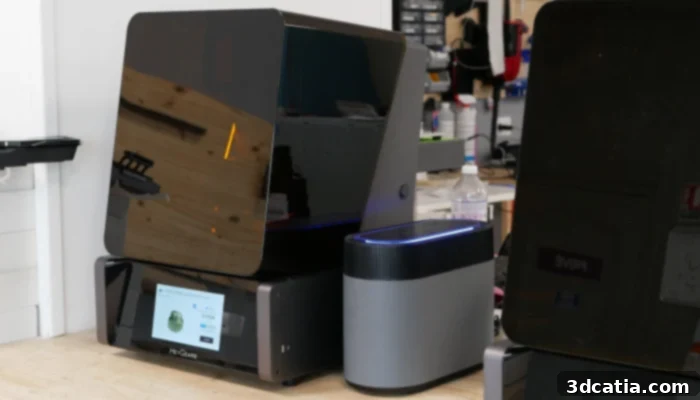
The UltraCraft Reflex 3D printer, recently unveiled by HeyGears, is a desktop resin printer designed for wider accessibility.
With the UltraCraft Reflex Combo, HeyGears is clearly signaling its ambition to reach a much wider audience globally. The company aims to establish itself as a recognized player on the international stage, moving beyond its specialized dental roots. The UltraCraft Reflex is strategically positioned as a resin 3D printer that promises a streamlined and intuitive user experience, superior print quality, and a comprehensive end-to-end ecosystem encompassing slicing, printing, and crucial post-processing steps. All of this is offered at a highly competitive price point, typically under $2500, making it an attractive proposition for a diverse range of users from small businesses to professional designers and even advanced hobbyists.
The critical question remains: does the HeyGears UltraCraft Reflex 3D printer truly deliver on its ambitious promises? Can it genuinely carve out a significant presence in the competitive resin 3D printing market, challenging established brands and offering a compelling alternative? To answer these questions comprehensively, we invite you to delve into our full review below, where we detail every aspect of this intriguing new machine and its accompanying ecosystem. For those who prefer a visual overview, a video test is also available.
Unboxing the HeyGears UltraCraft Reflex Combo: A Complete Ecosystem
The UltraCraft Reflex Combo isn’t just a 3D printer; it’s a holistic system designed to cover the entire resin 3D printing workflow. The complete package comprises three distinct yet interconnected machines: the UltraCraft Reflex 3D printer itself, the UltraCraft Wash unit for cleaning prints, and the UltraCraft Cure station for post-curing. Each component arrives in its own carefully packaged box, ensuring safe transit and organized setup. Upon unpacking, the aesthetic uniformity and cohesive design language of all three machines are immediately apparent, clearly demonstrating that they were conceived and engineered as integral parts of a single, efficient ecosystem.
For the purpose of our comprehensive test, we also received the innovative Pulsing Release Module (PRM). This module, available separately for $649, is designed to significantly reduce adhesion between the printed part and the NFEP film in the resin vat, a common challenge in resin 3D printing. In addition to the hardware, HeyGears provided us with a selection of their proprietary printing resins, allowing us to thoroughly test the system with materials optimized for its specific technology.
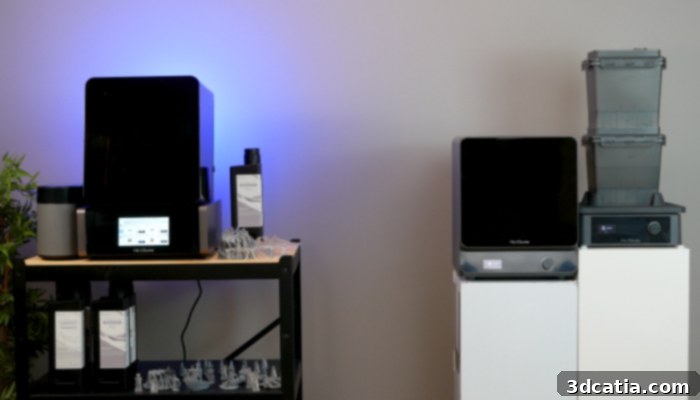
The “Combo” includes the 3D printer along with dedicated post-processing machines, creating a seamless workflow.
The UltraCraft Reflex desktop resin 3D printer itself features relatively compact external dimensions of 400 x 420 x 573 mm, making it suitable for various workspace environments. Despite its modest footprint, it boasts a respectable print volume of 192 x 121 x 220 mm, offering ample space for a wide array of models. Weighing in at 25 kg, which is comparable to other high-quality 3D printers in its category, the printer’s substantial weight suggests a robust and solid construction, indicative of its premium build quality. Each machine from HeyGears comes with a well-illustrated English-language user manual, providing clear guidance for setup and operation.
The front of the printer is dominated by a clear and responsive 7-inch color touchscreen control panel, offering intuitive navigation. The distinctive wide, orange plastic hood, a common feature on resin machines, effectively filters harmful UV rays and opens manually with an upward swing, providing easy access to the build area. Inside, the resin tank and a perforated printing tray, equipped with a convenient quick-release fastener, are prominently located. On the right side of the machine, a USB port allows for direct print initiation, bypassing networking functions if desired. The rear panel houses essential connections, including the machine’s power port, the PRM’s power plug and air inlet, and the printer’s RJ45 port for network connectivity.
While an internal activated carbon filter for air purification is not standard, HeyGears has thoughtfully included an internal USB port, allowing users to easily add one. Furthermore, the manufacturer has announced that an integrated internal filter is currently under active development, indicating a commitment to improving user experience and addressing concerns about resin fumes.
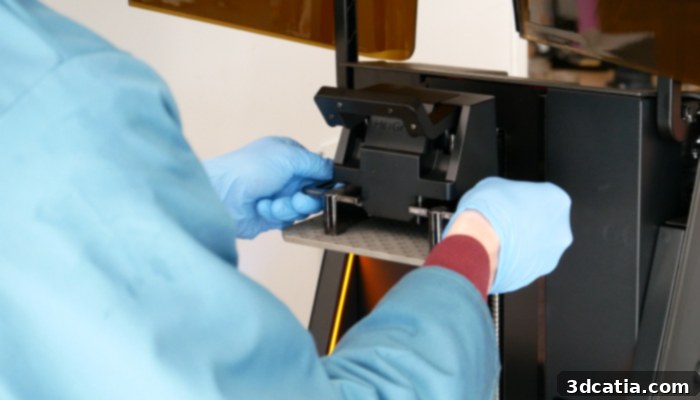
The HeyGears UltraCraft Reflex printing plate is designed for ease of use, featuring a quick-release system for simple handling.
HeyGears also provides a comprehensive set of accessories, neatly organized within an airtight plastic container, along with a spare NFEP film. This kit includes a robust metal spatula for removing prints, a pair of sharp cutting pliers for support removal, fine filters to clear any print residues from the resin, plastic cards for mixing resin in the vat and for cleaning purposes, a set of Allen (hex) keys for maintenance, protective gloves, and a specialized tool for removing cured resin residues from the vat. It’s worth noting that the latter requires a 3D-printed handle, the sliced file for which is conveniently available within Blueprint Studio, HeyGears’ proprietary slicer. While the accessory kit is remarkably complete, the inclusion of a pair of fine-nosed pliers or tweezers would be a welcome addition, further facilitating the intricate task of support removal and fine detail work.
Streamlined Installation of the HeyGears Ecosystem
Once all components are unboxed, the setup process for the HeyGears ecosystem begins by arranging the machines on a stable work surface. The installation of the UltraCraft Reflex printer itself is remarkably user-friendly, guided by the clear instructions in the manual and an intuitive step-by-step guide displayed on the printer’s integrated touchscreen. This thoughtful design minimizes potential confusion, making the initial setup accessible even for those new to resin 3D printing.
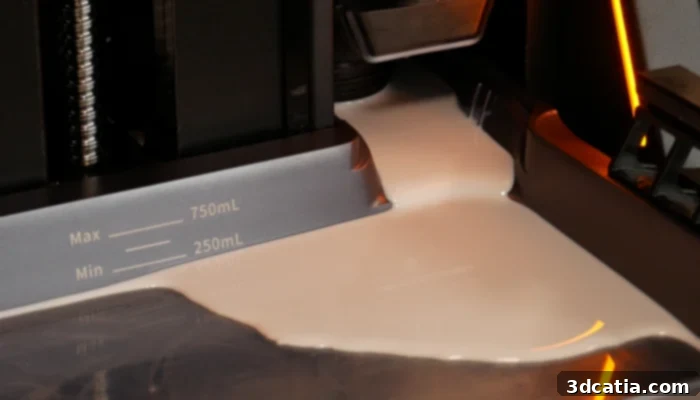
Thanks to an integrated level sensor, proprietary resins, and a smart valve, the UltraCraft Reflex automatically fills its resin tank, ensuring consistent material supply.
The installation sequence typically involves several key steps: first, leveling the machine, which is intelligently assisted by a virtual spirit level on the screen; second, configuring the Wi-Fi network for seamless connectivity; third, installing the resin level detection module; fourth, setting up the print tray; fifth, inserting a proprietary resin cartridge; and finally, the crucial step of leveling the print tray. A standout feature of the UltraCraft Reflex is its advanced auto-calibration system for the build platform. This innovative system completely eliminates the need for manual intervention to adjust the parallelism and initial Z-axis position, significantly simplifying the setup process and ensuring consistent first-layer adhesion.
HeyGears has opted for a closed material system, utilizing proprietary resin cartridges. These cartridges are equipped with an RFID chip, allowing the printer to automatically recognize the specific material as soon as it’s installed. This integration, coupled with a precise level sensor and a smart valve, ensures automatic and consistent filling of the resin tank during printing, preventing interruptions and maintaining optimal print conditions. While proprietary materials offer consistency and optimized performance, they also represent a potential limitation in terms of material choice and cost, a common trade-off in specialized printing ecosystems.
The accompanying post-processing machines, UltraCraft Wash and UltraCraft Cure, are functional immediately upon power-up. However, to unlock their full smart capabilities and integrate them into the connected ecosystem, users need to download the Blueprint Go mobile application and pair the machines with their HeyGears account. This connectivity allows for centralized control and workflow management.
Overall, the combination of detailed paper manuals, clear on-screen instructions on the 3D resin printer, and intuitive guidance within the mobile app for the post-processing machines ensures a smooth and straightforward onboarding experience. For additional support, comprehensive video guides are readily available on the manufacturer’s website, further assisting users through every step of the initial setup and ongoing operation.
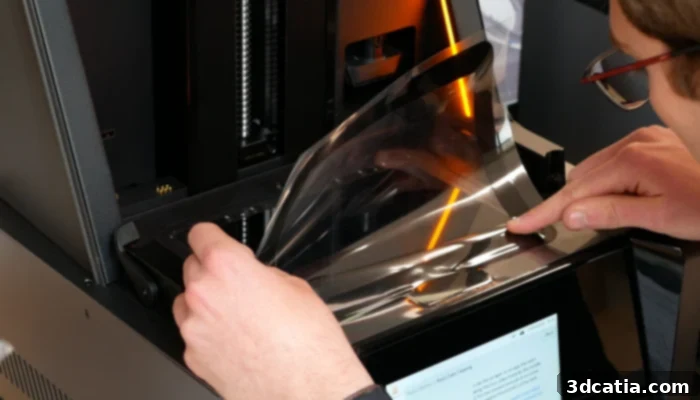
Installing the airflow adapter for the PRM requires a meticulous process of changing the protective adhesive film on the LCD screen.
The sole aspect that proved somewhat challenging during installation was the setup of the airflow adapter for the Pulsing Release Module (PRM). This step necessitates the careful removal of the existing adhesive film protecting the LCD screen to install a new one that accommodates the PRM’s air flux. This is a meticulous operation that demands precision and can potentially be daunting or complicated for a novice user, highlighting an area where HeyGears could potentially refine the installation process with pre-applied components or more robust user guidance.
HeyGears’ Slicer: Blueprint Studio for Optimized Printing
At the heart of the HeyGears 3D printing ecosystem is Blueprint Studio, the manufacturer’s proprietary slicing software. HeyGears designed Blueprint with a strong emphasis on user-friendliness, aiming to provide an accessible interface that caters to users of all experience levels, from beginners to seasoned professionals. Available in both English and Mandarin, Blueprint Studio offers all the essential functionalities required to prepare 3D models for printing, including intuitive model manipulation, automatic support generation, precise slicing capabilities, and a convenient “one-click print” feature that significantly simplifies the entire slicing workflow.
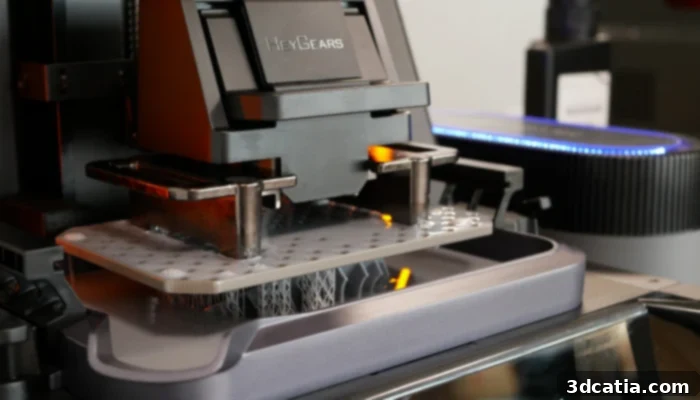
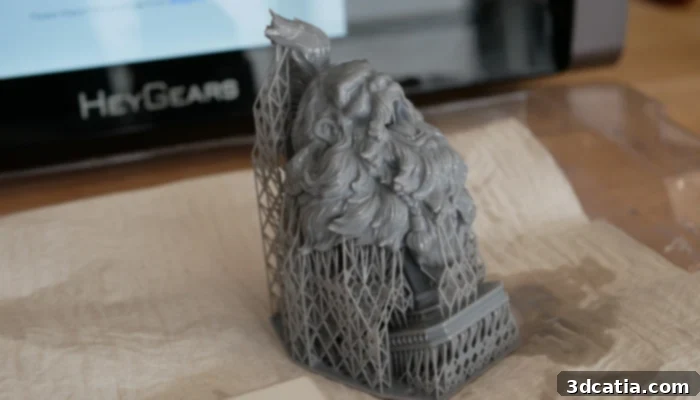
The HeyGears-developed PICK algorithm facilitates easier support removal, improving post-processing efficiency.
Beyond its user-friendly interface, Blueprint Studio incorporates sophisticated algorithms designed to enhance print results. These include “individual pixel extinction,” which intelligently reduces adhesion on large, flat surfaces, minimizing the risk of warping and improving part release. Anti-aliasing capabilities ensure smoother surface finishes by reducing pixelation effects inherent in LCD-based printing. “WDR Fusion+” (Extended Dynamic Range) optimizes exposure across the entire print area, resulting in more consistent curing and higher detail fidelity. Furthermore, the innovative “PICK algorithm” intelligently detects supports and strategically underexposes them, making them easier to remove post-print while leaving minimal marks on the model. Finally, the software’s seamless cloud connectivity allows for efficient file transfer to the 3D printer and post-processing machines, automatically configuring equipment settings based on the specific models being printed and the materials selected, thereby streamlining the entire production cycle.
Despite Blueprint Studio’s impressive functionality and ease-of-use, there are a few areas where the software could benefit from further development. Currently, compatibility with more modern 3D model formats, such as 3MF, is not yet available, which can be a minor inconvenience for users working with these newer file types. The software, available for download on both Mac OS and Windows, also requires a relatively modern hardware configuration to run optimally; older computers may experience slowdowns during operation. During our testing, we also encountered some difficulties with more advanced, intricate support manipulation, indicating that while automatic support generation is robust, manual fine-tuning could be improved. Specifically, the addition of support blocking geometries (such as cubes, cylinders, or pyramids used to prevent automatic support generation in specific areas) is not yet possible, necessitating a greater reliance on manual support generation for complex geometries.
Upon communicating these observations to HeyGears, the manufacturer informed us that Blueprint Studio is scheduled for significant updates in the near future, and that these specific improvements, including enhanced support manipulation and broader file format compatibility, are actively being addressed. This commitment to continuous improvement suggests that Blueprint Studio will only become more powerful and user-friendly over time.
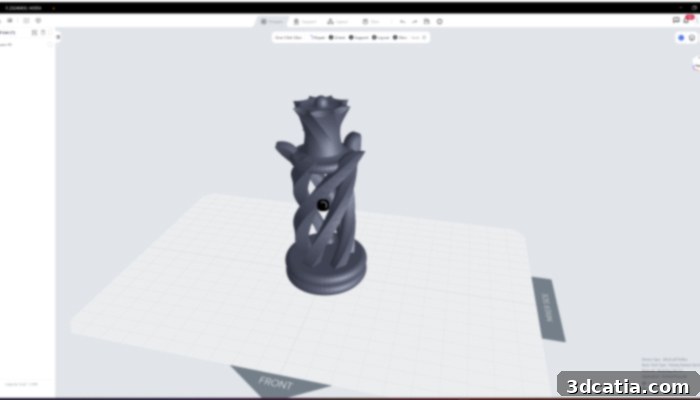
Blueprint’s one-click slice functionality significantly lowers the barrier to entry for beginners in resin 3D printing.
Exceptional First Prints and the Power of PRM Technology
The UltraCraft Reflex operates on MSLA (Masked Stereolithography Apparatus) technology, a popular method for resin 3D printing known for its speed and precision. Unlike traditional SLA or DLP resin printers, MSLA utilizes a powerful UV LED light source, in this case, an advanced COB (Chip-on-Board) LED array. This COB configuration ensures superior lighting uniformity across the entire build plate, which translates directly into more consistent curing and higher quality prints. The light is selectively masked by an LCD screen, which on the UltraCraft Reflex, boasts an impressive 6K resolution. This high resolution, combined with HeyGears’ engineering, allows the 3D printer to achieve an exceptional XY precision of 33 microns, making it capable of reproducing incredibly fine details and intricate geometries with remarkable accuracy.
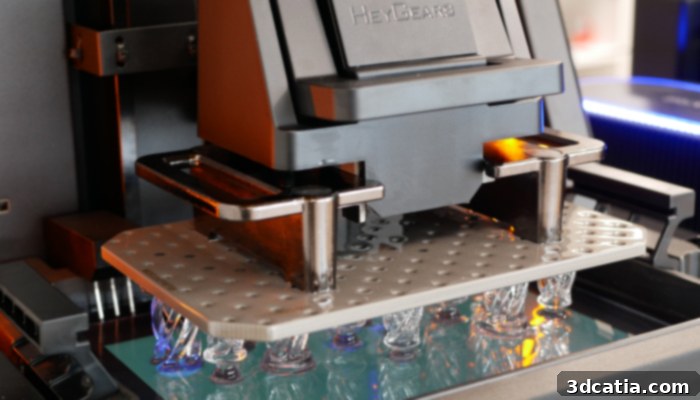
The 3D printer employs a high-resolution LCD screen to precisely mask a UV LED COB light source, ensuring detailed prints.
A truly innovative highlight of the UltraCraft Reflex is its “PRM” (Pulse Release Module) system. According to HeyGears, this groundbreaking module can reduce the release force between the printed part and the NFEP film in the resin vat by up to 50%. The PRM is a pneumatic system that generates controlled pulses of air, creating a brief, localized separation between the newly cured layer and the film. This significant reduction in peeling force translates into several major advantages for the user and the print quality:
- **Reduced Support Requirements:** By minimizing the adhesion force, the PRM allows for the use of fewer and finer supports. This not only significantly reduces preparation and post-processing time but also leads to substantial savings in resin consumption.
- **Minimized Risk of Part Distortion:** The gentler separation process drastically lowers the chances of print failures caused by excessive stress or deformation during the peeling action, which is a common issue with larger or more delicate resin prints.
- **Improved Part Finish:** With less physical stress on the part, there are fewer marks, blemishes, and traces left on the printed surfaces, resulting in cleaner, smoother models directly off the build plate.
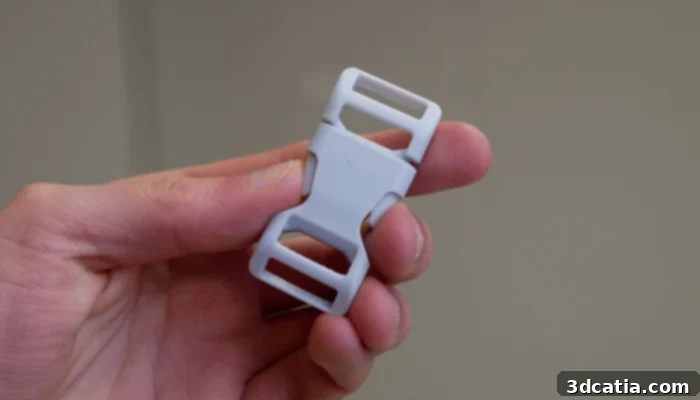
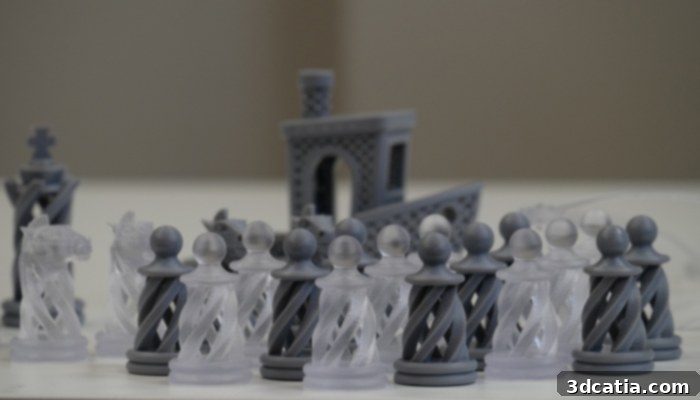
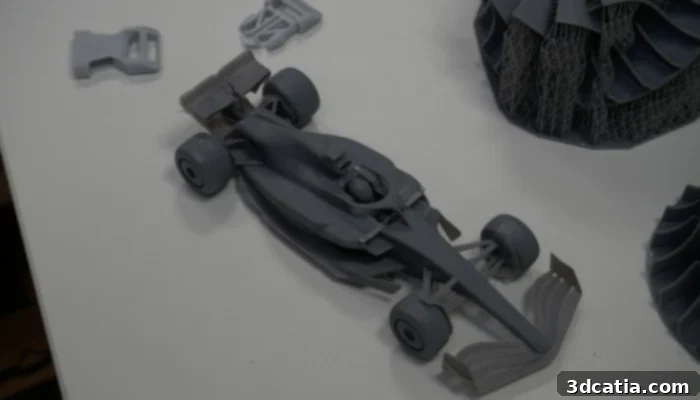
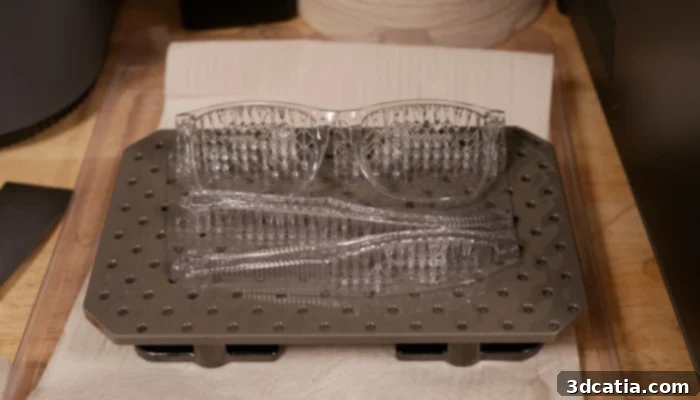
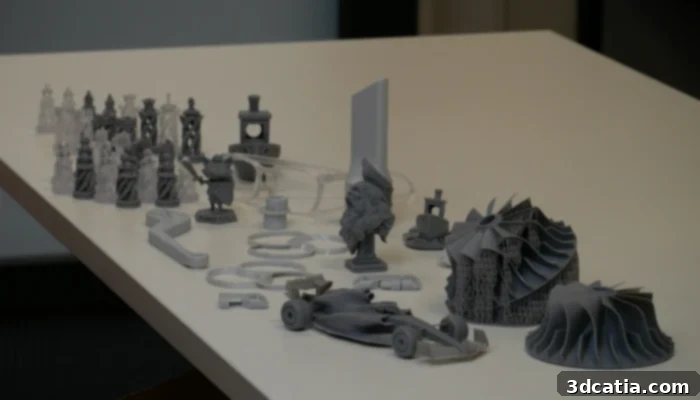
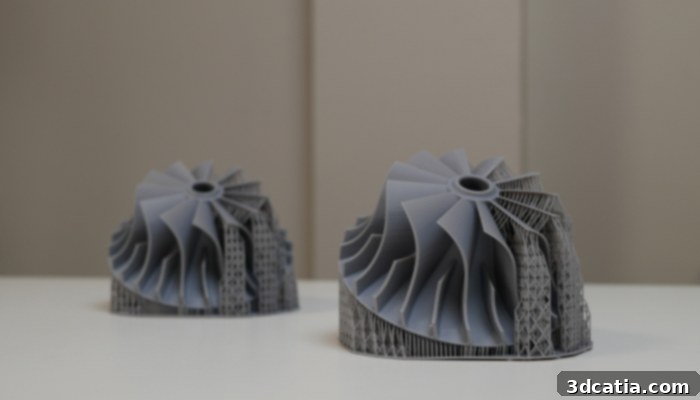
During our extensive testing period, we had the opportunity to experiment with a diverse range of HeyGears’ proprietary resins. This included PAP10, a resin specifically formulated for producing highly detailed miniatures; PAU10, a versatile, high-performance universal material suitable for a wide array of applications; and PAT10, a transparent resin designed for clarity. Despite encountering two minor printing failures with the transparent resin (one attributed to insufficient support density, highlighting the importance of proper slicing settings), the vast majority of our prints with the HeyGears UltraCraft Reflex were exceptionally successful. They consistently exhibited an extraordinarily high level of detail, faithfully retaining all the intricate nuances of the original 3D files. This performance underscores the printer’s capability for precision and fidelity, making it ideal for applications requiring intricate features.
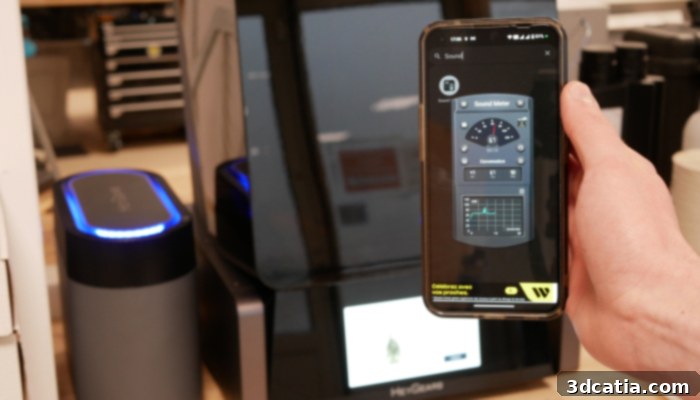
When active, the PRM module can generate noticeable noise, a factor to consider for installation in quiet environments.
The PRM proved to be an exceptionally efficient device, fulfilling its promise of considerably reducing the required peeling force. Its pneumatic compressor-type system, which generates precise pulsed air to aid in lifting parts from the NFEP film, undeniably contributes to a superior part finish and a significantly reduced risk of deformation. This technology is a real game-changer for enhancing print success rates and overall print quality in resin 3D printing.
However, it’s important to note that the PRM is not without its minor drawbacks. Its operational noise level can be quite noticeable, potentially proving disruptive if the printer is used in a quiet office environment or a shared workspace. This is a factor worth considering when planning the installation location. Fortunately, the PRM is not an indispensable component for the machine’s operation; it can be easily activated or deactivated as required, offering users the flexibility to balance print benefits with ambient noise levels. This modularity ensures that users can tailor their printing experience to their specific needs and environment.