
3D Printing Revolutionizes Hearing: South African Surgeons Perform World’s First Middle Ear Transplant
In a monumental leap forward for medical science, a dedicated team of researchers and surgeons in South Africa has achieved a global first: a successful middle ear transplant utilizing cutting-edge 3D printing technologies. This pioneering procedure marks a significant milestone in the medical field, offering unprecedented hope for millions suffering from conductive hearing loss. The innovative approach involved meticulously reconstructing the damaged ossicles – the tiny bones of the patient’s middle ear – using patient-specific 3D printed components. Researchers are optimistic that this breakthrough could provide a viable, long-term solution, applicable to individuals across all age groups, including even newborn babies, whose delicate ear structures previously posed insurmountable challenges for traditional surgical methods.
The Groundbreaking Procedure: Precision and Reduced Risk
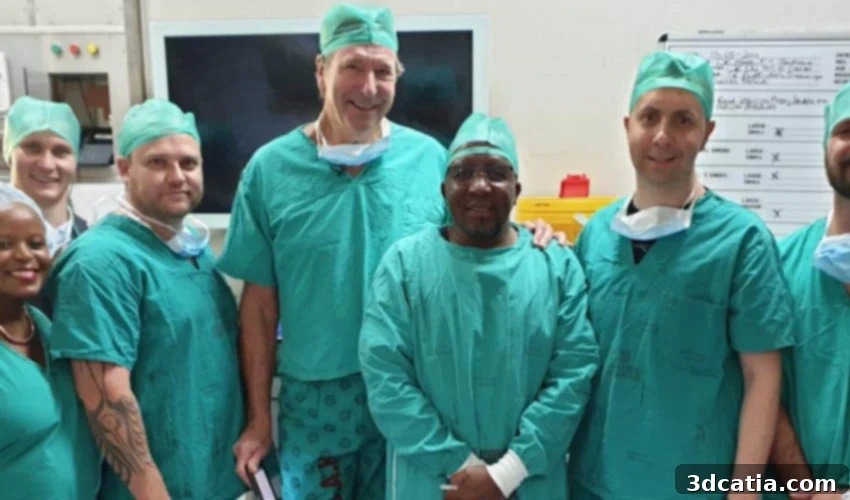
The patient who underwent this historic surgery was a 35-year-old man whose hearing had been severely compromised following a car accident that inflicted irreparable damage to his inner ear components. Professor Mashudu Tshifularo, a leading figure in the research group that spearheaded this remarkable operation, provided crucial insights into the procedure’s advantages. He explained, “By replacing only the ossicles that aren’t functioning properly, the procedure carries significantly less risk than known prostheses and their associated surgical procedures.” This selective replacement targets only the affected parts, minimizing disruption to healthy tissue. Professor Tshifularo further elaborated on the material choice, stating, “We will use titanium for this procedure, which is biocompatible.” Titanium is renowned for its strength, durability, and excellent compatibility with the human body, reducing the likelihood of rejection or adverse reactions. The surgical method itself is also less invasive: “We use an endoscope to do the replacement, so the transplant is expected to be quick, with minimal scarring.” This endoscopic approach allows for precise manipulation within the confined space of the ear with smaller incisions, facilitating faster recovery and improved aesthetic outcomes.
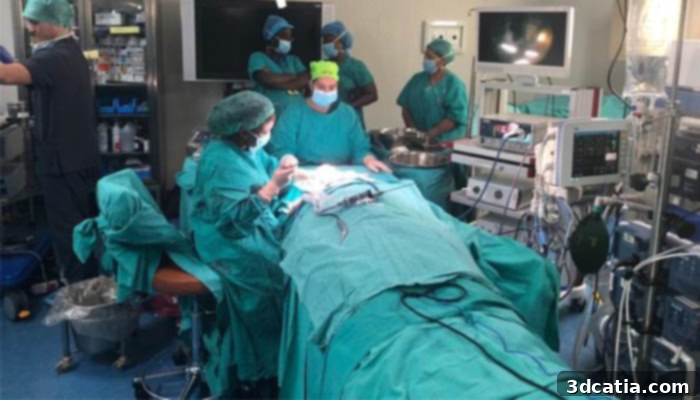
Surgeons restored their patient’s hearing within two hours |Photo Credits: Cape Town Etc
This ability to specifically target and replace the malleus, incus, and stapes – the three tiny bones collectively known as the ossicles, which transmit sound vibrations from the eardrum to the inner ear – is a testament to the unparalleled precision offered by 3D printing in bone reconstruction. Traditional prostheses often involve more extensive interventions, but the custom-printed ossicles perfectly mimic the patient’s original anatomy, ensuring optimal sound conduction. The broad applicability of this technique, even to the most vulnerable patients like newborns, underscores its transformative potential. Early intervention for hearing loss in infants can significantly impact their speech, language, and cognitive development, making this innovation particularly vital for pediatric care.
A Decade of Innovation: Tackling Hearing Loss with 3D Technology
Professor Mashudu Tshifularo’s journey to this groundbreaking success spans over a decade, with the last two years specifically dedicated to exploring and refining the application of 3D technologies for scanning and rebuilding damaged sections of the ear. The middle ear houses some of the smallest and most intricate bones in the human body, making their repair and reconstruction exceedingly challenging. Hearing loss, a condition affecting millions worldwide, can stem from various causes. While it is often a natural part of the aging process, typically starting to decline around the age of 30-40, it can also be triggered by severe disease, chronic infection, physical trauma or injury – as was the case with the 35-year-old patient – or it can be an inherited condition. For many, these forms of hearing loss were previously considered permanent, leading to significant impacts on quality of life, communication, and overall well-being. This innovative 3D printed solution, however, holds the promise of fundamentally changing that perception.
“3D technology is allowing us to do things we never thought we could,” Professor Tshifularo affirmed, highlighting the expansive possibilities opened by additive manufacturing in medicine. The ability to create highly customized, perfectly fitting implants from detailed scans of a patient’s own anatomy represents a paradigm shift. This level of personalization is crucial for successful outcomes in delicate surgeries like middle ear reconstruction. However, as with many pioneering ventures, bringing such an invention to fruition required substantial resources. Professor Tshifularo acknowledged the financial hurdles, stating, “But I needed sponsors and funding for this invention to take off the ground.” This underscores the critical role of investment and support in translating innovative research into life-changing medical procedures.
Immediate Impact and Future Prospects
The success of the initial operation was immediate and profound. The patient regained his hearing almost instantly after the procedure, with only the muffling effect of bandages preventing full, crystal-clear sound perception. This rapid recovery and immediate restoration of function are highly encouraging. Recognizing the immense potential of this medical breakthrough, the South African Department of Health has proactively called upon development partners and donors to provide crucial support. Minister Motsoaledi declared the government’s full commitment: “As a Department of Health, we shall do everything in our power to assist and mobilize resources to make sure that Prof. Tshifularo gets all the help he needs for this far-reaching innovation.” This official backing is vital for scaling up the procedure, training more surgeons, and making this life-changing technology accessible to a wider population. The implications extend far beyond South Africa’s borders; this achievement sets a precedent for medical innovation globally, potentially paving the way for similar advancements in countries facing high incidences of treatable hearing loss.
The Broader Revolution of 3D Printing in Medicine
This middle ear transplant is not an isolated incident but rather a powerful example of how 3D printing, or additive manufacturing, is fundamentally transforming various facets of medicine. Beyond custom implants like the ossicles, 3D printing is widely used to create highly realistic anatomical models for surgical planning and education, allowing surgeons to practice complex procedures before operating on actual patients. It enables the rapid production of patient-specific surgical guides, enhancing precision and reducing operating times. In prosthetics and orthotics, 3D printing facilitates the creation of lighter, more comfortable, and affordable devices tailored to individual needs. The technology also plays a crucial role in drug delivery systems and is on the cusp of revolutionizing tissue engineering and bioprinting, with the long-term goal of printing functional organs. The ability to use biocompatible materials such as titanium, various polymers, and ceramics further expands the scope of applications, ensuring that implants and devices are safe and effective within the human body. The precision, customization capabilities, and efficiency offered by 3D printing are unparalleled, moving healthcare towards a more personalized and effective model, where treatments are designed around the unique anatomy and needs of each patient.
Looking Ahead: Accessibility and Ongoing Research
The success of the 3D printed middle ear transplant serves as a beacon of hope for millions worldwide who suffer from conductive hearing loss. As research continues and technology advances, the potential for widespread adoption of this procedure appears increasingly promising. However, challenges remain, particularly concerning the cost of sophisticated 3D printing equipment, materials, and the specialized training required for medical professionals. Overcoming these barriers will be crucial to ensure equitable access to this innovative treatment, especially in underserved regions. Continuous research will also focus on refining the materials used, optimizing surgical techniques, and exploring even more complex applications of 3D printing in otolaryngology and other medical specialties. The journey from initial concept to a widely available, standard medical procedure is long, but the South African team’s achievement has firmly established a new frontier in the fight against hearing loss, promising a future where deafness caused by damaged middle ear bones can be a thing of the past.
For more detailed information on this groundbreaking story, you can visit Cape Town Etc HERE.
What are your thoughts on this incredible medical advancement? Share your comments below or connect with us on our Facebook and Twitter pages! Don’t miss out on the latest developments in additive manufacturing – sign up for our free weekly Newsletter here, delivered straight to your inbox!