

3D Printing Revolutionizes Water Infrastructure: Solutions, Applications, and Future Trends
In science class, you learned that water is fundamental to life. We often take this renewable resource for granted because many have easy access to it with a simple turn of a tap. However, delivering clean drinking water and managing wastewater requires intricate engineering. Globally, numerous water infrastructure systems are aging and require maintenance or replacement. These systems can suffer from leaks, inefficiencies, and high costs, exacerbated by rising demands from growing populations. Adding environmental goals to the mix, we face a complex question: How can communities create efficient, secure, affordable, and sustainable water infrastructure?
Engineers are increasingly exploring 3D printing as a potential solution. This emerging technology offers faster, greener, and more customizable solutions for building and maintaining infrastructure. Before delving into 3D printing’s role, let’s briefly examine what water infrastructure entails.
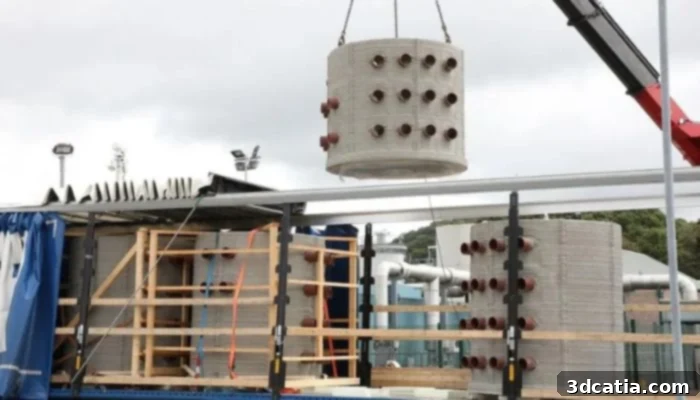
Concrete drawpit being placed into position at Esholt Waste Water Treatment Works (Photo Credits: Hyperion Robotics)
Understanding Water Infrastructure
Water infrastructure is critical for fulfilling basic societal needs, sustaining life, and safeguarding public health. Collecting and treating wastewater is equally vital for preventing disease and protecting the environment. A core component of this infrastructure is water treatment plants. These facilities source water from rivers or underground wells, treating it through various chemical and physical processes to render it potable. The purified water then travels through a network of distribution systems—pipes, pumps, and storage tanks—to reach its destination.
After use, this water becomes wastewater, necessitating further treatment. It flows to wastewater treatment facilities where advanced processes eliminate contaminants before it is safely released back into the environment. Additional components include reservoirs and dams, storing large volumes of water for flood control, hydroelectric power, and a stable water supply.
Mapping this infrastructure requires a deep understanding of local needs, environmental impacts, regulations, and costs. So, where does additive manufacturing fit into this complex landscape?
3D Printing Applications in Water Infrastructure
3D printing offers diverse applications for water infrastructure. Let’s explore the primary areas where it’s making a significant impact.
3D Printing Infrastructure Components
Many infrastructure components can now be 3D printed, a fact highlighted by the United Kingdom’s Water Industry Printfrastructure project. This project, led by United Utilities in partnership with ChangeMaker3D, Manchester Metropolitan University’s PrintCity, and Scottish Water, successfully implemented numerous 3D-printed components. Since its launch in 2023, the project has conducted several studies testing both concrete and polymer 3D printing for water infrastructure. Key achievements include printing a wastewater jet nozzle, a CCTV skid plate, and a trough for water monitoring instruments. These components are now in daily use by United Utilities following rigorous testing. The project also fabricated laboratory equipment currently used by Scottish Water and United Utilities.
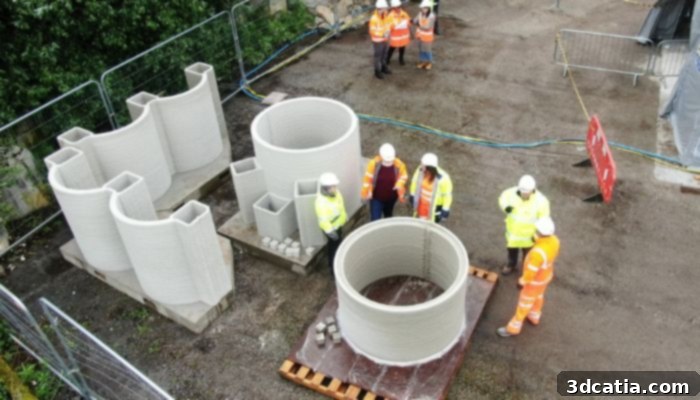
A wastewater chamber created by United Utilities
The project also involved opening a 3D concrete printing hub at United Utilities’ Wigan Wastewater Treatment Works in June 2024. There, they printed sewer overflow chambers, Industrial Emissions Directive containment walls, manhole rings, and distribution chambers. The Printfrastructure project demonstrates the extensive possibilities for 3D-printed water infrastructure elements, further emphasized by United Utilities’ plans to increase its 3D printing budget from 2025-2030.
Filtration and Water Treatment Advancements
Beyond infrastructure components, 3D printing facilitates the fabrication of advanced devices for filtering and treating water. For example, researchers at the University of Bath 3D-printed ceramic lattices capable of removing perfluorooctanoic acid (PFOA) and polyfluoroalkyl substances (PFAS), known as “forever chemicals,” from water. Their 2024 findings revealed that these lattices could remove at least 75% of PFOA and PFAS. Similarly, the Royal Netherlands Navy successfully 3D-printed a replacement water filter specifically designed for maritime environments.
Additive manufacturing is also revolutionizing membrane-based filtration systems. A 2023 study, “3D-Printed Materials for Wastewater Treatment,” highlighted the use of 3D technologies in manufacturing advanced membrane components, including biocarriers, sorbents, catalysts, and even entire membranes. Traditional membrane fabrication requires large solvent quantities, toxic monomer materials, and results in a high carbon footprint and waste. 3D printing, conversely, eliminates solvent discharge, offering a more environmentally friendly approach.
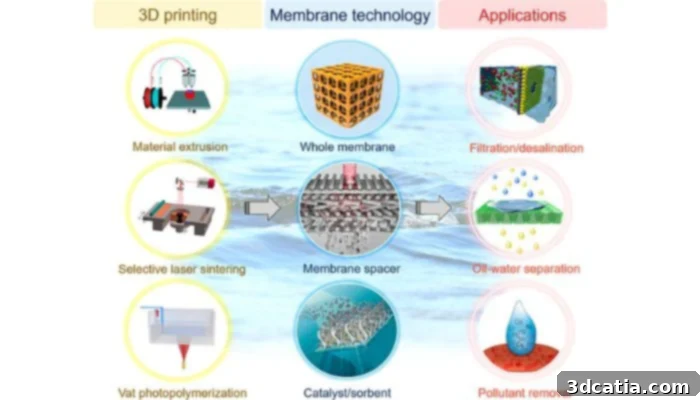
A graphical abstract of how additive technologies can be used for wastewater treatment (Image credits: Roy Barman S et al.)
These membranes have been effectively used in industrial waste treatments, particularly for degrading organic pollutants, oily sewage, and heavy metals from manufacturing and pharmaceutical industries. They also play a crucial role in domestic water treatments and desalination applications, facilitating the recycling and reuse of non-potable water.
In 2016, University of Bath researchers pioneered the fabrication of a membrane module for ultrafiltration. Since then, 3D printing has been used to create entire membranes, although it’s more common to produce module parts. Various components make up a full membrane, and 3D printing has been extensively studied for creating:
- Membrane spacers: These ensure continuous fluid flow, preventing damage to the membrane’s active layer and reducing fouling. Technologies such as SLS, DLP, FDM, and polyjet have been used to design spacers in diverse configurations, including multilayered structures, helices, and ladders.
- Photocatalysts: When exposed to specific light wavelengths, photocatalysts generate reactive oxygen species (ROS), such as hydroxyl and superoxide radicals, which oxidize and break down organic contaminants. This makes them highly effective for removing pollutants from water. FDM, material jetting, binder jetting, and vat photopolymerization have been employed to create photocatalysts.
- Biocarriers: Used for degrading organic pollutants, biocarriers are porous materials that support microorganism growth and biofilm formation, accelerating pollutant degradation. Direct-ink-writing, SLS, and polyjet are used to create these carriers.
- Sorbents: Sorbents selectively adsorb molecules or ions from liquids or gases, removing substances like ammonia, heavy metals, and volatile organic contaminants. Natural materials are often used, but developed adsorbents can lack mechanical stability and flexibility. Extrusion-based 3D printing, SLS, and other 3D technologies offer the creation of sorbents with high mechanical strength, controllable porosity, high stability, and outstanding efficiency.
Technologies and Materials for 3D Printing Water Infrastructure
Selecting technologies and materials for water infrastructure depends on the specific application. Common technologies include DLP, material extrusion, and SLS. Pratik Gavit, a researcher from the Department of Materials Engineering at the Indian Institute of Science, emphasized that industry stakeholders should consider part size, required precision, mechanical performance, and cost when choosing a technology.
For high-precision components like membrane spacers or parts with fine features, DLP or SLA are often optimal. These technologies offer resolutions below 100 micrometers and exceptionally smooth surface finishes, making them suitable for intricate geometries, complex internal channels, and applications where surface roughness significantly impacts performance, and minimal post-processing is required.
For larger infrastructure components, such as pipes, tanks, or structural elements, material extrusion (FDM) is a cost-effective solution. It offers large build volumes (up to approximately 300 × 300 × 600 millimeters) and compatibility with various engineering thermoplastics, making it ideal when part size and budget are primary considerations.
For functional prototypes and medium-volume production, SLS balances mechanical strength and design freedom. It produces robust parts without requiring support structures, making it attractive for components with complex geometries that must withstand operational stresses and require consistent material properties.
Benefits of 3D Printing in Water Infrastructure
The benefits of using 3D printing in water infrastructure vary depending on the application, but common advantages include greater design freedom and customization, rapid production and deployment, enhanced sustainability, improved performance and durability, and cost savings on unique and small-batch parts.
United Utilities reports that the most significant benefits of 3D concrete printing are speed, reduced carbon impact, and cost savings. “For example, printing a CSO chamber was 60% quicker, provided a carbon saving of 27%, and was cost-effective. These figures were independently verified by our carbon assessment consultant.” The Printfrastructure project overall reduced carbon emissions by up to 50%, based on comparing the embedded carbon impact from the asset lifecycle for the 3D printed asset compared to a traditionally constructed asset.
United Utilities also noted that polymer printing allows them to print obsolete parts, extending the life of filter arm assets, and is useful for creating quick prototypes or bespoke designs. “We are further exploring the potential to use this to quickly create parts to allow a quick fix in emergency scenarios, for example, a burst pipes whilst waiting for the permanent solution.”
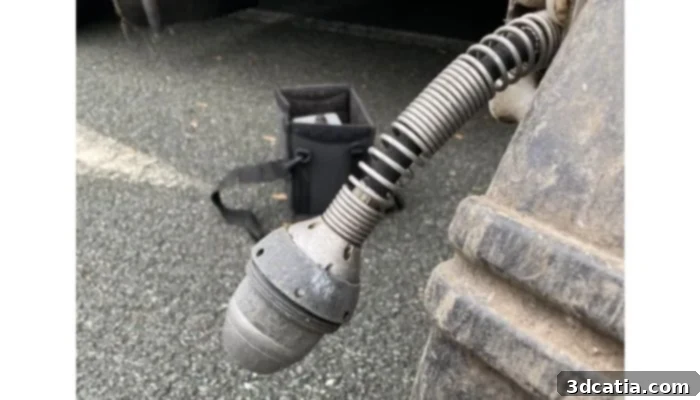
United Utilities uses 3D printed wastewater jet nozzles in daily operations. (Photo Credit: United Utilities)
Limitations of 3D Printing in Water Infrastructure
While additive manufacturing offers significant advantages for waterworks, adopting new technologies always presents challenges. The United Utilities team emphasized the need to make people comfortable with this construction method and understand its potential benefits. “Setting up our printing hub in Wigan to demonstrate 3D printing in action helped to show the speed at which the concrete structures can be printed, and sharing our learnings throughout the project with other water companies, delivery partners and suppliers has helped to overcome some of these barriers.”
Gavit outlined the primary limitations of 3D printing in water infrastructure across three categories: technical, economic, and regulatory.
Technical hurdles include:
- Resolution limitations: Current printers struggle with the fine pore sizes needed for advanced filtration (nanofiltration requires <10 nm pores).
- Material constraints: Limited selection of chemically resistant, food-grade materials suitable for potable water applications.
- Size scaling: Difficulty printing flat membrane sheets larger than 1×5 meters, which are needed for industrial applications.
Economic barriers can include:
- High equipment costs: Industrial-grade printers capable of printing water infrastructure components cost $200,000-$500,000+.
- Slow production rates: 3D printing is often economically viable only for low-volume production (<1,000 parts annually for environmental benefits).
- Material costs: Specialized printing materials cost $100-500/kg compared to $10-50/kg for conventional materials.
Regulatory hurdles involve:
- Safety certifications: 3D printed components for potable water systems must meet NSF/ANSI standards, which current materials often cannot achieve.
- Long-term performance validation: Regulators require 20+ year lifespan data, but 3D printing for water applications has <10 years of field history.
- Quality control standards: Lack of standardized testing protocols for 3D-printed water infrastructure components.
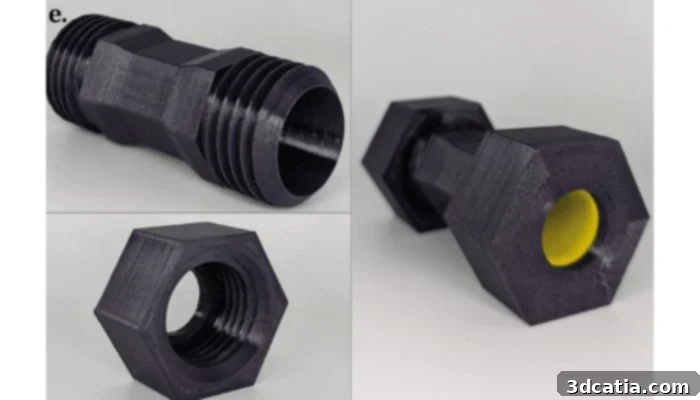
Dr. Joshua Pearce from Western University 3D printed PETG pipe fitting parts to unlock more efficient water management. (Photo Credits: Western University)
Future Outlook for 3D Printing in Water Management
Despite these challenges, manufacturers continue to explore additive manufacturing for water infrastructure solutions. The future may bring more decentralized 3D printing hubs for water utilities and integration with digital twins and predictive maintenance. The transition from experimental projects to everyday practice is already underway. While still in early stages, these advances suggest a future where 3D printing plays a key role in delivering clean and safe water more sustainably. “The key is managing expectations,” Gavit explained. “3D printing won’t revolutionize water infrastructure overnight, but it’s already creating value in specific applications and will expand as materials and processes mature.”
What do you think of using 3D printing for water infrastructure? Let us know in a comment below or on our LinkedIn or Facebook pages! Plus, don’t forget to sign up for our free weekly Newsletter to get the latest 3D printing news straight to your inbox. You can also find all our videos on our YouTube channel.
*Cover Image (Left): Separonics ceramic filter membranes. Credit: Lithoz