
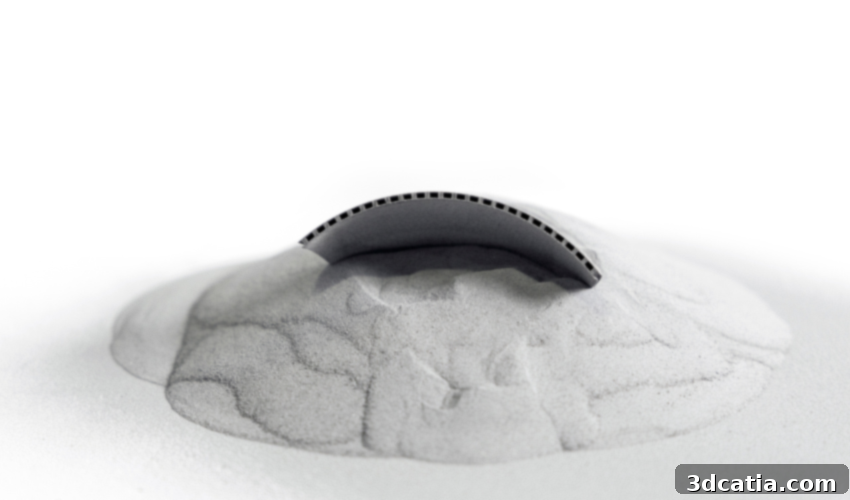
Super C103™: Revolutionizing Niobium Refractory Alloys for Advanced Aerospace and Defense with Additive Manufacturing
In the demanding realms of aerospace and defense, the relentless pursuit of materials capable of enduring extreme operational environments is a critical driver of innovation. These industries require components that can withstand immense heat, corrosive elements, and high mechanical stress, making material selection paramount for safety, performance, and mission success. Refractory alloys, distinguished by their exceptional resistance to high temperatures and wear, have emerged as indispensable solutions for these challenges. Among this specialized class of materials, Niobium C103 (Nb C103) has garnered significant attention. Its unique properties, coupled with transformative potential when processed through additive manufacturing (AM), are paving the way for next-generation engineering applications.
Understanding Niobium C103: Composition, Properties, and Traditional Limitations
Niobium C103 is a sophisticated alloy primarily composed of niobium (Nb), meticulously enhanced with precise additions of hafnium (Hf) and titanium (Ti). This specific elemental combination is engineered to significantly bolster its high-temperature strength and oxidation resistance, critical attributes for components operating under harsh conditions. The alloy’s inherent corrosion resistance and remarkable stability in extreme heat make it an ideal candidate for highly demanding applications, such as advanced rocket engines and cutting-edge weaponry. Historically, however, Niobium C103 in its wrought form has been classified as a low-strength refractory alloy, a designation that has severely constrained its widespread adoption in areas requiring superior mechanical properties.
Traditional manufacturing methods for C103 have presented numerous limitations. These processes typically rely on conventional techniques like machining from round bar stock to produce relatively simple geometric shapes. Such methods are inherently inefficient, often leading to an astonishing material waste rate, where up to 95% of the raw material is discarded. This translates into an economically unsustainable 20:1 buy-to-fly ratio, meaning twenty pounds of material must be purchased for every one pound that ends up in the final component. This inefficiency not only inflates production costs but also severely restricts design flexibility, hindering the creation of complex, optimized parts crucial for modern aerospace and defense systems. The inability to fully leverage C103’s potential through conventional means underscored the urgent need for a paradigm shift in its fabrication.
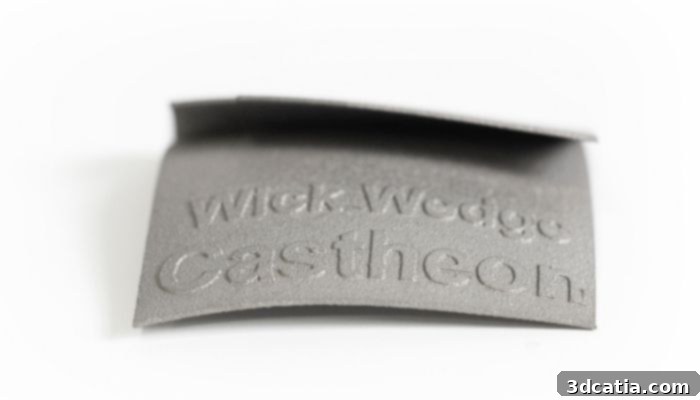
Castheon’s Breakthrough: Dr. Youping Gao and Metal Additive Manufacturing
Recognizing these profound challenges, Castheon, a distinguished division of ADDMAN Group, embarked on a pioneering mission to revolutionize the utilization of Niobium C103 through advanced metal additive manufacturing. At the helm of this transformative endeavor is Dr. Youping Gao, a visionary leader whose extensive expertise has been instrumental in this breakthrough. With over two decades of invaluable experience at Aerojet Rocketdyne, where he served as a Tech Fellow and Discipline Chief in Manufacturing Engineering, Dr. Gao possesses an unparalleled understanding of critical rocket engine manufacturing processes. His prior work included leading advancements in AM, notably earning NASA production certification for mission-critical human spaceflight components, a testament to his profound impact on the industry.
Dr. Gao’s comprehensive knowledge of traditional Nb C103 manufacturing limitations proved pivotal in formulating innovative solutions. His unique insight into the material’s behavior under various processing conditions enabled Castheon to independently develop proprietary 3D printing techniques. These advanced techniques provide unprecedented control over the microstructure and deposition rates during the AM process. Such precise control is absolutely essential for the successful integration of advanced strengthening mechanisms, including Oxide Dispersion Strengthened (ODS) and Carbide Dispersion Strengthened (CDS) structures, directly into the alloy’s matrix. This integration dramatically enhances the material’s overall performance, particularly its mechanical properties at elevated temperatures.
A significant achievement stemming from these innovations is the monumental improvement in creep resistance. Creep, the tendency of a solid material to slowly move or deform permanently under the influence of persistent mechanical stresses, is a critical failure mechanism in high-temperature applications. Castheon’s AM process achieved a staggering three-order-of-magnitude (1,000 times) improvement in creep resistance compared to traditionally forged C103. This remarkable leap propelled the material from its conventional low-strength category into a new medium-strength classification, opening up a wider range of high-performance applications previously deemed unfeasible for Niobium C103.
The Dawn of Super C103™: A Patented High-Strength Solution
Driven by a commitment to continuous innovation, Castheon pursued further advancements to unlock the full potential of Nb C103. This endeavor involved a meticulous and exhaustive refinement of both the printing parameters and the raw Nb C103 powder itself. The culmination of these rigorous efforts was the groundbreaking development and subsequent patenting of Super C103™, a truly significant breakthrough in the field of refractory alloys. This innovation stands as a testament to the power of advanced material science combined with cutting-edge additive manufacturing.
Central to the superior performance of Super C103™ is the precise integration of high-grain carbon particles into the Nb C103 powder during the Laser Powder Bed Fusion (LPBF) process. This is not merely an addition but a strategic embedding of carbon particles, allowing for a highly controlled and uniform dispersion throughout the alloy. By carefully controlling the size, distribution, and morphology of these carbon particles, Castheon has engineered Super C103™ to achieve a remarkable and unprecedented improvement in both structural integrity and high-temperature performance. The finely dispersed carbide precipitates formed by these carbon particles act as potent strengthening agents, inhibiting grain growth and hindering dislocation movement, which are crucial for maintaining strength at extreme temperatures.
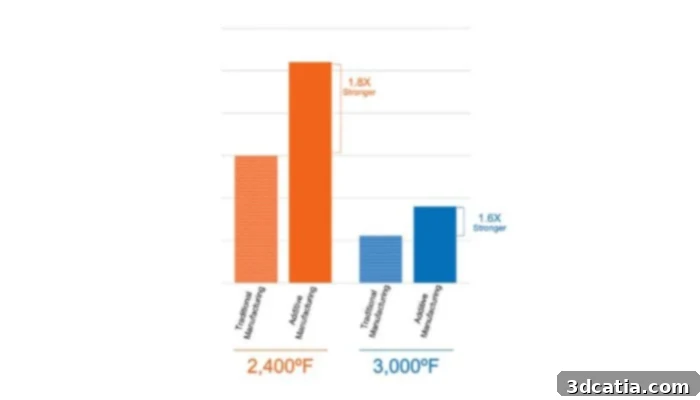
Strength benefits of C103 AM compound and multiply at hypersonic temperatures. Optimization of C103 AM into Super C103 AM will deliver even higher performance.
Elevating Performance for Hypersonic and Defense Applications
This profound enhancement is particularly vital for applications that demand materials capable of withstanding the most extreme operational conditions while steadfastly maintaining their strength and structural stability. The optimized microstructure, meticulously crafted through the precise incorporation of high-grain carbon particles, not only robustly reinforces the Niobium alloy but also empowers it to perform at levels far exceeding what was previously attainable with conventional Nb C103. The innovative material design mitigates traditional weaknesses, allowing for sustained performance under conditions that would cause lesser materials to fail.
As a direct result of these advancements, Niobium Super C103™ has been officially elevated to the prestigious high-strength category for refractory alloys. This reclassification signifies its superior mechanical properties and its readiness for the most challenging applications. Super C103™ now stands as an ideal and transformative solution for cutting-edge aerospace and defense projects, especially those operating in hypersonic regimes or other environments where material performance is not merely advantageous but absolutely paramount for mission success. Its ability to maintain structural integrity and strength at extreme temperatures makes it indispensable for components that experience immense thermal and mechanical loads.
“There are three strength categories for Nb-based refractory alloys: low, medium, and high. With our patented process, we’ve elevated Niobium C103 to the high-strength category, now known as Super C103™. We believe this breakthrough will play a crucial role in the future of hypersonic missiles and defense systems, delivering significant advantages in cost and performance.” – Dr. Youping Gao, President & CEO of Castheon
The Future of High-Performance Materials: Cost-Efficiency and Technological Advancement
This monumental advancement in Niobium C103, specifically through the development of Super C103™ via additive manufacturing, represents a significant and decisive leap forward for the entire aerospace and defense industries. By successfully overcoming the inherent limitations of traditional material processing methods, which were characterized by inefficiency and restricted performance, Castheon is not merely improving an existing alloy; it is setting an entirely new benchmark for the application and utility of refractory alloys in the most high-stress and demanding environments imaginable. The ability to achieve high-strength properties with significantly reduced material waste and enhanced design freedom transforms the economic landscape of producing these critical components.
As the global demand for materials capable of withstanding increasingly extreme conditions continues its upward trajectory, the profound innovations embodied within Super C103™ strategically position it as a key foundational component for the next generation of hypersonic flight vehicles, advanced propulsion systems, and sophisticated defense technologies. The future trajectory of these critical industries is inextricably linked to the availability of materials that not only perform flawlessly under immense pressure but also simultaneously drive substantial cost-efficiency and accelerate technological advancement. This is precisely the dual promise and tangible benefit that Castheon’s groundbreaking breakthrough in Niobium Super C103™ offers. Its superior performance, combined with the design flexibility and material efficiency of additive manufacturing, ensures it will play a vital role in shaping the future of advanced engineering. You can find out more about this groundbreaking material and its applications HERE.
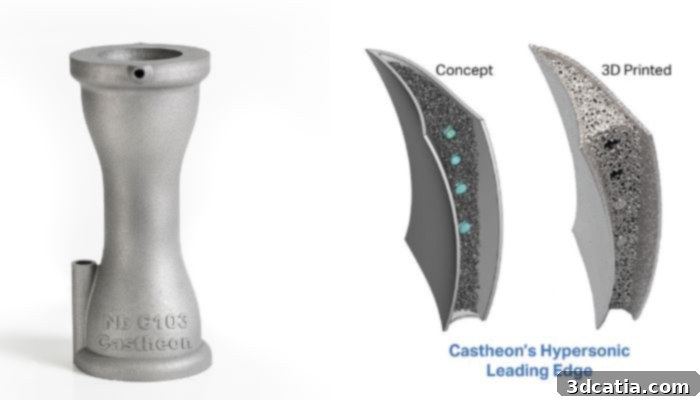
What are your thoughts on Niobium C103 and the potential of Super C103™ in advanced manufacturing? Do you currently utilize refractory alloys in your 3D printing applications? We invite you to share your insights and experiences in a comment below or join the conversation on our LinkedIn, Facebook, and Twitter pages! Don’t miss out on the latest advancements in additive manufacturing—be sure to sign up for our free weekly newsletter here to receive top 3D printing news directly in your inbox! You can also explore all our informative videos on our YouTube channel.
*All Photo Credits: ADDMAN Group