
Revolutionizing Breast Reconstruction: How 3D Printed Scaffolds Offer a Safer, Natural Alternative to Silicone Implants
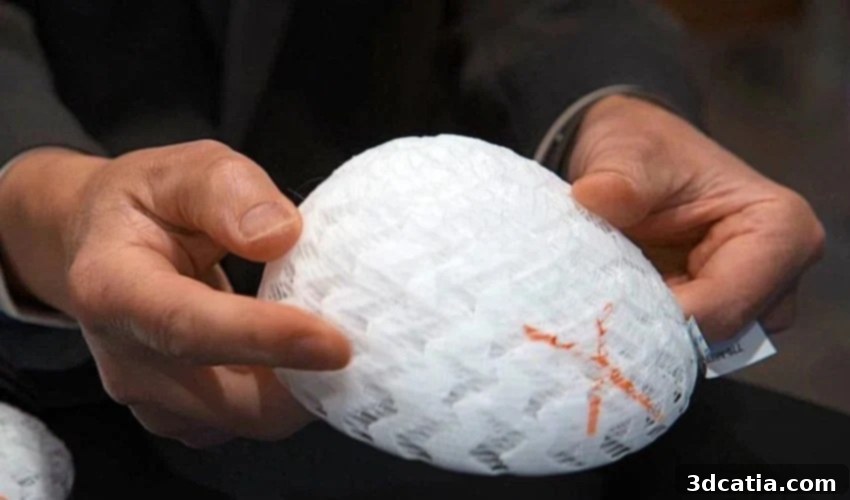
A groundbreaking development from Australian scientists is poised to significantly transform the landscape of breast reconstruction and cosmetic surgery. This innovative research leverages additive manufacturing, more commonly known as 3D printing, to produce revolutionary scaffolds that could, in the near future, replace conventional silicone breast implants. Designed to visually and functionally resemble traditional implants, these advanced scaffolds are crafted from the very same biocompatible material utilized in dissolvable surgical stitches, ensuring seamless integration with the body’s natural processes. While the study is still progressing through its early phases, the dedicated Brisbane-based research team holds immense optimism that this novel technology will eventually provide a substantially safer, more natural, and patient-friendly alternative to existing silicone implants. This pioneering work is expected to profoundly revolutionize the methodologies behind breast reconstruction and various cosmetic surgeries, steering them towards solutions that are in greater harmony with the patient’s own biology and long-term health.
The journey of this cutting-edge technology from laboratory concept to clinical application has marked a significant milestone with encouraging results from initial animal trials. Building upon this foundational success, the 3D printed scaffold technology has recently been utilized in its first human patient, a critical step forward in its development. The medical team is closely monitoring the patient for any signs of complications. Should the initial human trial proceed without issues, doctors plan to expand the test run to include a cohort of 15 to 20 additional, otherwise healthy individuals. Among the earliest beneficiaries, patient Moana Staunton, shared a compelling personal account. She had previously struggled with numerous debilitating health complications attributed to her traditional silicone breast implants. Following the surgical procedure involving the new scaffold technology, Ms. Staunton reports a remarkable and rapid disappearance of her perplexing ailments. “My chest is light and I don’t have vertigo or anything like that anymore,” she stated, expressing profound relief and a renewed sense of well-being. She concluded, “Overall, it’s been an excellent, amazing experience for me,” underscoring the immediate and transformative positive impact this innovative approach has had on her quality of life and overall health.
The Innovative Technology Behind the 3D Printed Breast Implants
Every year, thousands of individuals in Australia undergo breast augmentation or reconstruction using silicone implants. However, a concerning number of these women experience various complications or develop illnesses after the procedure. A significant and increasingly recognized issue is Breast Implant Illness (BII), a poorly researched yet debilitating condition that can manifest a wide range of health concerns in women with breast implants. Symptoms of BII can include chronic fatigue, joint pain, neurological issues, cognitive dysfunction (often referred to as “brain fog”), hair loss, and various autoimmune-like responses. The introduction of the additively manufactured scaffold represents a beacon of hope, promising to ensure that women will no longer have to endure the distressing health complications frequently triggered by silicone implants following breast surgery. This technological leap aims to significantly improve long-term patient health, satisfaction, and safety, moving towards a future where breast procedures enhance well-being without compromising health.
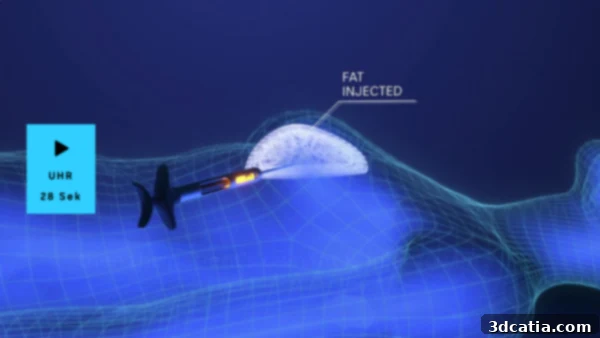
The core brilliance of the 3D printed scaffold lies in its ingenious design and mechanism of action. Once precisely inserted into the breast area by skilled surgeons, it functions as a sophisticated, temporary framework. This framework acts as a meticulous shaper, guiding the subsequent injection of autologous fat. Autologous fat grafting is a procedure where a patient’s own fat cells are harvested from one part of the body (e.g., abdomen or thighs) and carefully transferred to another, ensuring perfect biological compatibility and virtually eliminating the risk of rejection. The intricate mesh structure of the scaffold serves a crucial dual purpose: it not only meticulously holds the injected fat in its desired position and shape, but critically, it also actively stimulates and supports the body’s natural regenerative processes. It fosters the formation of new vascularized tissue and collagen within its structure, creating a robust, living matrix. This biological integration is paramount as it prevents the reabsorption of the fat back into the body – a significant and frequent challenge encountered with conventional fat grafting techniques, which often suffer from poor fat retention rates. Moreover, the scaffold itself is engineered for temporary existence; it gradually and completely dissolves within a period of approximately two years following insertion, leaving behind only the patient’s own natural, regenerated breast tissue. Professor Owen Ung, a highly respected Brisbane-based breast and endocrine surgeon at Metro North Health and director of the Comprehensive Breast Cancer Institute, who has played an instrumental role in this pioneering project, eloquently shared his vision: “I think it will be a real game changer for women who are going to need treatment going forward. And then a real game changer for the surgeons that are delivering that treatment,” underscoring its profound potential to benefit both patients seeking improved outcomes and medical professionals seeking more effective tools.
The material of choice for these advanced scaffolds is polycaprolactone (PCL), a well-established biodegradable polyester widely used in various biomedical applications, including dissolvable sutures, due to its exceptional biocompatibility and controlled degradation rate. PCL’s ability to safely break down into non-toxic components that are naturally absorbed and cleared by the body is a critical safety feature. The inherent flexibility of the 3D printing process allows for the creation of custom-fit scaffolds, meticulously tailored to each individual patient’s unique anatomical contours and specific aesthetic and reconstructive goals. This level of personalization ensures optimal integration, superior aesthetic results, and enhanced comfort, directly addressing a key limitation of generic, off-the-shelf silicone implants. By providing a temporary yet robust structural guide, these scaffolds effectively promote and direct the body’s innate healing and regenerative capabilities, culminating in a breast reconstruction that feels, moves, and behaves much like natural breast tissue. This sophisticated biomimetic approach represents a monumental leap forward from simply filling a space with a foreign object, ushering in an era of true biological tissue regeneration and personalized medicine.
A Beacon of Hope for Female Cancer Patients and Beyond
The initial phase of these crucial medical trials on human subjects is strategically focused on individuals who currently have problematic or defective breast implants that require removal. Professor Ung further explains that in these specific cases, medical teams are either carefully removing or restoring existing problematic implants and subsequently replacing them with these new, advanced 3D printed scaffolds. This represents a fundamentally different and more biologically aligned technological approach compared to merely exchanging one silicone implant for another. The ultimate, overarching vision and the primary focus of subsequent, more expansive studies are, however, geared towards offering vital solutions for women requiring breast surgery following a cancer diagnosis. Professor Ung emphatically highlights the immense clinical significance of this application: the clear long-term plan is to extend this innovative help to women who have courageously battled breast cancer and undergone a mastectomy. Mastectomy, a profoundly life-altering procedure, frequently leaves patients with significant physical and often deep emotional scars, and the current reconstructive options are often limited, complex, and come with their own set of challenges and potential complications. The critical need for more effective, natural, and permanent solutions in this area of reconstructive surgery is undeniably high, with a noticeable scarcity of truly viable and satisfying alternatives. Despite the incredibly promising outlook, medical professionals responsibly emphasize that considerable rigorous research, extensive clinical trials, and comprehensive validation are still required to conclusively prove the scaffold technology’s long-term safety, efficacy, and durability. Nevertheless, the inherent biological compatibility of this regenerative approach holds tremendous potential to significantly reduce the likelihood of implant rejection – a common and distressing complication associated with traditional implants – thus offering a more harmonious and enduring outcome for patients.
One of the most compelling and transformative advantages of these 3D printed implants, standing in stark contrast to their traditional silicone counterparts, is the complete elimination of the need for future replacements. This enduring benefit is achievable because the final reconstructed breast tissue is ultimately derived from the patients’ own body tissue, which is naturally stimulated, guided, and nourished by the temporary scaffold. Plastic surgeon Michael Wagels, a pivotal and insightful member of the dedicated research team, articulated this profound objective: “We’re trying to achieve something that is so innately part of the patient that it ultimately disappears, and what’s left is the patient themselves, or their own tissue.” This visionary goal transcends mere augmentation or superficial reconstruction, moving towards genuine biological regeneration, offering a permanent, natural, and truly integrated solution. However, the expert also prudently highlighted the inherent complexities and significant challenges associated with performing fat grafting or carefully placing the scaffold in areas that have previously undergone radiation therapy. Radiation treatment can profoundly alter local tissue quality, often compromising blood supply, reducing cellular viability, and inducing fibrosis. These changes can make successful tissue integration, fat cell survival, and subsequent tissue regeneration much more difficult, necessitating extremely careful pre-operative planning, advanced surgical techniques, and meticulous post-operative care to ensure optimal and safe outcomes for these specific patient populations.
Broadening Horizons: Further Possible Application Areas for Regenerative 3D Printing
Presently, the bespoke medical meshes, which are precision-engineered to individual patient requirements, must be manufactured in Germany. This current necessity stems from the fact that Australia does not yet possess a dedicated medical 3D printing facility capable of producing such advanced, clinically approved implants on a large or customized scale. However, experts are highly optimistic that this situation will change dramatically in the foreseeable future, with a concerted national push towards establishing robust local capabilities for printing medical supplies and sophisticated implants. The localization of medical 3D printing would bring a myriad of benefits, including significantly reduced manufacturing times, lower production costs, a more resilient supply chain, and vastly improved accessibility to cutting-edge treatments for Australian patients. Looking well beyond the realm of breast reconstruction, the profound potential of this innovative technology extends far into numerous other critical areas of medicine and surgery. It could prove invaluable not only for patients in need of breast implants but also for addressing a diverse spectrum of complex medical conditions, such as the intricate reconstruction of facial structures in challenging cases of hidden neck cancer or severe congenital or traumatic jaw defects. Furthermore, this technology offers a beacon of hope for individuals who have sustained significant tissue loss in their lower limbs, or other critical body parts, as a devastating consequence of traumatic traffic accidents, providing a transformative pathway to functional and aesthetic restoration. Michael Wagels eloquently summarizes the expansive and promising future of this technology: “Anywhere where we do lose tissue and we are looking to try and replace that tissue, then this has enormous potential. I think we are seeing the start of a new paradigm, a new series of procedures and operations which really developed around this technology.” This powerful statement encapsulates the overarching vision of regenerative medicine moving decisively beyond simple repair or replacement with foreign materials, towards true biological restoration and integration, fundamentally reshaping future surgical practices and profoundly enhancing long-term patient recovery and quality of life.
The advent of 3D printed scaffolds signifies a profound paradigm shift in reconstructive surgery, transitioning from traditional implant-based solutions that rely on inert foreign materials to a dynamic, regenerative approach that actively harnesses and guides the body’s own inherent healing mechanisms. This groundbreaking technology places a strong emphasis on personalized medicine, where implants are meticulously designed and precisely manufactured for each patient’s unique anatomy, specific condition, and desired functional and aesthetic outcomes, thereby promising superior and more natural results. The inherent ability for these biocompatible scaffolds to gradually dissolve, leaving behind only the patient’s natural, regenerated tissue, effectively eliminates the long-term risks and complications commonly associated with permanent foreign bodies, such as capsular contracture, implant rupture, or the distressing symptoms of Breast Implant Illness (BII). As research continues to advance rapidly and manufacturing capabilities evolve and scale, the sophisticated integration of these advanced biomaterials and cutting-edge additive manufacturing techniques is poised to unlock unprecedented possibilities in treating a wide range of complex tissue defects throughout the human body. Ultimately, this will dramatically enhance patient quality of life, redefine the very future of reconstructive surgery, and solidify the position of regenerative medicine as a cornerstone of modern healthcare globally.