
Elkem Silicones Unveils Revolutionary Iron-Silicon 3D Printing Powder for High-Performance E-Mobility Motors
The landscape of e-mobility is rapidly evolving, driving an urgent need for more efficient, durable, and lightweight components. In a significant stride towards this future, materials manufacturer Elkem Silicones has announced the successful development of a cutting-edge 3D printing powder specifically engineered for electric motor components. This innovative material, a specialized iron silicon powder, boasts exceptional properties, particularly its ease of magnetization and demagnetization. This crucial characteristic enables the creation of parts that are not only more resistant to wear and tear but also significantly more responsive and energy-efficient within dynamic magnetic fields.
To rigorously test and validate the performance of this novel additive manufacturing material, Elkem Silicones and its esteemed project partners have focused on designing and producing components for electric scooters. This choice is strategic, as electric scooters represent a rapidly expanding segment of urban transportation, demanding lightweight yet robust motor solutions accessible to a wider population. This ambitious initiative is a cornerstone of the 3-year SOMA project (Lightweight solutions for e-mobility by AM for soft magnetic alloys), a collaborative effort generously supported by EIT Raw Materials and funded by the European Union, underscoring its importance for European industrial innovation and sustainable mobility.
The SOMA Project: Pioneering Additive Manufacturing for E-Mobility
Traditionally, the manufacturing of electric motor parts has relied heavily on subtractive methods, primarily cutting and stamping sheets of metal. While established, this technique comes with inherent limitations. One of the most significant drawbacks is the resulting strength and structural integrity of the final part, which can often be too fragile or lack the necessary robustness for the demanding operational environments of modern electric motors. Such conventional methods also restrict design complexity, leading to less optimized geometries and potential for higher energy losses due to eddy currents or inefficient magnetic flux paths.
Recognizing these challenges and the immense potential of advanced manufacturing, Elkem Silicones, in conjunction with a powerful consortium of industry leaders and research institutions, turned to additive manufacturing (AM) – commonly known as 3D printing. The SOMA project unites a diverse and highly skilled group of organizations, each bringing unique expertise to the table: VTT (the Technical Research Centre of Finland) serves as the project coordinator, leveraging its extensive research and development capabilities in materials science and additive processes. Siemens contributes its profound knowledge in industrial applications, electric motors, and digital manufacturing. Stellantis, a global leader in automotive manufacturing, provides critical insights into the requirements for mass production and future e-mobility platforms. Lastly, Gemmate Technologies offers specialized expertise, likely in advanced materials engineering, powder metallurgy, or simulation, crucial for optimizing the new material and process parameters. Together, these partners have strategically opted for a powder-based 3D printing process, which offers unparalleled design freedom and material utilization efficiency.

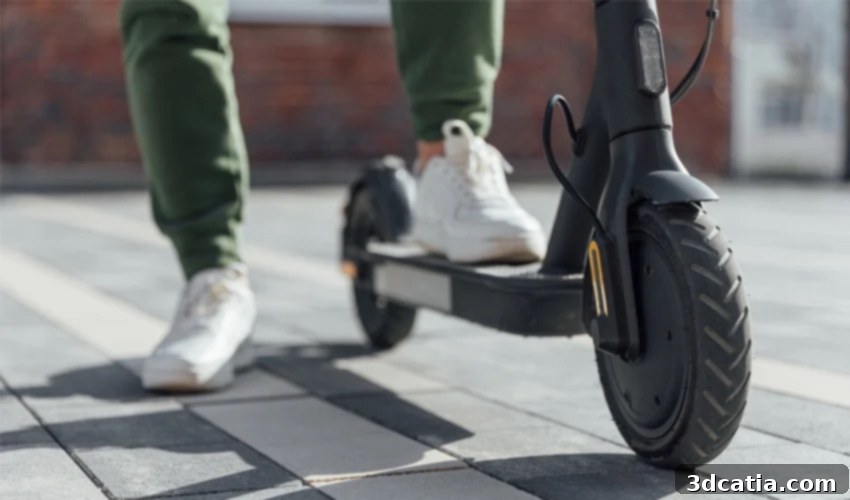
The SOMA project aims to use additive manufacturing to design parts for improved e-mobility (photo credits: SOMA).
The Breakthrough Material: Iron-Silicon for Enhanced Motor Performance
Elkem Silicones embarked on a meticulous material development journey, creating a tailor-made powder specifically engineered to meet the stringent requirements of high-performance electric motors. The primary objective is to thoroughly evaluate the performance metrics of this novel powder by 3D printing various test models and functional prototypes. The company explains that the foundational composition of this advanced powder is based on a synergistic blend of silicon and iron, carefully balanced to harness their individual strengths.
Silicon, a material renowned for its high mechanical properties, acts as a semiconductor and is widely used in alloys with various metals to significantly increase their strength, hardness, and thermal resistance. In the context of soft magnetic materials for electric motors, silicon plays a pivotal role in enhancing electrical resistivity, which directly helps in reducing eddy current losses. Eddy currents are undesirable circulating electrical currents induced within conductive materials by changing magnetic fields, leading to energy dissipation as heat. By minimizing these losses, silicon contributes substantially to the overall efficiency and thermal management of the motor.
Iron, on the other hand, is the quintessential ferromagnetic material, highly reputed for its excellent magnetic properties, as well as being ductile and malleable. It forms the backbone of the magnetic circuit in electric motors. When these two elements – silicon and iron – are combined in a precisely formulated powder, they deliver an array of compelling advantages for electric motor components. Crucially, this unique combination facilitates the rapid and effortless magnetization and demagnetization of the material, a property vital for the dynamic operation of AC motors, where magnetic fields frequently switch polarity. This rapid response directly translates into more efficient power conversion and improved motor control.
Tomi Lindroos from VTT, a key figure in the SOMA project, enthusiastically affirms the progress made: “This is a project with immense potential to transform motor parts manufacturing. We have successfully created a new, specialized powder, primarily based on silicon-steel with carefully selected additives, which exhibits excellent printability characteristics. Early evaluations of 3D-printed components demonstrate significantly enhanced ductility, providing greater resilience, alongside competitive magnetic properties that meet or even exceed traditional materials.” This statement underscores the dual achievement of improved mechanical and magnetic performance, critical for next-generation e-mobility applications.
Real-World Application: Powering Electric Scooters with 3D Printing
The choice of electric scooters as a primary testbed for the iron-silicon 3D printing powder is both strategic and indicative of the material’s immediate potential. Electric scooters, bicycles, and other light electric vehicles are experiencing a boom in popularity, driven by urban congestion, environmental concerns, and the demand for convenient personal transportation. For these applications, every gram of weight reduction and every percentage point of motor efficiency gain can significantly impact range, performance, and user experience. By leveraging additive manufacturing, the project partners aim to create motor components that are lighter, more compact, and more efficient than those produced by conventional methods.
Imagine scooter motors with optimized stator cores featuring complex geometries impossible to achieve through stamping, leading to reduced eddy currents and improved magnetic flux. Or rotor components with enhanced strength-to-weight ratios, contributing to better acceleration and overall durability. The ability to customize and iterate designs rapidly using 3D printing also allows for faster development cycles and tailored solutions for various motor sizes and power requirements. This pilot application will not only validate the material’s performance in a real-world scenario but also provide invaluable data for scaling up production and exploring broader applications.
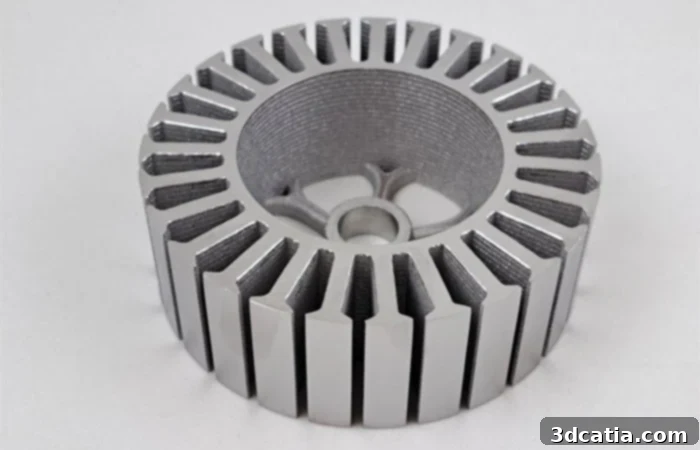
Example of a 3D-printed part made using the newly developed powder (photo credits: Elkem)
Future Prospects and Market Introduction
Looking ahead, the SOMA project is not just about material development but also about commercialization and impact. Jan Ove Odden, Project Manager at Elkem, highlights the next crucial steps: “The innovative iron-silicon powder developed within the SOMA project is now being introduced to the market by Elkem for comprehensive evaluation of the product for future commercial production. We are making this pioneering product currently available in small test volumes to allow potential industry partners and manufacturers to explore its capabilities firsthand.” This strategic phased rollout ensures that the material can be thoroughly assessed across various applications and manufacturing environments before a full-scale commercial launch.
The implications of this breakthrough extend far beyond electric scooters. The successful deployment of this iron-silicon 3D printing powder could pave the way for a new generation of high-performance electric motors across diverse sectors, including electric vehicles (EVs), industrial machinery, robotics, drones, and even aerospace applications. The ability to 3D print complex soft magnetic components with superior mechanical strength and magnetic properties represents a paradigm shift, enabling lighter, more efficient, and more robust electrical systems. This innovation underscores the critical role of advanced materials in accelerating the transition towards a more sustainable and electrified future, demonstrating how collaborative European research and development can address pressing technological needs.
This project exemplifies the power of cross-disciplinary collaboration between material scientists, additive manufacturing experts, and industrial end-users. By tackling the fundamental challenge of creating superior materials for soft magnetic applications, Elkem Silicones and its SOMA partners are not just refining existing manufacturing processes but are actively shaping the future of e-mobility. Discover more detailed information about the SOMA project and its ongoing advancements HERE.
What are your thoughts on this exciting new 3D printing material for the e-mobility sector? We invite you to share your insights in a comment below or join the conversation on our LinkedIn, Facebook, and Twitter pages! Don’t miss out on the latest advancements in additive manufacturing—remember to sign up for our free weekly newsletter here, delivering the most relevant 3D printing news directly to your inbox! Additionally, explore our extensive library of videos and insights on our official YouTube channel.