

Revolutionizing Diabetes Treatment: The Promise of 3D Printed Human Islets for Insulin Independence
Diabetes, a chronic health condition impacting millions globally, presents significant challenges for both individuals and healthcare systems. According to the World Health Organization (WHO), a staggering figure of over 800 million people worldwide are living with diabetes, underscoring its immense global burden. While type 2 diabetes often has preventable roots, linked closely to lifestyle factors such as diet and exercise, the origins of type 1 diabetes remain an area of ongoing scientific investigation. This specific form of diabetes is characterized as an autoimmune disease, meaning the body’s immune system mistakenly attacks and destroys its own insulin-producing cells in the pancreas. Its onset can be sudden and dramatic, leaving the body unable to produce sufficient insulin, thereby losing its critical ability to regulate blood sugar levels effectively.
For those affected by type 1 diabetes, the consequences of uncontrolled blood sugar fluctuations are profound and potentially life-threatening. Patients must meticulously monitor their blood glucose levels multiple times a day and administer insulin injections regularly to counteract dangerously high (hyperglycemia) or low (hypoglycemia) blood sugar. This constant vigilance and daily regimen impose a considerable physical and emotional toll, impacting quality of life and presenting long-term risks of severe complications affecting the heart, kidneys, nerves, and eyes. However, a groundbreaking new scientific approach, leveraging advanced 3D printing technology, offers a beacon of hope: the creation of functional 3D printed islets derived from the body’s own tissues, potentially transforming diabetes management and leading towards insulin independence.
The international scientific community has been tirelessly dedicated to developing a method for producing functional human pancreatic islets through a sophisticated 3D printing process. These efforts culminated in a highly anticipated presentation at the recent ESOT Congress in London, where the research findings were unveiled to great acclaim. Experts present at the congress lauded the innovative approach as nothing short of “a turning point in diabetes care.” Their excitement stems from the fact that these bio-printed islets represent a significantly more effective and remarkably less invasive alternative to conventional islet transplantation procedures, which, despite their efficacy, come with substantial limitations and risks for patients.
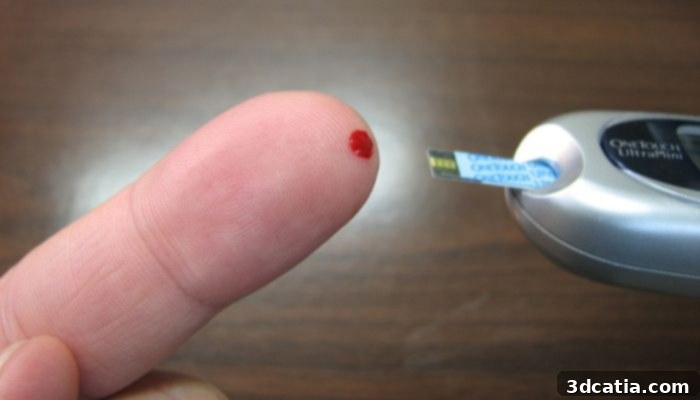
People suffering from diabetes must constantly monitor their blood sugar levels and administer insulin injections themselves. (Image: Pixabay)
The Science Behind 3D Printing of Human Islets for Diabetes Therapy
The innovation at the heart of this research lies in the meticulous fabrication of 3D printed islets, which are crafted from a specially formulated bio-ink. This revolutionary bio-ink is a sophisticated composite, primarily composed of alginate for its excellent biocompatibility and structural support, combined with decellularized human tissue extracted from the pancreas. The inclusion of decellularized human pancreatic tissue is critical; it serves as a natural, patient-specific scaffold that closely mimics the extracellular matrix of the native pancreatic environment. This biomimetic approach is fundamental to creating an ideal setting for cell viability and function once implanted.
Through a carefully controlled 3D bioprinting process, the researchers have successfully engineered a tissue construct characterized by a unique combination of dense and porous structures. This intricate architecture is not accidental; it is meticulously designed to facilitate an optimal exchange of vital oxygen and essential nutrients, which are paramount for ensuring sustained cell health and longevity. Furthermore, this specific structural design significantly promotes vascularization—the formation of new blood vessels—an absolutely essential prerequisite for the proper integration and long-term functionality of the islets following a transplant. Without adequate blood supply and nutrient delivery, transplanted cells quickly fail, highlighting the importance of this architectural precision in the bio-printed construct.
Dr. Quentin Perrier, the lead author of this groundbreaking study, articulated the core ambition of the research, stating, “Our goal was to recreate the natural environment of the pancreas so that transplanted cells would survive and function better.” He elaborated on the unique composition and benefits of their innovative material: “We used a special bioink that mimics the support structure of the pancreas, giving islets the oxygen and nutrients they need to thrive.” Dr. Perrier also provided insights into the painstaking precision required during the printing process to the British Sunday Express: “We slowed down the printing process and reduced pressure so the cells wouldn’t be damaged.” He emphasized the extreme caution exercised, comparing the delicate nature of the process to handling fragile materials: “It was like handling glass – it had to be done gently, precisely and with the right materials.” This meticulous attention to detail during bioprinting is crucial for preserving the delicate cellular structures and ensuring the viability and functional integrity of the printed islets.
The results obtained from extensive laboratory tests have been remarkably promising, providing robust evidence for the potential clinical application of these 3D printed islets. The bio-printed constructs demonstrated exceptional vitality, remaining alive and fully functional for an impressive duration of up to three weeks under controlled conditions. Crucially, their response to glucose stimuli was significantly superior compared to conventional islet preparations, exhibiting a more rapid and accurate detection of glucose changes. Furthermore, the 3D printed cells showcased an enhanced capacity to release a greater quantity of insulin, a vital characteristic for effective blood sugar regulation. Within this three-week period, the cells not only survived but also adapted and significantly improved their intrinsic ability to sense and respond dynamically to varying blood glucose levels, mirroring the sophisticated responsiveness of native pancreatic islets. A compelling statistic from these trials was an outstanding cell survival rate of 90%, which strongly underscores the robust potential for their future application in a clinical context, offering a credible pathway towards novel therapeutic strategies for diabetes.
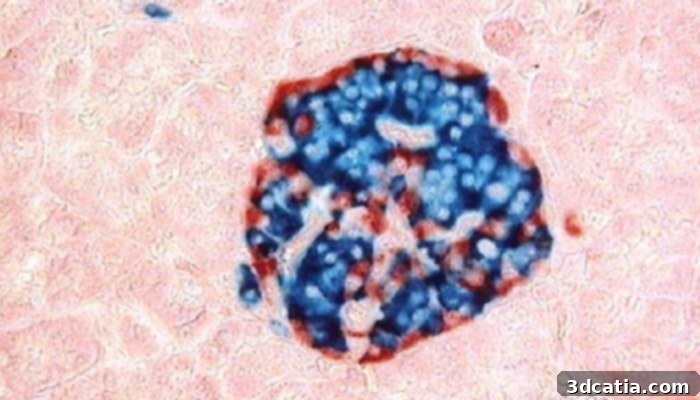
Human pancreatic islet, visualized with double immunostaining: colors: red = glucagon antibodies, blue = insulin antibodies. (Image: Afferent)
Traditional islet transplants, while effective for some patients, are typically performed by implanting cells into the liver. This method, despite its established use, is fraught with considerable limitations, including substantial cell loss during and after implantation, which diminishes the overall efficacy of the procedure. Moreover, patients requiring these transplants are heavily reliant on the availability of suitable organ donors, a perennial challenge given the severe global shortage of donated organs. The complexity and extremely high costs associated with conventional islet transplantation procedures further restrict their accessibility and widespread application. In stark contrast, the advent of 3D printed islets presents a compellingly different scenario. The cells produced by the bioprinter can be implanted via a minimally invasive procedure, typically just beneath the skin. This significantly simpler approach requires only local anesthesia, dramatically reducing the risks associated with major surgery and general anesthesia. Overall, this method substantially lowers the clinical risk profile for patients, offering not only greater safety but also enhanced comfort and a quicker recovery, marking a significant advancement in therapeutic options.
Towards an End to Daily Insulin Injections with 3D Printed Islets?
The paramount factor underpinning the potential success of 3D printed islets as a transformative treatment for diabetes lies in their remarkable ability to precisely mimic the sophisticated biological functions of their natural counterparts. This means that, just like native pancreatic islets, these engineered constructs are designed to dynamically release insulin in response to elevated blood sugar levels and, equally critically, cease insulin production when blood glucose concentrations return to normal or begin to fall. This precise, on-demand insulin regulation is fundamental to preventing both hyperglycemia and hypoglycemia, providing a finely tuned control mechanism that current exogenous insulin therapies struggle to replicate with the same physiological accuracy.
Crucially, the researchers in this study made a deliberate and strategic decision to utilize actual human insulin cells as their biological model, eschewing the use of animal cells, such as those derived from pigs, which have been explored in alternative research approaches. This choice is vital because human-derived cells are less likely to provoke an adverse immune response in human recipients, thereby enhancing the long-term success and reducing the need for aggressive immunosuppressive drugs typically required for allogeneic (non-self) transplants. Dr. Perrier underscored the significance of this methodological choice, remarking, “This is one of the first studies to use real human islets instead of animal cells in bioprinting, and the results are incredibly promising.” He further articulated the ambitious long-term vision of this research, stating, “We’re getting closer to creating an off-the-shelf treatment for diabetes that could one day eliminate the need for insulin injections.” This vision entails developing readily available, personalized treatments that could fundamentally change how diabetes is managed.
While the prospect of 3D printed insulin-producing cells entirely replacing daily insulin injections for all diabetes patients remains a subject of ongoing research and future clinical trials, there is an undeniable consensus within the scientific and medical communities that this innovative approach represents a concrete and profoundly significant step in the right direction. This groundbreaking development not only promises to alleviate the substantial daily burden faced by millions of individuals with type 1 diabetes but also opens new avenues for regenerative medicine and bioengineering. Further detailed information on this remarkable scientific breakthrough can be found HERE, offering a deeper dive into the specifics of the research and its potential impact.
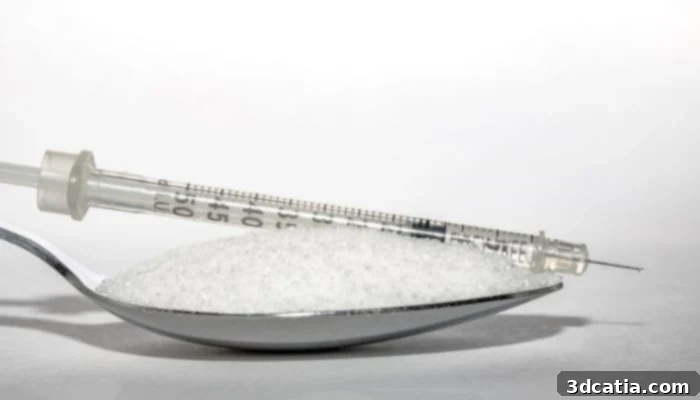
3D-printed islets could herald the end of insulin injections. (Image: Pixabay)
What are your thoughts on the revolutionary potential of 3D printed islets for diabetes treatment? We encourage you to share your insights and opinions in a comment below or join the conversation on our LinkedIn and Facebook pages. Additionally, to stay informed about the very latest advancements in additive manufacturing, be sure to sign up for our complimentary weekly Newsletter, delivering the most pertinent 3D printing news directly to your inbox. For those interested in visual content, all our compelling videos are available on our YouTube channel. If your interests specifically lie in medical and dental 3D printing innovations, we invite you to explore our dedicated page HERE for more specialized news and articles.
*Cover Photo Credit: Getty Images