
Discover the Future: Top 5 3D Printing Innovations Reshaping Our World with Additive Manufacturing
This week, we delve into the incredible world of 3D printing and explore how additive manufacturing is fundamentally changing our society. From groundbreaking humanitarian projects to highly specialized industrial applications, this versatile technology has permeated numerous sectors. Its impact is visible everywhere, from revolutionizing medical fields with custom prosthetics and surgical guides, to driving innovation in the automotive industry with lighter, stronger components. To keep you abreast of the latest advancements, we’ve curated a selection of the top five most impactful and inspiring 3D printing videos of the week. This compilation highlights incredible breakthroughs, including the construction of the world’s first 3D printed community, the creation of personalized eyewear, and innovative solutions for wildlife conservation. We invite you to watch these compelling stories and witness how 3D printing is not just a technology, but a catalyst for change. For even more fascinating insights and demonstrations, don’t forget to visit and subscribe to our YouTube channel. We hope you find these innovations as exciting as we do!
Top 1: Building the World’s First 3D Printed Community in Mexico
The global challenge of homelessness and inadequate housing affects millions, particularly in developing nations. Addressing this critical need, we’ve previously highlighted the ambitious partnership between New Story and ICON. Their shared mission: to leverage additive manufacturing to construct the world’s inaugural 3D printed community, offering a sustainable and scalable solution to housing scarcity. Initially, the precise location of this pioneering endeavor remained undisclosed. We are thrilled to announce that the project is now officially underway in Tabasco, Mexico, bringing hope and stability to an area desperately in need. In this monumental undertaking, New Story and ICON have joined forces with ÉCHALE, a trusted Mexican partner specializing in sustainable housing solutions for vulnerable communities. The homes being constructed are not merely structures; they are symbols of new beginnings, destined for local families currently enduring extreme poverty and residing in unsafe, rudimentary shelters. This initiative goes beyond providing shelter; it aims to create dignified, resilient, and affordable housing that can withstand local environmental conditions, offering long-term stability. Utilizing advanced 3D printing technology for construction dramatically accelerates the building process, significantly reduces labor costs, and minimizes material waste, making it an ideal approach for rapid, large-scale deployment of high-quality homes. This project serves as a powerful testament to 3D printing’s potential in humanitarian efforts, offering a viable blueprint for tackling housing crises worldwide. Discover more about this life-changing community in the video below and witness the dawn of a new era in home construction.
Top 2: Revolutionizing Eyewear with 3D Printed Custom Frames
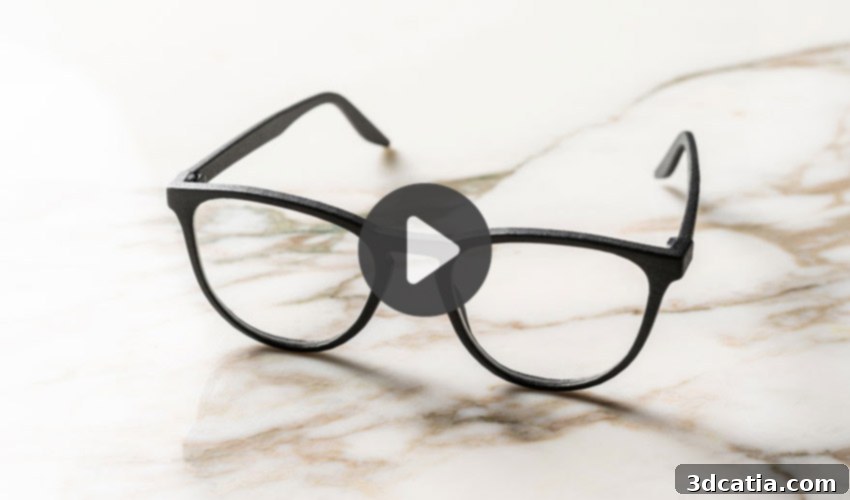
In an age where personalization is highly valued, Fitz Frames emerges as an innovative American company dedicated to creating custom-made glasses, specifically tailored for children, through the power of additive manufacturing. The process is remarkably user-friendly and highly precise. Parents can simply use a smartphone to scan the unique contours of their child’s face. This digital scan then serves as the blueprint, allowing Fitz Frames to 3D print bespoke spectacle frames that perfectly match the child’s facial structure and specific requirements. This approach eliminates the common discomforts associated with ill-fitting standard frames, such as slippage, pressure points, and inadequate visual alignment, ensuring optimal comfort and vision correction. To guarantee the highest quality and maintain complete control over its production pipeline, Fitz Frames has strategically invested in Laser Powder Bed Fusion (LPBF) machines from EOS. These state-of-the-art industrial 3D printers enable the company to manage the entire manufacturing process in-house, from initial design concept to the final polished product. This vertical integration allows for meticulous quality control at every stage, from material selection to the intricate details of the frame’s construction. By leveraging EOS technology, Fitz Frames can not only ensure the durability and aesthetic appeal of its 3D printed glasses but also respond with remarkable agility and efficiency to market demand. This personalized manufacturing model is a game-changer in the eyewear industry, demonstrating how 3D printing can deliver superior, tailored products that genuinely meet individual needs, especially for children who benefit most from comfortable and robust frames. Explore how Fitz Frames is setting new standards in children’s eyewear in the video below.
Top 3: Innovative 3D Printing Solutions for Raptor Rescue Vulture Tracking
Raptor Rescue is an impassioned association dedicated to the vital cause of treating and rehabilitating injured birds of prey, playing a crucial role in conserving these magnificent creatures. Among the many species they protect, vultures face a particularly dire situation. These essential scavengers, vital for ecosystem health by preventing the spread of diseases, are now alarmingly endangered. Their populations have plummeted by an staggering 95% in Africa alone, indicating a global crisis that demands immediate and innovative intervention. To effectively understand and mitigate the dangers threatening vultures, the teams at Raptor Rescue embarked on a mission to track them using sophisticated GPS systems. The primary challenge was to design a tracking device that was not only discreet and robust but also exceptionally lightweight, ensuring it could be carried by the vultures without imposing any significant burden or impacting their natural behavior and flight patterns. Initial attempts using conventional manufacturing methods proved unsuccessful, as they struggled to achieve the necessary combination of minimal weight, durability, and customized fit required for individual birds. This led them to a revolutionary solution: FDM (Fused Deposition Modeling) 3D printing. Leveraging this additive manufacturing technique, the engineers were able to rapidly prototype and produce devices weighing a mere 6 grams. The inherent flexibility and customization capabilities of FDM 3D printing allowed for the creation of perfectly fitted cases that conformed to the vultures’ anatomy, ensuring comfort and secure attachment. This breakthrough enables Raptor Rescue to gather invaluable data on vulture movements, migration routes, foraging areas, and critically, the identification of threat zones such as poisoning sites or areas of human conflict. The detailed insights derived from this tracking data are instrumental in formulating targeted conservation strategies, contributing significantly to the protection and recovery of endangered vulture populations. Learn more about how 3D printing is making a tangible difference in wildlife conservation in the video below.
Top 4: Achieving Unprecedented Color Accuracy with Pantone Validated 3D Printers
In the realm of product design and prototyping, color accuracy is paramount. The ability to precisely define, communicate, and reproduce colors consistently across various mediums and manufacturing processes is critical for designers, engineers, and manufacturers alike. Recognizing this crucial need, Stratasys has achieved a significant milestone with its J835™ and J850™ 3D printers, which have been officially designated as PANTONE Validated. This groundbreaking validation marks the first instance of an additive manufacturing technology offering such a high level of professional design realism and color fidelity. Pantone, globally recognized as the leading authority on professional color standards across a multitude of vertical industries – from fashion and interior design to product development and graphic arts – plays an indispensable role in ensuring that color intent translates accurately into physical reality. The PANTONE Validated status on the Stratasys J-series printers assures designers, modelers, and manufacturers worldwide that they can accurately define, communicate, and consistently reproduce an expansive range of Pantone colors directly in their 3D prints. This capability eliminates the guesswork and numerous iterations often required to achieve desired color outcomes with traditional prototyping methods. By integrating Pantone’s universal color language, these Stratasys printers empower designers to create prototypes that not only boast intricate geometries and multi-material properties but also exhibit true-to-life colors, drastically shortening design cycles and reducing time-to-market. This innovation is transformative for industries where color identity is a core brand asset or critical for product functionality, enabling unparalleled precision and confidence in their additive manufacturing workflows. Witness the power of true color in 3D printing in the video demonstration below.
Top 5: The Future of Footwear: Sustainable 3D Printed Shoes
The footwear industry is continually seeking innovative methods to enhance performance, comfort, and sustainability. A remarkable example of this innovation was prominently displayed at Formnext 2019, one of the world’s leading additive manufacturing trade shows. Visitors to BASF’s stand were undoubtedly captivated by the distinctive sneakers worn by their employees. These eye-catching white and black shoes were not mass-produced through conventional means; instead, they were entirely 3D printed using BASF’s cutting-edge Ultrasint TPU (Thermoplastic Polyurethane) powder. A limited edition of 50 pairs was specially designed and produced for the exhibition, showcasing the immense potential of additive manufacturing in consumer goods. The entire outsole of these sneakers was meticulously optimized, not only for aesthetic appeal but primarily for superior performance in terms of weight reduction and efficient material utilization. This optimization resulted in the striking, open lattice structure that is a hallmark of 3D printing design freedom. This innovative structure is not merely decorative; it provides exceptional functional benefits. It significantly enhances comfort by offering targeted cushioning and support where needed most, improves overall stability for a balanced stride, and contributes to a clean, modern aesthetic that pushes the boundaries of shoe design. By leveraging 3D printing with advanced materials like Ultrasint TPU, manufacturers can create highly complex geometries that are impossible with traditional injection molding, leading to lighter, more resilient, and customizable footwear. This advancement points towards a future where shoes are not just manufactured but engineered for individual performance and preferences, while also promoting more sustainable production practices through reduced material waste and on-demand manufacturing. Step into the future of footwear design and engineering by watching the video below.
We hope you’ve enjoyed this captivating journey through the week’s top 3D printing innovations. From addressing global housing challenges and revolutionizing personalized products to safeguarding endangered species, achieving unparalleled color fidelity, and transforming sustainable footwear, additive manufacturing continues to push the boundaries of what’s possible. We’re eager to hear your thoughts! Drop a comment below to share your favorite innovation or connect with us on our Facebook and Twitter pages. To ensure you never miss out on the latest news, breakthrough applications, and expert insights from the dynamic world of 3D printing, remember to sign up for our free weekly Newsletter. Get all the cutting-edge developments in the 3D industry delivered straight to your inbox and stay ahead of the curve!