
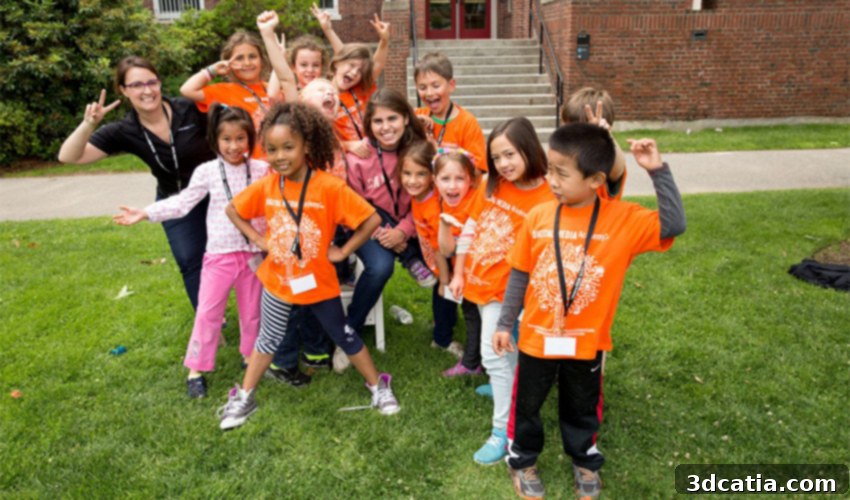
Unleashing Innovation: The Rise and Impact of 3D Printing Summer Camps for Young Minds
Summer holidays have long been synonymous with enriching camps, offering children myriad opportunities to explore interests ranging from sports and arts to sciences and scouting. In recent years, a fascinating and highly beneficial new trend has emerged on the summer camp scene: 3D printing summer camps. These innovative programs are not just a passing fad; they represent a crucial step in preparing the next generation for an increasingly technological world, providing hands-on experience with a transformative technology that is reshaping industries globally.
The journey of 3D printing within educational frameworks has been steadily progressing. We’ve previously explored how universities are integrating additive manufacturing into their core curricula and discussed the broader evolution of 3D printing’s role within our educational systems. However, the impact of this technology needs to begin much earlier. 3D printing summer camps serve as an invaluable entry point, allowing younger learners to engage with 3D printing technology, ignite their curiosity, and develop a foundational interest from an early age. This early exposure is paramount, as it cultivates a comfort level and intuitive understanding that will serve them well in future academic and professional pursuits.

Why 3D Printing Education is Indispensable for Young Innovators
The rationale behind the burgeoning popularity of 3D printing summer camps is remarkably straightforward and compelling. Additive manufacturing, or 3D printing, is not merely an emerging technology; it is rapidly becoming an integral component across a vast range of industrial sectors. From aerospace and automotive to medical, consumer goods, and architectural design, 3D printing is fundamentally altering production processes, design capabilities, and supply chains. It stands as a pivotal future technology, poised to redefine manufacturing and innovation for decades to come. This pervasive influence is inevitably changing the profile of future job seekers, demanding a new set of skills and competencies.
Businesses leveraging 3D printing are experiencing significant benefits, including substantial cost reductions through optimized material usage and rapid prototyping, decreased time to market for new products, and the ability to produce lighter yet stronger parts with complex geometries previously impossible to achieve. Furthermore, 3D printing enhances overall operational efficiency and provides innovative solutions to a multitude of engineering and design challenges. Given this profound impact, it becomes imperative for students to develop a comprehensive understanding of 3D technology—a cornerstone of the 21st-century global economy. The earlier children begin to engage with this technology, the more readily they can develop the essential skill sets required to operate the sophisticated software and machinery involved in 3D printing. These summer camps provide precisely this foundational base, fostering both theoretical knowledge and practical application.
Cultivating Creativity and Problem-Solving Skills
Beyond the direct technical benefits, 3D printing camps offer a unique environment for cultivating critical soft skills. Children are encouraged to think creatively, transform abstract ideas into tangible objects, and iteratively refine their designs. This process inherently teaches problem-solving as they troubleshoot design flaws, understand material limitations, and optimize their prints. It’s an exercise in design thinking, where failure is not an endpoint but a valuable learning opportunity. These skills — creativity, critical thinking, problem-solving, and adaptability — are highly sought after in any professional field and are crucial for personal development.
Engaging Programs: A Deep Dive into 3D Printing Summer Camps
Many organizations and educational institutions are stepping up to offer structured and engaging 3D printing summer camp experiences. These camps are meticulously designed to introduce children to the entire additive manufacturing workflow, from initial concept to final physical product.
Spotlight on Exemplary 3D Printing Programs
Camps such as the Try Engineering Summer Camp, proudly powered by IEEE, are at the forefront of advocating for and teaching 3D printing to young enthusiasts. This particular camp provides a comprehensive curriculum that covers the four major engineering disciplines: electrical, mechanical, civil, and aeronautics. Within this expansive framework, 3D printing is integrated as a core tool, specifically covering aspects of design, engineering principles, the printing process itself, and post-processing. A highlight of the program is the innovative 3D printed car project, where students are challenged to conceptualize, design, revise, and analyze their own miniature 3D printed vehicles. The culmination of this project is an exciting race where students compete against their peers, providing a tangible and thrilling application of their learned skills. This hands-on project fosters not only technical proficiency but also teamwork, competitive spirit, and the satisfaction of seeing their designs come to life. It creates a vibrant, creative environment where students can explore the subject matter, learn new concepts, and evolve their understanding within the realm of engineering and design.
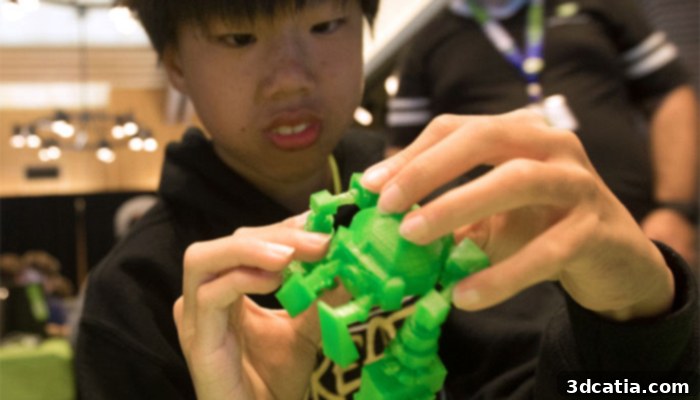
Another prominent example is iD Tech, renowned for its extensive range of technology courses. Their offerings span from CodeMaker and Game Development to advanced Coding and Engineering programs, alongside their highly popular 3D Printing and Modeling programs. iD Tech’s camps cater to various age groups and skill levels, offering courses that progress from beginner fundamentals to advanced applications. These camps are specifically designed to immerse students in hands-on learning experiences, teaching them to utilize 3D printing technology effectively. The curriculum expertly blends imagination with practical production, introducing students to the entirety of the 3D printing process, from initial digital design using CAD software to material selection, slicing, printing, and even basic post-processing. This holistic approach ensures that students gain a thorough understanding of how their creative visions can be translated into physical realities.
Manufacturer Initiatives: Supporting Educational Advancement
The increasing popularity of these tech-focused camps has not gone unnoticed by the 3D printer manufacturing industry. Companies are actively taking steps to support and facilitate the integration of 3D printing into educational environments, recognizing the unique needs of settings like summer camps and classrooms.
A prime example of this collaborative effort is Ultimaker, a leading manufacturer of FDM 3D printers. They have taken proactive measures to develop 3D printers specifically optimized for educational use. The Digital Media Academy (DMA) held its inaugural 3D printing camp in 2015, initially encountering significant challenges with “standard” SLA printers. Issues such as extended printing times, the need for complex post-processing, and the handling of messy resins proved to be ill-suited for a dynamic, multi-student camp environment. Ultimaker responded to these challenges by developing the Ultimaker 2 Go, a more robust, user-friendly, and faster printer. This collaboration allowed Ultimaker to pilot-test their machines in a real-world educational setting and gain invaluable insights into how best to serve science and technology camps aiming to implement 3D printing. Duvoisin, DMA’s Assistant Director, highlighted the dramatic improvement: “3D printing classes are going a lot smoother than the first year with SLA printers where I had to be constantly on the phone with the manufacturers trying to support the teachers using them in class.” This anecdotal evidence underscores the importance of purpose-built educational hardware.
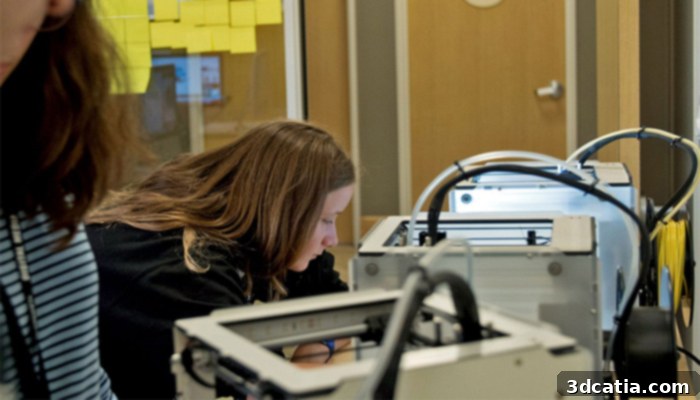
A DMA Stanford student watching her 3D print
Initiatives like these clearly demonstrate a growing awareness from 3D printer manufacturers regarding the need to cater to a new audience. They understand that teachers in a camp or traditional school setting may not be specifically trained in advanced additive manufacturing technology. Consequently, there’s a drive to provide user-friendly, safe, efficient, and reliable technology specifically designed for these unique situations, accompanied by robust support and accessible educational resources.
Beyond Camps: Integrating 3D Printing into Everyday Education
The movement towards early 3D printing education is extending beyond specialized summer camps. More and more opportunities are being developed and implemented directly into the day-to-day teachings within schools globally. This integration allows children to develop their interest and skills in 3D printing not just during holiday breaks, but as a continuous part of their regular academic journey.
Kids are increasingly getting the chance to learn about this amazing technology and its vast possibilities, gaining a very relevant skill set that will be invaluable as they transition from students to the next generation of the workforce. Whether they pursue careers in engineering, product design, aerospace, medical fields, architecture, or even entrepreneurship, a foundational understanding of 3D printing will provide a significant advantage. This early exposure fosters innovation, digital literacy, and a practical approach to problem-solving, preparing them for jobs that may not even exist yet.
The ultimate vision is for 3D printing to become a natural and integrated part of the student learning process, moving from the specialized environment of 3D printing summer camps to being a normal, everyday tool in schools around the world. Companies like Makers Empire have already spearheaded their versions of such setups, offering comprehensive 3D printing learning programs specifically designed for K-8 schools. Their platforms provide user-friendly design software, a vast library of lesson plans aligned with curriculum standards, and professional development for teachers, making it easier for schools to adopt and implement 3D printing effectively into their classrooms. You can explore their innovative approach further here:
Equipping the Next Generation for a Dynamic Future
The advent of 3D printing summer camps and the broader integration of additive manufacturing into education signify a critical shift in how we prepare children for the future. By providing early access to this transformative technology, we are not just teaching them to operate machines; we are nurturing their innate curiosity, fostering their creative potential, and equipping them with essential critical thinking and problem-solving skills. These programs are building blocks for future innovators, designers, engineers, and scientists who will leverage 3D printing to solve complex global challenges, drive economic growth, and push the boundaries of what’s possible.
Ultimately, investing in 3D printing education for young minds is an investment in a more innovative, adaptable, and technologically proficient future generation. It ensures that students are not merely passive consumers of technology but active creators and shapers of their world.
What are your thoughts on the growth of 3D printing summer camps and its general use in school environments? Do you believe it’s an essential skill for the next generation? We’d love to hear your perspective! Let us know in a comment below or connect with us on our Facebook and Twitter pages! And don’t forget to sign up for our free weekly Newsletter to receive all the latest news in 3D printing directly to your inbox!