
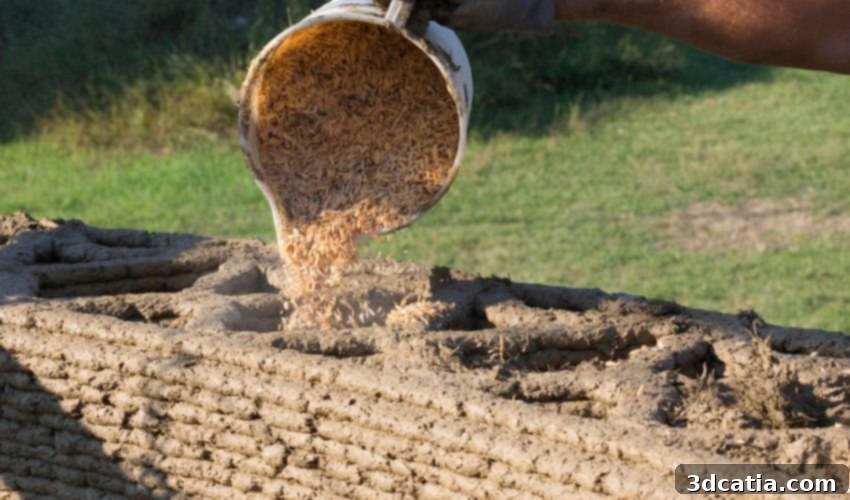
Building a Brighter Future: How UNDP and 3D Printing Address Colombia’s Housing Crisis with Sustainable Solutions
The global housing crisis has become a persistent and pressing issue, echoing across continents and impacting millions of lives. From densely populated urban centers in the United States and the expanding metropolises of India to the well-established nations of the European Union, many countries grapple with a severe housing deficit. This critical shortage means that the available housing stock falls far short of the population’s needs, leading to significant social and economic challenges. Among the regions most acutely affected by this crisis is South America, with Colombia standing out as one of the hardest hit nations. However, a beacon of hope has emerged in the form of innovative technology: 3D printing. The United Nations Development Program (UNDP) is now strategically leveraging this revolutionary construction method to help build essential infrastructure and homes in the country, marking a significant step towards alleviating the crisis.
The scale of Colombia’s housing challenge is staggering. As of 2023, an alarming 3.7 million households – representing more than a quarter of the nation’s total – are classified as facing a household deficit. This dire situation is compounded by the fact that, according to the World Bank, two out of every three of these families also require substantial structural improvements to their existing dwellings, many of which are substandard or unsafe. The severity of the problem has spurred the Colombian government into action, leading to concerted efforts to bridge this gap. A key initiative is the National Development Plan 2023-2026, which prioritizes increasing access to adequate housing, particularly for lower-income households. It is within this urgent context that the UNDP has stepped in, making a pivotal move with the acquisition of a cutting-edge Crane WASP 3D printer. This advanced machine is set to become an instrumental tool in the construction of much-needed buildings and vital services, offering a scalable and sustainable pathway to address the deficit.
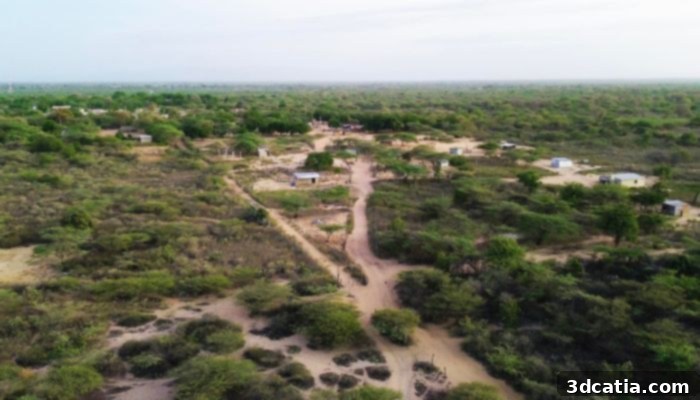
UNDP is turning to 3D printing for construction in Colombia
For those unfamiliar with its mission, the UNDP is a vital agency of the United Nations, dedicated to the global eradication of poverty and the achievement of sustainable economic growth and human development. Operating in 177 countries and territories worldwide, including Colombia, the UNDP’s scope is vast and its impact profound. The decision to integrate 3D printing technology, specifically through the deployment of the Crane WASP, represents a significant strategic milestone for its operations in the region. This move underscores a broader commitment to leveraging innovative solutions for complex development challenges, demonstrating how cutting-edge technology can be harnessed for humanitarian and sustainable objectives. The UNDP’s long-standing experience in community development and its deep understanding of local needs make it uniquely positioned to implement such a transformative project, ensuring that the benefits of 3D printed construction reach those who need it most.
The Crane WASP is not just any construction 3D printer; it stands apart from many other additive manufacturing solutions in the sector. We have previously highlighted the capabilities of the Crane WASP, noting its unique approach to sustainable building. Unlike conventional 3D concrete printers that rely on specialized, often energy-intensive concrete mixes, the Crane WASP is engineered to print directly with readily available local soil and a variety of natural materials, including agricultural waste. This innovative material flexibility is a game-changer, significantly reducing construction costs and minimizing environmental impact by decreasing the need for transporting raw materials over long distances. Given the UNDP’s core mission of promoting sustainable development and its emphasis on environmentally conscious practices, the selection of the Crane WASP to spearhead construction efforts in Colombia is not only understandable but also strategically brilliant. It aligns perfectly with the principles of a circular economy, transforming abundant local resources into viable building components.
Beyond its eco-friendly material usage, the Crane WASP offers a multitude of advantages crucial for addressing the housing crisis in diverse and challenging environments. This large-scale 3D printer, whose design was ingeniously inspired by the agility and efficiency of the Potter Wasp, is renowned for its exceptional versatility and mobility. This design philosophy means that the Crane WASP is not confined to easily accessible, flat terrains; instead, it can be deployed effectively even in remote and demanding landscapes where traditional large, stationary construction machinery would be impossible to operate. Furthermore, its operational efficiency is underscored by its remarkably low energy consumption, a feature that enables its use in areas with limited power infrastructure, such as remote, off-grid locations or even arid desert regions. This characteristic is particularly critical in Colombia, where the most pervasive lack of access to decent housing is observed in rural areas, including dense forests, expansive deserts, and rugged mountainous terrains. The ability to build directly on-site, using local resources and minimal external inputs, transforms the logistical and financial feasibility of delivering durable, safe housing to communities that have historically been overlooked and underserved.
The collaboration between WASP and UNDP represents a convergence of technological innovation and humanitarian commitment. In a recent press release discussing this groundbreaking partnership, WASP articulated that the UNDP’s acquisition of the Crane WASP profoundly “fulfills the very vision that inspired the creation of WASP’s project: to develop technologies that deliver effective benefits to humanity through innovation and research.” This statement highlights the shared ethos driving both organizations – a dedication to progress that directly improves human lives. WASP further emphasized its optimism that the wider dissemination and adoption of these advanced construction 3D printers will be instrumental in overcoming persistent geographic limitations, thereby expanding access to more sustainable, efficient, and resilient construction methods globally. The potential for such technology to democratize construction, making high-quality housing attainable for vulnerable populations, is immense. It moves beyond mere construction to fostering local economic development, training local workforces, and embedding self-sufficiency within communities. The implications extend far beyond Colombia, serving as a powerful demonstration of how additive manufacturing can be a force for good on a global scale.
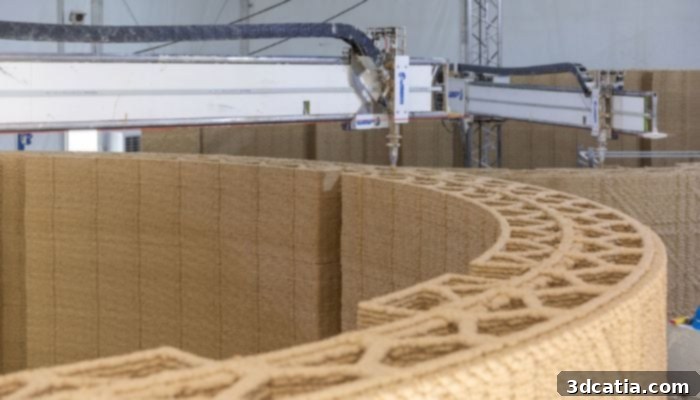
The Crane WASP 3D printer
This pioneering project in Colombia serves as a powerful testament to the escalating popularity and proven efficacy of construction 3D printing. As the world continues to seek innovative solutions to complex global challenges, the strategic adoption of such technologies by major international bodies like the UNDP signals a promising shift in development paradigms. The success of the Crane WASP in Colombia could very well establish a replicable blueprint, leading the UNDP to consider deploying similar 3D printing initiatives in other countries facing comparable housing crises or needing rapid, sustainable infrastructure development. Imagine the potential for rapid disaster relief, resettlement programs, or community-building projects facilitated by these mobile, sustainable printers. The ability to construct durable, earthquake-resistant, and climate-appropriate structures quickly and affordably, using locally sourced materials, offers an unprecedented advantage in humanitarian efforts worldwide. This innovative approach not only provides immediate solutions but also builds long-term capacity within communities, empowering them with the tools and knowledge to shape their own sustainable futures. The future of humanitarian construction is undoubtedly being redefined by the possibilities unlocked through advanced additive manufacturing.
What are your thoughts on the United Nations Development Program’s pioneering use of 3D printing to tackle the housing crisis in Colombia? We’d love to hear your perspective! Share your insights and join the conversation by leaving a comment below or connecting with us on our LinkedIn, Facebook, and Twitter pages! Don’t miss out on the latest advancements and news in the world of additive manufacturing. Sign up for our free weekly newsletter here to receive all the essential 3D printing updates directly in your inbox. You can also explore our extensive library of videos and interviews on our dedicated YouTube channel.
*All Photo Credits: WASP