
Optimizing Cycling Performance: How 3D Printing Revolutionizes Custom Bicycle Saddles
In the dynamic and competitive world of sports, the synergy between advanced technology and athletic performance is constantly evolving. Within cycling, a sport where marginal gains can mean the difference between victory and defeat, 3D printing, or additive manufacturing (AM), has unequivocally proven to be a game-changer. This is particularly evident in critical areas where technological innovation can significantly enhance an athlete’s capabilities and well-being. A prime example is the design and production of bicycle saddles, components that demand intricate optimization for a rider’s comfort, long-term health, and ultimately, their performance. Traditional manufacturing methods often struggle to create truly personalized equipment that caters to the unique physiological and biomechanical requirements of each individual cyclist. This is precisely where the transformative power of additive manufacturing shines. One of the most compelling advantages of AM lies in its unparalleled ability to produce highly customized parts, precisely tailored to the specific morphology and needs of every rider. Recognizing this potential, leading companies such as AMT and BASF 3D Printing Solutions have strategically partnered with innovative bicycle manufacturers to bring these solutions to life. A remarkable instance of this collaboration is the Czech company Posedla, an enterprise dedicated to creating state-of-the-art cycling equipment. Posedla has expertly leveraged the extensive benefits of 3D printing technology, its versatile materials, and sophisticated post-processing techniques to develop revolutionary products that are now being utilized by elite athletes worldwide, pushing the boundaries of cycling performance.
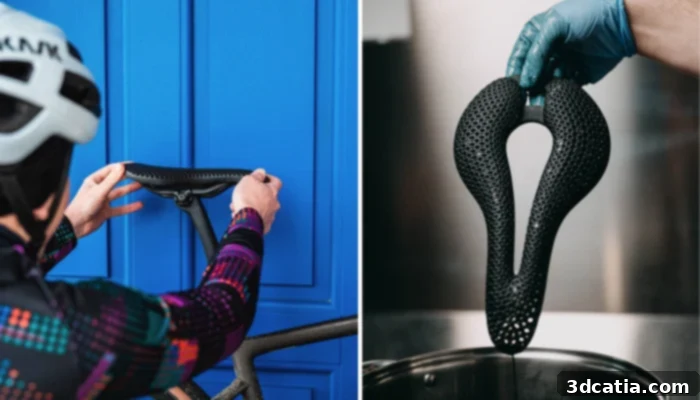
Posedla’s overarching objective was to engineer bicycle saddles that offer unprecedented levels of optimization, moving beyond generic designs to truly personal solutions. To achieve this ambitious goal, the company strategically partnered with renowned experts in additive manufacturing, drawing upon their deep experience and cutting-edge technical expertise. The core principle of their approach is individualization. By meticulously gathering and utilizing the unique characteristics of each rider, Posedla is able to design and produce a fully customized saddle. This bespoke creation is not merely adapted to the rider’s general anatomy but also accounts for crucial factors such as their specific riding posture, flexibility, weight distribution, and even their preferred riding style. The customization journey begins with a comprehensive test kit dispatched directly to the user. This kit is designed to capture vital anatomical information, including the precise width of the rider’s sit bones and a detailed impression of their sitting area. This crucial data forms the foundation for digital design. Subsequently, an advanced three-dimensional model of the personalized saddle is meticulously generated through sophisticated algorithmic modeling software. This innovative process not only ensures an exact fit but also allows for intricate lattice structures and varying material densities that would be impossible with conventional manufacturing. This methodology stands as a powerful testament to the significant advancements in product customization currently sweeping across various industries, clearly demonstrating that the consumer goods sector, especially in high-performance sports, is undergoing a profound and exciting transformation towards hyper-personalization.
Credits: Posedla
Revolutionizing Manufacturing: The Production of Custom Bicycle Saddles
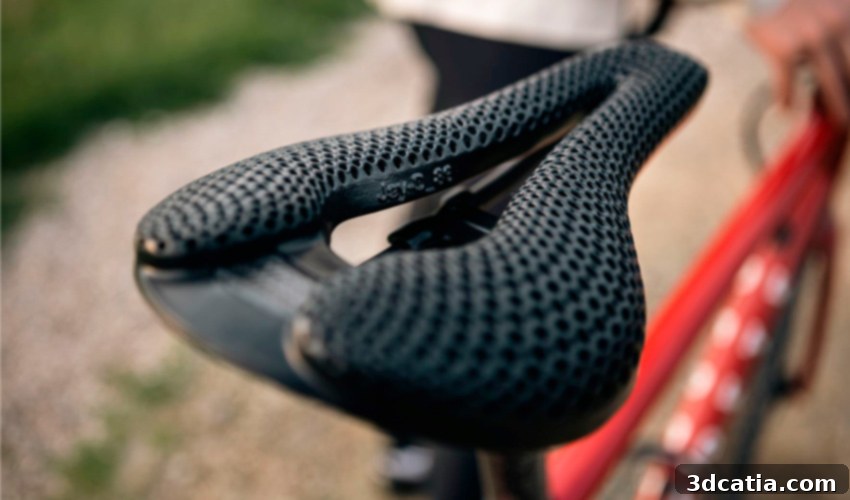
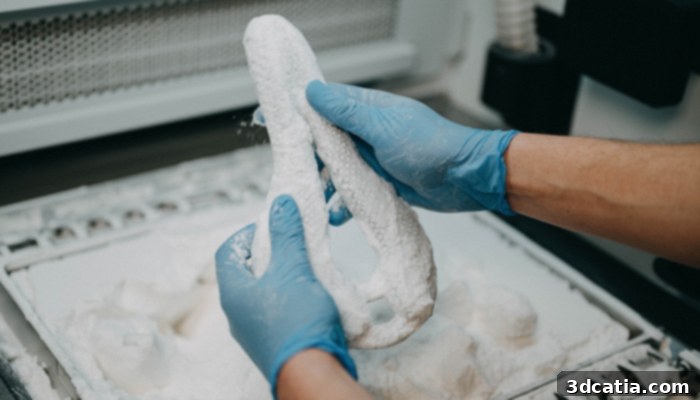
Once the precise 3D model of the custom saddle is digitally perfected, the next critical phase involves bringing this design to life through advanced manufacturing. For the production of their innovative saddles, Posedla made a strategic choice, opting for the proven solutions offered by three industry leaders in the additive manufacturing sector: HP, AMT, and BASF 3D Printing Solutions. For the core printing process, Posedla sought a method that not only offered exceptional precision and detail but also possessed the inherent scalability required for a production environment. This led to the selection of HP’s Multi Jet Fusion (MJF) technology. HP MJF is renowned for its ability to produce functional, high-quality parts at speed, making it an ideal choice for mass customization applications. This powder-bed fusion process involves selectively applying a fusing agent to layers of polymer powder, which are then heated to consolidate the material, creating intricate geometries with excellent mechanical properties. Simultaneously, the choice of material was paramount. Posedla required a flexible polymer that could withstand the rigorous demands of cycling, offering both exceptional durability and superior UV resistance to endure varied outdoor conditions. Addressing these stringent requirements, BASF 3D Printing Solutions, through its esteemed material brand Forward AM, proposed its advanced Ultrasint® TPU01 flexible polymer. This thermoplastic polyurethane (TPU) material is specifically engineered for additive manufacturing, known for its excellent elasticity, impact absorption, and resistance to abrasion. The synergistic combination of HP’s Multi Jet Fusion technology with Forward AM’s high-performance Ultrasint® TPU01 material enables the creation of incredibly sophisticated structures within the saddle. This allows for localized variations in stiffness, a critical factor for rider comfort and performance. Specifically, the design incorporates solid support in the crucial sit bone area, ensuring stability and power transfer. It also features carefully engineered gradients with different parameters, optimizing for forward-backward movement and pressure distribution across the saddle’s length. Crucially, the saddle nose area is designed to be much softer, minimizing pressure points and enhancing comfort during long rides or aggressive riding positions. This level of material control and geometric complexity is a hallmark of what makes 3D printing indispensable for modern sports equipment.
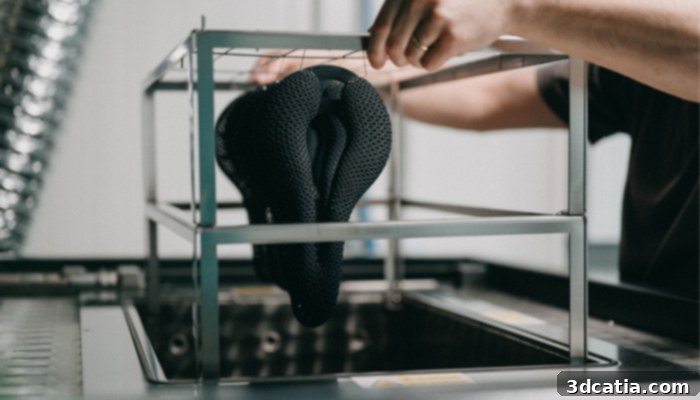
Following the precision printing of the saddles, another fundamental and often critical aspect of additive manufacturing is post-processing to achieve the desired final product quality and performance. For this crucial stage, Posedla turned to AMT, a company widely recognized for its pioneering and advanced post-processing solutions designed to elevate 3D printed parts to industrial-grade standards. AMT’s expertise enables the certification of parts for use in even the most demanding industries, a testament to the reliability and consistency of their processes. In the specific case of the 3D printed saddles for Posedla, AMT PostPro’s cutting-edge Vapor Smoothing technology proved to be the optimal choice. The vapor smoothing method, as its name suggests, involves exposing the printed parts to a controlled chemical vapor that microscopically melts and reflows the surface of the material. This innovative process effectively seals the naturally porous surface inherent to many powder-based 3D printing technologies, significantly reinforcing the mechanical and structural properties of the saddle. Beyond enhancing durability and strength, vapor smoothing imparts a superior aesthetic finish, remarkably similar in texture and smoothness to parts produced via traditional injection molding. This smooth, sealed surface is not just about aesthetics; it also offers practical benefits such as improved hygiene, easier cleaning, and a more comfortable feel against the skin. Crucially, as a direct result of being post-processed with Vapor Smoothing, Forward AM’s Ultrasint® TPU01 material successfully passed rigorous skin contact and irritation tests, ensuring the saddles are safe and comfortable for extended wear directly against a rider’s body. Furthermore, the end-use parts underwent extensive testing for mechanical damage and fatigue, demonstrating their ability to meet, and even exceed, the stringent ISO standards set for bicycle saddles. The successful completion of these comprehensive tests with flying colors signifies that these innovative, custom-designed saddles are now fully validated and ready for high-performance use by cyclists.
AMT’s Vapor Smoothing technology was used for post-treatment of the parts. (Credits: Posedla)
The implementation of 3D printing as a primary production tool offers a multitude of tangible advantages that extend far beyond simple prototyping, fundamentally reshaping manufacturing paradigms. One of the most impactful benefits is its ability to enable true mass customization and agile production, allowing companies to efficiently meet the highly specific needs of individual customers while simultaneously achieving broader production objectives. The Posedla team emphatically highlighted this aspect, stating that without additive manufacturing, “The level of customization we offer in our product would be otherwise impossible to achieve.” This underscores the revolutionary impact of 3D printing in delivering truly personalized products at scale. Beyond customization, the efficiency gains in the manufacturing process itself have been remarkable. Posedla proudly reports a significant reduction in production time, slashing it from an average of 10 weeks down to an impressive 3 weeks, even with the manufacturing plant operating at full capacity. This accelerated turnaround time means riders can receive their custom saddles much faster, enhancing customer satisfaction and market responsiveness. Furthermore, the innovative design capabilities of 3D printing have led to a substantial reduction in the product’s weight. The advanced lattice structures and optimized material distribution allow for a final saddle that now weighs less than 140 grams, a critical factor for competitive cyclists where every gram counts towards performance. This lightweight design, combined with superior customization and rapid production, has profoundly impacted Posedla’s market position. By continuously improving and optimizing its saddles through additive manufacturing, Posedla has transformed into a much more competitive and agile company within the highly specialized bicycle equipment market, setting new benchmarks for innovation and rider experience. These advantages demonstrate how 3D printing is not just a technology, but a strategic asset that drives product excellence, operational efficiency, and market leadership.
The success story of Posedla’s customized 3D printed bicycle saddles will be a prominent highlight at upcoming industry events. Both AMT and Forward AM, key partners in this innovative venture, will be proudly exhibiting this advanced end-use part at their physical booths during Formnext in Frankfurt. This offers an unparalleled opportunity for industry professionals, cycling enthusiasts, and technology innovators to witness firsthand the tangible results of this powerful collaboration. Attendees will be able to explore the intricate design, feel the quality of the materials, and learn more about the advanced manufacturing and post-processing techniques involved. If you are eager to delve deeper into the specifics of this groundbreaking success story, understand the intricate technologies utilized in its development, or explore the broader implications of additive manufacturing for high-performance sports, we encourage you to visit the official AMT website HERE for comprehensive information and insights.
Credits: Posedla
What are your thoughts on the groundbreaking application of Industry 4.0 technologies, particularly additive manufacturing, to create more optimized and personalized bicycle saddles? Do you believe this level of customization is the future for high-performance sports equipment, and what other areas of cycling could benefit from similar innovations? We invite you to share your insights and engage in the conversation by leaving a comment below or by connecting with us on our social media channels, including LinkedIn, Facebook, and Twitter! To stay updated with the very latest news, breakthroughs, and trends in the rapidly evolving world of 3D printing, don’t forget to sign up for our free weekly Newsletter here, delivered straight to your inbox. You can also discover a wealth of educational and insightful content, including interviews, case studies, and technology deep-dives, by visiting our YouTube channel, where all our videos are readily available.
*Cover picture credits: Posedla