
Revolutionizing Industries: Top 5 Groundbreaking 3D Printing Innovations This Week
The world of additive manufacturing continues to evolve at an astonishing pace, consistently pushing the boundaries of innovation across diverse sectors. From transforming healthcare solutions to pioneering advancements in sports equipment and infrastructure, 3D printing is undeniably shaping our modern society. This week, we dive into five remarkable video highlights that showcase the sheer versatility and impact of this transformative technology. Our curated selection explores everything from a strategic collaboration between Carbon and Specialized to the exciting realm of multifunctional soft robots. If you’re eager to stay ahead of the curve with the latest breakthroughs in 3D printing, you’ve come to the right place. These videos offer a captivating glimpse into how additive manufacturing is not just a technology for the future, but a powerful force driving change today. For even more insightful content, make sure to visit our extensive library of 3D printing videos on our Youtube channel. Prepare to be inspired by the ingenuity and potential of this incredible field!
Top 1: Carbon’s Landmark Partnership with Specialized for Advanced Cycling Gear
In a significant move that underscores the growing influence of additive manufacturing in high-performance sports, the renowned American bike manufacturer Specialized has forged an exciting partnership with the leading 3D printing company Carbon. This collaboration has culminated in the creation of a revolutionary 3D printed bike saddle, aptly named the S-Works Power saddle. Utilizing Carbon’s cutting-edge Digital Light Synthesis (DLS) technology, this saddle is engineered not only to deliver unparalleled comfort for riders but also to meticulously optimize performance and stability on the road or trail. The innovative lattice structure, only achievable through advanced 3D printing, allows for precise zoning of stiffness and compliance, adapting perfectly to the rider’s anatomy. Carbon has a well-established history of strategic partnerships, which have been instrumental in its rapid ascent and impressive valuation, notably securing $260 million in funding recently, bringing its valuation close to $2.4 billion. Prior successful ventures with major brands like Adidas for its Futurecraft 4D footwear and Riddell for advanced protective helmets have solidified Carbon’s reputation. Moving beyond trainers and headgear, their expansion into high-end cycling components highlights the boundless potential of additive manufacturing to redefine product design and user experience across diverse markets. Dive into the video below to discover more about this groundbreaking collaboration and its implications for the future of cycling.
Top 2: Empowering Lives with 3D Printed Prosthetic Limbs for Amputees
A inspiring startup based in Nigeria is leveraging the power of 3D printing technology to provide a new lease on life for amputees. This innovative initiative focuses on designing and manufacturing customized prosthetic limbs, offering a beacon of hope and practical assistance to individuals who have lost limbs. A key advantage of additive manufacturing in this context is its ability to produce prosthetic limbs that are perfectly adapted to each patient’s unique morphology and needs. This level of personalization is crucial for comfort, fit, and overall functionality, significantly improving the wearer’s quality of life and facilitating rehabilitation. Furthermore, these advanced prosthetic limbs can be 3D printed in a laboratory setting with remarkable speed and at a fraction of the cost associated with traditional manufacturing methods. This cost-effectiveness makes high-quality prosthetics accessible to a much wider population, particularly in regions where traditional solutions might be prohibitively expensive or scarce. While acknowledging that these prosthetics represent a significant step towards improved mobility and independence, the endeavor serves as a powerful testament to how 3D printing can directly address critical humanitarian challenges. By providing affordable, custom-fit solutions, this startup is not only offering physical support but also helping individuals regain confidence and reintegrate into their communities. Witness this life-changing application of 3D printing in action by watching the video.
Top 3: Pioneering Sustainable Infrastructure with a 3D Printed Concrete Bridge
Years ago, the world watched with keen interest as a visionary project began in the Netherlands: a team of dedicated researchers set out to construct a 3D printed concrete bridge designed specifically for cyclists. This ambitious undertaking was initially driven by a strong desire to minimize environmental impact and explore more sustainable construction methodologies. The bridge’s construction involved precisely laying hundreds of layers of specialized concrete, meticulously building up the structure to form a robust and durable small bridge, capable of safely supporting substantial loads. What makes this project particularly innovative is its modular approach: the bridge was not printed as a single monolithic structure, but rather in several distinct blocks, which were then transported and expertly assembled on-site. This method reduces logistical complexities and allows for greater flexibility in construction. With an anticipated lifespan of between 30 and 50 years, this 3D printed bridge stands as a powerful testament to the longevity and structural integrity achievable with additive manufacturing in civil engineering. It not only provides a functional pathway but also serves as a proof of concept for future sustainable urban development, demonstrating how additive manufacturing can revolutionize infrastructure, reduce waste, and accelerate construction timelines. Witness this engineering marvel and its environmental benefits in the video below.
Top 4: Amexci – A Hub for Additive Manufacturing Innovation in the Nordics
Amexci, a prominent Swedish company, has positioned itself as a pivotal player in the European 3D printing landscape. Specializing exclusively in additive manufacturing, Amexci plays a crucial role in accelerating the adoption and integration of this advanced technology across various industries. Their core mission involves supporting companies through every stage of implementing 3D printing into their business operations, providing essential training and expertise to help them overcome the inherent challenges and fully master the technology’s capabilities. A cornerstone of Amexci’s commitment to innovation is its state-of-the-art innovation centre. This facility is equipped with a diverse array of advanced EOS 3D printers, catering to both metal and polymer applications, demonstrating the broad spectrum of materials and processes Amexci supports. The strategic objective of Amexci extends beyond merely offering services; it aims to proactively develop and expand 3D technologies throughout the Nordic and Baltic countries. By fostering a collaborative environment for research, development, and application, Amexci is instrumental in building a robust ecosystem for additive manufacturing, empowering businesses in the region to unlock new levels of design freedom, production efficiency, and material innovation. Explore their impressive facility and mission in the video.
Top 5: The Dawn of Multifunctional Soft Robots Powered by 3D Printing
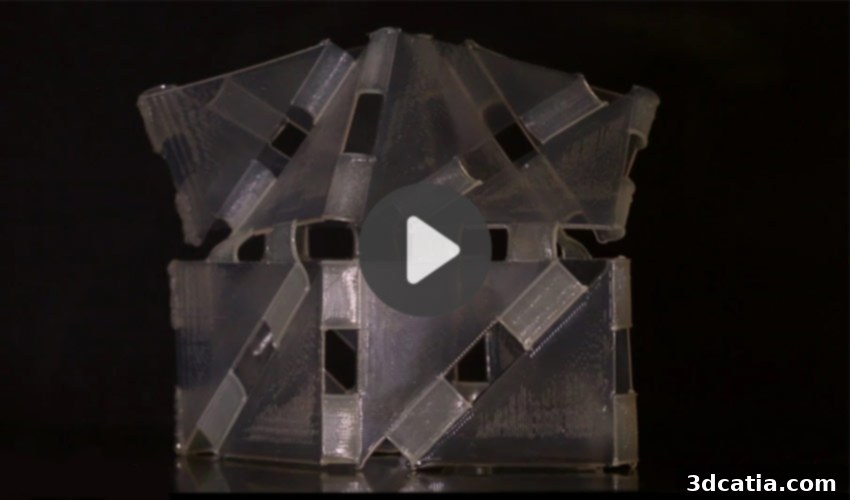
Soft robotics represents an exciting and rapidly expanding subfield within the broader discipline of robotics, dedicated to the creation of robots from highly compliant and flexible materials, drawing inspiration directly from the natural world of living organisms. This field seeks to emulate the remarkable agility, adaptability, and resilience observed in biological systems, allowing robots to interact with their environment in more natural and safer ways than traditional rigid robots. However, a significant limitation for many contemporary soft robots has been their reliance on external power sources and centralized control systems, which inherently restricts their potential applications and autonomy. Breaking through these barriers, researchers from prestigious institutions like Harvard University and the California Institute of Technology have made a monumental stride by developing innovative, origami-inspired soft-robotic systems. Crucially, these systems are fabricated using additive manufacturing, enabling the creation of intricate and precise designs that would be impossible with conventional methods. These groundbreaking 3D printed soft robots possess the extraordinary ability to move, change shape, and perform complex functions by responsively reacting to external stimuli, all without the need for cumbersome external power sources or continuous external control. This self-contained intelligence and adaptability open up a vast array of potential applications, from delicate medical interventions and exploration in challenging environments to new forms of human-robot interaction. Witness the future of robotics in the fascinating video below.
What are your thoughts on this week’s captivating selection of 3D printing innovations? We’d love to hear your insights and predictions for the future of additive manufacturing! Feel free to share your comments below or engage with us directly on our vibrant Facebook and Twitter pages. Your feedback is invaluable as we continue to explore the cutting edge of this transformative technology. And to ensure you never miss out on the latest breakthroughs, exclusive insights, and trending news from the dynamic 3D industry, don’t forget to sign up for our completely free weekly Newsletter. Get all the essential updates delivered straight to your inbox, keeping you fully informed and ahead of the curve!