
Formnext 2023: Unveiling the Most Impressive 3D Printers and Additive Manufacturing Innovations
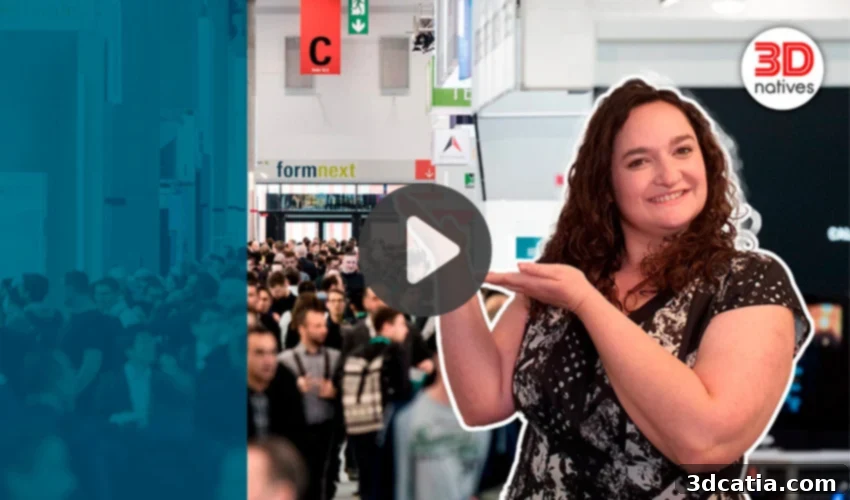
As Formnext 2023 drew to a close, the premier global event for additive manufacturing once again proved to be a pivotal hub for innovation, collaboration, and groundbreaking technology. For those immersed in the world of 3D printing, Formnext is more than just a trade show; it’s a window into the future of manufacturing. This year was no exception, packed with insightful talks, significant product launches, and compelling demonstrations that showcased the rapid evolution of the industry. However, for those who couldn’t navigate the bustling halls of Messe Frankfurt, missing out on these vital developments is a real concern. Fret not, for we at 3Dnatives have meticulously covered the event, bringing you live updates and exclusive insights directly from the show floor. In our latest comprehensive video, embedded below, we embarked on a mission to identify and highlight five of the most impressive 3D printers that captured our attention, each representing a unique leap forward in additive manufacturing technology.
Our journey through Formnext 2023 began at the booth of German innovator, Micro Factory 3D Solutions. Making their debut at this globally recognized event, the company unveiled their namesake product, the Micro Factory 3D printer. This machine stands out as an exceptional MSLA (Masked Stereolithography) solution, distinguished by a truly intriguing and highly efficient feature: full automation. Unlike traditional setups that require manual transfer between machines, the Micro Factory 3D printer is engineered to seamlessly integrate the entire post-processing workflow. It is capable of printing, washing, and curing parts all within the same compact system. This level of integration is revolutionary for scaling up production, dramatically reducing manual labor, improving consistency, and accelerating turnaround times. Its precision and streamlined workflow make it an ideal choice for high-volume applications in diverse sectors such as industrial manufacturing, where intricate components are critical, and dentistry, where custom prosthetics and aligners demand both accuracy and speed. The ability to manage the entire process from start to finish without human intervention is a testament to the industry’s push towards smarter, more automated manufacturing ecosystems.
Continuing our exploration, we encountered one of the most physically imposing 3D printers at the entire show: the MaxiPrinter from Constructions-3D. This colossal, spider-like solution is, as its name and appearance suggest, explicitly designed for the rigorous demands of the construction sector. Its most striking feature is an exceptionally long robotic arm, which grants it an enormous build space, far surpassing the capabilities of conventional construction 3D printers. This expansive reach allows for the fabrication of incredibly large structures, from entire houses to complex architectural elements, on-site with unprecedented speed and efficiency. What truly sets the MaxiPrinter apart is its innovative mobility. Equipped with robust tracks on its underside, the machine can transport itself across diverse terrains, eliminating the need for complex and costly relocation logistics typical of large-scale construction equipment. This self-sufficiency significantly enhances its versatility and potential applications in remote or challenging construction environments. The MaxiPrinter embodies the transformative power of additive manufacturing in revolutionizing how we build, promising faster construction times, reduced material waste, and the ability to create bespoke designs that were once impractical or impossible with traditional methods.
Transitioning from the macro to the micro, our next highlight focused on one of the smallest yet most impactful machines at Formnext: a cutting-edge solution from UpNano. This particular 3D printer truly pushes the boundaries of precision, enabling the creation of parts so tiny they verge on the sub-microscopic. While the original content describes it as allowing for “the tiniest (or even sub-microscopic!) parts,” this points to advanced lithography-based technologies like 2-photon polymerization. Such extreme resolution opens up a vast array of possibilities in highly specialized fields. Applications include the fabrication of intricate micro-optics for advanced sensors and imaging devices, minuscule components for micro-robotics that can perform delicate tasks, precision medical devices like microscopic surgical tools or drug delivery systems, and sophisticated structures for fundamental scientific research. The ability to print features on a scale invisible to the naked eye signifies a monumental leap in manufacturing capabilities, offering unparalleled detail and functional complexity for components that require absolute precision at the smallest scales imaginable. UpNano’s contribution underscores the industry’s capacity to cater to both monumental and microscopic manufacturing demands, continually expanding the scope of what 3D printing can achieve.
Our journey then led us to a binder jetting solution from CONCR3DE, which brought a critical focus back to the increasingly urgent topic of sustainability in manufacturing. In an era where environmental impact is a paramount concern, CONCR3DE’s technology offers a refreshing approach by leveraging biomaterials. Notably, their system can utilize recycled sawdust, transforming what would typically be industrial waste into a valuable raw material for additive manufacturing. Binder jetting, as a technology, inherently offers advantages in material versatility, and CONCR3DE capitalizes on this by demonstrating how it can be employed with eco-friendly alternatives. Beyond sawdust, the potential extends to other recycled or naturally abundant materials, paving the way for a more circular economy in 3D printing. This innovation is not just about using sustainable inputs; it also contributes to reducing the overall carbon footprint of manufacturing processes, fostering a greener industrial landscape. The ability to create functional and aesthetic parts from waste materials highlights a promising future where additive manufacturing actively contributes to environmental preservation, moving beyond simple prototyping to sustainable production of end-use parts, artistic installations, and potentially even elements for green architecture.
Last but certainly not least, our final stop brought us to VLM Solutions, where we explored their innovative Industry 4.0 cells. These sophisticated systems embody the pinnacle of integrated manufacturing, offering a truly all-in-one industrial solution. VLM Solutions’ cells are not just about a single 3D printing technology; they represent a holistic approach by combining Wire Arc Additive Manufacturing (WAAM) with traditional CNC machining and other auxiliary processes. WAAM is particularly adept at producing large-scale metal parts with high deposition rates, making it suitable for heavy industries. The ingenious integration of CNC machining means that parts printed via WAAM can undergo immediate precision finishing within the same cell. This hybrid approach offers significant advantages: it allows for the creation of highly complex geometries typical of additive manufacturing, while simultaneously achieving the tight tolerances and smooth surface finishes characteristic of subtractive manufacturing. This eliminates the need for manual transfer between different machines and facilities, streamlining the production workflow, reducing lead times, and enhancing overall efficiency. VLM Solutions’ Industry 4.0 cells exemplify the future of advanced manufacturing, where intelligent automation and multi-process integration lead to unparalleled flexibility, efficiency, and quality in industrial production, providing a complete solution from raw material to finished, high-precision component.
As Formnext 2023 concludes, the lasting impression is one of an industry not just growing, but evolving at an astonishing pace. The innovations showcased by Micro Factory 3D Solutions, Constructions-3D, UpNano, CONCR3DE, and VLM Solutions collectively paint a vivid picture of the future of additive manufacturing. From hyper-automated MSLA systems for streamlined production to monumental 3D printers for construction, ultra-precision machines for microscopic applications, sustainable solutions utilizing biomaterials, and fully integrated Industry 4.0 cells, the breadth and depth of advancement are truly inspiring. These technologies are not merely incremental improvements; they are transformative shifts that promise to redefine manufacturing capabilities across countless sectors, enabling greater efficiency, sustainability, and creative freedom. We encourage you to delve deeper into these remarkable machines and their capabilities by watching the comprehensive video feature above, where you can see these innovations in action and gain further insights into their potential impact. Formnext 2023 has undeniably set a new benchmark, reinforcing additive manufacturing’s critical role in shaping the industries of tomorrow.
Having explored these incredible breakthroughs, we’re eager to hear your thoughts! Which of these impressive 3D printers or innovations from Formnext 2023 captivated you the most? Share your insights and favorites in a comment below, or engage with our vibrant community on our LinkedIn, Facebook, and Twitter pages! To stay continuously informed about the very latest in additive manufacturing news, don’t forget to sign up for our free weekly Newsletter here, delivering essential updates straight to your inbox. You can also find all our comprehensive video content, including event recaps, interviews, and technology deep-dives, on our YouTube channel. Join us in celebrating the advancements that are rapidly shaping the future of manufacturing!