
Unveiling the Most Influential 3D Models of 2020: A Cults3D Roundup for Every Enthusiast
While 2020 was a year many were eager to move on from, it also served as a crucible for innovation, particularly within the vibrant world of 3D printing. The challenges and changes of the year inspired an incredible surge of creativity, leading designers to push the boundaries of what’s possible with desktop manufacturing. As we reflect, it’s clear that the 3D printing community, fueled by platforms like Cults3D, rose to the occasion, delivering ingenious and original models that captured our imaginations. This period highlighted a significant trend: the ascent of “Print-in-Place” designs. These articulated models are revolutionary because they emerge from the printer fully assembled, with all their intricate moving parts already functional. This eliminates the need for post-print assembly, making complex mechanisms accessible to a wider audience and showcasing the incredible precision of modern 3D printers. Join us as we take a nostalgic look back at some of the most captivating and influential 3D files of 2020, all readily available for download on Cults3D, that continue to inspire makers and enthusiasts alike.
A Print-in-Place Engine for Testing Your 3D Printer Settings
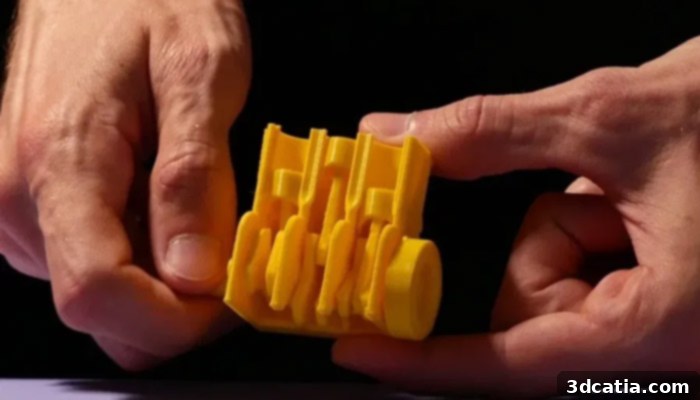
Our journey through 2020’s most influential 3D models fittingly begins with a quintessential print-in-place design: a miniature engine that has become an indispensable tool for 3D printer calibration. You’ve likely encountered this ingenious model before, as it has quickly risen to prominence as an alternative to the traditional Benchy boat for fine-tuning printer settings. While the Benchy serves its purpose for basic assessments, this print-in-place engine offers a far more advanced and comprehensive diagnostic experience. Its intricate design incorporates features that thoroughly test your printer’s capabilities, including tight tolerances, bridging, overhangs, and retraction settings. By turning the integrated crank, you activate a series of rotating gears and linkages, mimicking the mechanics of a real crankshaft. This dynamic movement allows users to visually inspect for any imperfections in layer adhesion, dimensional accuracy, or mechanical function immediately after printing. The entire model is printed in a single pass, without the need for any support structures, making it a true testament to precise design and proper printer configuration. For any enthusiast seeking to master their machine, this engine provides invaluable feedback, ensuring optimal print quality for all future projects.
The file is available HERE
A Full-Sized 3D Printed Kayak
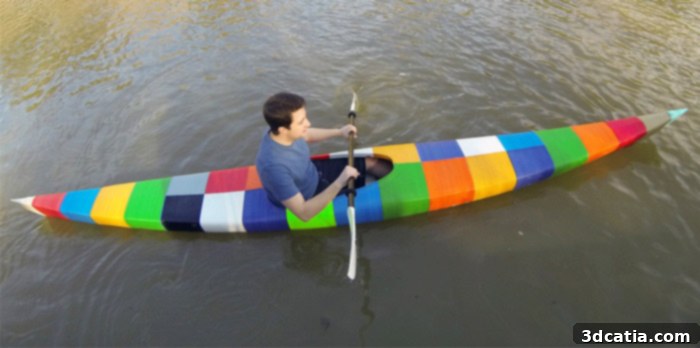
Even if the weather isn’t calling for a paddle, the sheer ambition and engineering marvel of Grass Roots Engineering’s 3D printed kayak demand our attention. This extraordinary creation, measuring an impressive 5.08 meters (approximately 16.7 feet) in length, challenges conventional notions of what can be achieved with a desktop 3D printer. The kayak is composed of 28 individually 3D printed structural pieces, which, once produced, are meticulously assembled to form a fully functional watercraft. The designer specifies that these pieces are securely fastened together using M5 metal screws and brass threaded inserts, ensuring robust structural integrity. Crucially, all seams are then sealed with silicone putty, creating a watertight bond essential for its intended purpose. The most astonishing aspect? It floats! This project transcends mere novelty, demonstrating the potential of additive manufacturing for creating large-scale, functional objects that might otherwise be prohibitively expensive or complex to produce through traditional methods. Beyond its innovative construction, the ability to print each section in a material and color of your choice offers unprecedented customization, allowing enthusiasts to create a personalized kayak that perfectly suits their style and needs. It represents a significant milestone in the journey of practical, large-format 3D printing.
The success of the 3D printed kayak lies not just in its ability to float, but in the meticulous design and choice of joining methods. Using metal screws and brass inserts ensures mechanical strength and resistance to the stresses of water and movement, while silicone putty provides the necessary seal against leaks. This approach highlights a common practice in advanced 3D printing projects: combining printed parts with off-the-shelf hardware to achieve superior functionality and durability. The modular nature of the design also has practical benefits, such as easier transportation and storage, as well as the potential for localized repairs if one section is damaged. This kayak is a testament to the maker community’s ingenuity, proving that with enough dedication and clever design, 3D printing can be used to create truly impressive, real-world solutions.
The 3D file is available HERE.
A Desk Lamp Straight Out of a Video Game
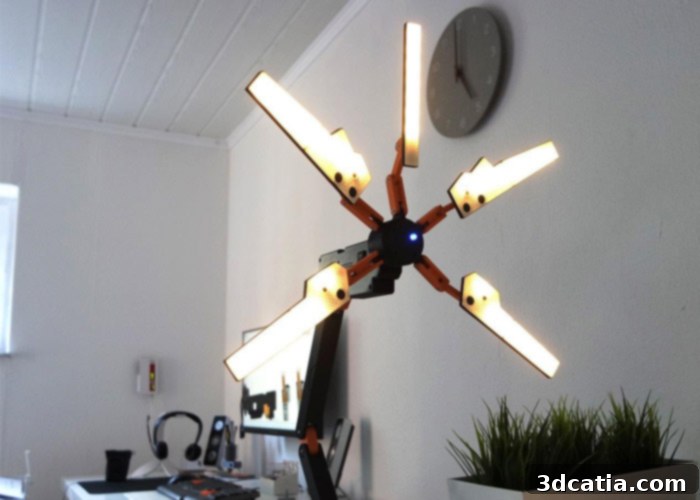
The world of 3D printable lamps is vast and varied, but this particular creation stood out in 2020 for its striking originality and detailed craftsmanship. Drawing inspiration directly from the critically acclaimed video game Death Stranding, the designer meticulously reproduced the iconic Odradek scanner to create a truly unique office lamp. This fusion of functional lighting with immersive fan art demonstrates the incredible potential of 3D printing to bring digital fantasies into the physical realm. However, this project is not for the faint of heart; its complexity demands a significant investment of time and patience. Comprising 37 distinct pieces, the lamp requires approximately 35 hours of printing time, depending on your printer’s speed and settings. Beyond the printing, assembly is a multi-step process that involves integrating various components such as screws, wires, a small switch, and LED lights to achieve the final, fully functional result. The end product is more than just a lamp; it’s a detailed prop that serves both as a practical lighting solution and an impressive piece of memorabilia for fans of the game, showcasing how 3D printing enables enthusiasts to materialize their passions with unparalleled detail.
The file is available HERE
A Versatile Print-in-Place Phone Holder
Smartphone holders have long been a classic and highly practical category within the 3D printing community, offering endless opportunities for customization and functional design. Among the standout models of 2020, this particular phone holder distinguishes itself as yet another superb example of a print-in-place design. Its articulated mechanism and inherent convenience make it an instant favorite for anyone looking to declutter their workspace or simply keep their device secure and visible. The design is elegantly simple yet remarkably effective: you merely place your phone onto the support’s base, and a cleverly articulated arm gracefully closes to hold it firmly in place. This seamless functionality, achieved right off the print bed, is a testament to the precision possible with modern 3D printers and intelligent design. For optimal performance and durability, the designer recommends a maximum layer height of 0.2 mm, ensuring smooth movement of the articulated parts, and an infill density between 15% and 30%, striking a balance between strength and material usage. While standard thermoplastics like PLA will yield a perfectly functional holder, for those seeking enhanced longevity and resistance to wear and tear, using a material such as ABS is often recommended, especially if the holder will be exposed to varying temperatures or frequent handling. Its blend of utility, clever mechanics, and print-in-place magic makes it a must-have for any 3D printing enthusiast.
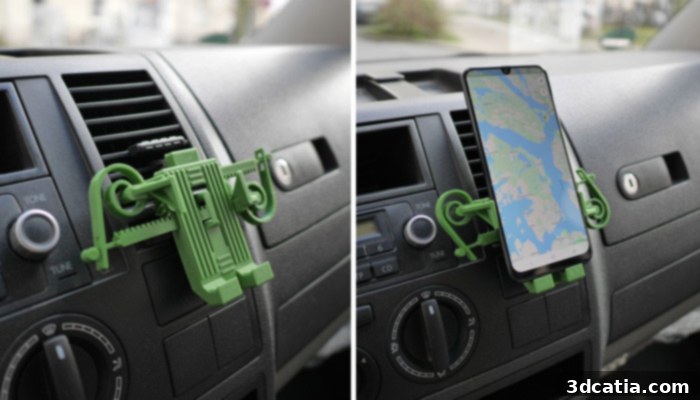
The 3D file is available HERE
Clever Storage for Your Tools: The Ziggurat Pyramid
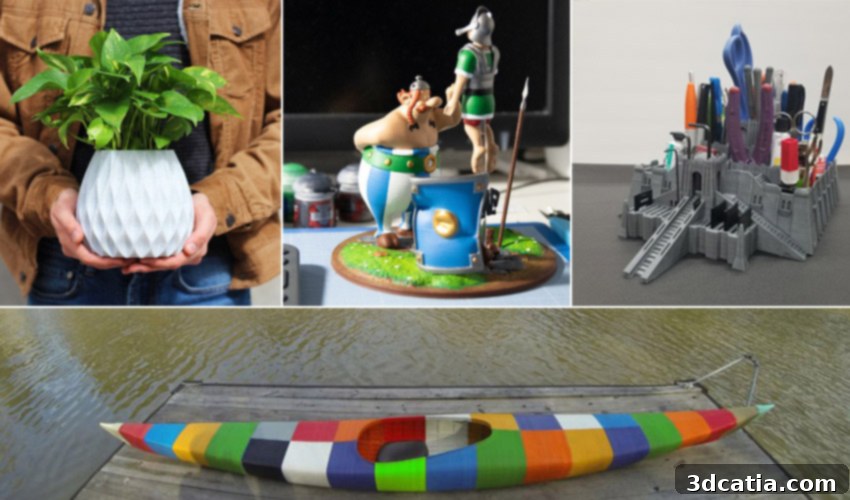
Maintaining an organized workspace is crucial for productivity, especially for makers and hobbyists with a myriad of tools and components. Designer Littletup addressed this universal need with an exceptionally creative and practical storage system that quickly became a favorite in 2020. Eschewing conventional boxes, Littletup envisioned and 3D printed a modular, fortress-like structure that ingeniously combines aesthetic appeal with unparalleled functionality. This innovative system is fitted with multiple boxes and compartments designed to store a diverse array of objects, both within and around its unique pyramid-like form. For instance, where one might expect a traditional moat, there are cleverly integrated inserts specifically designed to house cards, small circuit boards, or other thin items, maximizing every inch of space. A significant advantage of this design is its adaptability: the designer thoughtfully notes that the entire piece can be split into two separate parts if your printer’s build plate is too small to accommodate the full structure (each part conveniently fits on a surface of 210 x 210 mm). This modularity ensures that even those with more compact desktop 3D printers can benefit from this sophisticated organization solution. With such a well-designed and customizable storage system, there are truly no more excuses for a cluttered workbench or misplaced equipment. It’s a prime example of how 3D printing empowers individuals to craft bespoke solutions for everyday challenges, combining form and function in a highly personalized way.
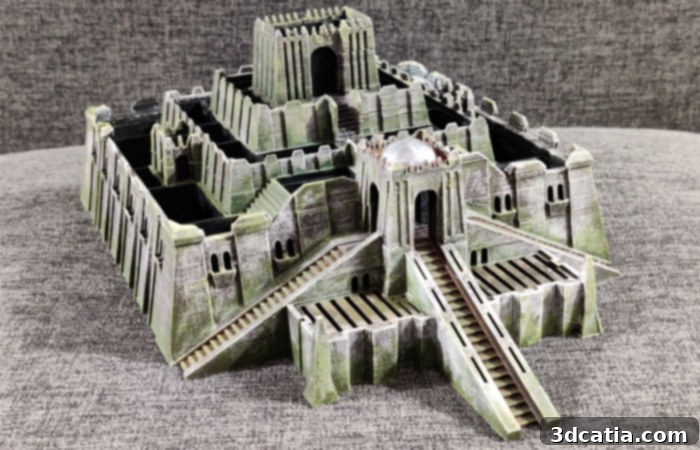
The file is available HERE
Decorate Your Home with a Unique 3D Printed Vase
Just like 3D printed lamps, the realm of STL files for vases is incredibly diverse, offering an endless array of styles and forms for home decor enthusiasts. However, one particular creation from a talented Mexican designer truly captivated us in 2020 with its innovative approach to visual depth and texture. This exquisite vase design masterfully plays on light and shadow, featuring numerous recesses and undulations that give it a distinctively wavy, almost fluid appearance. The intricate surface texture isn’t just for aesthetics; it interacts beautifully with ambient light, creating dynamic visual effects that shift with the viewer’s perspective. A practical feature of this design is its adjustable height, allowing makers to scale the vase to perfectly suit their intended display space or the volume capacity of their printer’s build plate. This flexibility ensures that the design is accessible and adaptable to various needs. The designer revealed that the object was modeled using Rhinoceros software, a powerful tool renowned for its ability to create complex, freeform surfaces, which explains the vase’s organic and sophisticated contours. For printing, PLA (Polylactic Acid) filament was chosen, a popular material known for its ease of use, wide range of available colors, and excellent surface finish, making it ideal for decorative items. The resulting piece is not just a container for flowers but a work of art in itself, showcasing how additive manufacturing can produce stunning decorative elements that enhance any living space, offering a unique blend of modern design and customizable functionality.
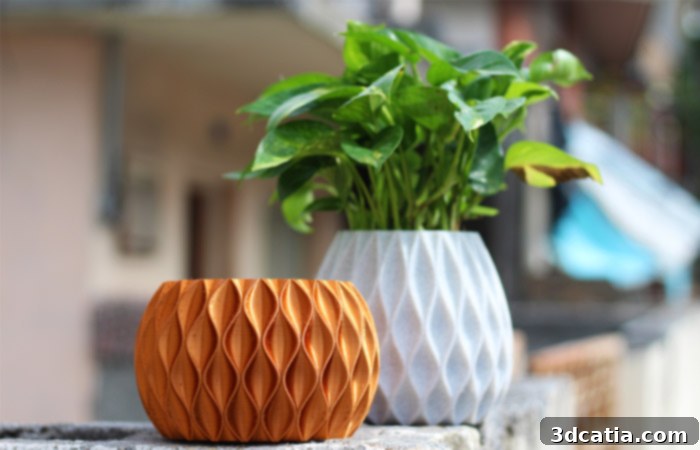
The 3D file is available HERE
An Ingenious Quick-Change Mechanism for Toilet Paper
Who hasn’t experienced the minor frustration of reaching for a fresh roll of toilet paper only to find an empty cardboard tube on the holder? This common household inconvenience sparked the brilliant mind of designer Pattyslab, who devised an incredibly clever and practical mechanism to “reload” your toilet paper with a single, effortless gesture. This ingenious system, a testament to practical problem-solving through 3D printing, consists of several components: a main support designed to attach securely to the wall, two robust 3D printed screws for installation, and a specialized piece that acts as a blocker to hold the paper roll in place. The design also includes an optional locking system for added security. The beauty of this system lies in its simplicity and efficiency: once a roll is finished, you merely push it upwards with a new roll, and the empty core is released, allowing the fresh roll to smoothly settle into the holder. This eliminates fiddly springs or cumbersome spindle replacements, streamlining a mundane but essential task. What’s more, this versatile design isn’t limited to toilet paper; it also works seamlessly with paper towel rolls, making it a valuable addition to kitchens and workshops alike. The designer has gone above and beyond, providing comprehensive tips on optimal printing settings, material choices, and detailed installation instructions, ensuring that even novice makers can successfully implement this upgrade. Don’t wait any longer to bring this touch of 3D printed convenience to your home!
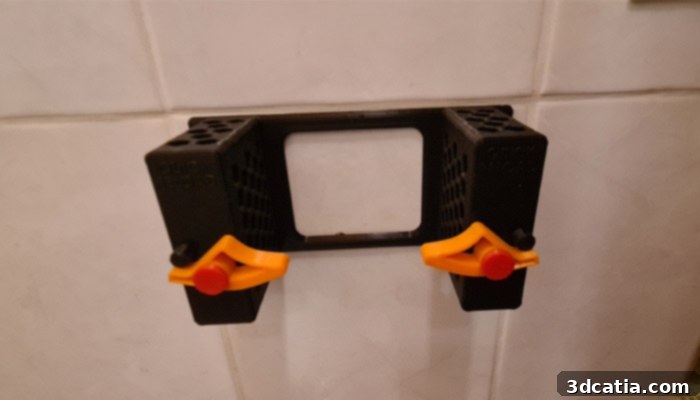
The file is available HERE
A Clever Print-in-Place Hinged Box
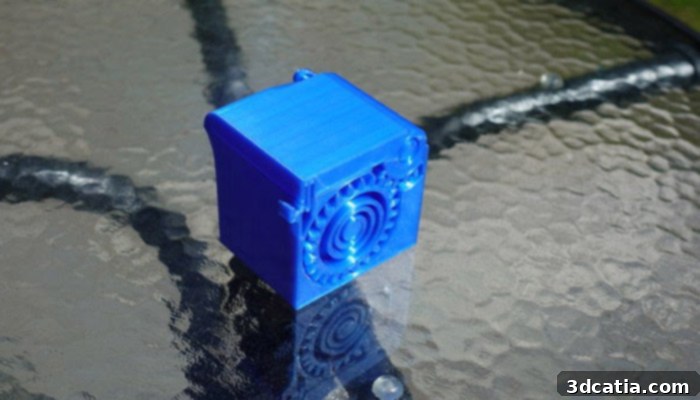
As highlighted throughout our retrospective, the “Print-in-Place” phenomenon was undeniably one of the most defining and influential trends in the 3D printing market in 2020. This particular 3D model, an ingenious hinged box, serves as yet another compelling illustration of its power and elegance. The remarkable feature of this small box is its ability to be printed entirely in a single run, without requiring any support structures whatsoever, and emerging from the print bed as a fully functional, articulated object. Its magic truly comes alive when you discover its opening mechanism: by pressing a subtle lever, the lid gracefully springs open. This seamless motion is achieved through a cleverly integrated gear system, demonstrating a high level of design sophistication. It requires only a minimal amount of pressure to activate the top, making it both incredibly simple to operate and brilliantly ingenious in its execution. The satisfaction of peeling this print-in-place design off the build plate and immediately having a working, self-contained mechanism is unparalleled. The designer provides helpful recommendations for optimal printing, noting that a layer height of at least 0.2 mm is advisable to ensure smooth articulation of the gears and hinges. Furthermore, they suggest that printing the piece on its side can potentially accelerate the print process and may even enhance the mechanical strength of the hinges. This hinged box is not just a container; it’s a miniature engineering marvel that showcases the boundless possibilities of print-in-place technology for creating intricate, functional objects with unparalleled ease.
The file is available HERE
For Fans of Asterix and Obelix: An Iconic Diorama
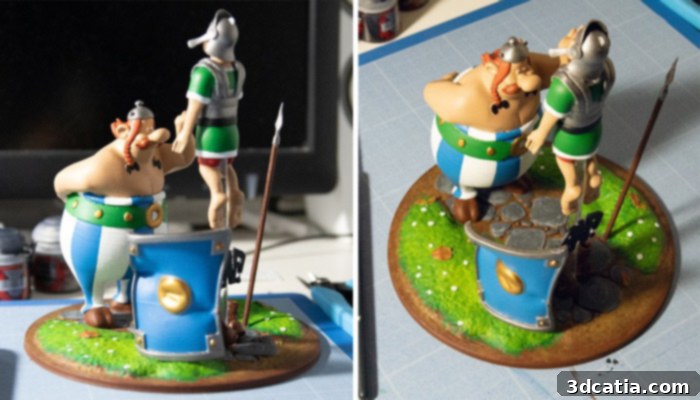
Few comic book characters enjoy the international acclaim and enduring legacy of Asterix and Obelix, the beloved Gaulish heroes created by the legendary French authors René Goscinny and Albert Uderzo. Their timeless adventures have captivated generations, making them prime subjects for fan art and collectible creations in the 3D printing world. Among the standout designs of 2020, this particular 3D model, depicting the iconic Obelix in the act of delivering a classic slap to a hapless Roman legionary, instantly captured the hearts of fans. This dynamic diorama perfectly encapsulates the playful yet powerful essence of the comics. While the end result is truly stunning and a fantastic display piece, makers should arm themselves with a good dose of patience, as this is a multi-part project designed for meticulous assembly and finishing. Each component must be printed separately, a common practice for intricate figurines, allowing for optimal print quality and detail for individual parts. Once printed, these pieces are then carefully glued together to form the complete scene. The designer notes that the head of the Roman legionnaire might be the most challenging part of the assembly, requiring a specific sequence: first, you must delicately cut the straps of his uniform, then position his head, and finally, re-glue the straps to secure it. To truly bring this iconic moment to life and achieve the highest level of realism, enthusiasts are strongly advised to paint their 3D figurine, adding vibrant colors and intricate details that mirror the original comic art. This model is a fantastic example of how 3D printing allows fans to interact with their favorite characters in a tangible way, creating bespoke collectibles that celebrate their passion.
The file is available HERE
A Magnetic and Articulated 3D Printed Pen Holder
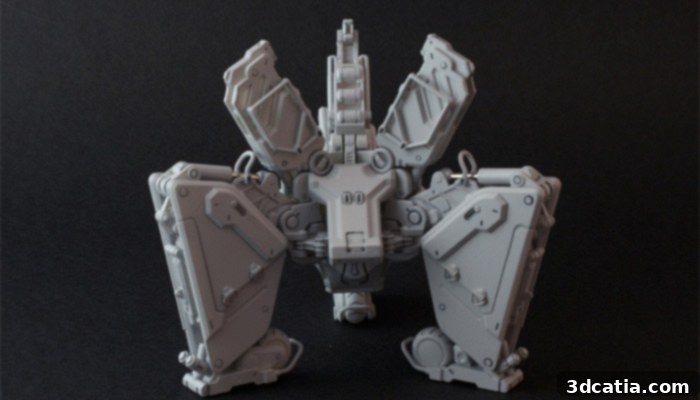
Our review of 2020’s most influential 3D models concludes with a highly functional and aesthetically pleasing gadget perfect for any office or workspace: a meticulously designed 3D printed pen holder. This particular design stands out for its clever use of magnets, which contribute to both its innovative assembly and its dynamic functionality. The holder features articulated arms that elegantly close around a pen or stylus, securing it firmly in place once it has been deposited. This gripping action isn’t just a simple friction fit; it’s a testament to ingenious mechanical design integrated with magnetic forces. The designer thoughtfully explains that “The body is kept together by magnets to make it easier to assemble; also the gripping arms spring open thanks to the repulsing force of magnets.” This means that magnets serve a dual purpose: they simplify the construction process by allowing parts to snap together cleanly, and they provide the ingenious “spring” action that keeps the arms open until a pen is inserted, then gently closes them. While this specific pen holder was initially designed and showcased on an SLA (Stereolithography) machine, renowned for its incredible precision and smooth surface finishes, the designer’s recommendations make it achievable on FDM (Fused Deposition Modeling) 3D printers as well. With the continued rise of telework and home offices, having a personalized, functional, and aesthetically pleasing pen holder like this has become more relevant than ever. It’s a prime example of how 3D printing empowers individuals to create customized organizational tools that enhance productivity and bring a touch of sophisticated design to their personal workspaces.
The files are available HERE
The year 2020, despite its unprecedented challenges, proved to be a remarkable period of growth and innovation within the 3D printing community. The selection of models highlighted above—from practical tools and ingenious household solutions to ambitious functional prototypes and intricate fan art—demonstrates the sheer breadth of creativity and technical skill prevalent among designers. The pervasive influence of “Print-in-Place” technology was a defining characteristic, showcasing a collective drive towards efficiency, simplicity, and complex mechanical integration directly from the print bed. Platforms like Cults3D played an instrumental role in fostering this innovation, providing a vital space for designers to share their ingenious creations and for enthusiasts to discover, download, and bring these digital models to life. These designs not only offered practical solutions and delightful decorations but also pushed the boundaries of what consumers and makers expected from desktop additive manufacturing. They inspired new ways of thinking about design, functionality, and the very process of creation. As we look back, it’s clear that these influential 3D models from 2020 have left an indelible mark, continuing to inspire the next generation of designers and makers to explore the endless possibilities of 3D printing. Which 3D files do you think made the biggest impact in 2020? We invite you to share your thoughts and discoveries in a comment below or connect with us on our Facebook and Twitter pages! Don’t miss out on the latest advancements and trends in the world of additive manufacturing; sign up for our free weekly Newsletter here and get the freshest 3D printing news delivered straight to your inbox!