

Revolutionizing Additive Manufacturing: A Comprehensive Guide to Leading Silicone 3D Printers
Silicone, a versatile elastomer celebrated for its unique properties, is rapidly gaining prominence in the world of additive manufacturing. Its exceptional attributes, including high thermal and chemical resistance, inherent biocompatibility, and excellent flame retardancy, make it an ideal material for a vast array of demanding applications across numerous industries. Traditionally, silicone parts are produced using conventional methods like injection molding, which often involve significant tooling costs, lengthy lead times, and design limitations. However, 3D printing silicone has historically presented considerable challenges due to its distinctive characteristics, such as high viscosity and the need for precise temperature control and a dedicated curing process for its liquid form.
Despite these hurdles, the landscape of silicone 3D printing is evolving at an unprecedented pace. Continuous research and development efforts have led to the emergence of innovative technologies and specialized 3D printers capable of handling these complex materials. Today, several sophisticated processes enable the creation of intricate silicone parts, ranging from advanced material deposition techniques to photopolymerization and even methods that mimic the precision of injection molding. These advancements are not only overcoming previous limitations but also unlocking entirely new possibilities for product design, customization, and rapid prototyping. From medical devices and personalized prosthetics to industrial components and consumer goods, silicone additive manufacturing is poised to transform various sectors.
To provide a clearer understanding of this dynamic field, we have taken an in-depth look at some of the leading silicone 3D printers and innovative technologies currently available on the market. These solutions offer diverse approaches to silicone additive manufacturing, catering to different industrial and medical needs, and showcasing the remarkable progress made in this exciting domain. Discover the cutting-edge systems that are driving the future of flexible and functional part production with silicone.
The Silimac P250 Silicone 3D Printer from Prayasta: Precision for 3D Printed Prostheses
Prayasta, an innovative Indian startup, is at the forefront of developing next-generation soft tissue implant prostheses, particularly for breast cancer treatment. Their ambitious goal is to engineer rupture-resistant and fully personalized implants that precisely match a patient’s unique shape, size, weight, and even the tactile sensation. Silicone, with its unparalleled biocompatibility and material properties, is central to their groundbreaking development. To achieve this, Prayasta has pioneered its proprietary technology, known as Implant-grade Elastomer Additive Manufacturing (iEAM), specifically optimized for the precise 3D printing of medical-grade silicone.
Building on their expertise, Prayasta also offers their advanced solution to the market: the Silimac P250. Positioned by the startup as the future of ‘implant-grade’ elastomers in 3D printing, the Silimac P250 utilizes Prayasta’s novel iEAM method, which combines syringe extrusion with real-time curing for highly effective silicone printing. This specialized approach ensures consistent material deposition and immediate solidification, critical for creating complex, anatomically accurate prostheses. The printer boasts an impressive material capacity, holding up to 14,000 ml in a single refill, making it exceptionally well-suited for both research and production environments. Furthermore, its built-in UV sterilization for the print chamber underscores its suitability for sensitive medical applications where sterility is paramount. The Silimac P250 delivers high precision and speed, featuring a generous build platform volume of 250 x 250 x 250 mm and a fine print resolution of 50 microns, enabling the creation of intricate and functional implantable devices.
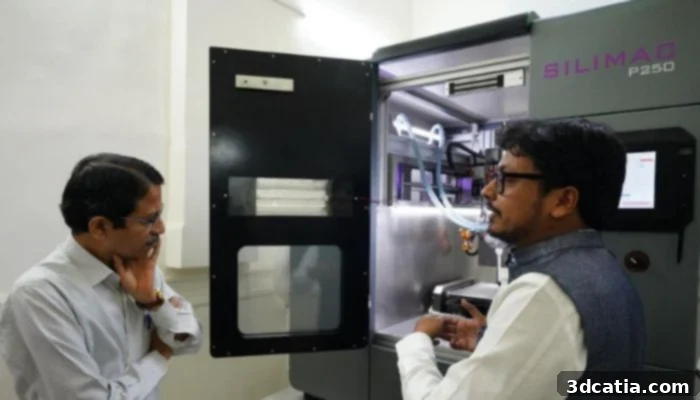
Photo Credits: Prayasta
SAM (Silicone Additive Manufacturing) from Spectroplast: Industrial-Grade Silicone Production
Spectroplast, a dynamic 3D printing company based in Zurich, Switzerland, has established itself as a key provider of cutting-edge solutions in the realm of silicone additive manufacturing. Their flagship product, the SAM printer, is specifically designed to cater to the demanding requirements of both industrial and healthcare markets, offering unparalleled capabilities for silicone part production. SAM, an acronym for Silicone Additive Manufacturing, is a specialized silicone 3D printer that leverages the power of Digital Light Processing (DLP) technology, an advanced form of vat photopolymerization.
The SAM printer is engineered with efficiency and precision in mind, featuring compact dimensions of 430x510x820 mm and a usable print volume of 75x134x100 mm. Its patented technology represents a significant leap forward, allowing for the direct manufacturing of pure silicone components without the need for traditional molds. This eliminates expensive tooling, accelerates production cycles, and provides unprecedented design freedom, making it an ideal complementary technology to conventional injection molding for both industrial and medical end-use products. Spectroplast’s SAM system is lauded for its speed, environmental friendliness, and cost-effectiveness, delivering high-quality silicone prints with intricate details and superior material properties. From custom seals and gaskets to patient-specific medical models and devices, SAM empowers industries to innovate and produce complex silicone parts with exceptional fidelity and material performance.
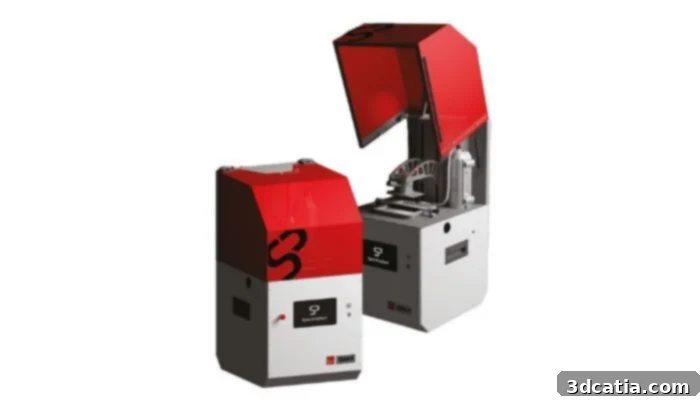
Photo Credits: Spectroplast
The S300X Industrial and Medical IDEX Silicone 3D Printer from Lynxter: Robust and Versatile
Lynxter, a distinguished French manufacturer of advanced 3D printing solutions, has engineered the S300X with a clear vision: to deliver a 3D printer that is not only highly accurate, efficient, and robust, but also remarkably compact. This industrial-grade machine stands out for its capability to print with challenging materials, including polyurethane and, critically, various types of silicone. The S300X is purpose-built for demanding sectors such as the medical field, where it excels in the production of high-quality prostheses and orthoses, offering customized solutions that significantly improve patient outcomes.
At the heart of the S300X’s versatility is its innovative Independent Dual Extrusion (IDEX) technology. This sophisticated system allows the 3D printer to operate with two independent extrusion heads, enabling multi-material printing or the production of two identical parts simultaneously, thereby enhancing productivity. The S300X offers a substantial print volume of 300 x 250 x 200 mm, while the machine itself maintains a footprint of 1000 x 629 x 887 mm. Complementing its robust design are several advanced features designed to optimize the printing process. These include a heated print plate capable of reaching 160°C and an enclosed build chamber that can maintain temperatures up to 40°C, crucial for ensuring consistent material properties and preventing warping with sensitive materials like silicone. The printer also features a standalone touch screen with an intuitive web interface for seamless operation and monitoring. With impressive printing speeds of up to 800 mm/s and exceptional resolution (12.5 microns on the X-Y axis and 1 micron on the Z axis at 50 mm/s), the Lynxter S300X provides a high-performance solution for manufacturing complex and functional silicone components across diverse industrial and medical applications.
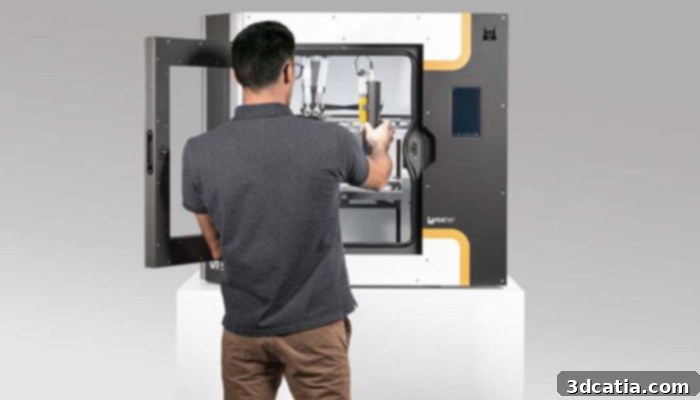
Photo Credits: Lynxter
The LiQ 320 Silicone 3D Printer from innovatiQ: Streamlined Liquid Additive Manufacturing
The LiQ 320 3D printer from innovatiQ represents a significant advancement in the additive manufacturing of silicone, simplifying the use of liquid silicone for creating highly detailed prototypes and functional final parts. Utilizing Liquid Additive Manufacturing (LAM) technology, this system offers a seamless and efficient process for handling fluidic materials. With a generous print area of 250 x 320 x 150 mm, the LiQ 320 provides ample space for producing a wide range of components, from small, intricate designs to larger, more complex geometries. Its impressive print speed, ranging from 10 to 150 mm/s, ensures rapid turnaround times without compromising precision.
Weighing approximately 390 kg, the robust construction of the LiQ 320 underscores its industrial capabilities. A key highlight of this system is its compatibility with specialized materials like SILASTIC™ 3D 3335 Liquid Silicone Rubber (LSR), a high-performance material renowned for its excellent properties. The innovatiQ platform allows for extensive customization of material characteristics, empowering users to precisely tailor their products to be soft, flexible, or hard, depending on the specific application requirements. The printing process incorporates an integrated high-temperature halogen lamp, which plays a crucial role in rapidly curing the silicone material. This efficient curing mechanism significantly reduces overall production time and, crucially, eliminates the need for extensive post-processing steps. Thanks to integrated material cross-linking, manufactured parts are immediately usable upon completion, greatly streamlining the workflow and enhancing productivity for applications ranging from medical devices to consumer electronics and industrial sealing solutions.
The Delta Tower Fluid MT 3D Printer: Multi-Material and Viscosity Versatility
The Delta Tower Fluid MT is an innovative 3D printer developed by the Swiss manufacturer Deltatower, renowned for its precision engineering. This machine stands out as a delta kinematic FDM (Fused Deposition Modeling) system, characterized by its unique circular printing tray, which offers a maximum working area of 420 mm x 400 mm. Beyond its distinctive kinematic structure, the Delta Tower Fluid MT is designed for remarkable versatility, capable of working with multiple materials simultaneously, expanding its application possibilities significantly.
A core strength of the Delta Tower Fluid MT lies in its high-precision volumetric dosing systems. This advanced methodology enables the manufacturing of models using a broad spectrum of low to high viscosity fluids and pastes. This includes challenging materials such as silicones, Liquid Silicone Rubber (LSR), various resins, polyurethanes (PU), and even ceramics, among others. Such extensive material compatibility makes it an ideal solution for diverse industrial and research applications. Furthermore, the printer is equipped with a sophisticated multi-tool system, allowing for the simultaneous printing of robust support structures, objects composed of materials with varying hardnesses and properties, and the acceleration of ultraviolet (UV) curing processes where applicable. An especially notable and innovative feature of this 3D printer is its ability to extrude “backwards” by retracting the material. This precise control over material flow favors the controlled tearing of the material rather than dripping, ensuring cleaner prints, reduced material waste, and superior print quality, particularly for highly viscous or delicate materials like silicone. This level of control opens up new avenues for complex and intricate part geometries.
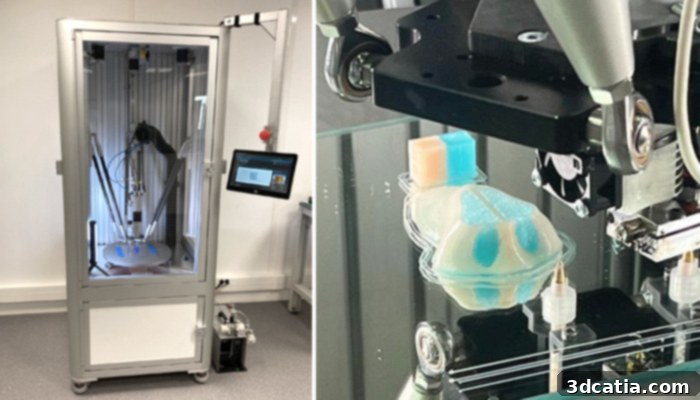
Photo Credits: Deltatower
S053 Silicone 3D Printer from San Draw: Biocompatible Solutions for Medical Applications
San Draw, a pioneering 3D printing company with its roots in Silicon Valley and its base in Taiwan, has carved a niche for itself in the specialized field of silicone additive manufacturing. The company has developed its own innovative and proprietary technology known as Fluid Additive Manufacturing (FAM), which is specifically engineered for the precise and efficient printing of most types of silicones. All San Draw printers, including their latest model, the S053, are built upon this advanced FAM technology, ensuring consistent performance and material compatibility.
The S053 printer is San Draw’s most recent offering, designed to meet the evolving demands of various industries, particularly the medical sector. It features compact dimensions of 490x470x630 mm, making it suitable for laboratory or small-scale production environments. The printer provides a respectable print volume of 200x150x100 mm, allowing for the creation of a range of components. A key differentiator for the S053 is its capability to print with silicones that are fully biocompatible, meaning they are safe for direct contact with living tissue. This critical feature makes the S053 an indispensable tool for a wide array of medical applications. It can be used for producing patient-specific anatomical models for surgical planning, custom medical devices, soft tissue prosthetics, and various other components where material safety and direct bodily contact are paramount. San Draw’s focus on biocompatible silicone printing with the S053 positions it as a vital solution for advancing healthcare innovation through additive manufacturing.
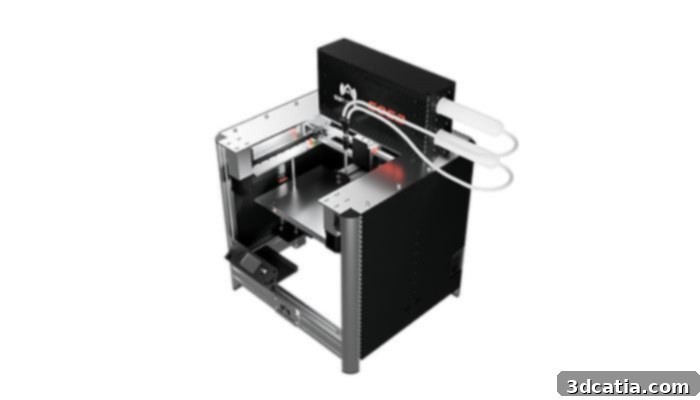
Photo Credits: San Draw
Silprin’s Silicone 3D Printer: A Desktop Solution for Soft Robotics
Silprin offers a compelling desktop 3D printing solution specifically designed for silicone, making advanced additive manufacturing more accessible for research, development, and specialized applications. This compact yet powerful machine boasts a substantial print volume of 400 mm x 400 mm x 250 mm, providing ample space for creating a variety of parts. User interaction is streamlined via an intuitive 7-inch touch screen, while an open-source control system offers flexibility for advanced users and researchers to customize parameters and experiment with new functionalities.
In terms of material handling, Silprin’s printer is equipped with a 600 ml capacity cartridge system, ensuring consistent material supply for extended print jobs. These cartridges are easily replaceable, minimizing downtime. The extrusion system is robust, capable of exerting up to 2,000 Newtons of force, which is essential for precisely depositing highly viscous silicone materials. Furthermore, the printer offers an impressive print life of up to 18 hours, facilitating the production of larger or more complex components without interruption. While the company recommends Dragon Skin 10A – VF, a high-performance silicone known for its flexibility and durability, users are encouraged to test and integrate other compatible materials, expanding the printer’s versatility. The Silprin silicone 3D printer is particularly well-suited for specialized applications such as soft robotics, where flexible, compliant structures are crucial, and for creating intricate tubes and channels used in microfluidics or biomedical devices, demonstrating its precision and adaptability for cutting-edge projects.
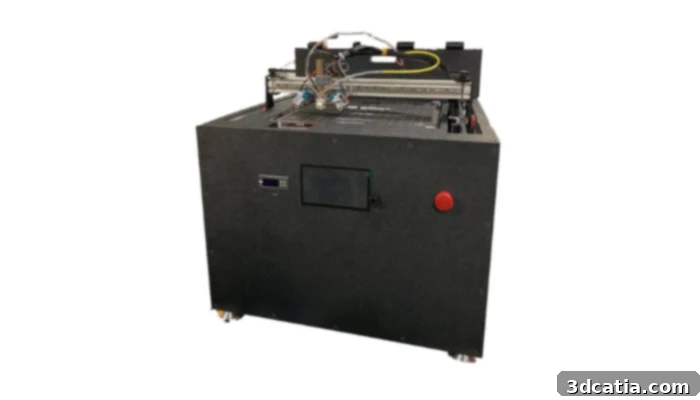
Photo Credits: Siliprin
The 3D-Bioplotter from Desktop Health: Advancing Tissue Engineering with Silicone
The 3D-Bioplotter series represents a pinnacle of bioprinting technology, originally developed by EnvisionTEC and now offered under the esteemed Desktop Health brand. These sophisticated machines are predominantly utilized in cutting-edge tissue engineering research, playing a critical role in the advancement of regenerative medicine. The 3D-Bioplotter is renowned for its ability to process an exceptionally wide range of biomaterials, enabling computer-assisted tissue engineering (CATE) with unparalleled precision and versatility.
The operational principle involves the precise 3D printing of scaffolds, which can be designed from complex 3D CAD models or directly from patient-specific data derived from CT images. Materials, including various types of silicone, are extruded through a fine needle in liquid, paste, or gel form. These extruded materials then solidify through a controlled chemical reaction, gradually building the desired 3D structure. This meticulous process ensures high resolution and structural integrity, crucial for biological applications. Each 3D-Bioplotter machine is comprehensively equipped with advanced features, including precise temperature control across its five cartridge slots. This multi-cartridge system allows researchers to print with several different materials simultaneously within a single process, facilitating the creation of complex, multi-layered tissue constructs. Among the compatible materials, various types of silicones are frequently employed for creating soft tissue models, for research into biocompatible implants, or as support materials for other delicate medical or technical applications. Its ability to handle biocompatible silicones makes the 3D-Bioplotter an indispensable tool for developing patient-specific implants, drug delivery systems, and advanced tissue regeneration strategies, pushing the boundaries of what is possible in biomedical engineering.
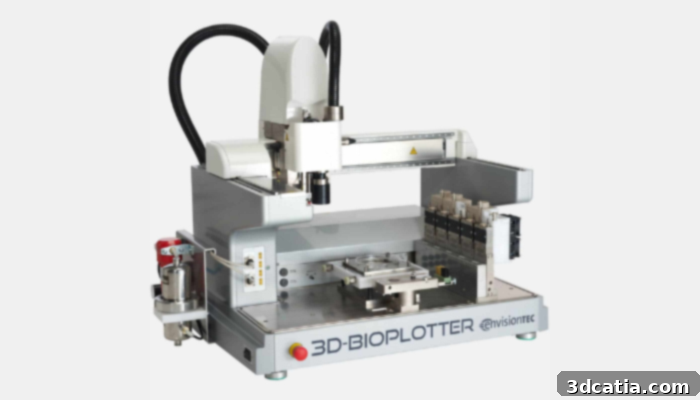
Photo Credits: EnvisionTEC/Desktop Health
3Deus Dynamics and its Innovative Silicone 3D Printing Method: Dynamic Molding
The solution developed by 3Deus Dynamics introduces a truly innovative and distinctive approach to silicone 3D printing, setting it apart from conventional methods. Initially focused on on-demand product manufacturing, 3Deus Dynamics has ambitious plans to evolve this technology into a comprehensive manufacturing platform, especially for critical medical applications in the medium term. The core of their groundbreaking approach is a patented technology called Dynamic Molding. According to 3Deus Dynamics, this method can be viewed as a radical new concept within Additive Manufacturing Deposition (AMD) processes.
The Dynamic Molding process works by meticulously depositing fluid material, such as silicone, from a micro-doser directly into a granular medium. This granular medium acts as a dynamic mold, providing essential support to the liquid material during the printing process. By immersing the fluid print within this physical powder, the technology effectively prevents the collapse of the 3D object, a common challenge when printing with flexible materials like silicone that lack structural rigidity during deposition. This support system is critical for achieving high-fidelity prints with complex geometries. The technology is remarkably versatile, compatible with all types of silicone, including medical-grade variants, and can handle a wide range of stiffnesses, from extremely soft (0 Shore A) to very hard (90 Shore A). This broad material compatibility and structural support mechanism enable the creation of highly detailed and functional silicone parts, opening up new possibilities for customized medical devices, soft robotics, and other applications requiring flexible, robust components. For a visual demonstration of how this cutting-edge technology operates, you can refer to the informative video from Elkem Silicones below:
The Nucleus Pneumatic Extruder from French Manufacturer Tobeca: A Versatile Add-on for FFF Machines
While not a standalone silicone 3D printer in itself, the Nucleus Pneumatic Extruder, developed by the innovative French manufacturer Tobeca, warrants special mention for its transformative potential in silicone additive manufacturing. Tobeca specializes in custom machine manufacturing and has engineered this extruder as an independent, highly adaptable system designed to seamlessly integrate with virtually any existing FFF (Fused Filament Fabrication) 3D printer. This ingenious design allows users to convert their conventional filament-based machines into powerful liquid material extruders, including for silicone.
The Nucleus extruder utilizes a standard plastic syringe, available in various convenient sizes ranging from 5cc to 50cc, making it flexible for different project scales and material volumes. It offers precise control over material deposition with an output pressure ranging from 0 to 8 bar, ensuring consistent and controlled extrusion of viscous materials like silicone. A significant advantage of the Nucleus system is its ease of cleaning, which is crucial when working with reactive and often sticky materials like silicone, simplifying maintenance and enabling quick material changes. Tobeca has extensively tested silicone as a primary material on this extruder, confirming its reliability and effectiveness for producing high-quality silicone parts. This cost-effective and versatile add-on provides a gateway for many users to explore the capabilities of silicone 3D printing without investing in a dedicated, specialized silicone printer, making advanced material fabrication more accessible to researchers, designers, and small-scale manufacturers.
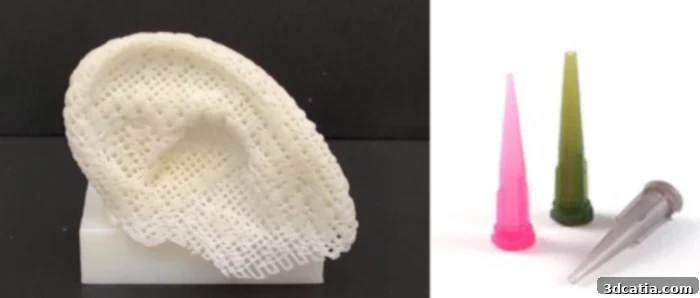
Photo Credits: Tobeca
Sterne Elastomere’s SiO-Shaping Technology: From Prototyping to Large-Scale Production
Sterne Elastomere, a renowned manufacturer of high-quality silicone materials serving critical sectors such as medical, food, and nuclear industries, has also ventured into the additive manufacturing space with its dedicated 3D printing solutions. The company initially unveiled the SiO-Shaping 1601 in 2016, a 3D printer specifically engineered for rapid prototyping of silicone parts. This inaugural machine was designed to efficiently print 100% UV-curable silicones, capitalizing on their rapid solidification properties to accelerate development cycles.
The SiO-Shaping 1601 was capable of designing parts with dimensions up to 205 x 200 x 100 mm, offering a minimum print layer thickness of 0.1 mm, which enabled the creation of finely detailed components. According to Sterne Elastomere, this printer allowed for the realization of parts with exceptionally fine and precise finishes, further enhanced by a panel of available colors for aesthetic or functional differentiation. Recognizing the growing demand for larger silicone parts and expanded material compatibility, Sterne Elastomere introduced a new and improved version in 2022: the SiO-Shaping 2201. This advanced printer significantly expands the build volume, allowing manufacturers to produce much larger parts, up to 500 x 500 x 500 mm. Beyond increased size capabilities, the SiO-Shaping 2201 also offers enhanced material versatility, providing the option to use different types of silicone. This includes standard cross-linking silicones and, notably, fluorinated silicone, a specialized material known for its superior resistance to oils and hydrocarbons, making it ideal for harsh industrial environments. These advancements underscore Sterne Elastomere’s commitment to pushing the boundaries of silicone additive manufacturing, catering to both precision prototyping and larger-scale industrial production with diverse material requirements.
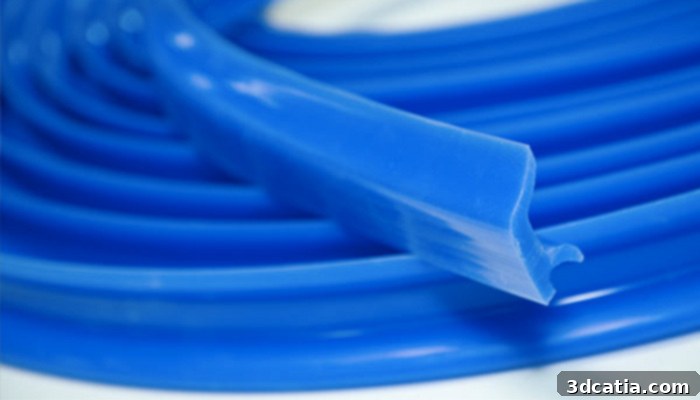
The landscape of silicone 3D printing is undeniably vibrant and continuously expanding, offering unprecedented opportunities for innovation across a multitude of industries. From highly specialized medical prostheses requiring extreme precision and biocompatibility to versatile industrial components demanding robust chemical and thermal resistance, the array of advanced silicone 3D printers and innovative technologies discussed above showcases the remarkable progress in this field. Each solution brings unique capabilities, whether through proprietary material deposition methods, advanced curing systems, or multi-material versatility, making flexible and functional part production more accessible and efficient than ever before.
What are your thoughts on these cutting-edge silicone 3D printers? Which of these innovative systems do you find most compelling, and for what applications would you consider utilizing them? We invite you to share your insights and opinions in a comment below or join the conversation on our LinkedIn, Facebook, and Twitter pages! Don’t miss out on the latest advancements and news in additive manufacturing—remember to sign up for our free weekly Newsletter here, delivering the most important 3D printing updates straight to your inbox! Additionally, you can explore all our engaging videos and content on our YouTube channel for further insights.